Eyeing cataract surgery? SLO County woman is on quest to overcome fears
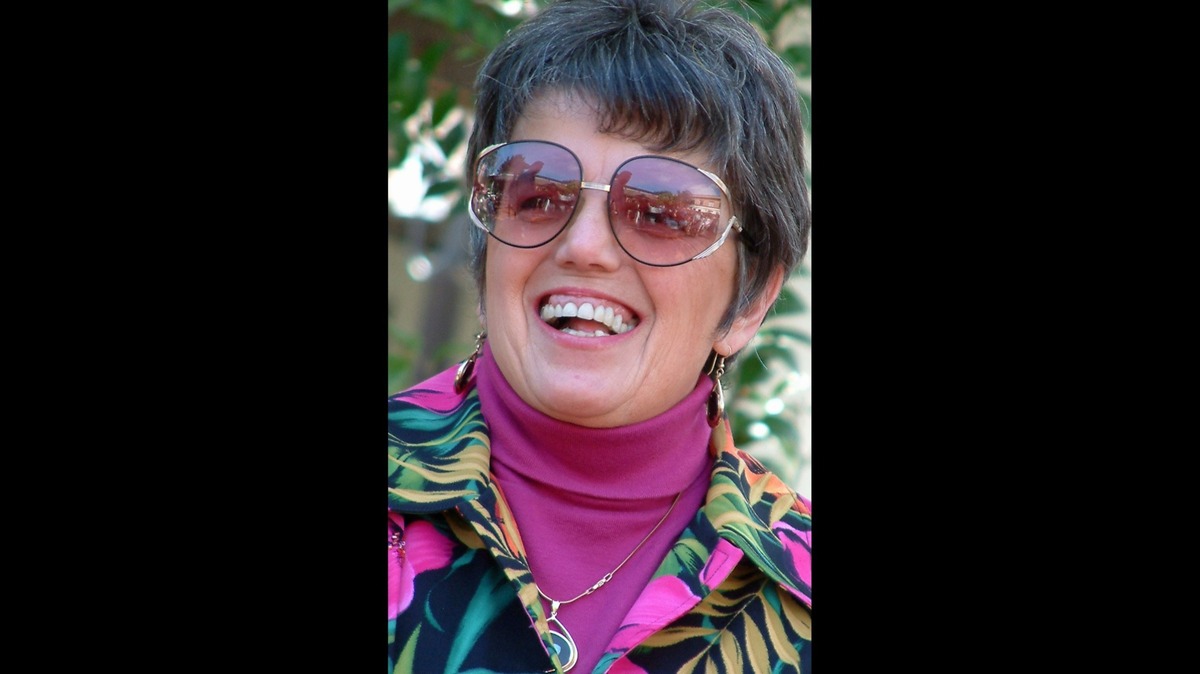
Do you dread going to the doctor?
I usually don’t, but there’s a certain medical procedure that scares me spitless. Do the words “cataract removal surgery” strike terror in your heart the way they do in mine?
For many, seeing a physician can feel like taking the worst final exam in the world.
Maybe dreading doctor visits is in our DNA.
Little kids hate to go see the doc, because that might mean getting another shot. Teens avoid the doctor’s office because they’re shy and embarrassed.
Meanwhile, someone with a continuing health issue is justifiably terrified at checkup time because the potential for scary news is always there.
Even pets hate trips to the veterinarian’s office, and can smell them a mile away. I swear our dogs could spell “vet.”
But this is my eyesight, folks, which puts it in an entirely different, horrifying category.
I’ve been told that the rush and speed of our lives can contribute to poor cataract surgery outcomes: The patient is late to their surgery appointment, so the body has no time to lower blood pressure before the procedure. The patient fidgets and moves during the surgery. Or the post-surgery patient rushes out the door of the surgical center and doesn’t let the body pause and refresh.
So, I’ll be good. I’ll arrive early and be calm. I’ll stay still if it kills me. I’ll lie peacefully in the recovery room until they kick me out.
In the meantime, to calm the panicked little kid inside me, I’ve been doing research.
Early cataract surgeries sound absolutely, frighteningly barbaric. But the procedure has improved a lot since then.
According to the American Academy of Opthamology, 50 million people were projected to have cataracts in the country by 2050. The organization estimates that having better eyesight after surgery can produce a 16% decrease in the odds of hip fractures and 13% decrease in the odds of car crashes due to cataracts.
Why get cataract surgery?
I’ve gotten lots of cheerleader speeches from friends and family members who’ve had successful cataract surgeries and are thrilled with the results.
“It’s the eye equivalent of having your home’s really dirty windows washed,” my friend Jennifer Smith of Cambria told me.
The day after his surgery, my astonished son Brian enthused, “The colors are so much brighter! The images are sharper.”
Neither of them had a whit of problem with the surgery or recovery, although Brian kvetched a bit about having to frequently apply antibiotic eyedrops and tape a bug-eyed plastic shield over the operative eye every night for a week.
My friend Mary Denice Walker told me that her eye problems began “as a 5-year-old, establishing a life of glasses and contact lenses, with deteriorating vision.”
After a few days of post-surgical recovery, she told her online friends she’d finally had “dramatic improvement in the newly operated eye and even a little in my other eye. I am really excited and hopeful!”
My late husband, Richard told me repeatedly that he couldn’t believe how much of a difference his new lenses made in his vision.
He’d had a lifetime of eye problems, ranging from being almost legally blind to having detached retinas, macular degeneration and glaucoma.
Fortunately, my surgeon, Dr. William James Gealy, is the same retinal specialist who successfully treated Richard’s eyes for more than 25 years.
Is this medical procedure safe?
Dr. Gealy, a deliberate, serious man with an understated manner, has repeatedly advised me to “prepared to be amazed” after my cataract surgery.
“From 2 million to 3 million of these surgeries are done every year just in the U.S.,” he told me, “and it’s arguably the most common surgical procedure performed” in the country, with a “very good and very long record.”
“Not all the operations are perfect. Not all are 100% safe,” my surgeon said, adding that a vast majority produce great results, in part because “the relative safety is enormously good.”
The operation’s “safety profile is probably better than any other procedure,” Gealy said, “both for your health and your well-being, in what you can expect in terms of your improved vision and your overall health.”
The procedure is done with an ultra-sharp diamond blade, “not anything you’ll feel,” Gealy said, and then the new lens is inserted.
Doctors use topical anesthetics, not general or nerve blocks, with an intravenous line in place so the anesthesiologist can administer a bit of a gentle sedation and adjust medications in case of variations in blood pressure or other issues.
“In many cases, there’s a noticeable vision improvement right after the surgery,” Gealy said.
Why do my eyes need fixing?
My worst eye issue isn’t the gradual decline in the sharpness of what I see, or the slight dimming of colors — neither of which I’d detected until the real problem surfaced.
Occasional “wandering eye” double vision is making it tricky — read: dangerous — to drive.
When there are two white lines on the road where I know there’s only supposed to be one, which is the real one? Which of those two identical cars is actually there, and which is a figment of my meandering eyesight?
After my surgery, Gealy assured me, “You’ll see a dramatic improvement in your vision and in the colors. It’s a great operation. It doesn’t take long and the results are stable.”
The implanted lens, a medical device, “will last longer than you do,” he said.
So my expectations are realistic.
I’m content to keep wearing glasses to drive or see a movie. Hey, I’ve got so many pairs of distance glasses that I can still wear and use — including my circa 1980s Jackie Kennedy glasses! — that it doesn’t make any fiscal sense to make them all instantly obsolete.
Besides, if I have to wear sunglasses anyway — my eyes have always been light sensitive — then why not make them the high-quality prescription glasses I already have?
I need to relax. Everything is going to be fine, just as it has been for zillions of other patients who have had this procedure with great results.
Breathe, Kathe. Everything is going to be OK. Better than OK.
I hope.