Done with turkey dinner? It’s time for football and guacamole
Happy Thanksgiving!
If you’re already tired of turkey dinner, just imagine the gallons and tons of chip dip you’ll devour in the course of the busy football and holiday seasons — especially guacamole.
Like many of us, I love guac with its rich vegetal taste, the soft, slick mouthfeel contrasting sharply against a crisp chip, dark-toasted sourdough or stick of jicama. I can even use it as a sandwich spread and fool myself into thinking it’s totally healthy, despite the calories and fat count.
However, even when it’s made with our lovely, local avocados, guacamole isn’t really the beauty queen of the barbecue or the buffet. It’s slippery, filled with suspicious-looking chunks and egregiously off-green, about the same color as an aging 1960s-era refrigerator.
Guac can also be really tricky.
Whether you’re buying your guacamole ready-made in a tub or shopping for raw avocados to make guac yourself, there’s always the angst of selecting the right one.
You thought the toughest choice at the produce aisle or farmers market was a picking a good melon or tangerine? LOL. Trust me, choosing the ideal avocado is like scoring a perfect spouse from a friend’s blind-date intro. It can happen, but rarely.
If an avocado is hard, it can take days or even weeks to ripen. And no, you won’t know ahead of time which is which.
How do you tell when when an avocado is perfect?
Avos are the “Goldilocks and Three Bears” of produce: Too hard, too soft and just right. The latter stage lasts about 4.3 minutes. If you’re lucky.
And even if the consistency is right, there’s no advance hint about what’s really inside that lumpy, bumpy, brownish-green skin.
Oh, ugh. This one’s full of chunky brown stuff. Yuck.
According to CaliforniaAvocado.com, “Flesh discoloration can occur when the avocado has been exposed to cold temperatures for a long period of time. Flesh bruising can occur in transit or as a result of compression caused by excessive handling.” In other words, don’t squeeze the avo until you’re ready to use it.
Assuming you’ve hit the jackpot and the avocado you have is the avocado you want, you still have to get the flesh out of the skin and off the pit, seemingly benign actions that have sent a lot of unsuspecting people with minced fingers to emergency rooms.
The first standard procedure — whacking the pit with a sharp knife, embedding the edge of the blade in the hard kernel and then twisting quickly to dislodge the pit — is deviously complex.
Like the avocado flesh in which it sits, the pit is slippery. Plus, it’s round.
Those are two conditions that are less than conducive to being easily pierced with the flat of a knife blade, which subsequently slips and slices somewhere near your ulnar and radial arteries.
If you succeed in getting the pit out, then you have to loosen the flesh. While slicing or dicing the avo before removing the skin may be tempting, a frightening number of wannabe chefs doing that wind up with serrated palms.
Using a spoon to scrape out the flesh? You’re likely to scrape up bits of the skin —hopefully, the avocado’s, not yours.
And somehow the shape of the spoon never matches the shape of the avo, so some gets left behind.
Using your fingers to pry out the avocado flesh a la the Barefoot Contessa, Ina Garten? I mean, that’s just gross, from a number of vantage points.
Avocado’s not a good color for a French manicure, and reaching deep into the bowel of an avocado is creepy at best.
An avocado gadget? Yeah, and I’ve got a bridge to sell you.
You could just squeeze the skin, another potentially tricky procedure as the avo pops out, skids across the table and skips onto the floor. But you’re gonna leave a lot of mangled avocado flesh behind, and what you glean will be halfway to guacamole consistency before it ever hits the bowl.
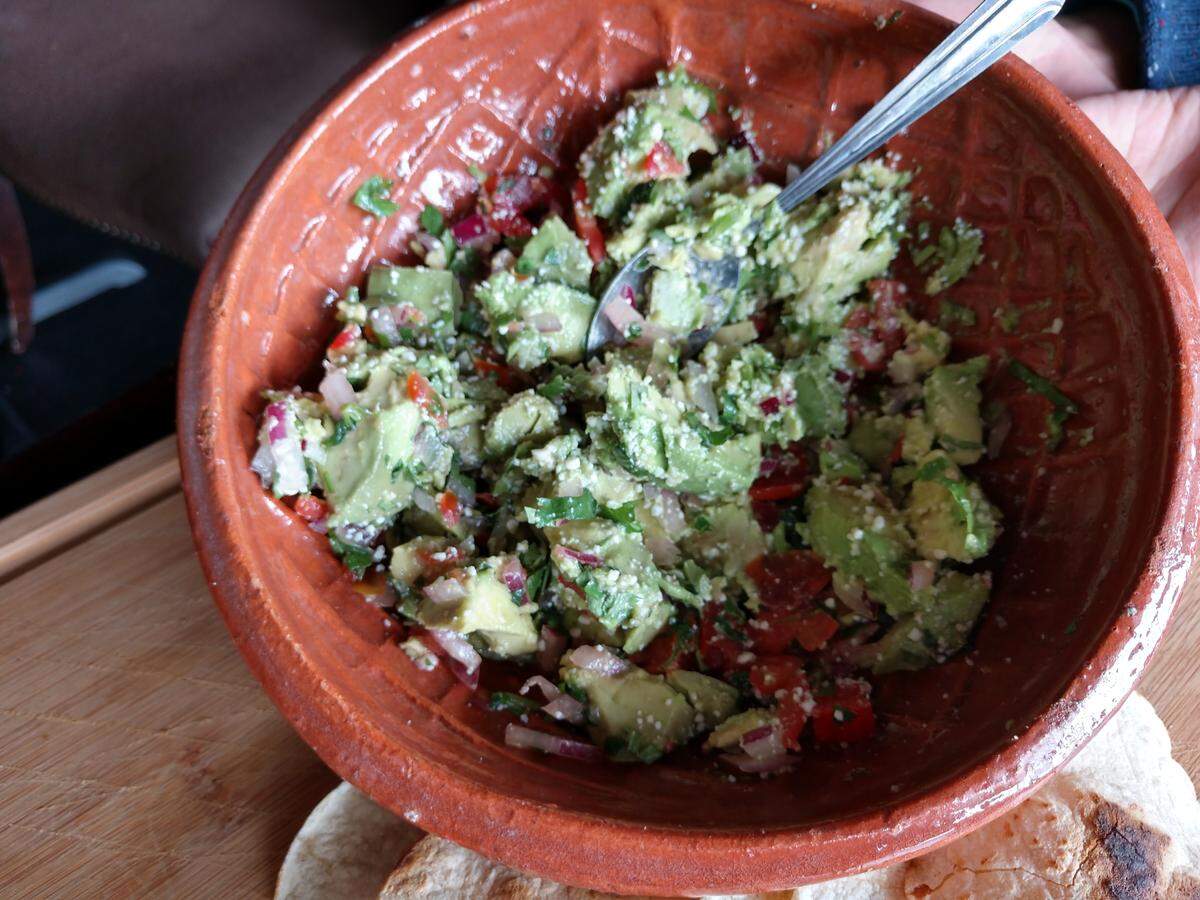
Got that done? Then you have to decide what you want your guac consistency to be. Chunky? Silky smooth? In between?
There’s also the slippery slope of what to add to your guacamole.:
• Onion: Red, white, green or none.
• Hot sauce or chili powder.
• Garlic: Toasted, roasted, sautéed, powdered, minced, juice or raw (gasp).
• Lime, lemon or both. Anybody for grapefruit juice? Nah.
• Peppers (from benign to “Omigod, my tongue is on fire, my epiglottis is fried and the top of my head just blew off! I may never breathe normally again”).
Some crazy people also add weird stuff to guac, such as baby shrimp, diced ham or mango.
After you’re all done and the dip is on the table, here’s a guarantee: If you’ve made the guac for a party, at least 50% of your guests will say you made it wrong, and their recipe is better.
But never fear. They’ll devour it anyway. Because we do love our guacamole, even when it’s really tricky.