SLO County house fire likely sparked by spontaneous combustion. Here’s how to prevent it
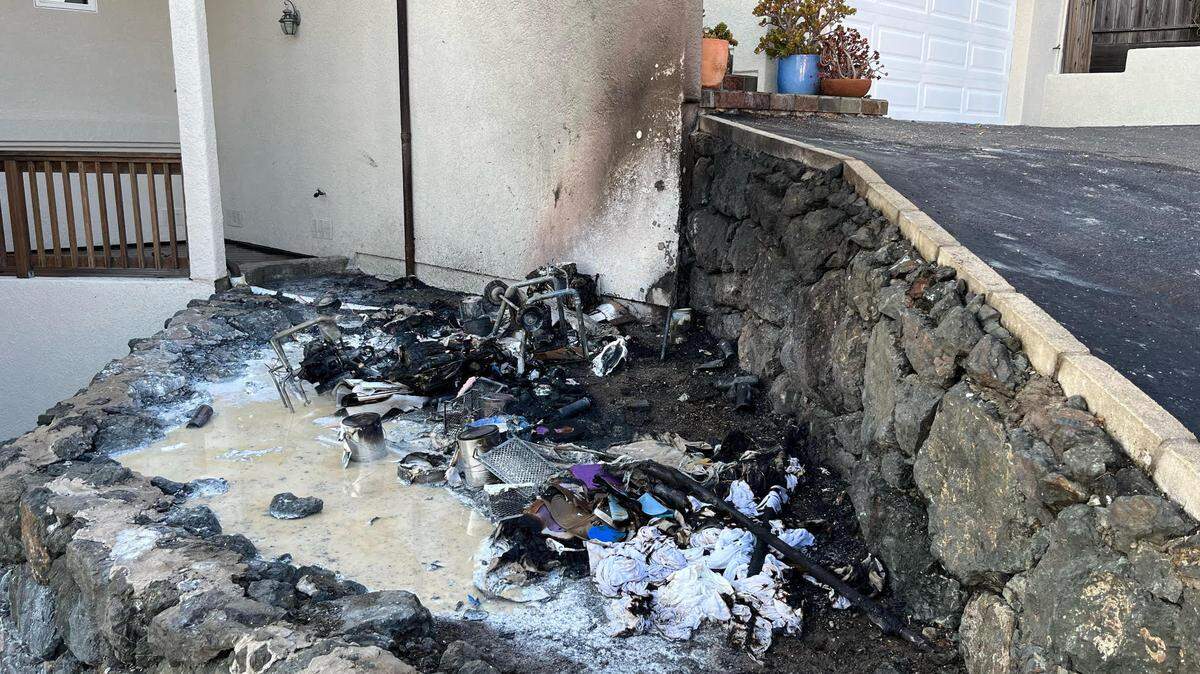
Nearly anything can start a blaze, especially during peak wildfire season in San Luis Obispo County.
Sparks thrown from a faulty catalytic converter. A vehicle dragging a chain on pavement. A hot car parked in high, dry grass. Metal hitting a rock when mowing a field full of high weeds.
More obvious causes include throwing a cigarette out of an open car window or lighting illegal fireworks in fire-prone places.
There’s another factor that may not be as obvious, but can be just as dangerous: Spontaneous combustion.
Explosions, smoke alert Cambria residents to house fire
Residents of Cambria’s Park Hill area were rudely reminded of that danger on a windy afternoon in late June.
They reported hearing two “tremendous booms” and then were alarmed when a dark, vile-smelling cloud roiled up their steep, heavily developed hill.
“We heard a huge explosion, so loud, like a cannon, followed by a second explosion,” a still shaken Valerie Tacker said a few days later. “All of a sudden, very dark gray smoke was coming up toward my house from two houses down the hill.”
“It was blowing uphill because there was a strong onshore wind,” she said.
As nearby residents poured out into Leighton Street, she said, “We could tell right away that there was a fire” at a house where crews had been working earlier.
After a neighbor made a quick call to 911, “The local fire department showed up very quickly. They got out their hoses and started spraying water,” Tacker said. “We all went in our houses, because we didn’t want to breathe the awful, acrid smoke.”
Leighton Street is only two roads over from the community’s 430-acre Fiscalini Ranch Preserve and large swaths of native Monterey pines. It’s one of only three remaining native stands of the conifers on the U.S. mainland and one of five in the entire world.
What is spontaneous combustion — and how does it start?
According to the National Park Service website, spontaneous combustion is what happens when a fire starts “without the application of an external heat source.”
“Due to chemical, biological or physical processes, combustible materials self-heat to a temperature high enough for ignition to occur,” the site said.
According to Cambria Fire Department Chief Justin Vincent, that’s likely what started the fire in the Park Hill neighborhood.
Supplies used for home repairs, cleanup projects and construction frequently include rags and towels used to wipe up spills, clean brushes and other everyday chores.
If not handled properly, “Wet rags can ignite on their own. They can start a fire if not handled carefully,” the chief wrote via email. “The same is true of the liquids themselves,” although that doesn’t happen with water-based finishes and liquids.
“Vapors from flammable and combustible liquids can ignite, causing a fire,” Vincent said.
As examples, he mentioned oil-based paints and stains, as well as gasoline, lacquers and nail polish. Cooking oil, too, can be a trigger.
“The oils commonly used in oil-based paints and stains release heat as they dry. If the heat is not released into the air, it builds up,” Vincent said. “That is why a pile of oily rags can be dangerous. As the rags dry, the heat is trapped. The heat builds up and finally causes a fire.”
Those rags and liquids aren’t the only possible sources of spontaneous combustion, he added.
“It can happen in vegetation waste as it breaks down in a pile,” Vincent said, but it “usually takes high heat and moisture within the pile to make that happen.”
The National Park Service site also mentions hot laundry left in piles, moist baled hay and large piles of compost, mulch, manure and leaf piles as potential fuels that can spontaneously combust under the right conditions.
How to prevent spontaneous combustion fires
Here are tips for how to prevent spontaneous compbustion fires, courtesy of Vincent and the National Park Service.
If you’re working on a project at home, spread the soiled rags in a single layer on concrete to prevent the buildup of heat and allow the rags to become hard and brittle. Place the rags out of direct sunlight and secure the corners to prevent movement by wind.
Never leave cleaning rags in a pile. At the end of the day, take the rags outside to dry. Hang the rags outside or spread them on the ground. Weigh them down so they do not blow away. Make sure they are not in a pile. Keep them away from buildings.
Keep containers of oily rags in a cool place. Keep them out of direct sunlight. Keep them away from other heat sources. Check with your town for information on disposing of them.
Store piles of hay, compost, mulch, manure, and leaves away from buildings, in case a fire occurs, and keep the piles small to allow for the circulation of air and the dissipation of heat.
Work groups or businesses using large quantities of oily rags should dispose of those rags in an OSHA-approved container to await pickup by an industrial cleaning company.
Hay should be completely dry before baling and moving to a storage facility. Ensure that the facility is well ventilated.
If your hay bale or mulch, leaf, manure or compost pile is emitting smoke, dial 911 or your local fire emergency number.