SLO County history buffs saved nearly a century of newspapers in 72 hours. Here’s why
Preserving the past is the name of the game for historical societies, libraries, governmental agencies.
That means digitizing the documents that recorded key historical moments. It’s a complex process, as many people discover as they try to safeguard photos and paperwork about their personal past and ancestry.
Digitizing can be pricey, but so is storing tons of paper.
The Cambria Historical Society, Cal Poly’s Robert E. Kennedy Library and historical societies in San Luis Obispo, Paso Robles and other areas are actively creating digital archives of priceless documents — with the aim of making the documents more easily available to the public and readily searchable.
Those collections can include decades of community newspapers.
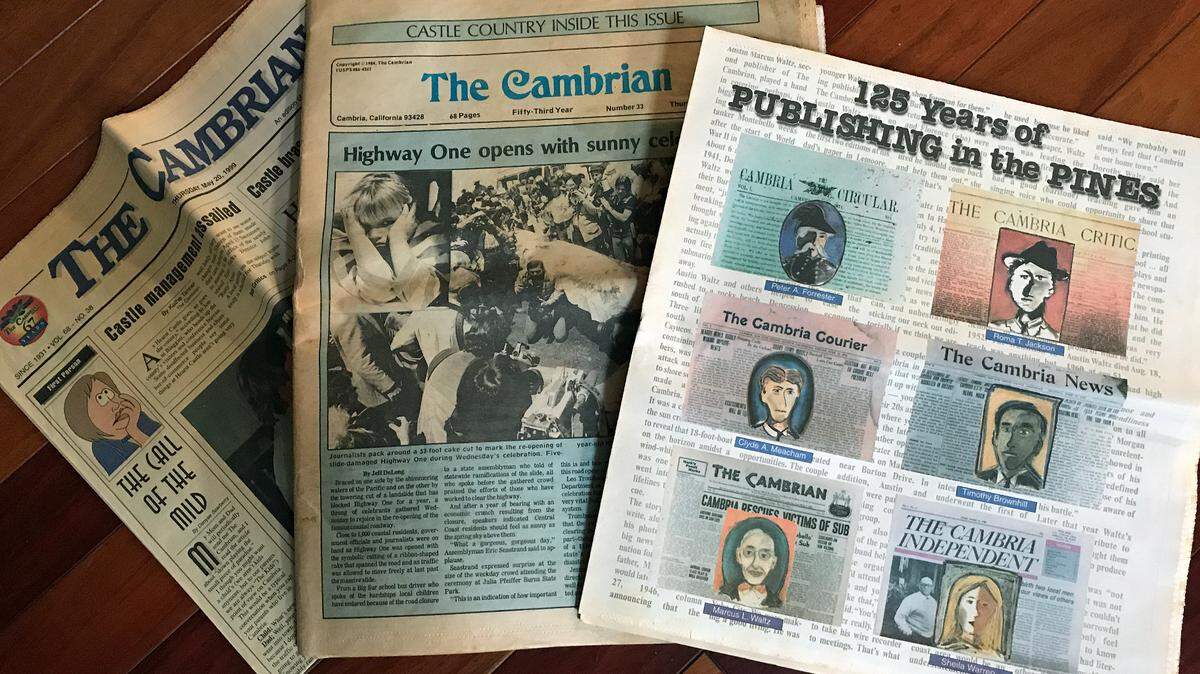
The Cambrian’s archive covers nearly a century’s worth of newspapers, although the town’s first paper was published in 1871.
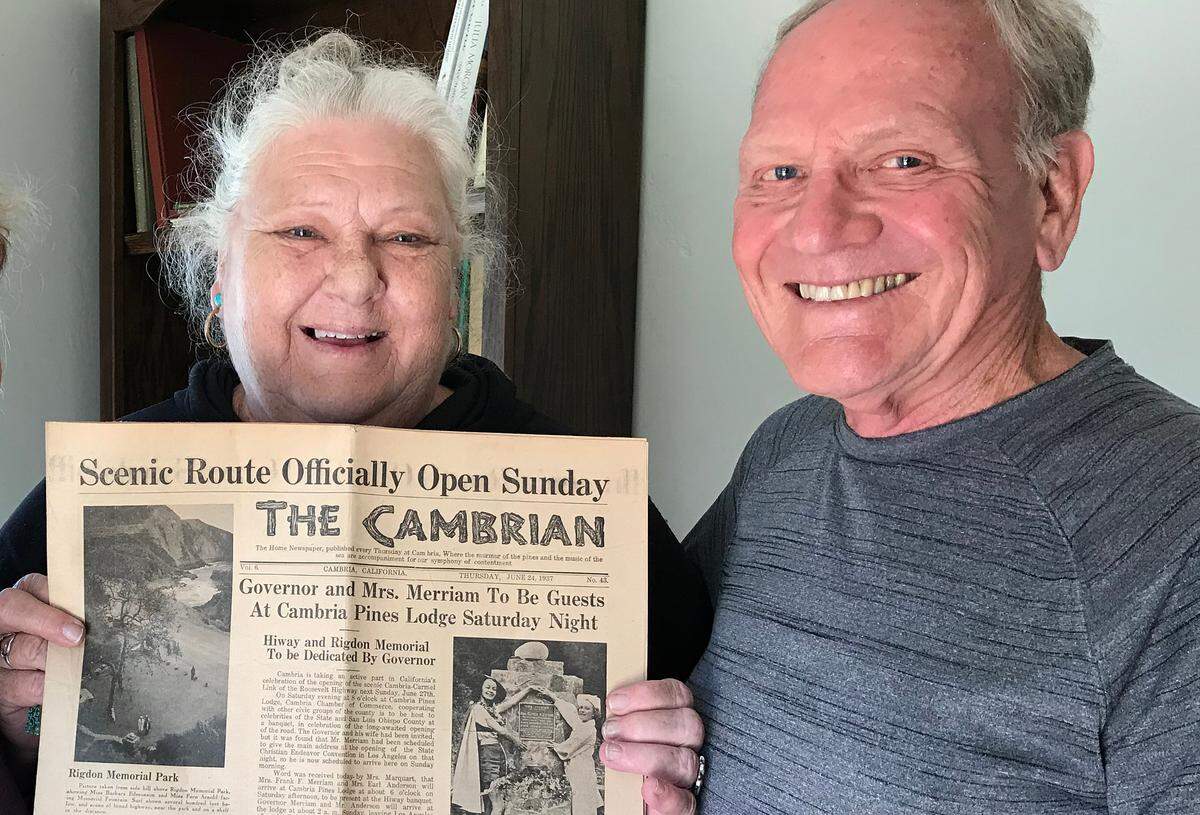
Melody Coe, Cambria Historical Society board president and archivist, knows how important that preservation is.
So do society vice president Consuelo Macedo and lifetime member Debbie Soto. That’s why they and others joined me in my staunch stand a few years ago to make sure Cambria’s historical records stayed in town.
Cambrian office closure prompts dilemma about archives
Sometimes, you just have stand up to authority to defend your beliefs, even when it’s uncomfortable and risky to do so.
As The Cambrian’s in-town office prepared to close in 2018 due to financial reasons, including a lack of local advertising, a literally weighty decision loomed. What should we do with generations worth of old newspapers housed in what’s traditionally called “the morgue”?
Some of the Cambrian’s archival editions went back as far as 1931. The Main Street office also stored local newspapers with other titles, including a copy of the very first issue of the Cambria Circular, dated 1917.
Management wanted to transfer those issues to the office of The Tribune, our larger, daily sister paper.
But I knew that The Trib was due to downsize its headquarters, moving from its longtime South Higuera Street location to a Tank Farm Road office in 2019. (At the time, nobody knew that the coronavirus pandemic would necessitate the closure of even that smaller office.)
When the sheer-volume push met the shove of available space, I was sure that The Tribune’s newspaper archives would take precedence over The Cambrian’s.
You can’t fit Shaquille O’Neill’s foot into Tinkerbell’s shoe.
And for us Cambrians, sending our archives out of town simply wasn’t an option.
So, I said “no.” Repeatedly. “Those papers are a historical community resource,” I said, “and they need to stay in Cambria so the public could access them more.”
With the help of Coe, Macedo, Soto, Mike Rice, Tribune photographer and archivist David Middlecamp and others, I won my argument — and the papers went to the Cambria Historical Society.
Newspapers move across town
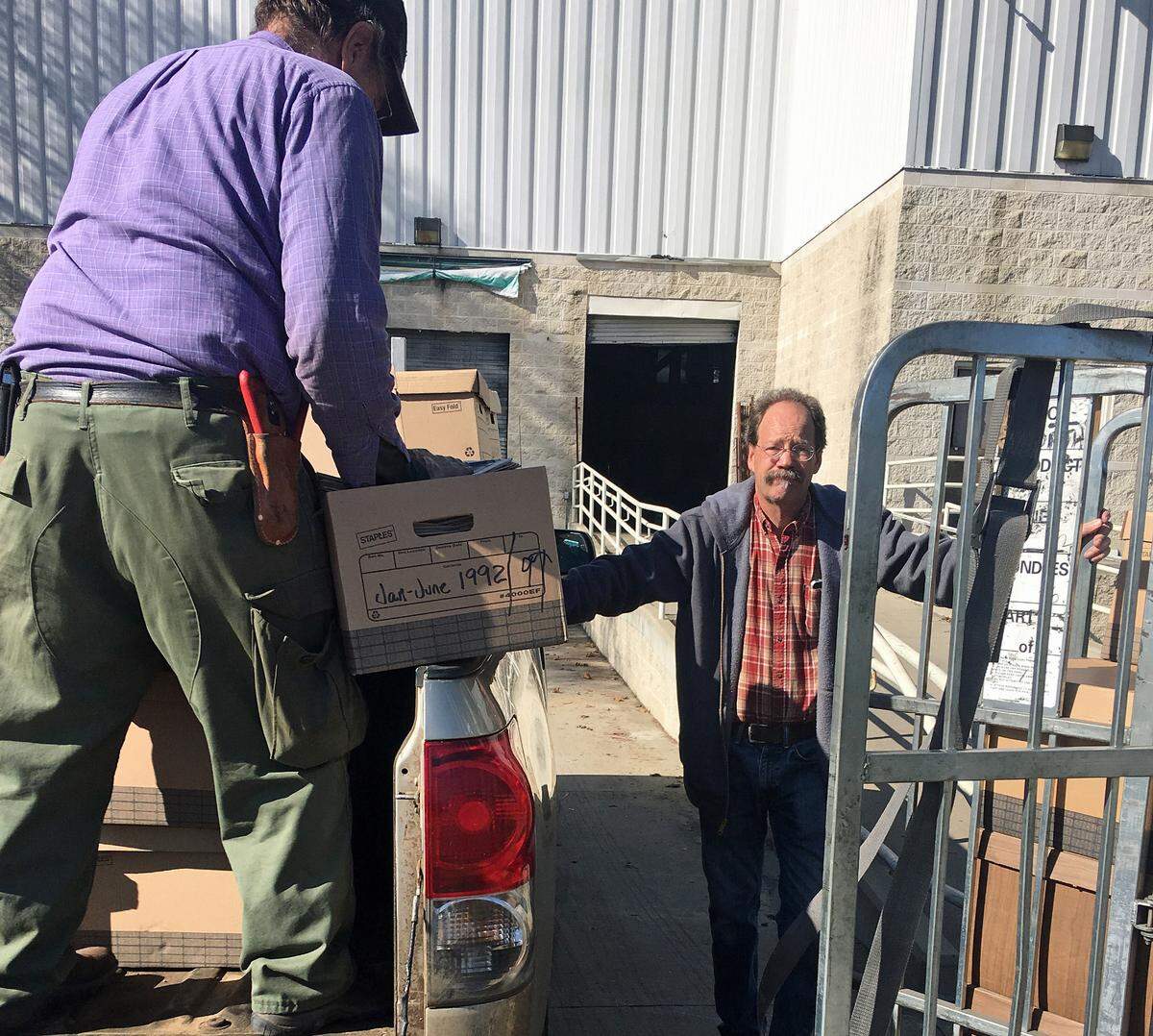
Then came the hardest part: Transferring the vast, heavy, bulky, fragile archives in three days or less.
It was a hustle, but with Coe, Middlecamp and Rice in control of the 72-hour dash, the history society moved load after load of papers about three blocks away.
When The Tribune moved to its smaller office in San Luis Obispo, Middlecamp again called Coe.
He had recently discovered a collection of Cambrian newspapers and microfilms, he said, but CHS would have to move them all within 24 hours.
Again, Rice, Middlecamp and Coe made it happen. Later, former Cambrian editor Jay Thompson rescued some other archival treasures.
Archiving and digitizing old Cambria papers
Now, with the help of generous donor Nancy Moure, those newspapers are becoming archivally secure in the Maggetti House, a little blue building on Center Street. The house is now dedicated to her because she helped the historical society pay for it.
I’m so proud of all the people who helped preserve these precious resources.
To see The Cambrian’s archives — including decades of articles that I’d helped to research and write — being cared for by archivist Coe and her interns is a dream come true.
The CHS now has the papers on microfilm, and those are in the process of being preserved digitally. Soon, they’ll be posted online at cambriahistoricalsociety.com, so townspeople and researchers will have easier access to the wealth of information the papers contain. Stay tuned for more details.
That project expands on the mission of the California Digital Newspaper Collection and the Library of Congress’s Chronicling America.
“Our current project budget is $5,000, which will include word-searchable digitizing, to be available online on our website,” Coe said. “That budget also includes acid-free storage boxes for the archival newspapers.”
How to help
To help digitize decades’ worth of documents, send a check to Cambria Historical Society, P.O. Box 906, Cambria, CA 93428 or go to cambriahistoricalsociety.com/donations.html.