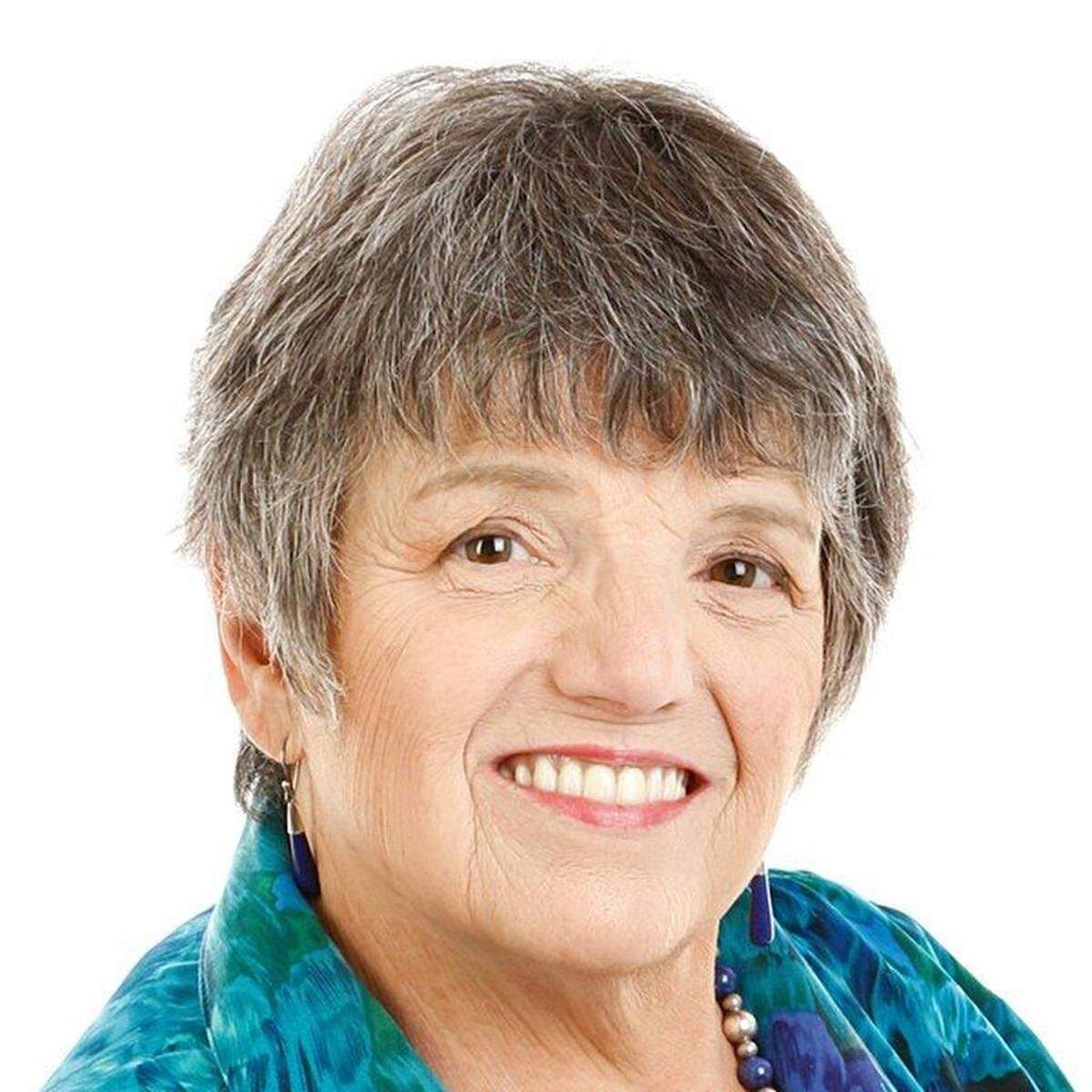
Raging Dolan Fire overran firefighter and his crew. Now SLO County man is battling to recover
As flames from the Dolan Fire in Big Sur roared around him and his crew last summer, U.S. Forest Service fire Capt. Casey Allen’s first and continuing concern was for his people.
“The fire was completely out of control, all around us,” he recalled. “People were panicking. We ran out of water.”
Allen, 55, suffered critical injuries while leading a crew fighting the massive wildfire.
The fire torched nearly 125,000 acres, destroyed 20 structures — including 14 homes — and injured several firefighters, resulting in at least $62 million in firefighting costs. Nine endangered California condors also died as a result of the blaze.
The wildfire, which authorities say was intentionally started by a Fresno man, began burning on Aug. 18, 2020. Despite recent heavy rains, Forest Service spokesman Andrew Madsen told The Tribune via email, officials are “holding off on calling the fire out until they’ve had a chance to complete a final on-the-ground and aerial assessment.”
That’s how persistent this fire was: More than five months after it began, the Dolan Fire is still not yet officially out.
On that Tuesday in early September, Allen and 14 other firefighters were trapped behind fire lines as the flames roared toward the Nacimiento Fire Station, just below the summit of Nacimiento-Fergusson Road. Three were injured and airlifted to Community Regional Hospital in Fresno, according to past reporting by The Tribune.
Two of those firefighters were treated and released the next day, but Allen, who incurred second- and third- degree burns over 40% of his body, remained in the hospital’s burn unit for seven weeks.
Since then, he has endured months of extensive, often painful, treatments for his injuries.
Doctors amputated portions of his fingers, toes and feet. Allen’s had grafts performed on many areas of his body, some of which failed and had to be redone. And the southpaw has essentially lost the use of his left hand, due to healing that’s reduced it to a claw shape that, according to the firefighter’s physicians, will require “many more surgeries” to repair.
What happened during Dolan Fire?
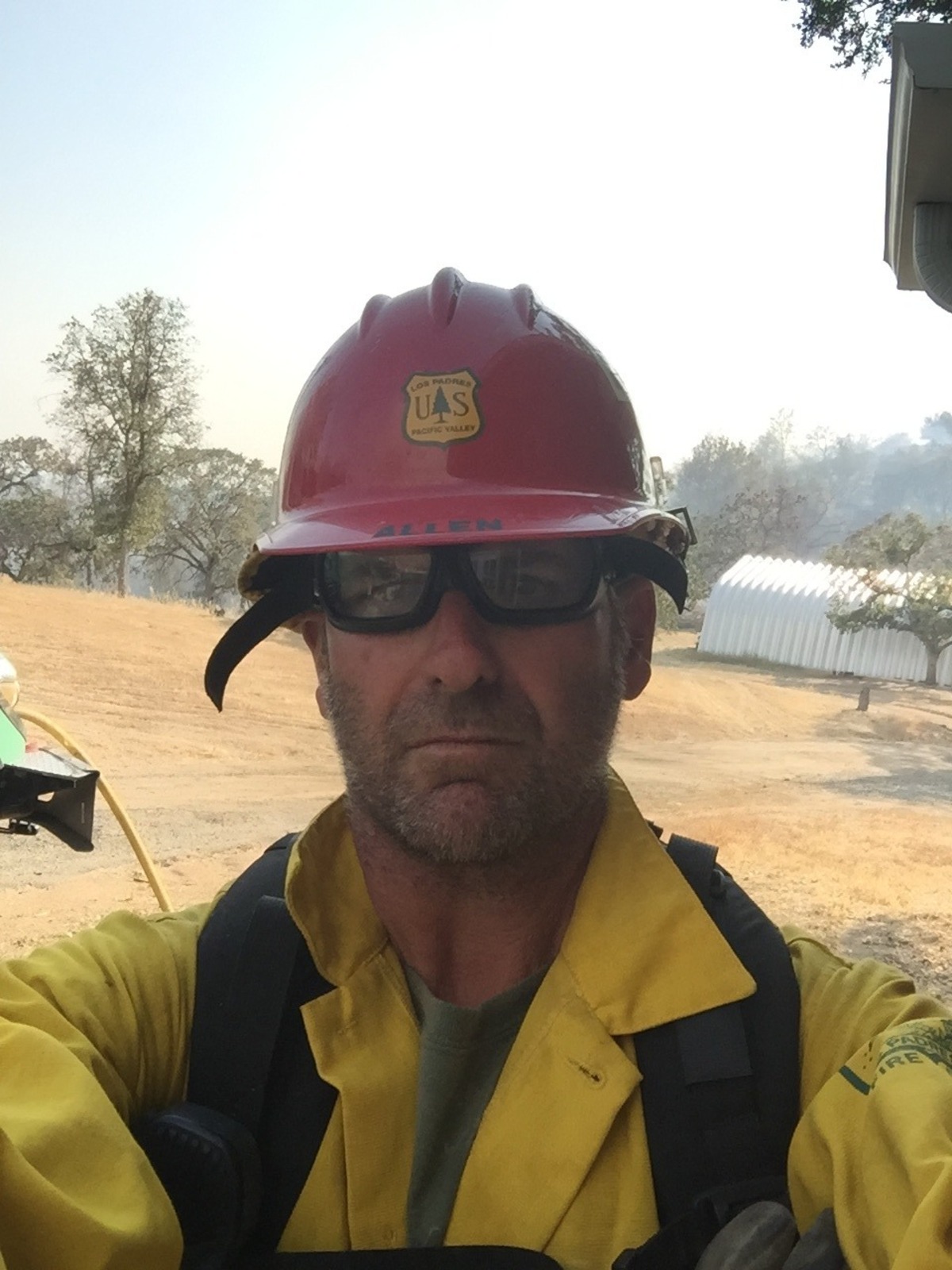
On Sept. 8, Allen was the “module leader for five of us on Engine 17 that morning,” he said, while another fire captain was the module leader of a different team. Those battling the blaze included Forest Service employees, as well as a contract dozer operator and the operator’s son.
Allen said that “we’d known for several days that the Dolan Fire would eventually be a threat to the station,” and firefighters set up to protect it as well as they could.
But soon, Allen realized the dire nature of their situation.
“I grabbed my group, and we talked about it together,” he said. “I told them to get rid of their gear and made sure everybody had all their PPE,” including gloves, radios and hard hats. The team members also had individual fire shelters — small, silvery mummy bags designed to reflect radiant heat, protect against convective heat and trap breathable air.
“We found a good spot, deployed the shelters as close together as we could and kept in communication with each other,” Allen continued.
“I kept asking if everybody was OK,” he added, and they said they were.
Meanwhile, the fire roared around them.
“We could hear it, like a freight train,” Allen recalled. “We heard some explosions, all the flammable material, a lot of stuff detonating, like a fireworks nightmare.”
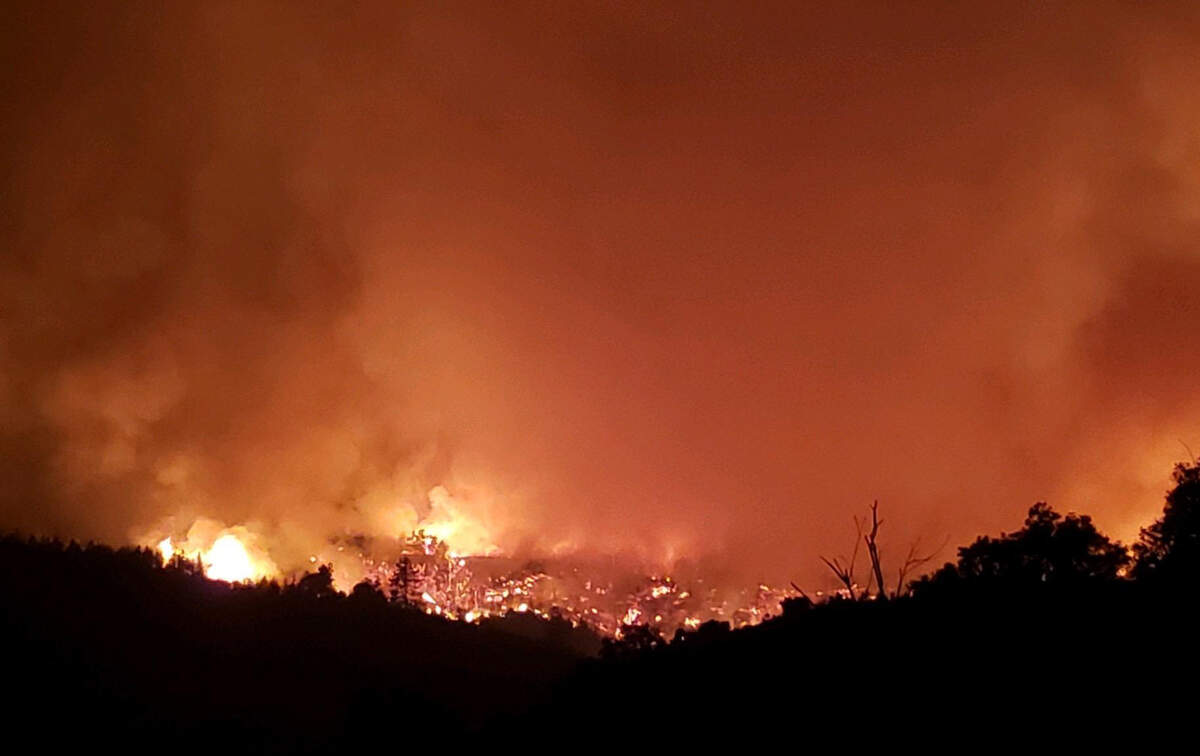
“We were in our shelters for a half hour at least, with the fire just blazing all around us,” he said. “We were taking too much heat … and another group of individuals said it was a little cooler over where they were.”
So, the decision was made to move.
“We got everybody up and started shuttling over there,” Allen said, “making sure everybody was heading there. The whole time, as we walked, we had the shelters wrapped around us like a blanket.”
Taking a deep breath, Allen added that the area “was pretty steep, and they’d kicked some rocks loose. I lost my footing and fell into the fire.”
From there, his memory is spotty.
Allen said, “I remember being carried up the hill to the vehicles, being transported to the landing zone at Fort Hunter Liggett for the life flight, being flown to the burn unit of the Fresno hospital.”
Central Coast firefighter has family ties to Cambria
Casey Allen is no stranger to the North Coast and the scenic Big Sur area.
For years, he lived and worked in Pacific Valley, a hamlet near the Plaskett Creek Campground a few miles north of Gorda, and he has long family ties to Cambria through his grandparents, Willard and Irma Allen, who owned a Pico Creek-area ranch “directly west of the Hearst horse ranch,” he said.
The Allens also, for a time, leased the gas station that’s now the Old Stone Station Restaurant, before moving their Mobilgas business to what is now the Shell station.
Casey Allen said Hearst cowboys taught his dad, Donald Allen, “how to ride a horse, hunt, roll a cigarette and drink coffee black. He had free rein all over the Hearst property.”
Casey Allen was born and raised in Santa Maria, where he got a degree in fire science from Allan Hancock College. Allen then went through the fire academy at the Santa Maria community college, graduating in 1996.
He was immediately hired by Los Padres National Forest’s firefighting officials. He’s had been on the job at the national forest ever since, logging nearly a quarter century of firefighting.
He has served nearly all of those years at the Forest Service’s Pacific Valley station. But he spent 2002 and 2003 working at the Nacimiento Fire Station, the same station where he suffered severe injuries during the Dolan Fire in 2020.
Recovery battle begins for SLO County man
The next thing he remembers is when he woke up the next day and saw his fiancée, Tina Nott.
Nott said emotionally, “The first thing he said was to ask, ‘Is everybody on the crew OK?” She told him they were.
“That was my main concern,” Allen said. And, with emotion in his voice, he added his intense gratitude for “my crew, for their professionalism and courage. Without their help, I could have perished.”
Since being released from the Fresno hospital on Oct. 28, 2020, and going home to San Luis Obispo County, Allen has undergone a series of intense burn treatments, many of them painful.
According to the injured fire captain and his fiancée, a 51-year-old teacher, those treatments have included a total of 13 skin grafts to his left hand, both feet, knees and legs, as well as the right side of his stomach, his buttocks and other areas.
Doctors also had to amputate the tips off four fingers of Allen’s left hand and his big toes, part of a second toe, and the both sides of both left and right feet.
That’s left Allen with substantial balance and walking issues. “The way he walks now is completely different,” his fiance said.
His upper left side was the “harvest site,” or the location from which doctors took skin for the grafts, the couple said. “It looks like a patchwork quilt now,” Nott said.
Allen’s face was burned, too, “but (the doctors) didn’t do much there,” he said, probably because there were other, more serious burns to attend to.
Allen and Nott have had to take many train and Uber trips to Goleta Valley Cottage Hospital in Santa Barbara for out-patient treatment. She carries a big notebook and file of his records to each appointment.
At one point, Allen had as many as six doctors on his Cottage Hospital treatment team, including Marc Soares, who specializes in reconstructive and plastic surgeries at Cottage, and infectious disease specialist Seth Anderson.
In early January, he spent 17 days at Cottage after grafts on his left ankle and foot failed and a serious staph infection set in. It was an emotional low point for him.
His doctor first discovered something amiss Jan. 6 during an in-person appointment in Goleta. “You go right across the parking lot (to the hospital) right now,” the physician told Allen, “and I’m admitting you.”
After identifying one of the issues as a staph infection, Allen’s doctors redid the grafts on his ankle and foot four times before deciding to see if the infection would respond to oral antibiotics and the skin would heal on its own. It’s difficult for a graft to take on in an area that flexes as much as an ankle does, he said.
After his stay at the Goleta hospital, Allen was able to return to the Five Cities area, where Nott had been waiting for him. She wasn’t able to visit him at either hospital, due to the coronavirus pandemic.
“He had to go through 11 surgeries all alone,” Nott said, with evident emotion in her voice.
Allen returned home to Pismo Beach via Uber on Jan. 22. He’s now taking twice daily doses of the strong antibiotic Oritavancin and receiving visits every other day from a home health nurse to treat his surgical sites.
Going home is difficult for burn patient
Before Allen’s accident, he was an exercise enthusiast who met his fiancée in 2019 “running the stairs at Pismo Beach,” he said. The pair have been together for about 15 months.
Allen and Nott had been living in a modular home in a Pacific Valley trailer park owned by the Forest Service, while Allen’s Pismo Beach home was occupied by people who had leased it through June 2021.
Allen’s Pacific Valley home was too far away from burn specialists and hospitals for the treatment he so desperately needed, so he and Nott decided they should return to Pismo Beach. That way, the couple would be closer to Goleta Valley Cottage Hospital, the facility to which Allen’s case was ultimately transferred.
To accomplish that, however, they had to stay in alternate accommodations while waiting for Allen’s renters to find a new place to live.
They managed that feat “with the kindness of friends,” Allen said.
Neighbors Marty and Susie Black spread the word “to firefighters, the bike-riding, pickleball, social club circle” in the area, Marty Black said. “We asked them to keep their eyes and ears open for a one-level rental with handicapped access. Casey wanted to get out of the hospital, but his house was leased. He had a house he couldn’t get into.”
Then Jim Krieg of the Pismo Beach Athletic Club arranged for Allen and Nott to temporarily stay in his family’s vacation home in Grover Beach, Black said. “Jim’s the hero here.”
Allen, Knott and their friends also worked with Beach Bum Property to find housing for Allen’s renters, freeing up his Pismo Beach house.
All that was accomplished within a month, Allen and Nott said.
But what about the couple’s belongings, which needed to be moved from Pacific Valley to Pismo Beach?
While he was still in the Goleta hospital, Allen said, friends like Justin Smith of Cambria had already stepped up to help.
“He’d been in contact with me all along,” Allen said. “Once I came out of denial that I’d be going back to the modular, Justin’s like ‘We’ve got it. You’ve got friends. Tell me where the key is, and we’ll get a moving truck.’ ”
Friends are standing by to move “our stuff out of the modular and put it in storage in Pismo,” Allen said, unless friends Patte Kronland and Lisa Kleissner succeed in selling the Pacific Valley unit furnished. If that works, Allen and Nott will only have to sort through their personal belongings to decide what to take home.
Allen and Nott moved to his Pismo Beach house in the first week of December 2020.
Supporters help fire captain recover
One person who has been at the couple’s side throughout the ordeal is Terrie Sabato, administrative officer for Los Padres National Forest.
She’s served, mostly as in a volunteer capacity, as hospital family liaison for Allen and Nott, who she’d never met before. “Being there for them and advocating for them was my No. 1 priority,” Sabato said.
According to Andrew Madsen, Forest Service public affairs officer, “It takes a very special person” to be in that position.
“(Sabato) stayed in Fresno in a hotel room for weeks on end, dealing with insurance, workman’s comp and all the paperwork” involved in such a complex case, Madsen said.
“Knowing what (Allen has) been through,” Sabato said, “I wanted to hug him, but he’s a very private person. It’s hard to see one of our own in that situation, but he was smiling. … They’re an amazing couple.”
Sabato thinks about Allen and Nott many times a day, and “the sacrifice they almost made for us.”
“I’m forever grateful to them,” she said, “and this is my way to pay them back, paying it forward.”
Even with all he’s been through, Allen said he’s thankful — for excellent doctors, for his family and friends, for neighbors and of course and especially for his fiancée. “She’s the greatest, incredible. What we’ve been through together, to be so supportive. She’s my advocate, my rock.”
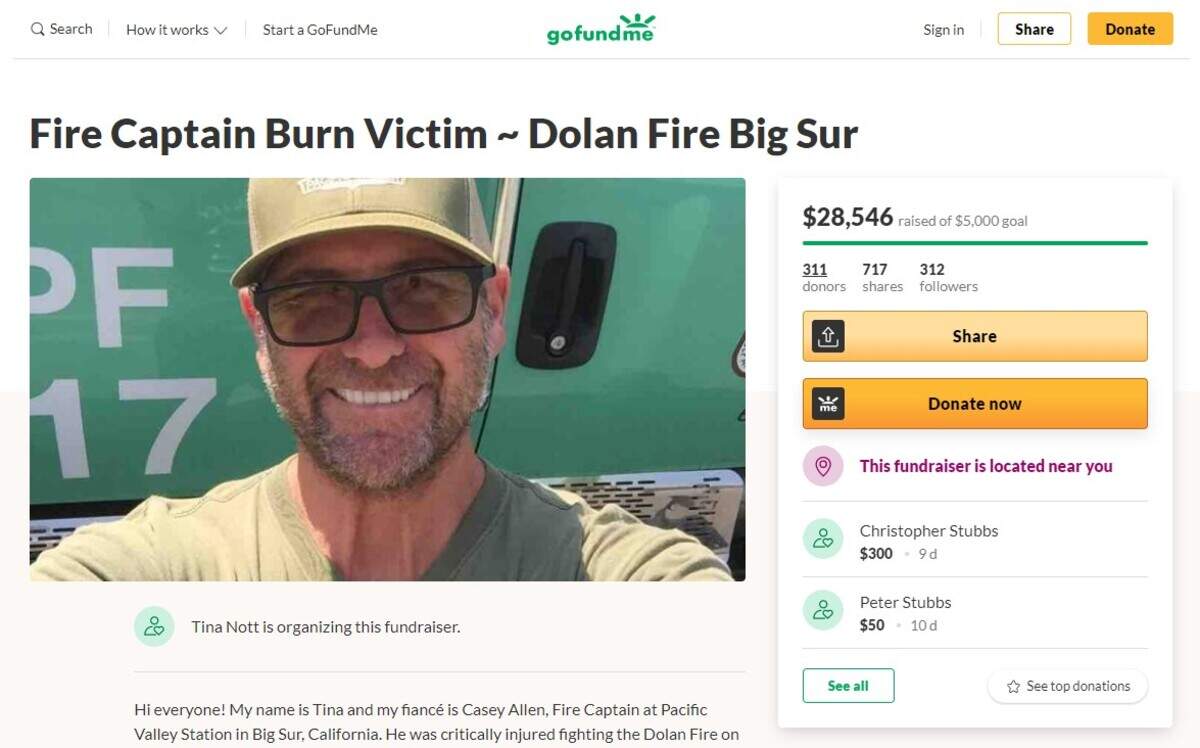
She and Allen are also grateful for all the support they’ve received from fellow firefighters, community members and others who have donated to the GoFundMe fundraiser Nott launched in October, shortly after Allen was injured.
So far, the campaign “Fire Captain Burn Victim ~ Dolan Fire Big Sur” has raised more than $28,000, far exceeding the $5,000 goal. But while donations have surpassed that modest goal, so have the couple’s expenses.
Allen said he’s also deeply grateful for the next-generation individual fire shelters he and his firefighters used as the Dolan Fire blazed around them.
The shelters were “designed by the brother of a firefighter who died in the South Canyon Fire” on Colorado’s Storm King Mountain in 1994, Allen said.
“Fourteen people passed away on that fire,” Allen said emotionally, and the brother of one of those firefighters “took it on himself to design something safer. In addition to honoring the brother he lost, he saved all of us.”
It’s that “look on the bright side” attitude that’s gotten Allen through his long, painful ordeal, which isn’t over yet.
That’s who the firefighter is, according to his fiancée.
“He’s been so upbeat throughout,” Nott said. “He’s had such a positive attitude, and I’d try to be the same. I’d cry, but never in front of Casey. I’d tell myself I’m not the one in physical pain, just heartbroken pain.”
This story was originally published February 2, 2021 at 5:00 AM.