
How the Dolan Fire turned California’s most scenic route into a smoldering ghost highway
Editor’s note: On Aug. 25 and 26, Tribune reporter took an overnight trip up Highway 1 from San Luis Obispo to Carmel to track the status of the Dolan Fire and its impacts on residents of the Big Sur Coast. The road closure at Ragged Point that was in place at the time has since shifted 12 miles farther north.
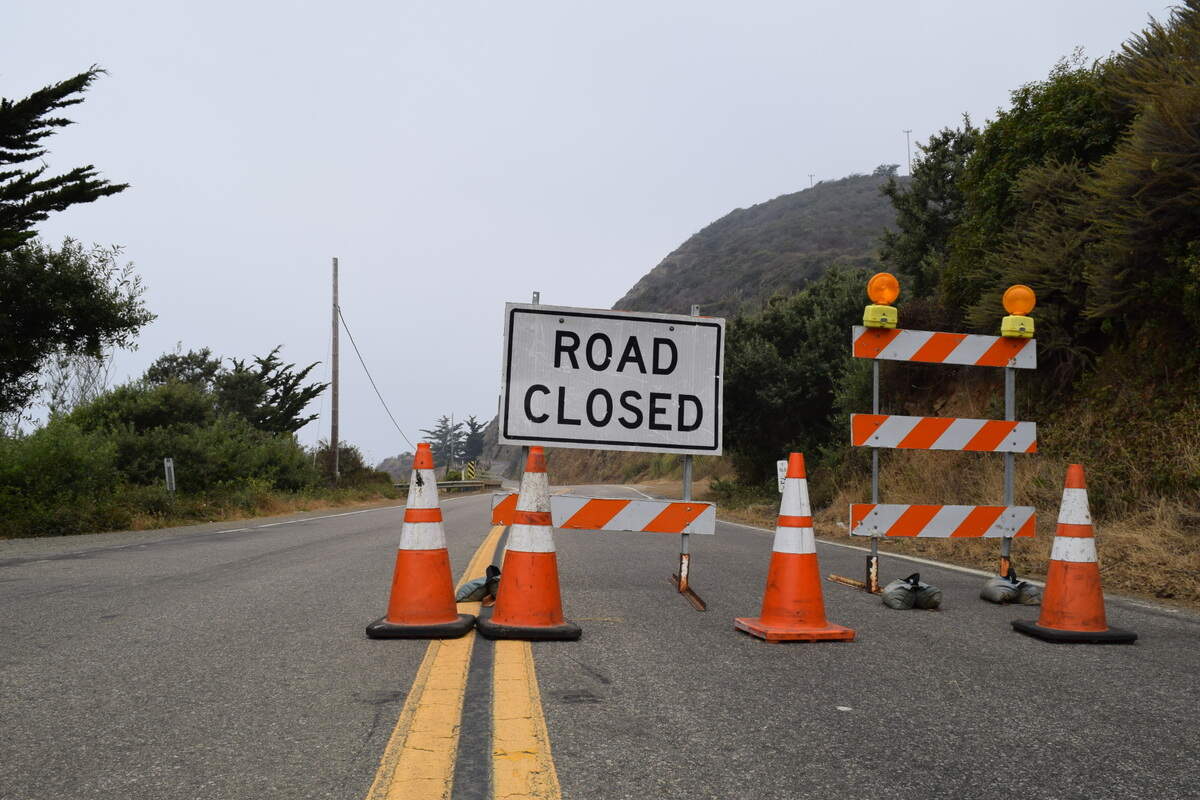
At the northwestern-most corner of San Luis Obispo County, an orange-and-white blockade cuts across one lane of Highway 1, just as the road emerges from the rush of trees that spill down the mountain, hiding the cliff-side community of Ragged Point amid their trunks.
Beyond that barrier stretches more than 71 miles of arguably the most scenic drive in the United States — a well-traversed route that in the past week has suddenly been shut off from the rest of the world as a devastating fire burned right to its edge in the Los Padres National Forest.
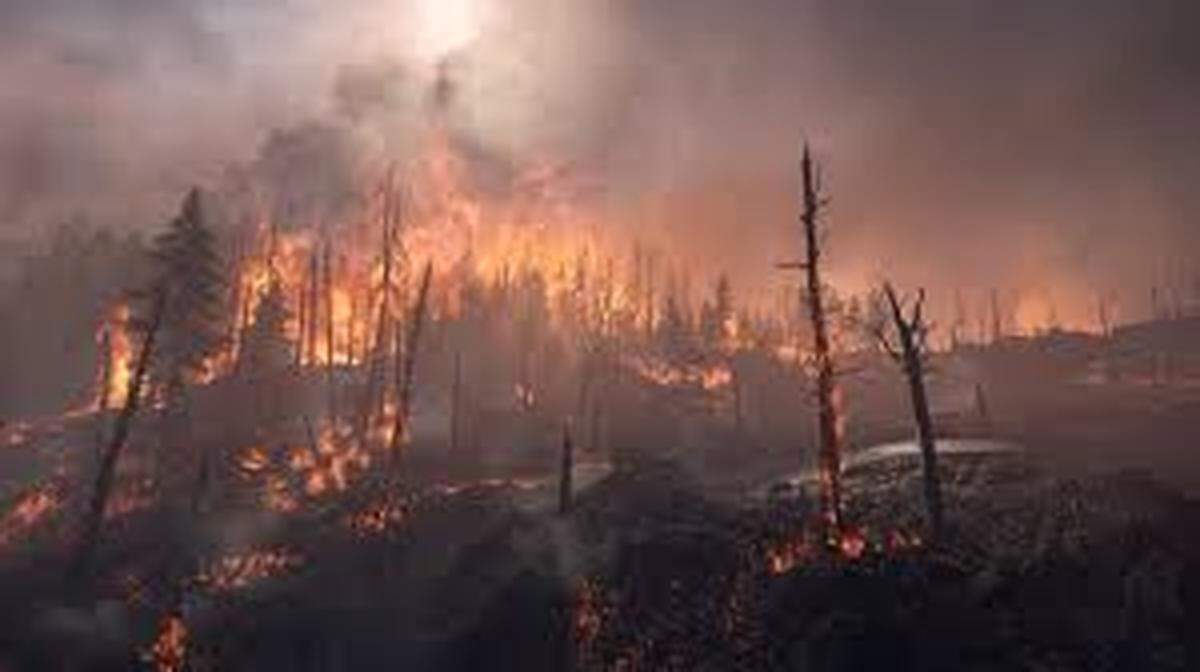
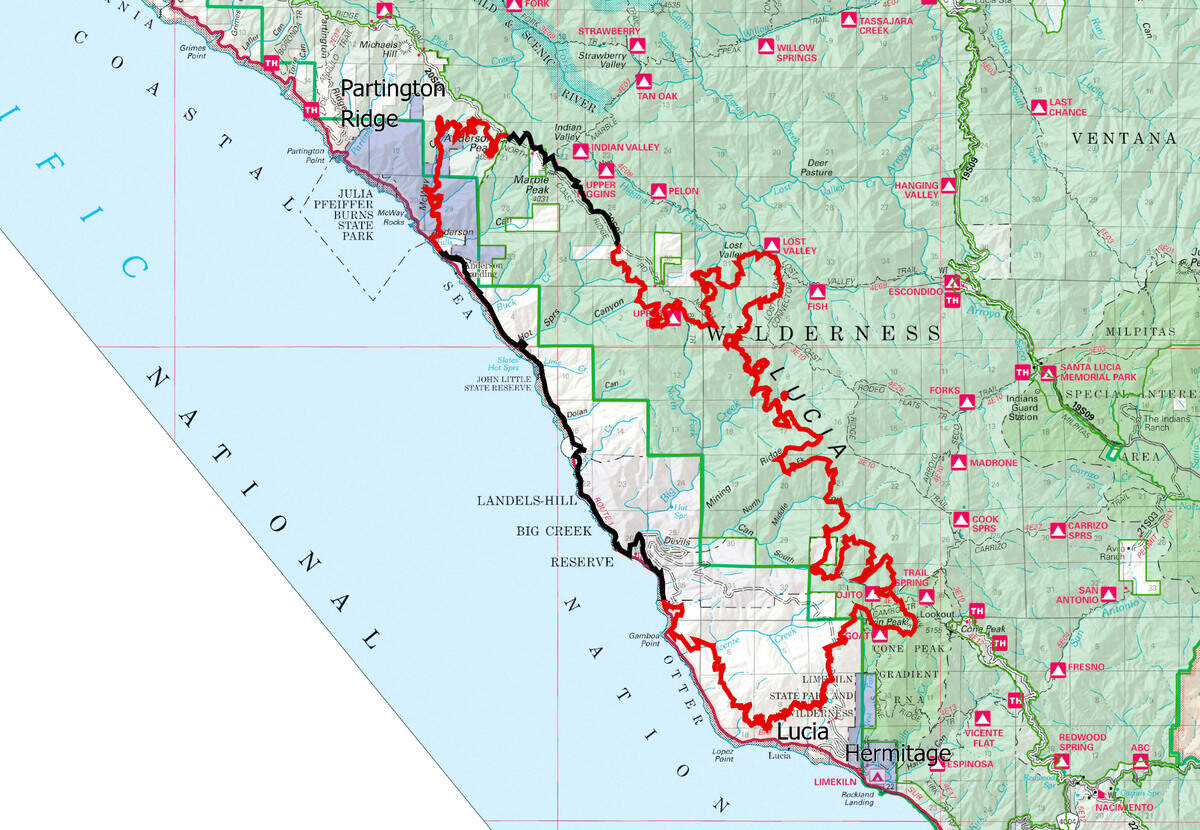
After its eruption on Aug. 18, possibly as the result of arson, the Dolan Fire has to date burned more than 25,000 acres of wilderness and threatened homes, campgrounds and trails in the forest’s Monterey District, while destroying a sanctuary for endangered California condors.
It has also prompted a closure of Highway 1, cutting inhabitants of the mountain region off from the rest of the state, while blocking the area’s ever-present tourists from flocking to its winding way.
As the fire continues to rage on — as of Sunday it was only 25% contained — those both inside and on the edges of the fire lines are left wondering: When will our lives return to normal?
Ragged Point road closure leaves tourists confused
From San Luis Obispo County, the journey into Big Sur typically starts at Ragged Point — specifically at the Ragged Point Inn and Resort, where a last-chance gas station, mini mart and cafe act as a rest stop for Highway 1 travelers before they begin to make their way up the winding coastal byway.
With the road closure in place, it also acted as something of a communication hub for fire personnel, evacuees and, of course, confused tourists.
On a foggy Tuesday morning before the road closure shifted north, Rori Cosma was making coffee and drinks for the half a dozen people ambling about the rest area. From behind the counter, Cosma answered questions about the road closure and dished out the latest updates on the Dolan Fire.
At one point, a pair of young men approach and ask if there is a way to get to McWay Falls. Cosma, a jovial man approaching retirement age, gently informed them that’s not going to be possible, given that the waterfall is in the Julia Pfieffer Burns State Park, close to the heart of the blaze.
He sent the pair on their way with a pamphlet about local attractions on their side of the road closure.
“We’re getting a lot of confused people thinking they can go up there, but it’s just too dangerous for them to go,” Cosma told The Tribune after the men had left.
“Especially when you have all these brave firemen doing the job,” he added. “They don’t need these extra people around while they are trying to fight the fire.”
Cosma, who has worked at the Inn for 17 years, said he first realized something was going on on Aug. 18, when a parade of firetrucks went “flying up the highway.” The road closure followed closely on its heels.
Since that day, Cosma has been monitoring the status of the Dolan Fire through daily updates from Cal Fire and fire agencies (one of which arrived while he was chatting with The Tribune). He then relays that information to guests at the Inn, including the handful of evacuees staying there.
“It is scary,” he said of these people’s experiences. “A lot of the people we spoke to, they said they were gone and were trying to come back up because their animals are there. And a lot of them were really worried that they didn’t get their animals out.”
Cosma said he and other Inn staff helped to put those evacuees in contact with people still within the fire boundaries to ensure their livestock were OK and help them to get evacuated.
“Then of course not knowing if their homes were going to survive or not,” he added with a shake of his head. “It is scary.”
As of Aug. 18, Cosma said business at the Ragged Point Inn and Resort was doing well after a brief slump earlier in the year due to the coronavirus pandemic. Even with the fire burning nearby, the Inn was still doing a steady stream of business for wayward travelers, he said.
On the other side of the closure? Not so much, Cosma said.
“Those poor businesses just can’t catch a break.”
From bustling to empty stores, empty campgrounds
Crossing beyond the orange-and-white barricade, the lively world just a few feet behind almost immediately disappears into the fog.
Where cars would routinely drive past the Ragged Point Inn parking lot (only to return moments later when met with the closure cones), heading north, virtually no other cars are on the road.
One or two fire and maintenance vehicles speed through on their way to important destinations within the fire zone, and every once in a while a truck or SUV carrying a resident to their property will pass by.
But for a road that is notoriously packed with selfie-hungry tourists during the summer months, the deserted stretch left behind in the shadow of the Dolan Fire is more akin to a ghost highway.
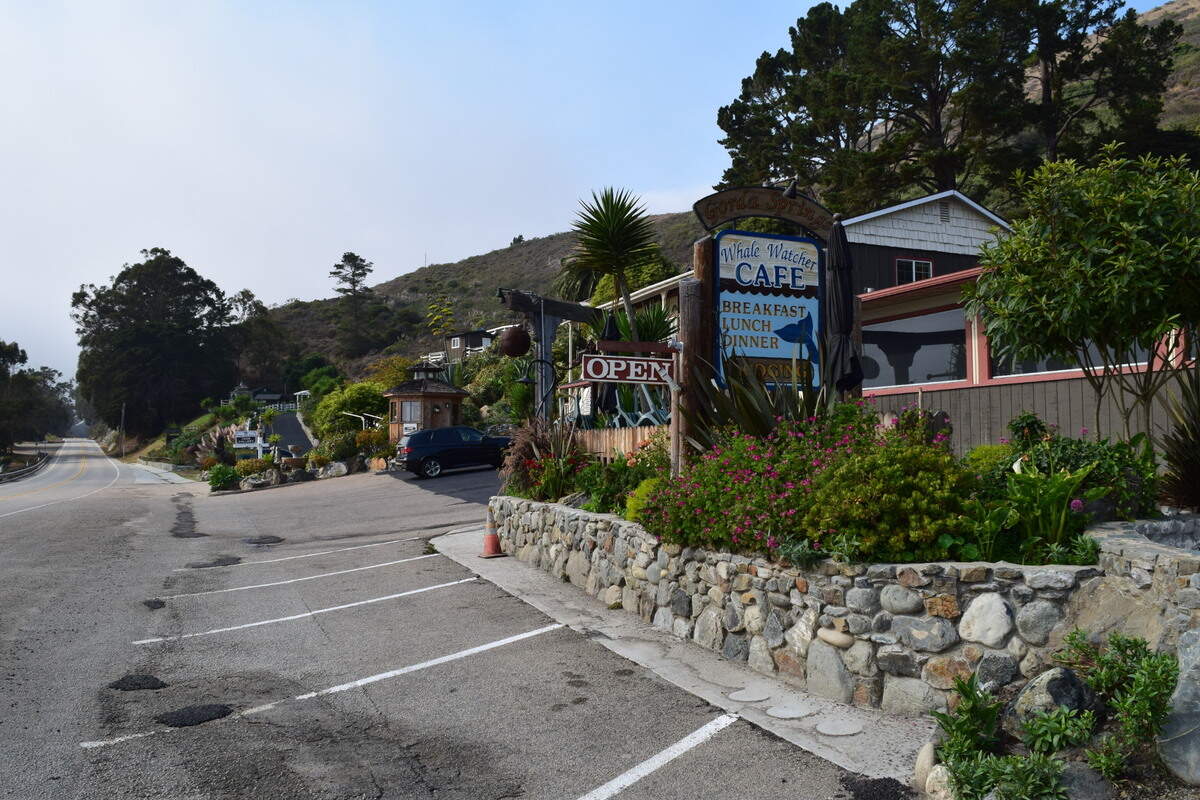
In Gorda, well out of the way of the fire’s current path, the parking lot for a market, cafe and gas station overlooking the ocean is notably devoid of people on Wednesday, other than two men standing at the gas station, talking over a hose coming out of the ground.
Inside the market, a woman is bent over an ice cream freezer, intently scraping away at the sides of the box in a bid to clean it while no customers linger among the aisles. A map of the Dolan Fire as well as the latest information release from officials are printed out and rest on the market counter near the register.
When asked about business now that the road is closed, she quickly fetches Mary Vargas, the owner of the Gorda Springs Resort.
Vargas, a quiet-spoken, petite woman wearing an N-95 face mask with a metal bridge that routinely attempts to slip below her nose, said business has obviously been slow since the fire began.
Normally this time of year, she would be seeing throngs of people stopping by, especially families with kids about to enter new school years, she said.
“It’s a very busy time of year for us,” she said. “I would say from May, Memorial Day, on, into the latter part of August — like right about now, where we are now — it’s our busiest season.”
But with the road closures came an abrupt halt to any potential customers. Now Vargas said the business is limited mostly to residents of the area and the firefighters battling the Dolan Fire.
The former stop in for information, the latter for cookies and energy drinks.
“That’s why we stay open,” she said.
Its unclear how long the roadway will be closed to the general public.
On Friday, the CHP moved the closure point from Ragged Point north toward Los Burros Road — a move that could come as a boon for Vargas because it will once again allow visitors up to the Gorda area.
A late-summer surge of tourists would be great for the resort, she said, and would help her to pay the bills in the less busy fall and winter seasons.
“They could come and have a breakfast or lunch. They could come and stay with us overnight or for a weekend. A nice getaway,” Vargas said. “There are hiking trails around, and walks on the beach — so yeah, come visit.”
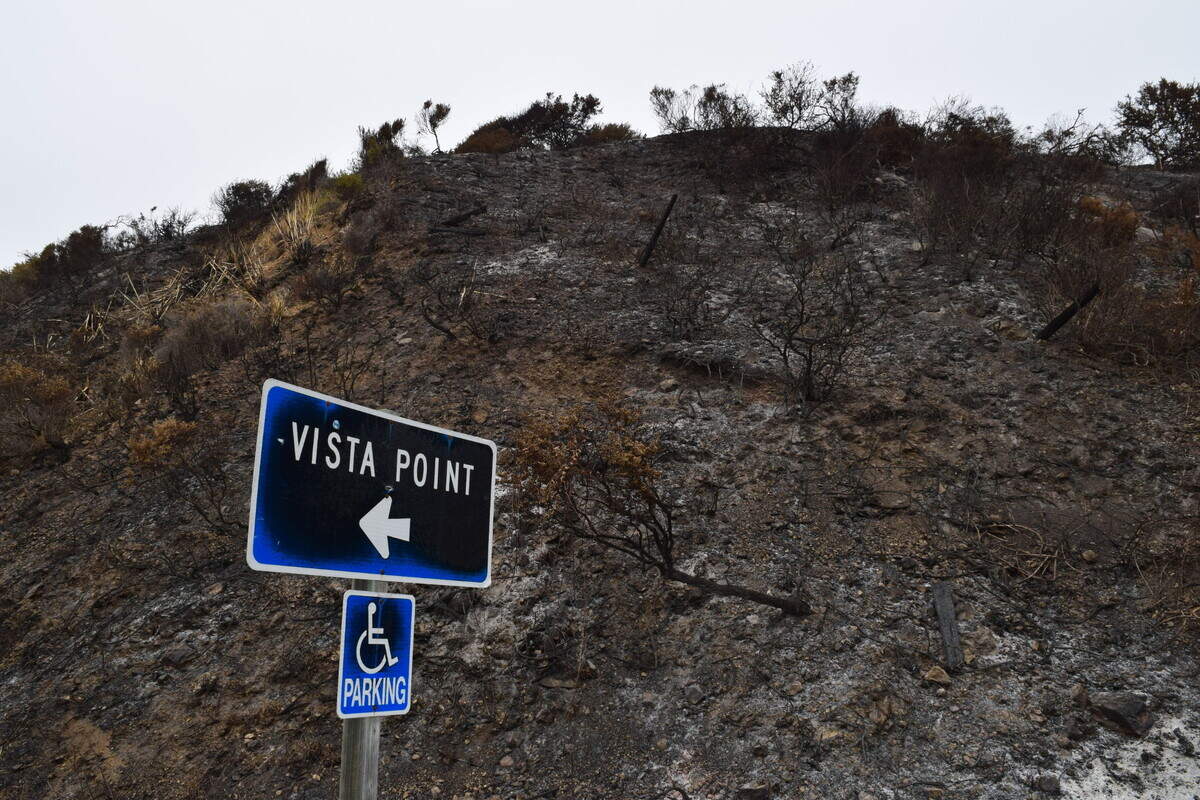
Further inland it’s even more unclear when business will return to normal.
Lynn Olson, a spokeswoman for the Los Padres National Forest Monterey District, said the forest’s numerous campgrounds had been “busier than ever” prior to the fire.
“Normally, we are full this time of year,” she told The Tribune in a phone interview on Thursday. “This year, with COVID in play ... the forest service has been a real place of escape, respite, for people. And we’ve been busier than ever — busier than in my 10 years.”
Now those campgrounds all lie empty — again, save for the firefighters who have set up impromptu tent cities among the plots.
On Tuesday, forest officials have issued an order prohibiting people from being within the fire area (loosely defined as the service’s land stretching east from Highway 1, bounded by the North Coast Ridge Road, South Fork Trail, Arroyo Seco/Indians Road and Nacimiento-Fergusson Road). This includes the dozens of campgrounds scattered across the Ventana Wilderness.
Those found in violation of the order could face fines of $5,000 or six months in jail.
The order was issued to ensure members of the public aren’t injured within the fire perimeter, but also to keep the roads clear for fire equipment traffic. It’s expected to last until the Dolan Fire is fully contained and controlled.
‘Just don’t freak out.’ Lucia resident recounts Dolan Fire’s approach
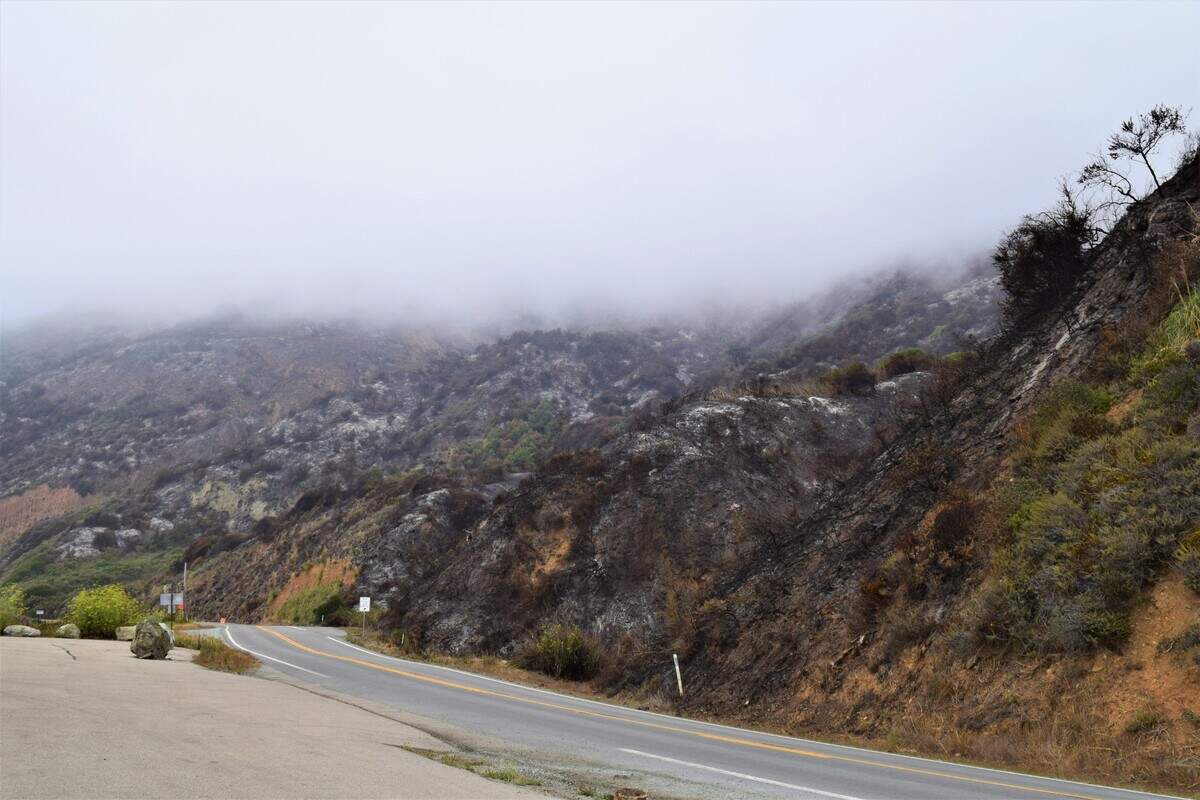
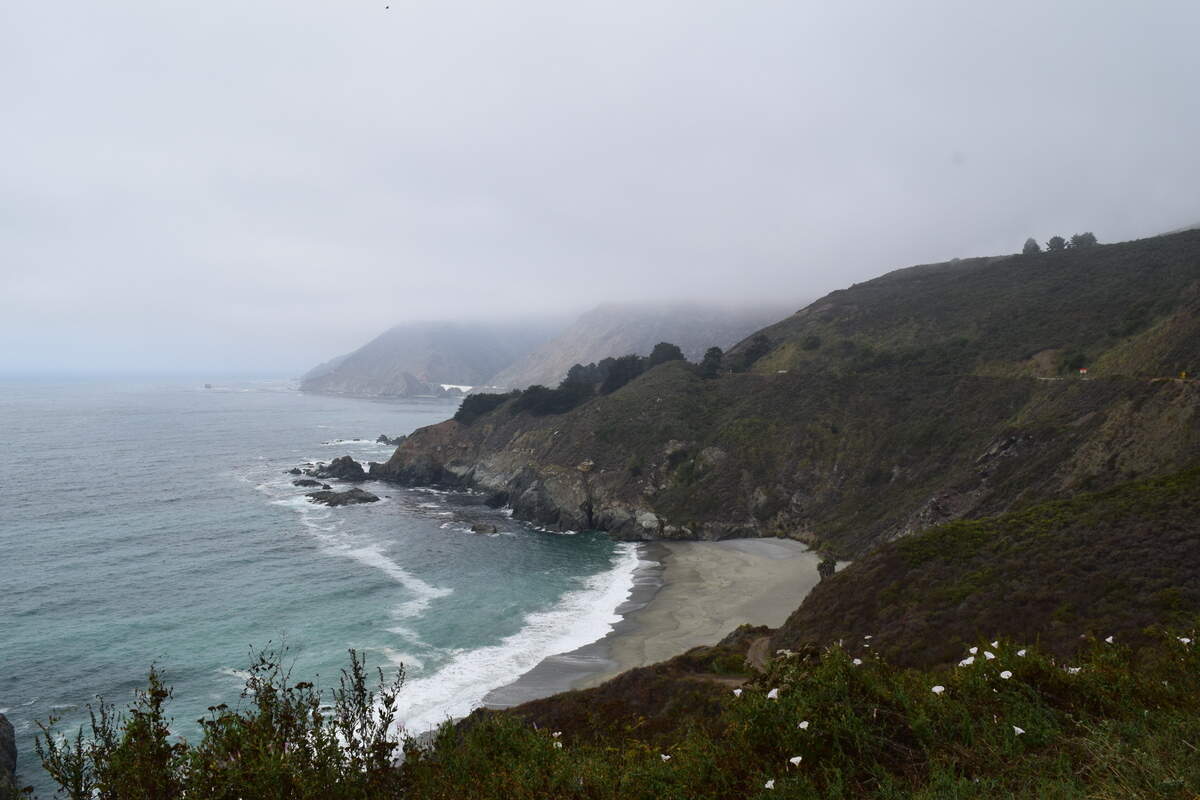
Farther up the road, the heavy marine layer and smoldering remains along the hillside only add to Highway 1’s newly ghostly countenance.
About 30 minutes north of Ragged Point, the mountain community of Lucia has served as a front for firefighting efforts on the southern end of the fire. After it first broke out in Dolan Canyon outside the John Little State Reserve on Aug. 18, the Dolan Fire made a mad dash for the south and the handful of small communities that hide among the jagged peaks, including Hermitage and Lucia.
Here the cliff faces and hillside are a scorched black, as drifts of smoke from hot spots lazily twirl upwards to combine with the gray fog lying low across the land.
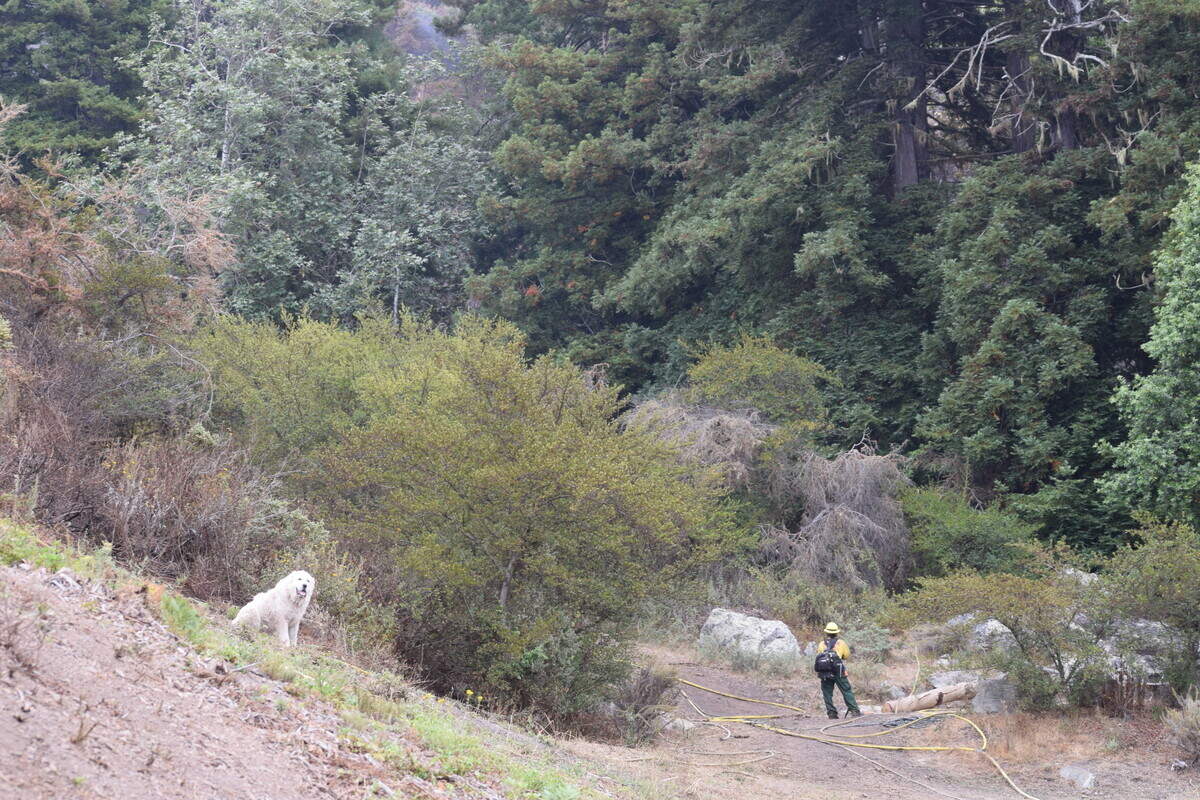
In Rhea Withrow’s backyard, firefighters still work to put out some remaining hot spots left over from the back-burning they did Monday night to help set up a containment line and protect the property.
On Wednesday, a fire truck with the words “Mayer Fire Department” (all the way from Arizona) rested next to Withrow’s towering hollyhock flowers and a kiddie pool filled with water. Withrow said the hotshots had spent the better part of the past week at that point laying a water line along the ridge on the southern edge of her property.
They also took every opportunity to stop and pet her massive, friendly dog, Rye, who has in the past week become something of a mascot for the men and women fighting the blaze.
Withrow, a no-nonsense devotee of mountain life, has taken the entire experience in stride. When asked if she considered moving from the area because of the risk of fire, she scoffed.
“You hear these stories of wildfire just like ripping through, and like running through your life, so that was what I totally expected,” Withrow said. “(But) it was so smooth and so calm, all the crews knew what they were doing.”
The first indication something was up came with a phone call on Aug. 18: a neighbor alerting Withrow and her family to the encroaching fire.
“The whole ridge line was on fire,” she recalled. “So we just hauled ass back here and packed up everything. We had pretty much everything ready: birth certificates, sentimental stuff, kids’ stuff. We stayed up until like 2 a.m. packing and then we just waited.”
The next day, they evacuated their two kids, ages 6 and 12 (along with their daughter’s special chicken and their son’s dog) and moved their goats down in a horse trailer to the pasture on the opposite side of the highway from the house. They continued to fill their truck up with more items — joining the sentimental keepsakes like their daughter’s letters to the tooth fairy were things like garbage bags of clothes and other household knick-knacks.
Withrow and her husband Surge continued to wait for news and direction on whether they should leave.
“I was ready to bail,” Withrow said.
But then a fire supervisor showed up with a crew. He was calm and confident that they didn’t need to leave, Withrow said. Even better? He had a plan.
“He was like, ‘It’s fine. We have a plan already. You’re in a great position,’” she said. “He was like, ‘No I’d say the chickens are gonna be fine, your garden’s gonna be fine. Just don’t freak out.’”
And over the next few days, they didn’t.
Even as the fire crept over their ridge line, surrounding they’re water source, Withrow said there was no panic.
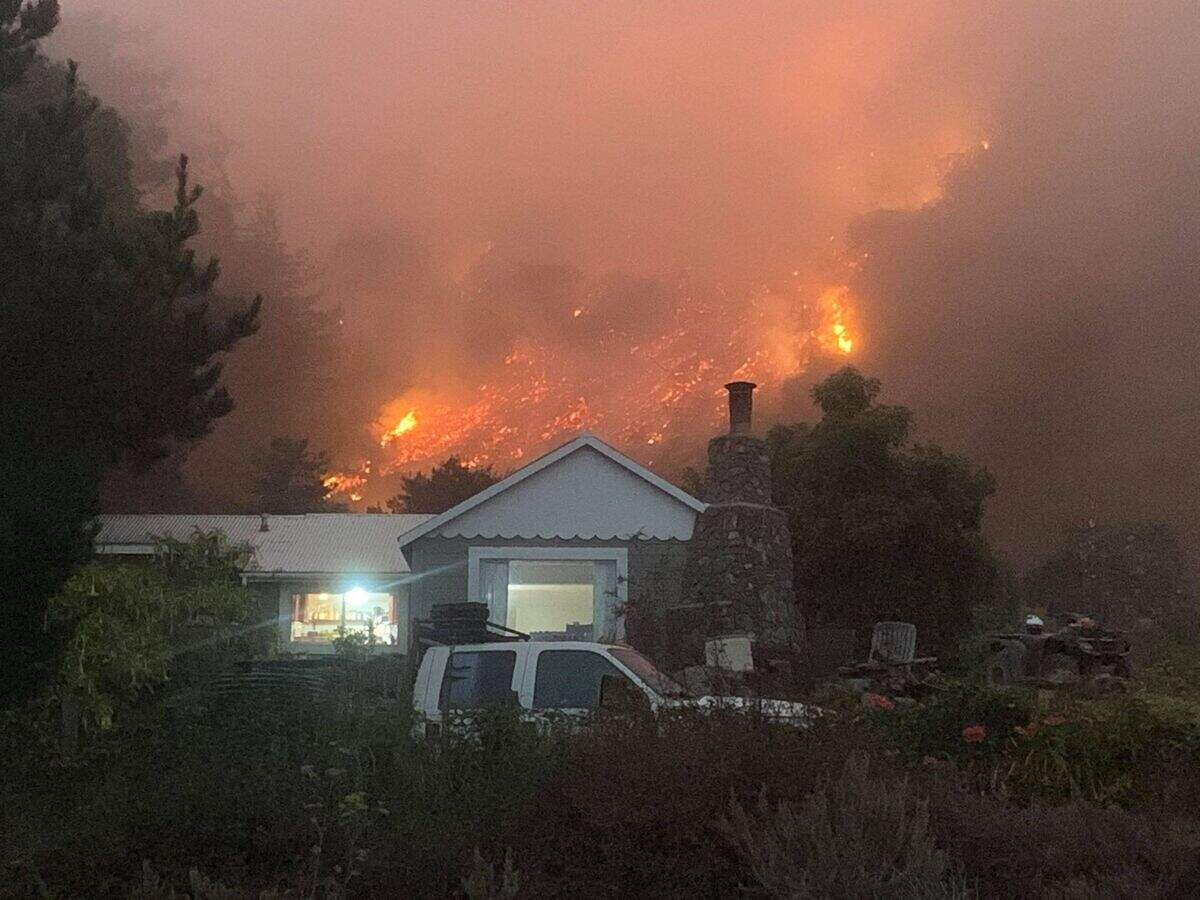
After crews backburned the hillside around her home, Withrow said one of the supervisors even pulled out a figurine of the dwarf Grumpy from “Snow White” and began taking pictures of it with the flames in the background to send to his family.
“We were too busy. There wasn’t time to think personal thoughts,” she said.
Only once the flames were extinguished and much of the immediate threat passed did Withrow finally have a moment of catharsis.
“I saw the mailman driving by, and I said to Surge, ‘I don’t know where the mail is.’ And he said, ‘Did you check the mailbox?’” she laughed. “It was hilarious, I hadn’t even thought that it would be in the mailbox. I laughed so hard that I cried, and then I just kept crying for a little while.”
As of Wednesday, the Amazon package she was waiting for had still not arrived.
She is keeping an eye out for it and the crowds of tourists she is sure will come flocking to the area once Highway 1 reopens.
“I thoroughly anticipate when they open the highway it’s just going to be crazy,” she said. “With the horses in the meadow, everyone has to stop and take the perfect Instagram photo with the horses, and I’m sure they’re just going to be out ...”
She finishes the thought with a wave her hand and a slight roll of her eyes before grinning, almost to say “well what can you do?”
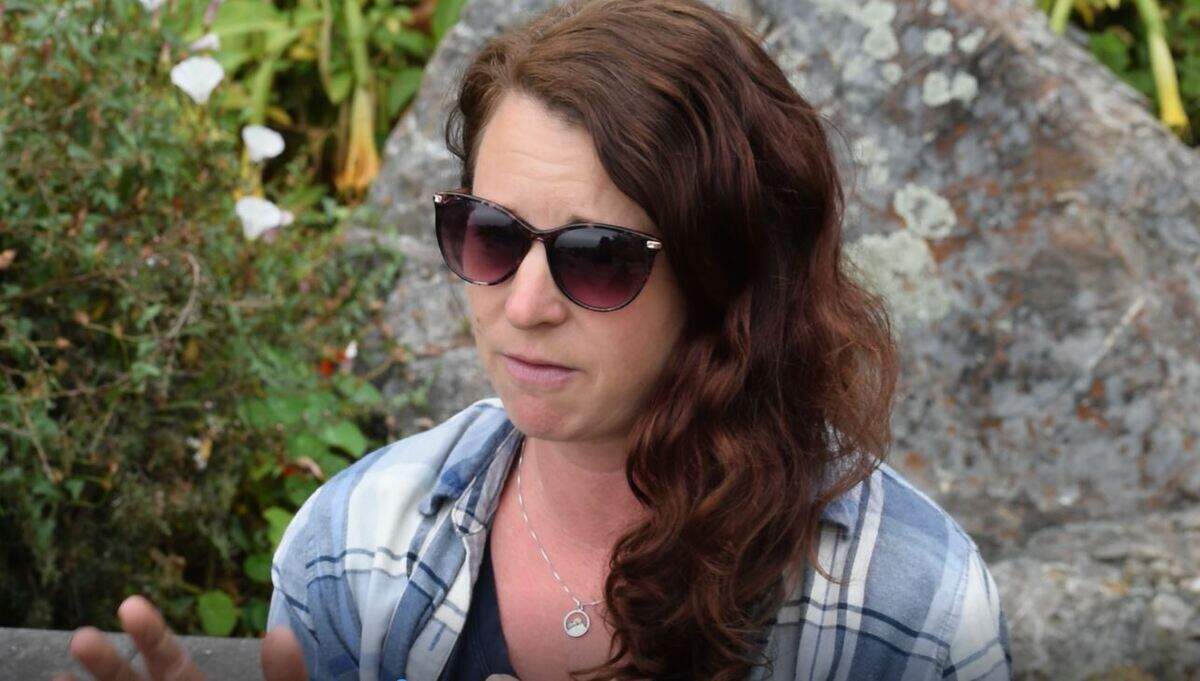
That c’est la vie attitude can in part be due to the just-roll-with-it ethic of those who live in the isolated region.
After all, Withrow and her family aren’t strangers to unusual circumstances. They’ve already lived through several wildfires, as well as the massive mudslides and Pfieffer Canyon Bridge failure that cut Big Sur off from the rest of the world in 2017.
Add on top of that COVID-19, homeschooling and their son’s appendix bursting earlier this year, and Withrow said she feels prepared for anything these days.
“Life’s going to be different for a while, but life was already different with COVID. We just keep adjusting as we go,” she said. “2020 has been really f----d for us ... but now I’m like, what else could possibly happen? We’re good.”
‘Oh no, not again.’ Residents keep close eye on northern edge of Big Sur fire
While the Forest Service hasn’t released information on how many structures have been destroyed, substantial damage has been reported to places like the Ventana Wildlife Society’s California condor facility and other areas.
Meanwhile, many businesses and homes along Highway 1 sit vacant, waiting for the fire to be brought under control, and for life to return to their normally bustling doorstep.
Just above the Highway 1 road closure on the northern edge of the fire, the strange absence of ever-present tourists lays heavily upon the area — almost as heavily as the marine layer that hides the mountains from the view of coastal Carmel.
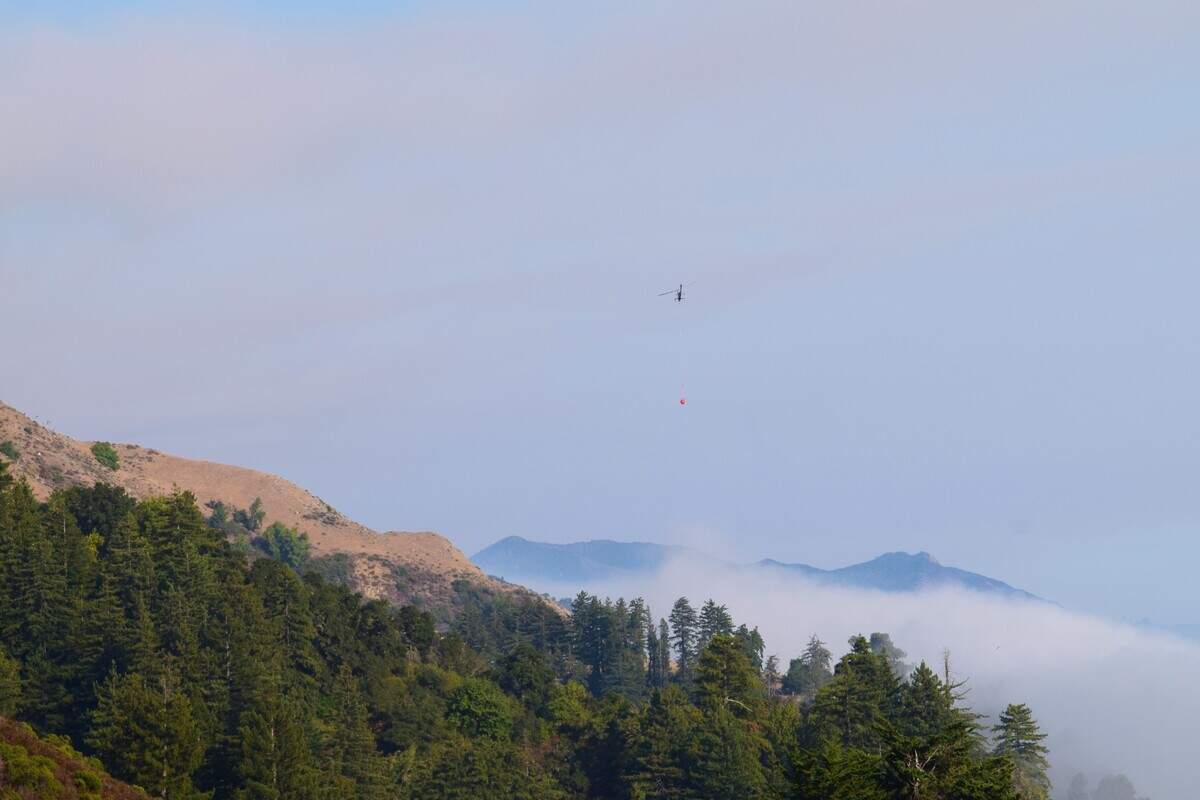
Along this stretch of Highway 1, which winds between redwood trees and craggy coastal bluffs, silence reigns, broken only by the hum of helicopters as they soar overheard. Though some leisure travelers have set up in still-open private campgrounds, many of the other State Parks campgrounds in the area have been overtaken by fleets of fire trucks and personnel.
On Tuesday, a paper sign was stuck to the wooden gate of the nonprofit Henry Miller Memorial Library’s entrance just south of Loma Vista: “Closed due to wildfire until further notice.”
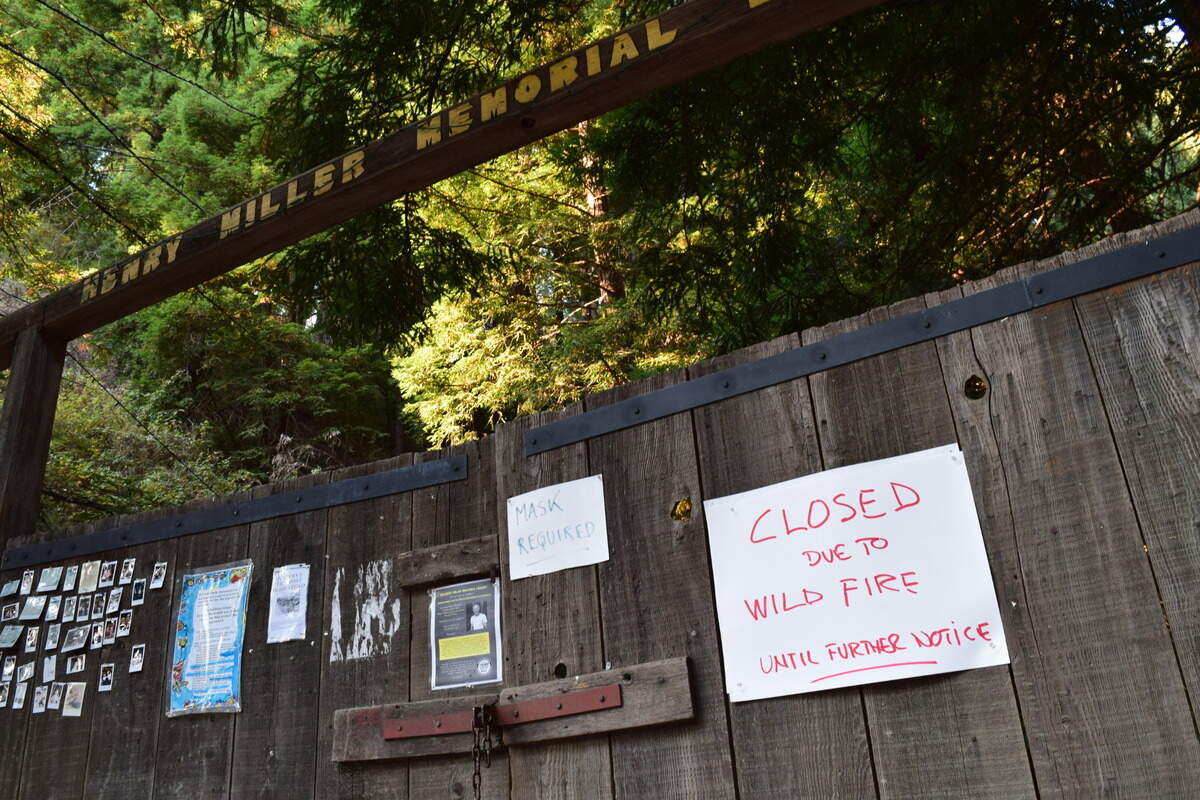
The sign was posted next to another, slightly older (but not by much) sign saying masks are required to enter the property.
Library manager Magnus Torén, said the library closed the day the fire started, in part because of the heavy smoke that spread through the area.
“As soon as the fire started, and we realized this was going to be a fire, with a big F, when that was determined, I decided immediately this is not a time to sit on my hands,” Torén said. “I closed the library and drove home.”
Torén, who himself lives at the northern edge of the fire off of Partington Ridge Road, said its been full work days for him for the more than a week-and-a-half since the Dolan Fire began.
“I’ve been here since 1984, and I’ve gone through a lot of fires,” he told The Tribune on Thursday. “No one enjoys a fire for sure, but for me, I have evacuated my home more than three times, and evacuated the library twice. It’s hard work and stressful, of course.”
With help from his son, who got permission from his Coast Guard commander to leave the ship and drive down from Seattle, Torén has spent the past week evacuating his and his wife’s “dearest belongings” and defending the property alongside firefighters.
“My first thought was, ‘Oh no, not again.’ Simple as that,” Torén said. “Then you kind of focus on what needs to happen, and that kind of adrenaline rush that comes from a very focused attention on the moment. It does focus your mind, when a fire relentlessly moves toward your home.”
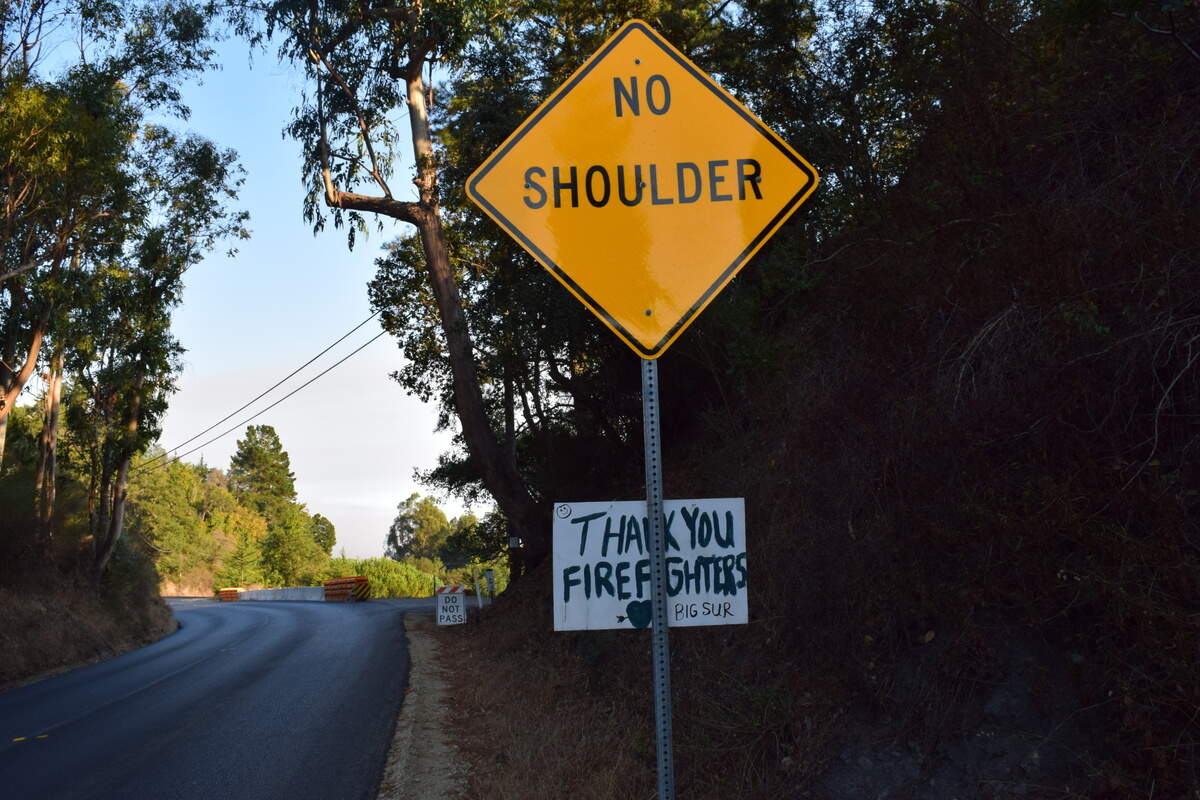
Currently, Torén and his family are stuck at their property because of the evacuation orders covering the area.
“Once we are here, we can’t leave and come back,” he said. “We are basically stuck on the hill until we are ready to leave and not come back.”
With little news, and spotty cell and Internet service, it’s now a waiting game for them as they keep a close eye on the fire that continues to threaten their area.
One thing keeping them going? Torén said he is planning on cracking open a very special bottle of wine — one with a name that might be familiar to San Luis Obispo County residents.
“It’s a beautiful bottle of wine — it’s Tablas Creek Vineyard, 2009 Esprit de Beaucastel,” he said with a laugh. “It’s a very nice bottle of wine that we’ve had since 2009 and we decided now is the time to drink it, once this is all over.
“So the question is, when is this all over?” he said. “All over is when the fire is 100% contained.”
This story was originally published August 30, 2020 at 5:00 AM.
%20Cropped.jpg)