
Historic rocket launch pad demolished at Vandenberg. What’s replacing it?
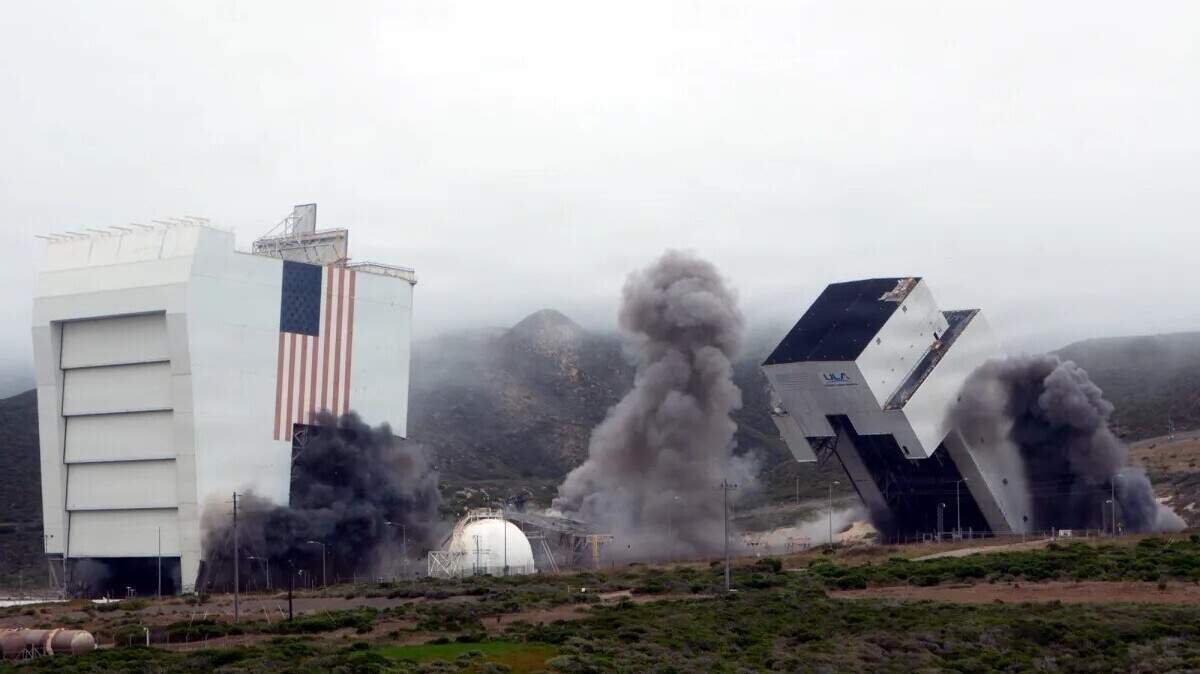
Pieces of Vandenberg Space Force Base history crashed down on Tuesday as remnants of the West Coast Space Shuttle program were demolished to make way for a second Falcon rocket launch pad in Santa Barbara County.
The implosion on behalf of SpaceX toppled key structures at Space Launch Complex-6, which was built for the Manned Orbiting Laboratory and then the West Coast Space Shuttle programs.
Both were canceled before any liftoffs occurred, but other programs then used the site.
Known as SLC-6, pronounced Slick-Six, the site sits on the South Base, where it’s tucked into a valley and isn’t visible when looking south of Ocean Avenue.
“What’s so important about this site, it’s not only been the most recognizable space launch complex on this base, but it also has a storied history that with this new evolution continues its very important support of national-security space launch,” said Jennifer Green-Lanchoney, Space Launch Delta 30 public affairs chief.
At least one Lompoc Valley resident reported hearing the implosion late Tuesday morning.
SLC-6 and its behemoth buildings have meant hope for the Lompoc Valley and the rest of the North County, followed by economic loss related to not one but two human spaceflight programs’ cancellations.
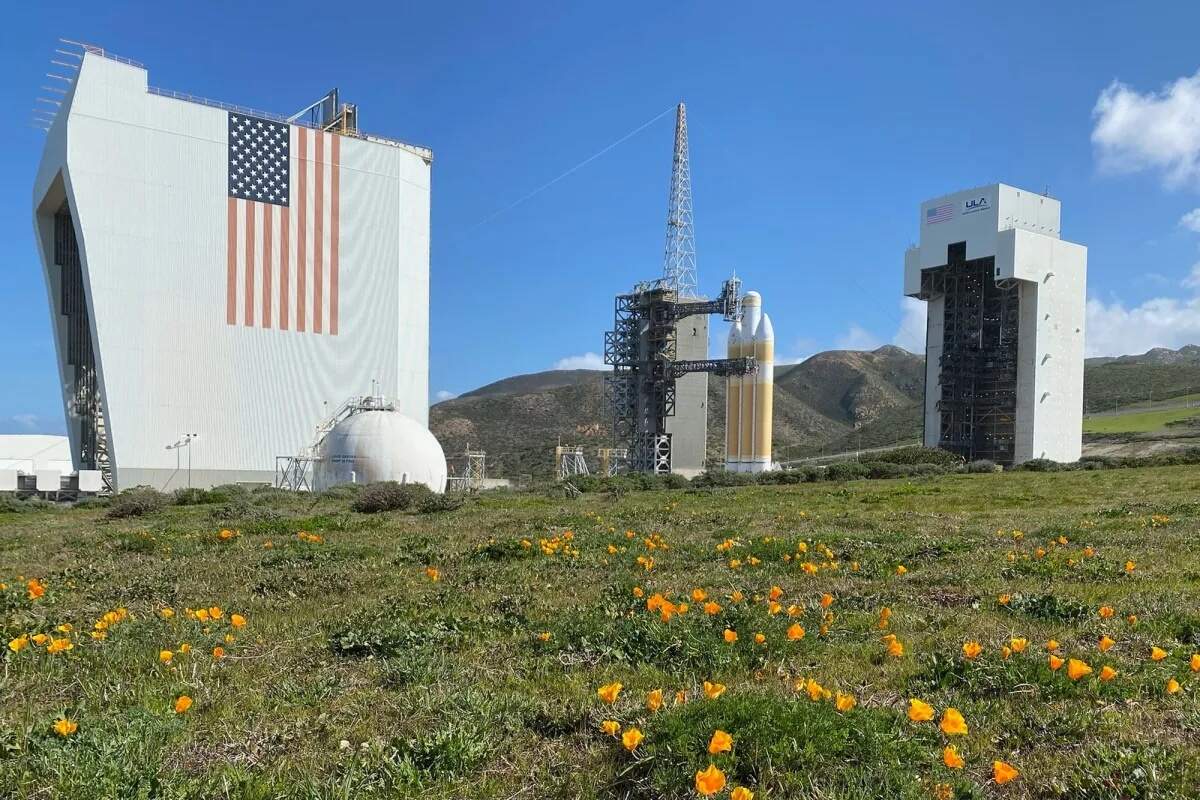
For decades, its distinctive American flag has served as an iconic feature of the facility.
The demolition came as SpaceX prepares to use SLC-6 for the Falcon 9 and Falcon Heavy rockets, giving the firm a second West Coast launch facility, joining Vandenberg’s SLC-4.
People associated with Vandenberg are used to new programs moving onto launch sites, but none hold the history of SLC-6.
“Space Launch Complex-6 represents six decades of American innovation and our unwavering commitment to securing space superiority,” said Col. James Horne III, commander of Space Launch Delta 30.
“By modernizing this historic footprint in partnership with our defense industrial base, we are building directly upon the foundation of our pioneers to deliver the resilient, combat-ready infrastructure required to dominate an increasingly contested domain.”
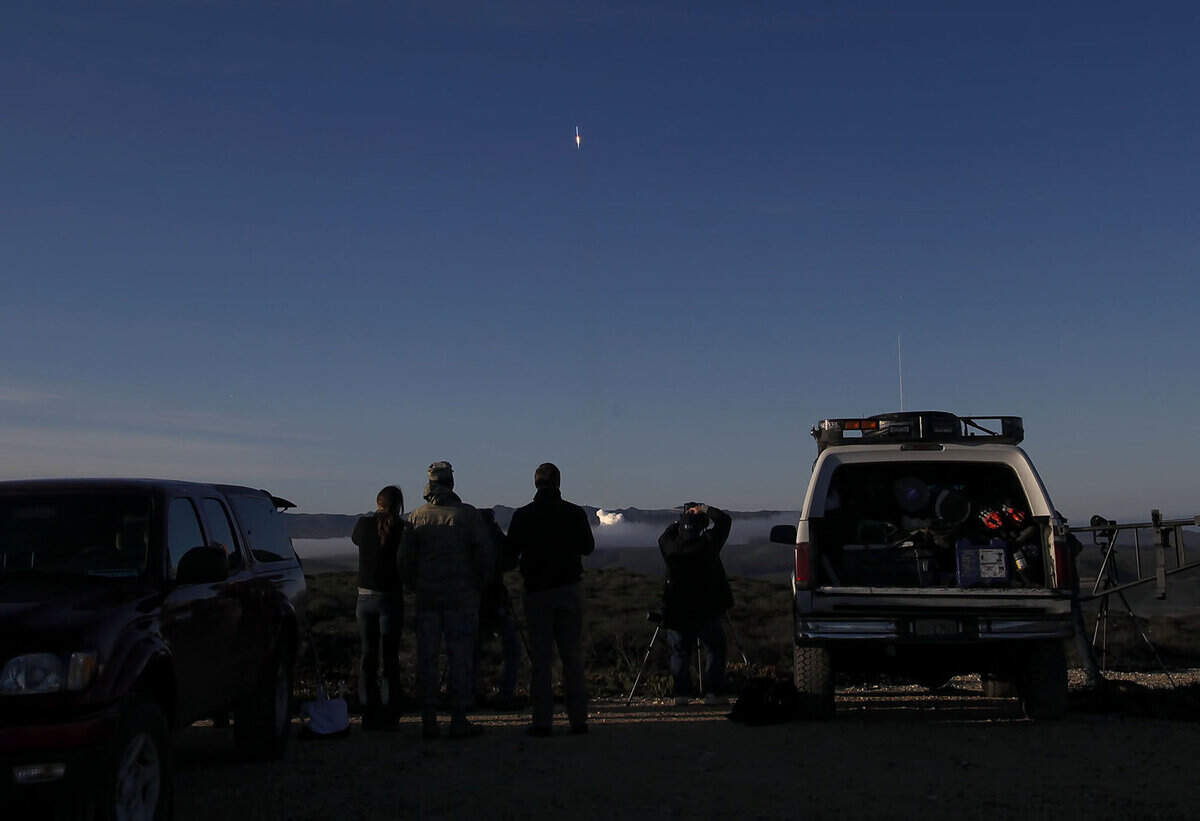
While restricting access to the area, Vandenberg officials reportedly provided a livestream of the detonation for people to watch at the Base Theater. A group of “high performers” also watched from a safe location.
“The efforts that they’ve made to our national security through their work on Vandenberg has been exemplary, and we wanted to provide them with an opportunity that was really a front seat at history,” Green-Lanchoney said.
New use brings new approach
The military granted SpaceX the right to use the SLC-6 for its second West Coast launch pad.
“It’s part of a modernization effort across the whole base,” Green-Lanchoney said.
Across the aerospace industry, huge towers that once housed workers and rocket components have been abandoned in favor of more austere launch facilities.
Rather than stacking rockets vertically for months to prep for liftoff, workers now ready rockets horizontally and move them to the pad just ahead of launch.
The demolition also removes a maintenance headache. Aerospace firms historically have battled rust because of salty air at the seaside sites.
“These historical structures have a lot of sentimental value, and they always will,” Green-Lanchoney said. “Just as they’ve evolved in the past to support the future of space launch, they’re evolving for the future.”
SpaceX’s plans to demolish SLC-6 structures such as the mobile assembly shelter, known by the huge American flag on the side, were included in environmental documents prepared for the firm’s future use.
At least one star from the huge flag has been rescued for future display at the Vandenberg Space and Missile Heritage Center.
Efforts also toppled the mobile service tower, fixed umbilical tower, and lift and pit crowns at SLC-6.
After undertaking specific cuts to control where the structures fell, plans called for detonating multiple 10- to 20-pound explosive charges simultaneously, creating a short impulse sound similar to Falcon first-stage booster landings, according to an environmental document prepared last year.
With the structures fallen, mechanical shears will be used to cut the building sections into manageable sizes while cranes will assist with any heavier pieces.
Meanwhile, SpaceX estimated that SLC-6 construction would take about 18 months, with the first year involving demolition.
The firm has announced plans to conduct 100 launches a year from Vandenberg, with up to five of those being the Falcon Heavy rocket.
Work to prep for the Falcon Heavy program will include adding two landing sites for two of the three first-stage boosters employed on the powerful rocket.
It isn’t the first demolition of an old launch site at Vandenberg to make way for a SpaceX rocket program.
In 2000, Lockheed Martin Corp. toppled the tower at SLC-3 West, used for retired Atlas missiles converted to carry satellites. That occurred as SpaceX initially intended to launch Falcon 1 from SLC-3W.
After relocating to SLC-4 East, SpaceX took apart the old tower that had been used for Titan IV rocket launches.
Likewise, the SLC-4 West tower also was toppled to make way for Falcon 9 rocket landings. SLC-4W previously had been employed for Titan II missions, another retired missile repurposed for putting satellites in orbit.
But SpaceX isn’t alone demolishing old launch sites. Deconstruction of SLC-2’s distinctive NASA blue tower occurred as the site transitioned from the Delta II rocket program to become home for the Firefly Aerospace Alpha vehicle.
That deconstruction inadvertently drew widespread attention when a fire sparked in an elevator shaft, sending a black column of smoke into the sky in 2020.
6 decades of history and growing
The legend and legacy of SLC-6 aren’t brief.
“It was more than 60 years ago that this pad first came to be,” Green-Lanchoney said.
The facility’s first program involved the Manned Orbiting Laboratory, a 1960s Air Force program to place military members in space to conduct scientific experiments to determine the “military usefulness” of putting humans in space.
“With growing pressure from the expansion of the Vietnam War, the perceived duplication of effort with NASA programs, and improved performance of operating unmanned surveillance systems, in June 1969 the president cancelled the MOL program, and with it, the Air Force’s last chance to develop a manned space flight program,” the National Reconnaissance Office said about the declassified program.
“The MOL program operated for five and one half years and spent $1.56 billion, but never launched a manned vehicle into space.”
An abrupt end of the program took a toll on the Lompoc Valley in terms of job losses.
Hopes arose again as SLC-6 found new life — home to the space shuttle program for military and NASA purposed.
However, the Challenger explosion in January 1986 after liftoff from Florida led to the demise of the Vandenberg program reportedly months before the planned debut and after the Enterprise orbiter sat on the pad.
Coincidentally, one man, Robert Crippen, had been slated to fly on MOL and then the first Vandenberg space shuttle flight, but both ended before any liftoffs.
Crippen did get to fly to space, including on the first space shuttle flight in 1981 and three others.
After the West Coast shuttle’s cancellation, SLC-6 was eyed briefly for the Titan IV program, but officials quickly dropped that plan.
After billions of dollars and three decades, the first launch at SLC-6 was the Lockheed Launch Vehicle, much smaller than the shuttle. That occurred in 1995.
The vehicle later was renamed the Lockheed Martin Launch Vehicle after a merger and then dubbed Athena before retirement.
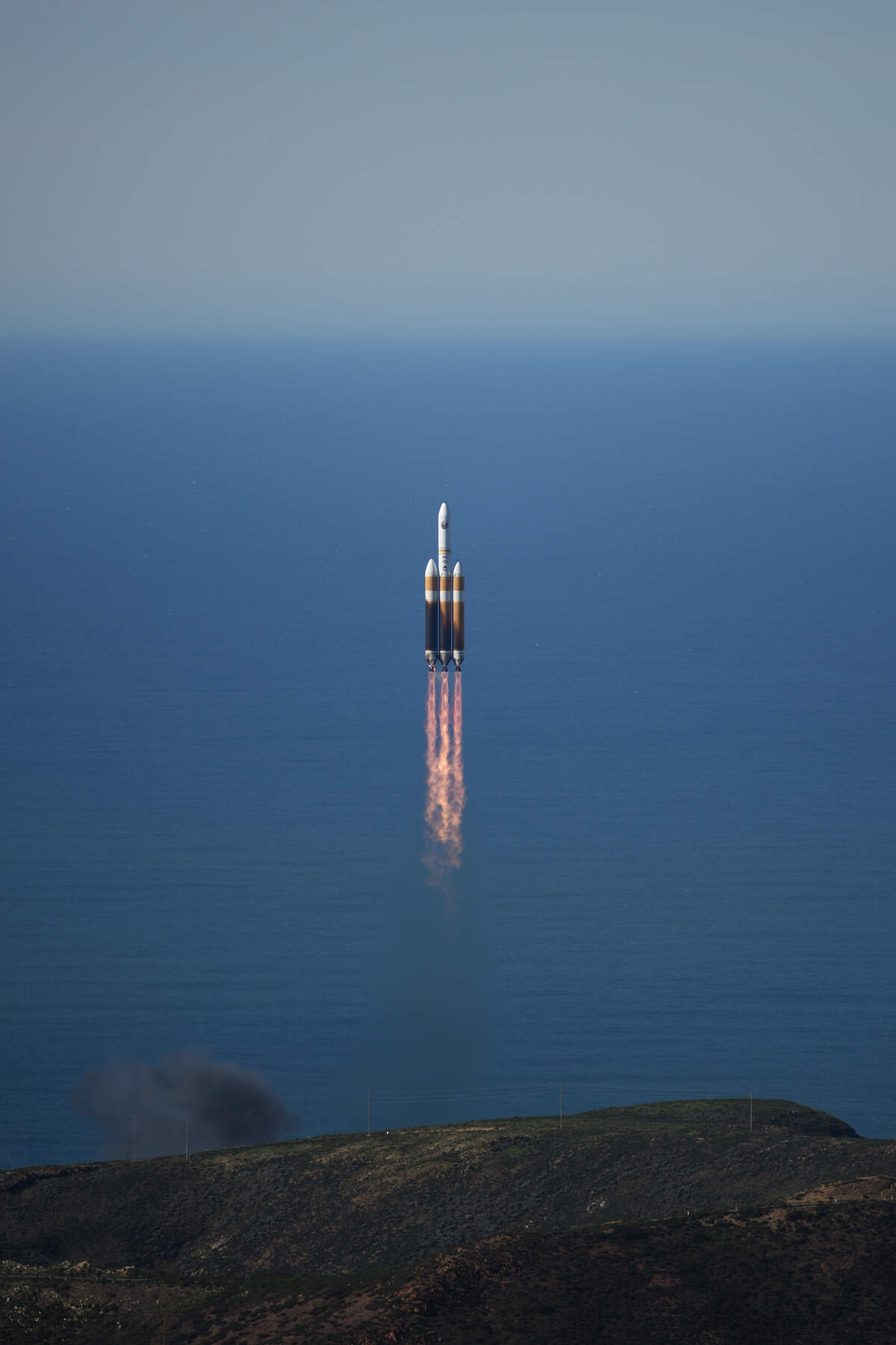
After sitting silent again, SLC-6 found yet another life — as home of the Delta IV family of rockets. Ten launches occurred between 2002 and 2022.
The retirements of the United Launch Alliance Delta IV program and its cousin Atlas V came amid development of the new Vulcan rocket.
Vulcan will fly from Vandenberg’s SLC-3 East, which had been used for Atlas IIAS and Atlas V rockets. SLC-3W still has a mobile service tower visible on the horizon south of West Ocean Avenue.
— Noozhawk North County editor Janene Scully can be reached at jscully@noozhawk.com.
This story was originally published June 21, 2026 at 12:30 PM with the headline "Historic rocket launch pad demolished at Vandenberg. What’s replacing it?."