You can pick your own lavender at this SLO County farm. Here’s a look
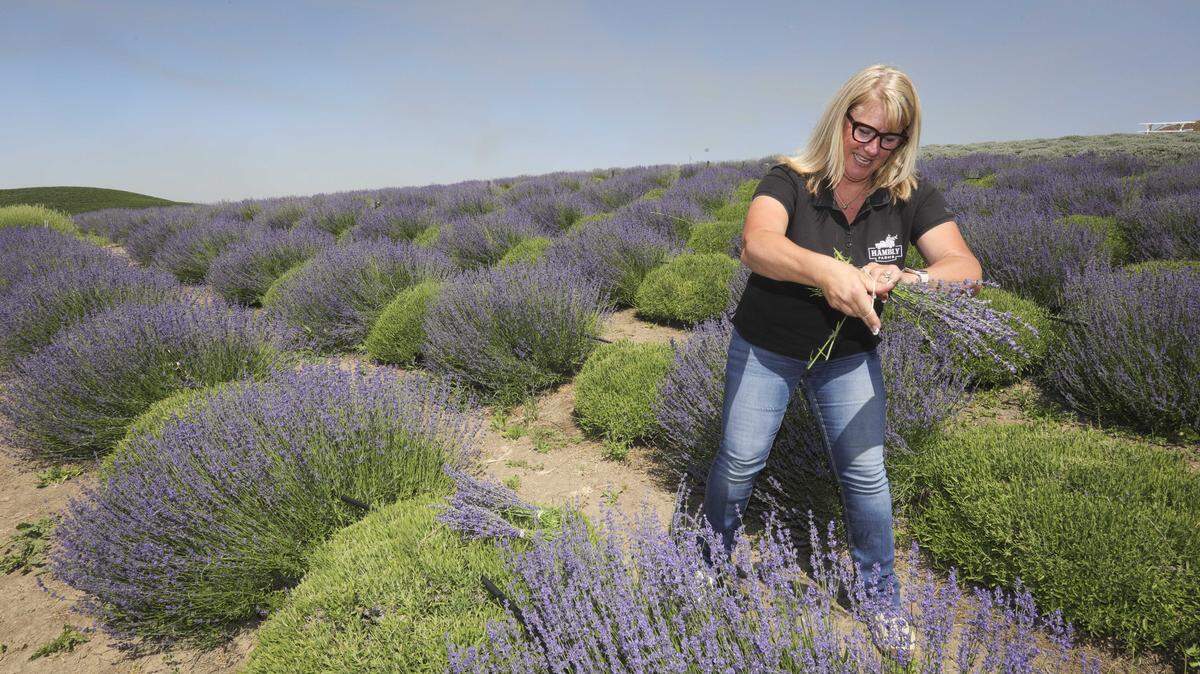
One thing about lavender, it’s anything but simple.
Despite its tranquil smell and numerous healing properties — not to mention its fresh taste in a scone or latte — harvesting the plant actually takes a village, at least that’s what Gina Hambly explained.
Hambly and her husband own Hambly Lavender Farm, a 26-acre property nestled in the rolling hills of San Miguel, just outside of Paso Robles.
Three acres of that plot contain about 5,000 plants of lavender in nine different varieties. The purple flowers span the property in manicured rows that look like checkerboards, a low hum in the air as eager bees diligently pollinate.
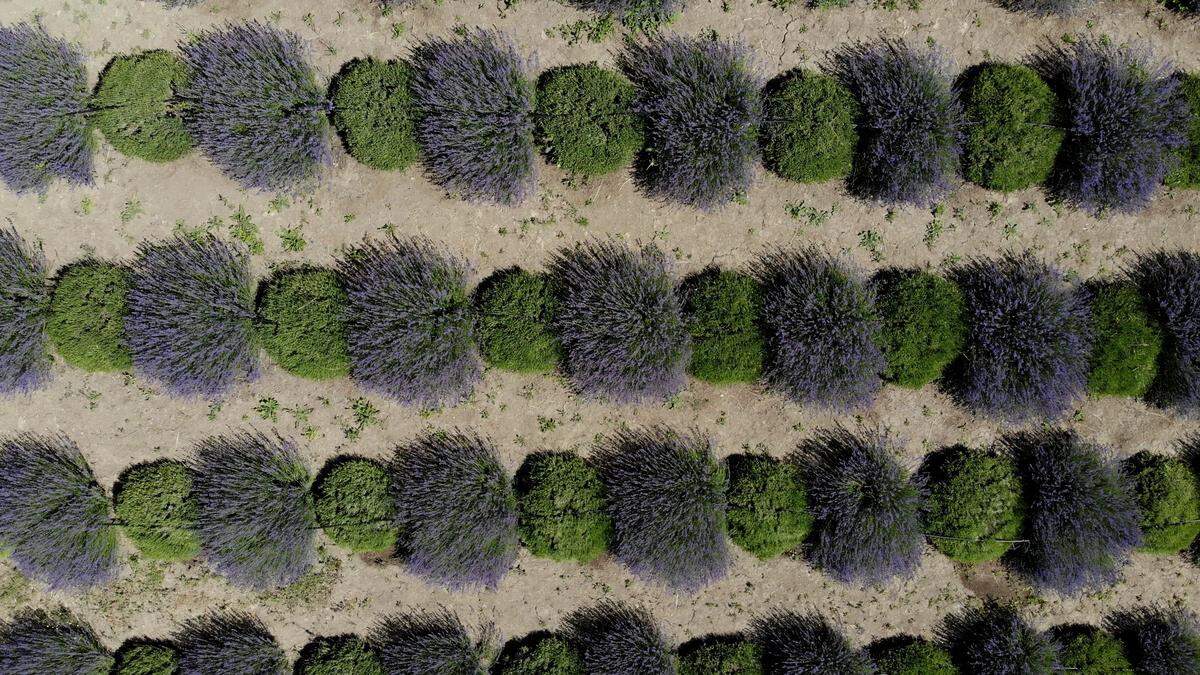
This is the land the Hamblys have dedicated their lives to maintaining.
In fact, Hambly said her favorite part of being in the lavender business is sharing her love with others.
Just arriving at the farm, located at 1390 Grana Place, awakens the senses, Hambly said.
“One of the properties of lavender is calming, so to be able to walk through that field and smell that through the air and see the wide open spaces ... so many people, when they open their car door, say, ‘My whole body just relaxed,’ and they hadn’t even gotten to the field yet,” she said. “It’s just the space and the experience — it’s a wonderful sensory, relaxing and calming your-nervous-system experience, and we’re able to offer that.”
Visitors have a couple different options for their trip to the farm.
For $20, you can pick your own parcel of fresh lavender. For $30, you can also participate in an education experience that’s hosted by Hambly’s husband, Milton, which reviews the farms varieties of lavender and grants an all-day stay on the farm with shaded seating.
The farm started in 2019 when Gina, a fourth-generation resident of Paso Robles, and her husband, a fifth-generationer, wanted to live off the land.
With San Miguel’s dry and hot weather, lavender seemed the best plant to survive and thrive.
“You can eat it, you can make a bouquet out of it, you can distill it, and all the other properties. We were like, ‘All right, let’s give it a go.’” Hambly said.
Hambly’s now in her third year being full-time on the farm, which had proven to be successful attracting many local visitors alongside out-of-towners.
What’s different this spring from previous years, however, is the early blooming.
By Mother’s Day, Hambly said they were ready to open for business when typically the flowers don’t blooming until mid-June.
“We figure it was the extremely warm winter we had. We didn’t really have winter this year. I think we froze once, maybe a soft freeze twice, and that’s not typical,” she said. “So, the plants typically go dormant in the winter, and they kind of store up all of their energy for spring, and so it was so warm, I think they got confused and were like, ‘Oh, it’s time to wake up and bloom,’ and so they did.”
But that’s just the way it works, Hambly said.
“We’re farming. I called Mother Nature. She didn’t answer,” she said with a laugh.
How lavender is harvested at Hambly Farms
Although lavender is a small bud, it's mighty. Not only does it pack a fragrant punch, but it requires careful, hands-on harvesting.
Harvesting looks different depending on the variety of plant and its intended purpose, Hambly said, and its purpose is crucial to get right, by the way.
Ever eaten lavender that tasted like soap? Hambly said you likely ate the wrong type.
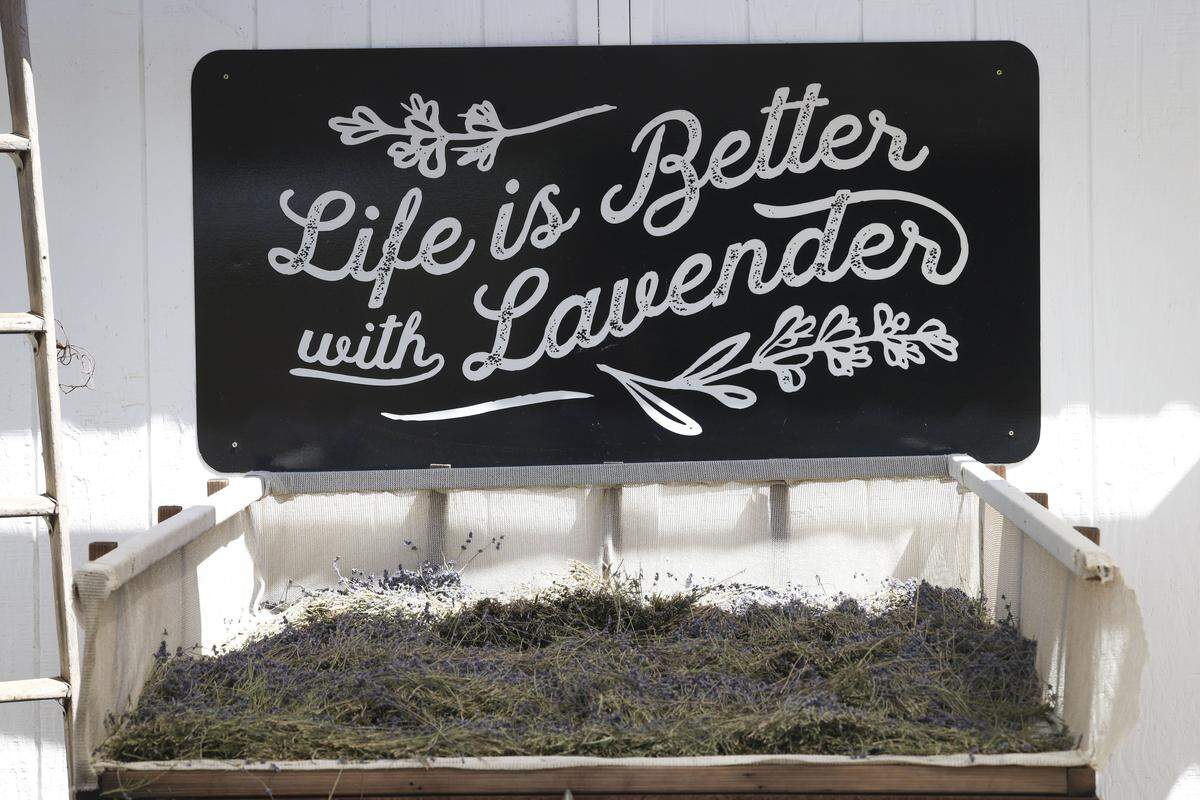
For culinary lavender, the Hamblys cut the bunches — which are about 3 inches wide — by hand, then rubber band the parcel together. They hang the parcel upside down and let them dry for about a week before they are ready for sale.
These parcels live in a small barn-like structure on the property and mimic ivy vines hanging from a wall. The parcels aren’t far from neighboring pigs and chickens that also live on Hambly Lavender Farm.
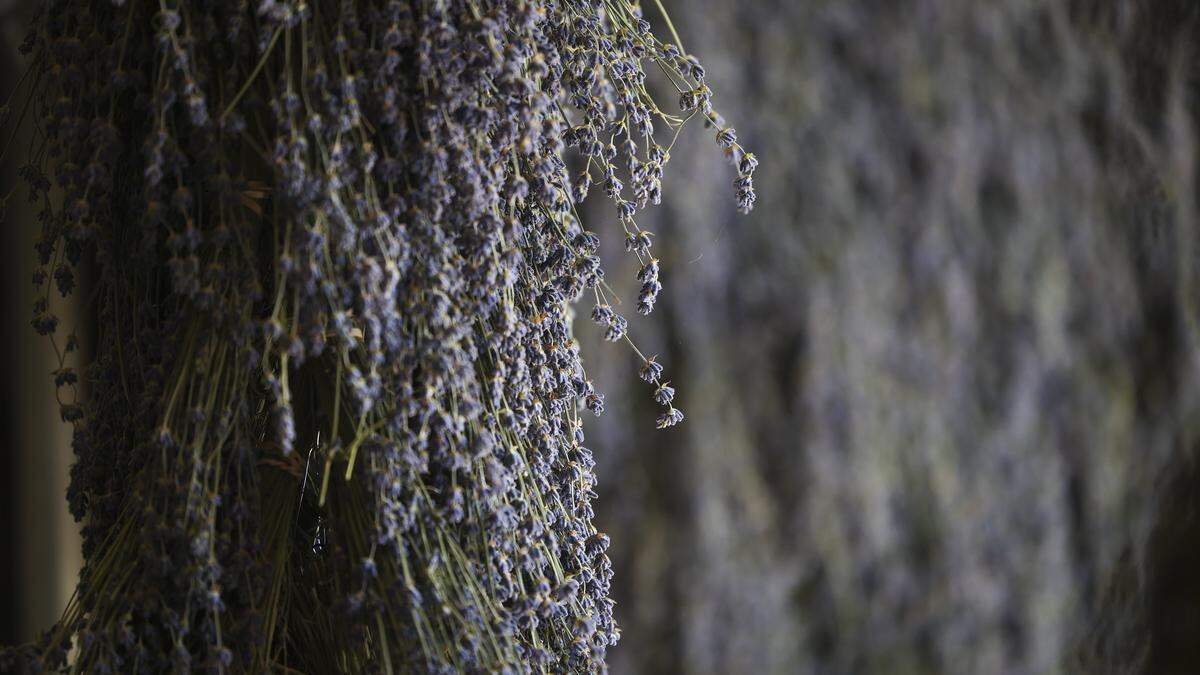
A harvested batch like this usually takes a team of six people 16 hours to complete, Hambly said.
But what’s an even more taxing procedure is distilling that lavender into oil, a process that the Hamblys take on right at their farm, which requires a specific variety of lavender and a special copper distiller that’s handmade in Portugal.
Hambly explained the process: Farmhands start with about 25 pounds of fresh lavender for one batch of oil. They stuff it all into the copper distiller. Using steam, the system breaks down the plant and eventually creates the widely used essential oil.
“As the water heats, it heats those buds up, and then the oil evaporates. Then the steam that’s going through the plant gathers the plant nutrients and as that collects, it gets all the way to the top, starts to cool down, and condenses back into a liquid,” she explained. “Then an ice water bath helps drop that temperature rather quickly to instill some properties in there, capture those properties in the oil and the water. ... And then oil and water don’t mix, right? So the oil floats to the top, the essential oil.”
But put this into context: Throughout this entire process, those 25 pounds of fresh herbs only make about two cups of pure lavender oil.
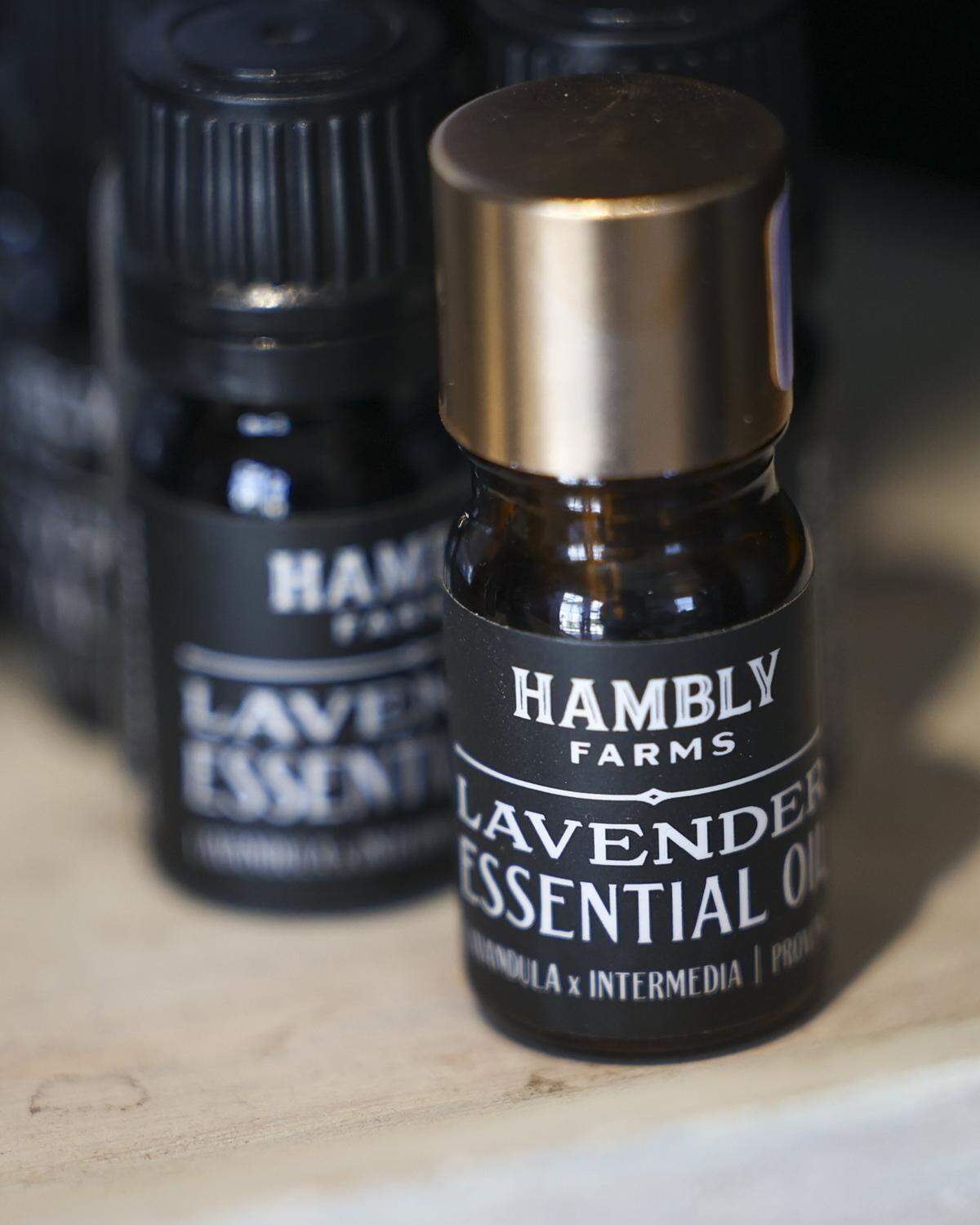
“Which is why lavender essential oil, that is actually authentic, that’s pure, is so expensive,” Hambly said. “You’ll see on Amazon, you can get one for $3 you can get one for $20. Well, you’re probably guaranteed not getting essential oil in that bottle, maybe a couple drops.”
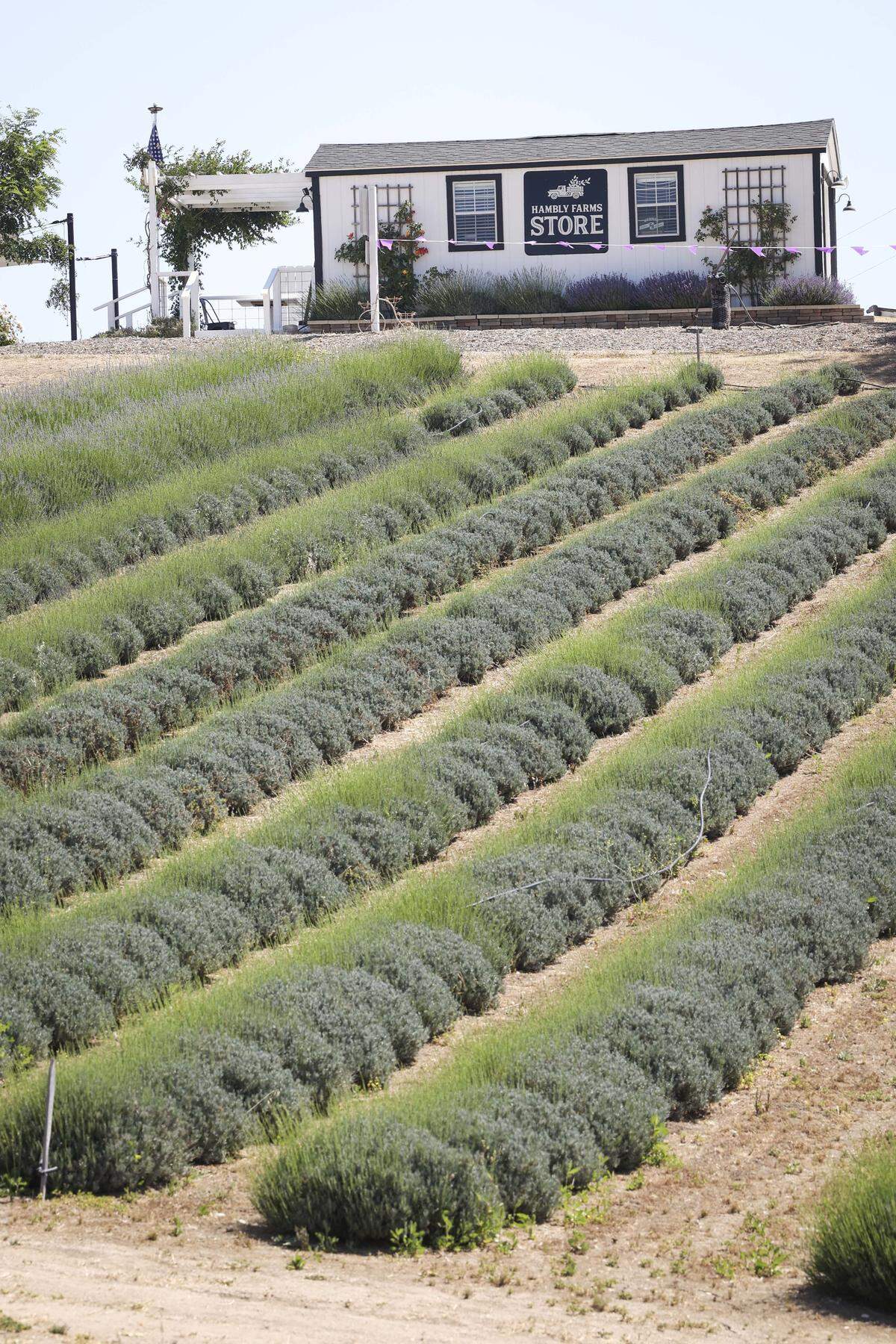
Lucky for visitors, Hambly’s storefront right on the farm sells their handmade lavender oil, sashes and more.
More information abou Hambly Lavender Farm
Hambly Lavender Farm is open to the public Friday through Sunday from 10 a.m. to 4 p.m. now until Sept 7. Reservations aren’t required, but they are recommended.
To learn more about Hambly Lavender Farm visit hamblyfarms.com.