Judge dismisses defamation case against CalCoastNews reporter
A judge has dismissed the defamation case against CalCoastNews reporter Karen Velie.
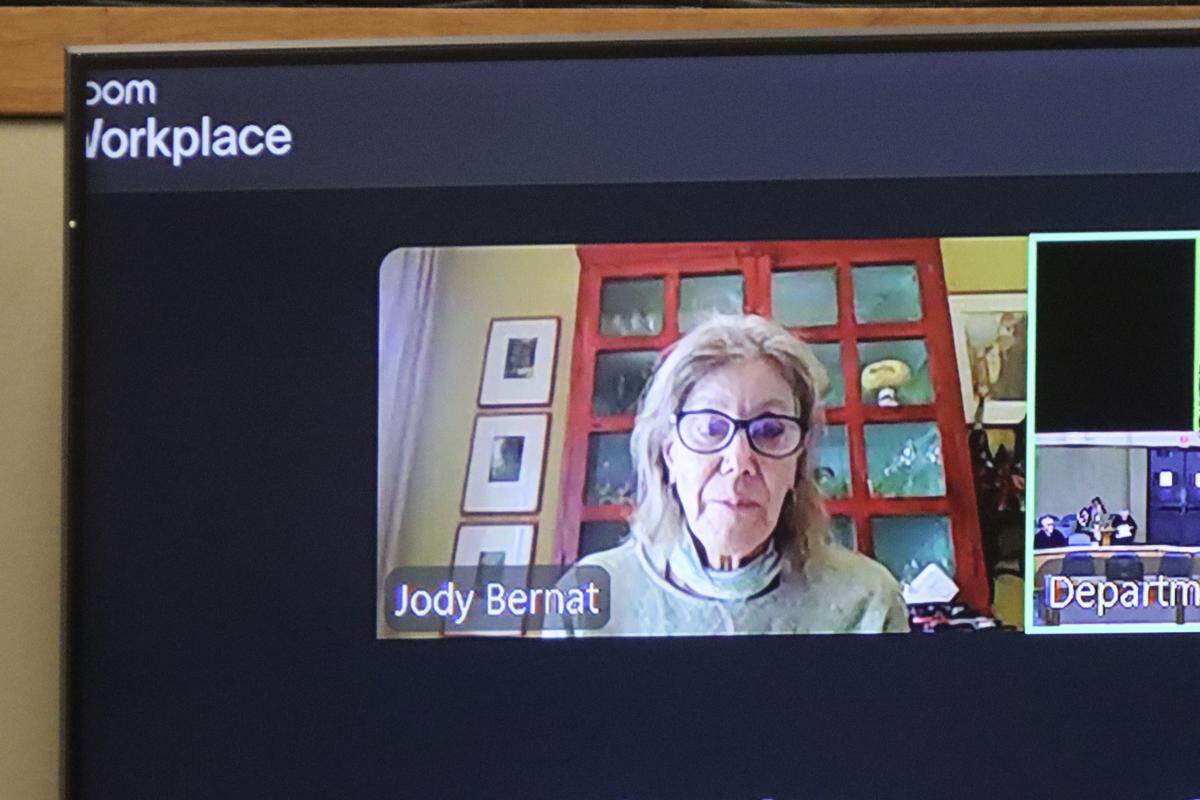
Velie was sued on Feb. 14, 2025, by Jody Bernat — the wife of former San Luis Obispo County attorney John Belsher — who accused Velie of defaming her in a Dec. 30 CalCoastNews article.
Belsher was the former business partner of Ryan Petetit-Wright, who pleaded guilty in September 2024 to bribing late Supervisor Adam Hill.
Belsher was not charged with any criminal violations relating to his business dealings, but he was ordered to pay a $3.6 million judgment to two former investors, Jeffrey and Debbie Chase, after he was found liable by a SLO County judge for fraud and breaching his fiduciary duty as their attorney. The judgment was paid in full, Bernat previously told The Tribune.
The defamation allegations stemmed from Velie accusing Bernat in the article of using an “alias” — Bernat instead of Belsher — while living in Surprise, Arizona, when in fact Bernat had legally changed her surname to protect her reputation and to guard herself from a stalker, she said. Velie corrected the article over a week after it published.
“The only statement that Ms. Bernat disputes is the use of the word ‘alias,’” Velie’s attorney, Annalisa Zulueta, said during a court hearing on the motion to dismiss on April 29. “Counsel talks about the context of the article, but plaintiff never claims that any of the other statements in the article, any of that context, is false.”
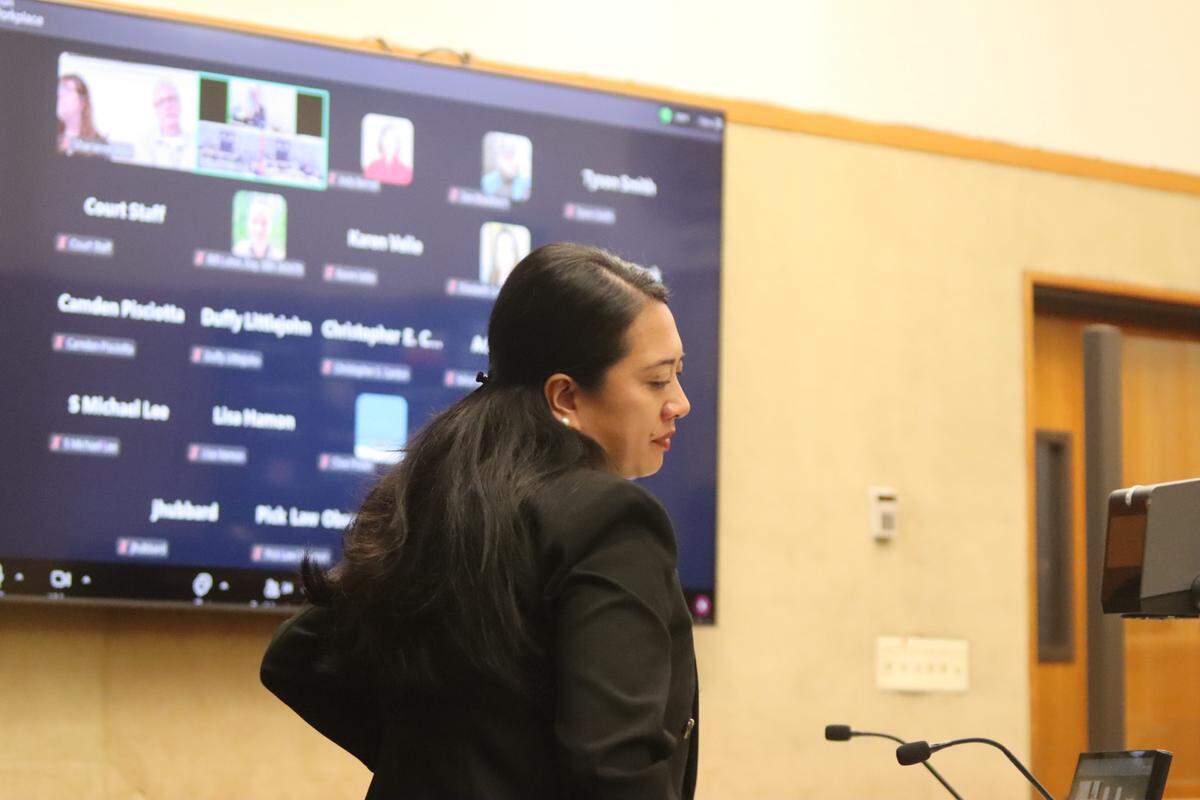
Belsher had previously represented Bernat as her lawyer on the case until he resigned from the California bar with pending disciplinary charges in January.
This was the second time Velie has been sued for defamation, following the $1.1 million verdict she lost in 2017.
The court made a tentative ruling ahead of the April 29 hearing to approve Velie’s motion to dismiss the case based on anti-SLAPP — Strategic Lawsuits Against Public Participation — laws designed to protect free speech activity, including journalism.
The ruling also found Bernat failed to show how the use the word “alias” cause her damage or injury.
“This case is exactly the type of case that the anti-SLAPP statute was designed to resolve correctly,” Zulueta argued.

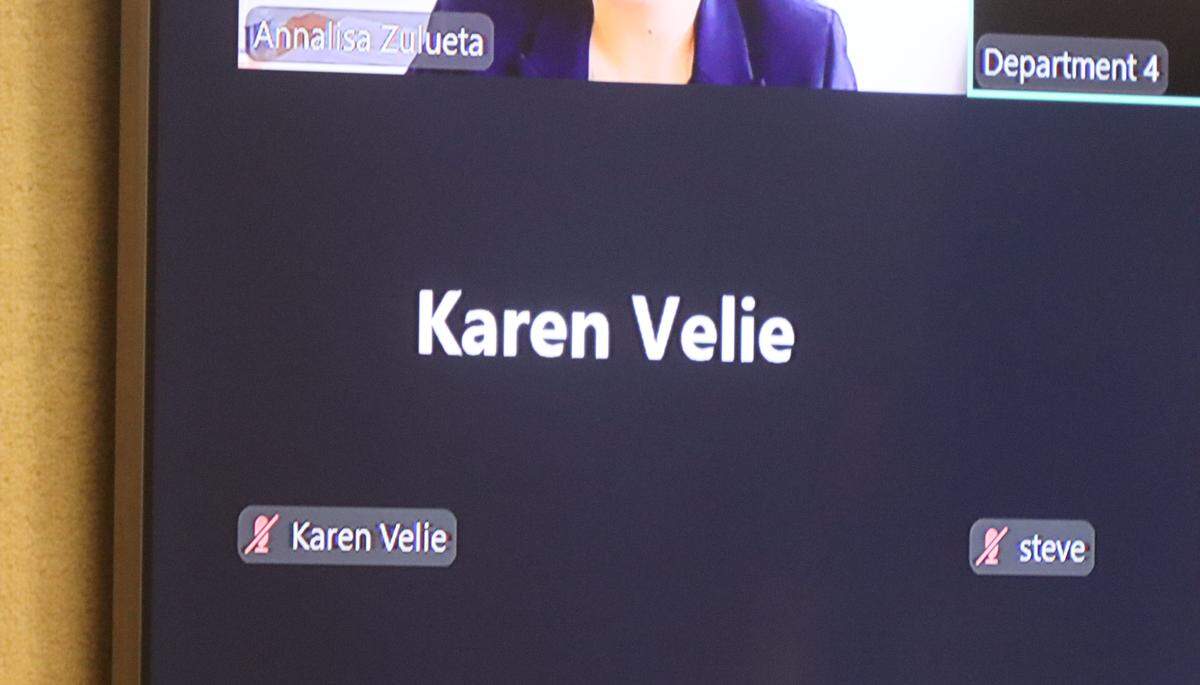
While everyone else involved in the case — including Belsher, Bernat, Velie, Zulueta and other observers including former Paso Robles City Council candidate Linda George and Debbie Chase — tuned in remotely over Zoom, Bernat’s new lawyer, Jeffrey Minnery, appeared in court in person ready to argue the decision.
“The word ‘alias’ cannot be separated from the article’s accusatory context,” Minnery said during his arguments. “The article did not neutrally report name change, but it framed Jody as part of a sham with concealment and deception built into the story.”
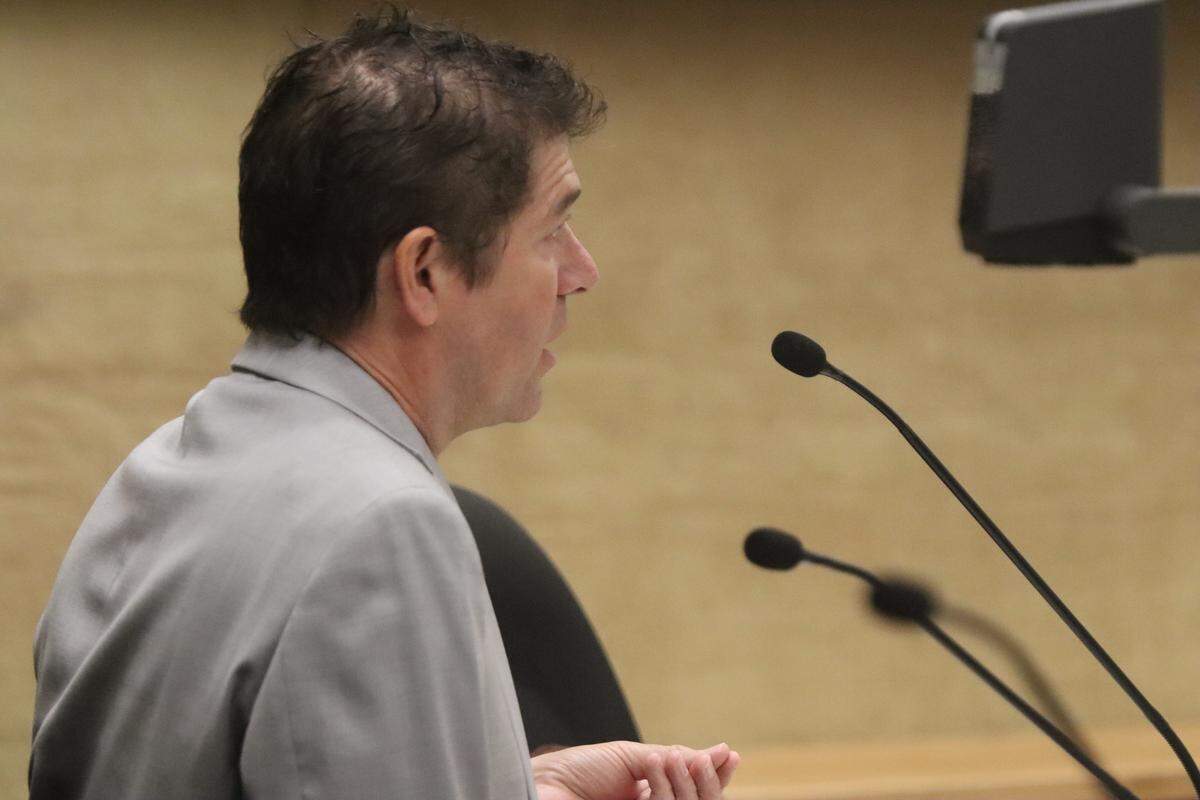
Even though the article was corrected, “the damages were already set in motion, if not already done,” Minnery said.
In the two weeks that the article ran without a correction, it was picked up by national wire services and widely disseminated, he argued.
Not only was the correction too little, too late, he argued, but it also proved that “the original publication (was) objectively false,” he said.
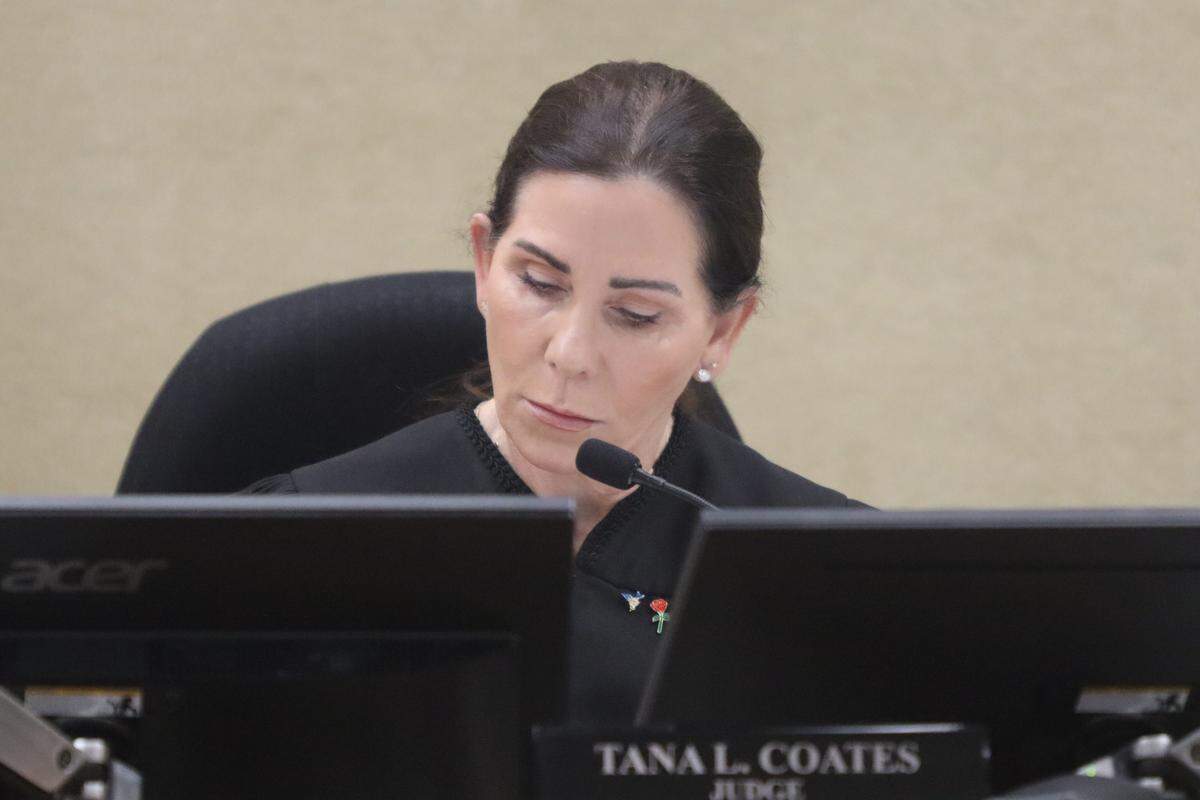
The hearing ended with Judge Tana Coates taking both arguments into consideration, and over a week later, she issued her final ruling to dismiss the case.
“This is a very serious and draconian manner to dismiss a case at this early — earliest — level,” Minnery said.
Velie did not respond to The Tribune’s request for comment.
Bernat will appeal dismissal
Bernat told The Tribune on Monday that she plans to appeal the decision, which she believes was “wrong on the law and ignores the true facts in the record.”
“The judge is citing laws which protect ‘newspapers,’ which is the guise under which Karen Velie operates,” Bernat said in a statement. “The judge says wrongfully and falsely accusing someone of using an alias to avoid legal matters is not derogatory. It most certainly is. The decision is allowing the continued harassment of persons undeserving of Velie’s attacks, like me.”
“As Velie will be emboldened to ruin lives, myself and others will continue to attack her yellow journalism,” Bernat said. “Karen Velie’s distortions and lies hurt people but she doesn’t care as long as it serves as ‘click bait’ for her gossip sheet she calls ‘news.’”
Bernat also sued her neighbor in Arizona, Steve Cable, on Feb. 11, 2025, and says he was Velie’s source of the false information that Bernat was using a fake name in their pickleball community.
That case is also on appeal, she said. Bernat has made a settlement offer, but Cable’s legal representation has not responded. Bernat declined to say what the settlement offer was.
Bernat also brought a civil suit against Cable in Maricopa County, Arizona, on Deb. 26. In a response to the complaint on Jan. 20, Cable admitted to speaking with someone at CalCoastNews, but denied that he provided false information or used the word “alias.”
The case was scheduled on the dismissal calendar for May 5, according to the Judicial Branch of Arizona in Maricopa County online court docket, but no further updates were given.
Sheriff’s Office inspected photos in CalCoastNews defamation case
Meanwhile, in an unusual twist, the San Luis Obispo County Sheriff’s Office became involved in the civil case through a debate over whether photo evidence was tampered with.
Velie had long argued that she had been improperly served with the lawsuit when it was first filed.
A report from a private investigator claimed she lived and was served at a home in Paso Robles and included pictures of a woman the investigator believed to be Velie entering the residence wearing a wig as a disguise. Velie argued in court records that the papers were served to her grandson at her daughter’s residence, not her own.
In California, lawsuits must be served to the defendant within 60 days of being filed, or served by substituted service to another person the defendant lives or works with after multiple failed attempts to serve directly.
In support of her argument that she does not live at the address where the lawsuit was sub-served and mailed to, Velie alleged that the photographs taken of the residence in question contained “significant and material discrepancies from the actual location” and were thus altered, court records show.
She contacted the Sheriff’s Office to look into the matter — which it did, according to a Feb. 3 email from Sheriff Ian Parkinson to Velie that was filed in court records.
When asked whether it was typical for the Sheriff’s Office to get involved in civil matters, spokesperson Tony Cipolla said the allegation of altered photographs submitted to the court “could constitute a criminal offense.”
The allegation was reviewed as a “potential act of perjury,” Cipolla said, which is a felony offense under California Penal Code Section 118 and is defined as willfully stating as true any material matter known to be false while under oath or penalty of perjury.
“When an allegation of a crime has been committed, the Sheriff’s Office will conduct an investigation,” Cipolla said.
Det. Clint Cole conducted an “in-person inspection of the property and compared the photographs to the actual conditions observed at the residence,” according to the email from Parkinson to Velie.
Through Cole identified “several discrepancies” between the photo and the actual residence, Parkinson’s email said, the Sheriff’s Office “found no further evidence to support that a crime had been committed,” Cipolla said.
Cole noted his observations for “comparison purposes,” Parkinson said, but because Cole did not have access to the original images, he was limited to “reviewing copies and making observations based on those materials alone,” Cipolla said.
“We were unable to confirm that a crime had been committed,” Cipolla said.
This story was originally published May 11, 2026 at 10:14 AM.
CORRECTION: The wording of this article has been updated to reflect that Karen Velie had argued she had been improperly served.