SLO County beach town eyes reining in development. How would policies work?
A rare joint meeting between the Grover Beach City Council and Planning Commission saw the interests of development and residents opposed to tall buildings clash yet again as the city explored options to meet the demands of some residents.
At Tuesday’s joint meeting, city staff presented the two government bodies with five options for changing local housing regulations, including height reductions, commercial space requirements and the protection of scenic viewsheds.
While no immediate action was taken on any policy presented at the meeting, some of the proposed changes could see discussion and possible implementation through the city’s next Housing Element, which kicks off its planning phase this summer.
The joint meeting comes after years of high-density housing development hearings have repeatedly become a battleground between residents who dislike the taller buildings and developers taking advantage of more housing-friendly state laws to redevelop the city’s West Grand Avenue corridor.
During the question period, commissioner Rachel Mann asked people in the room to raise their hands if they were renters. After just six people in a packed room raised their hands, Mann urged her fellow decision-makers to consider the positive impact that dense housing production has for the roughly 50% of the city’s population that rents their housing.
“I would encourage us to be aware, if we’re listening to each other, to think of who’s not in the room that we need to be thinking about as we make decisions,” Mann said.
Are city’s hands tied by state law?
To start the meeting, city attorney Jennifer Thompson provided an overview of the laws that most prominently impact housing production in Grover Beach.
First and foremost, the Housing Crisis Act — or 2019’s Senate Bill 330 — prevents cities from down-zoning or reducing housing density and states that local agencies can’t adopt development standards that reduce residential capacity allowed in 2018, Martin said. It also caps the number of hearings per housing development at five.
The Housing Accountability Act further requires that local agencies cannot deny or reduce the density of housing unless specific findings are made and limits local discretion to deny or change projects that comply with objective design standards.
The Housing Element Law requires all cities to adopt a Housing Element that identifies sites that can meet the city’s Regional Housing Needs Assessment housing goals, which are set every eight years. Though failing to meet these housing numbers can cost the city local control of housing approvals, Grover Beach is currently on track to meet its current 2020-28 369-unit requirement, with 98% of the required units permitted, according to the staff report.
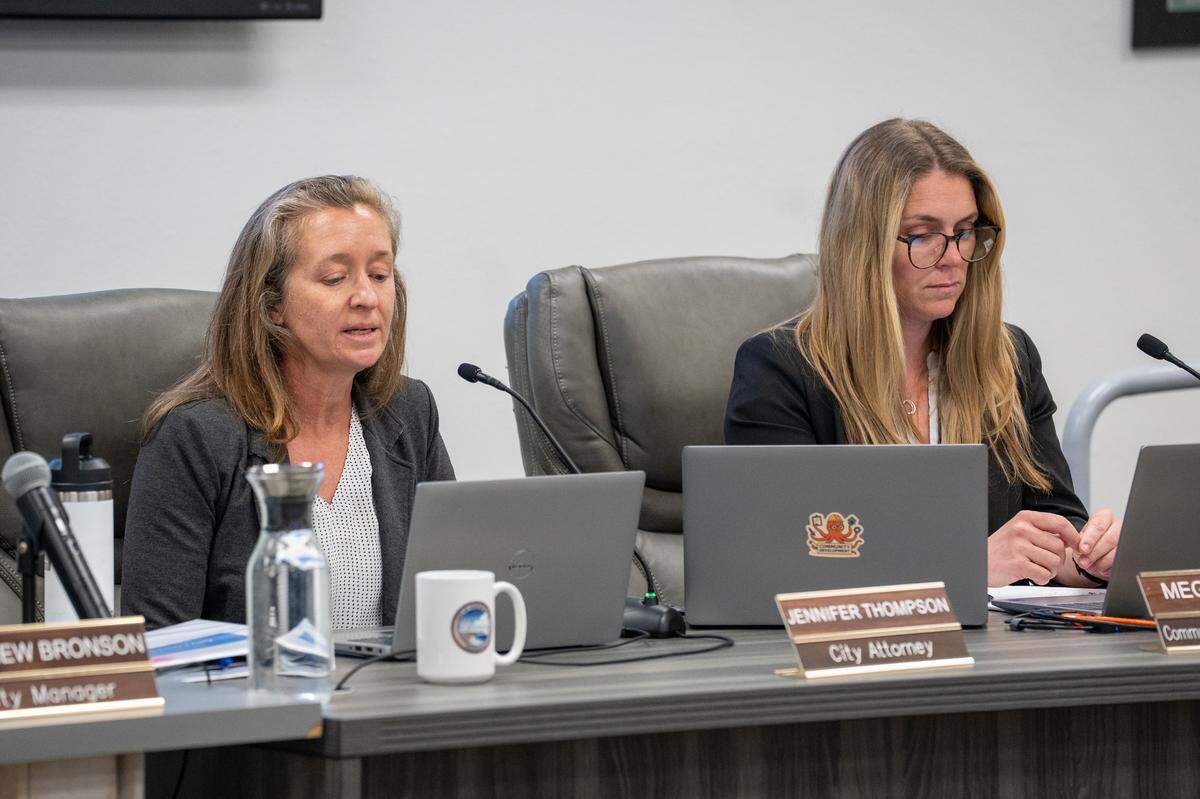
Martin said the city’s current Housing Element — in concert with the state’s renewed focus on housing production — was “really where things started to change.”
Martin said the Housing Accountability Act “caused the 6th cycle update to have an increased emphasis on planning for housing and holding the local jurisdiction accountable to that plan, so the city adopted a housing element with a promise to remove barriers to development consistent with the updated economic development strategy, consistent with the 2011 West Grand Avenue master plan, and to comply with state law.”
“The hope was that we would increase that housing density through the housing element and position the city to meet its housing needs allocation by 2028,” Martin said.
While the RHNA cycle sets a minimum, it doesn’t enforce a maximum, and the current wave of development taking advantage of state housing laws reflects a longstanding need for profitable development in the city, Martin said.
“We’ve met our planning obligation early,” Martin said. “A lot of cities — both in this county, as well as others throughout the state — can’t say that, and this demonstrates the past policy direction relating to our West Grand Avenue plan, our mixed-use development standards, our permit streamlining, our zoning capacity, our implementation measures, our incredible staff — everything is working as it was intended, and this is all in compliance with state housing law.”
City explores development alternatives
During the joint meeting, a handful of ideas about how to constrain development were presented by the staff.
One such idea would require a 33% minimum commercial space in mixed-use projects — an idea lifted from a ballot initiative aimed at lowering building heights launched by Grover Beach residents in February.
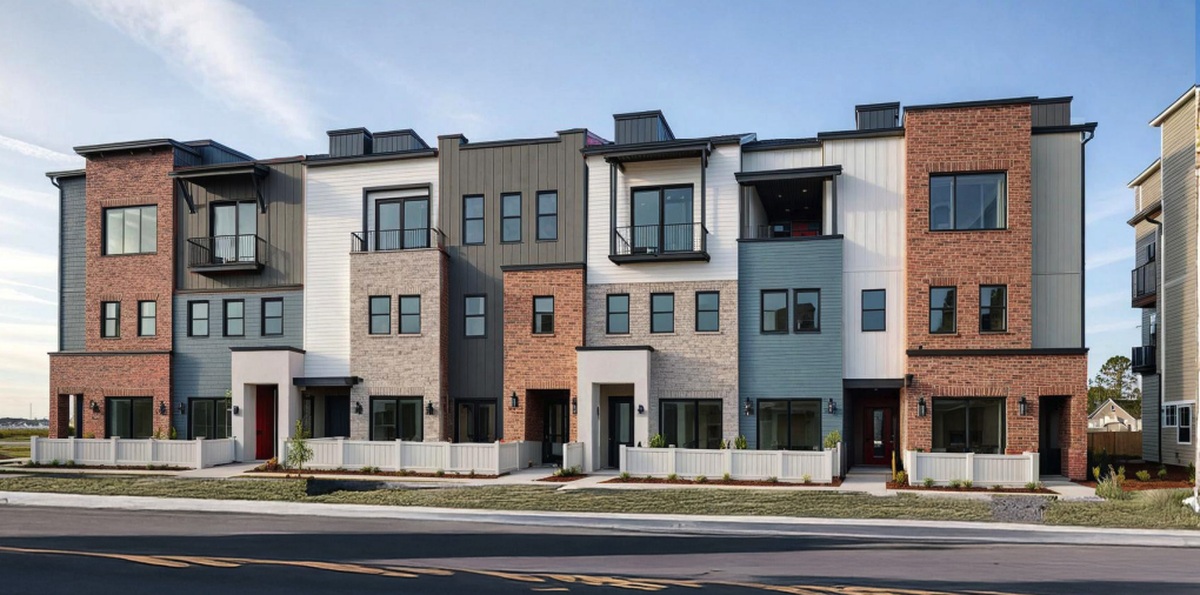
Another point would have city staff explore changes to objective design standards, with a particular focus on architectural variety that stems from concerns about the prevalence of contemporary designs along West Grand Avenue.
Martin said these objective design changes could be implemented through the 7th cycle of the Housing Element.
An issue that’s been a subject of residents’ criticisms of tall buildings — the protection of scenic viewsheds — was addressed through an option for the Council to designate scenic corridors through a Local Coastal Plan amendment, which would require around $200,000 in staff and consultant resources and the California Coastal Commission’s certification if implemented, Martin said.
Martin added that viewsheds are an “extremely subjective topic” that could open up the city to legal challenges.
Staff also presented an option to explore an inclusionary housing ordinance that would require affordable housing or the payment of in-lieu fees to go toward other affordable housing projects as a response to concerns over the actual affordability of the projects being greenlit.
But most importantly, staff presented the Council and Planning Commission with the option to cap building heights to 40 feet for commercial ones and 33 feet in industrial zones, with a three-story cap — another element of the ballot initiative.
Martin warned that these changes could impact housing capacity, and could clash with state regulations — but this cap could also be circumvented by Density Bonus Law projects that request height exemptions.
Public demands lower building heights, City Council unsure
While all of these policies could bring the city’s development standards closer in line with the demands of residents who have become a fixture of development-related meetings, there’s no guarantee the city will adopt any of these policies.
Tuesday’s meeting attracted comments in support of existing building from county and city officials such as District 3 Supervisor Dawn Ortiz-Legg, former city manager Bob Perrault and former Mayor Jeff Lee.
Former Mayor Debbie Peterson, who’s been closely involved with initiatives opposing taller development, said new development in Grover Beach isn’t living up to its promise of abundant and affordable housing because out-of-town residents are buying many of the units that are coming online through high-density condo developments.
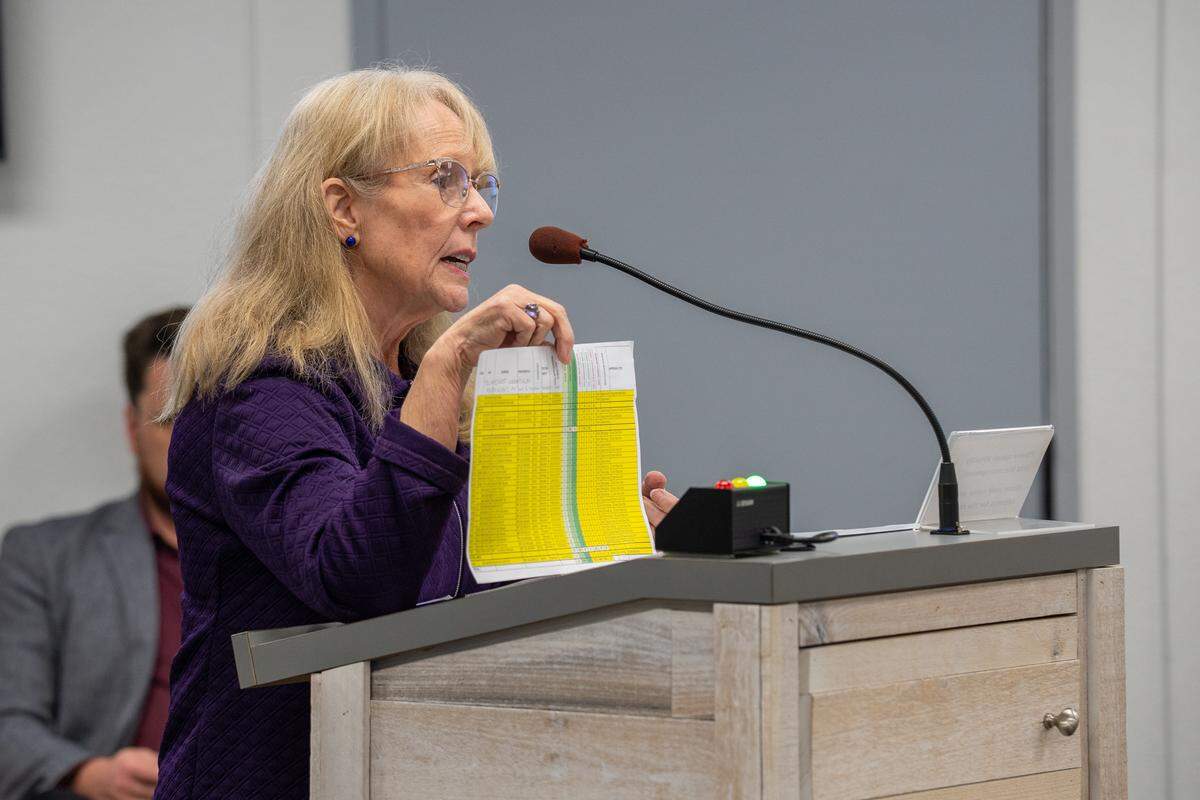
During public comment, Peterson said residents opposed to tall buildings didn’t want a height limit that contradicts state laws, but rather a reversion to the limits of 2018, prior to the implementation of higher building height rules.
“Despite all of this building, our population is decreased by 1,000,” Peterson said during public comment. “That’s because the people who are buying the houses and the people in Grover Beach are not being counted in our census, because they’re being counted somewhere else, because these are second homes, and second homes are not housing.”
According to U.S. Census estimates, Grover Beach’s population dropped from 13,156 people in 2010 to an estimated 12,534 in July 2024, the most recent data year available — or around 622 fewer residents counted from 2010 to the most recent Census estimate.
Kelvin Coveduck, a proponent of the citizens’ ballot initiative, said the city’s early completion of its RHNA goals should be a sign that the city should “pump the brakes” and reevaluate ongoing planned development projects — including the planned Solstice project in his neighborhood.
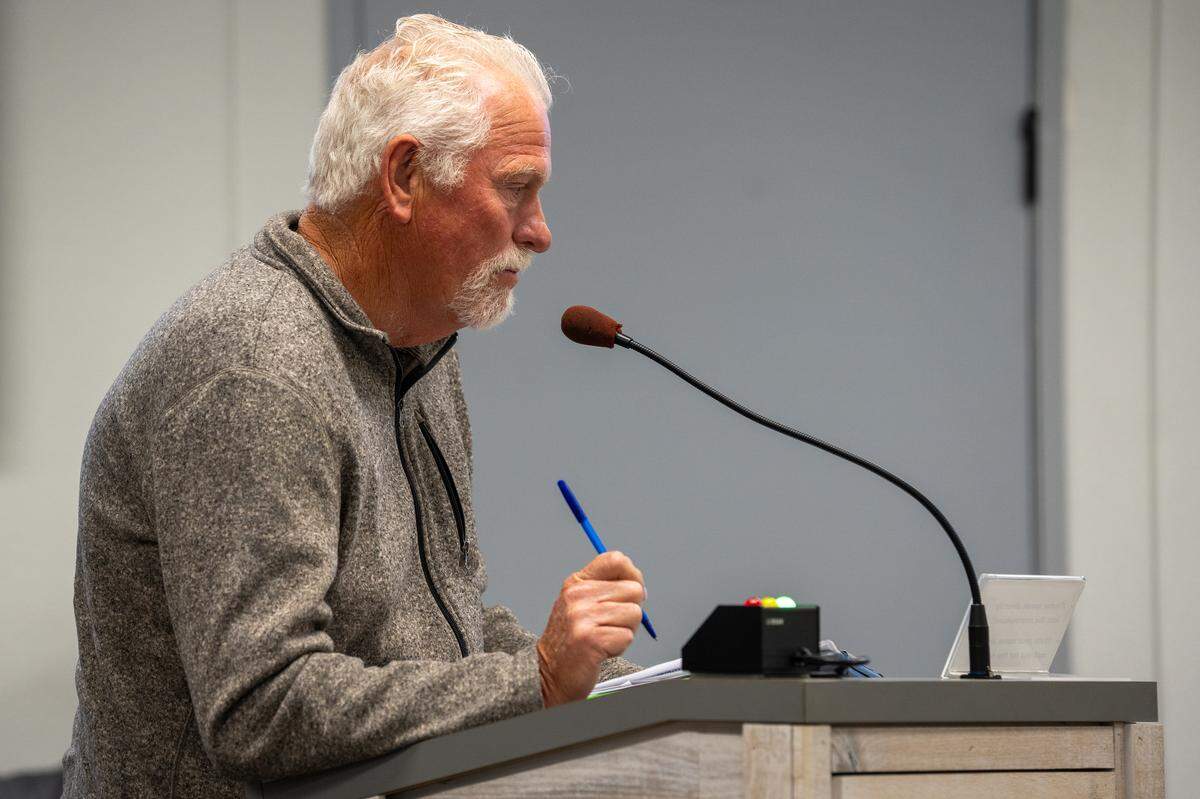
“I’ve been told that our hands are tied, but they’re not tied if you untie them, and that’s what I’m asking to do,” Coveduck said. “I think you should modify the LCP to make designated scenic views and vistas — it’s important we have them (and) we should designate them as such.”
For the most part, council members appeared supportive of some measures that would reign in the pace and scale of development, but made it clear that they expect development to progress in the city in one form or another.
Mayor Kassi Dee expressed support for looking at new objective design standards in the next Housing Element cycle, but was hesitant to say that identifying and designating coastal viewsheds would be worth the time and money.
“It’s going to need to be more about what makes the most sense and what protects us the most from state overstepping and being able to make decisions for us — that is very important to me,” City Council member Jules Tuggle said. “Making sure we don’t make any decisions that put us in jeopardy of losing our certification and losing control, that is more important to me than exactly where the buildings go, and I would love to have (an) ‘everybody’s on the same team’ kind of conversation instead of the way the conversation has been going in our community.”
None of the City Council members said they outright favored reducing building heights, but that doesn’t mean the issue won’t appear before the Council down the line.
“We have a view in our house — it’s beautiful, but the trees cover it all, so we don’t see it anymore,” council member Robert Robert said. “We love trees too, so what do you do?”
“We need to respect our community concerns, but also operate within legal framework we’re given,” Robert continued. “The goal isn’t to stop growth, it’s to shape it in a way that we can all agree with.”
This story was originally published April 2, 2026 at 10:00 AM.