No more tall buildings? Group wants to stunt SLO County city’s growing skyline
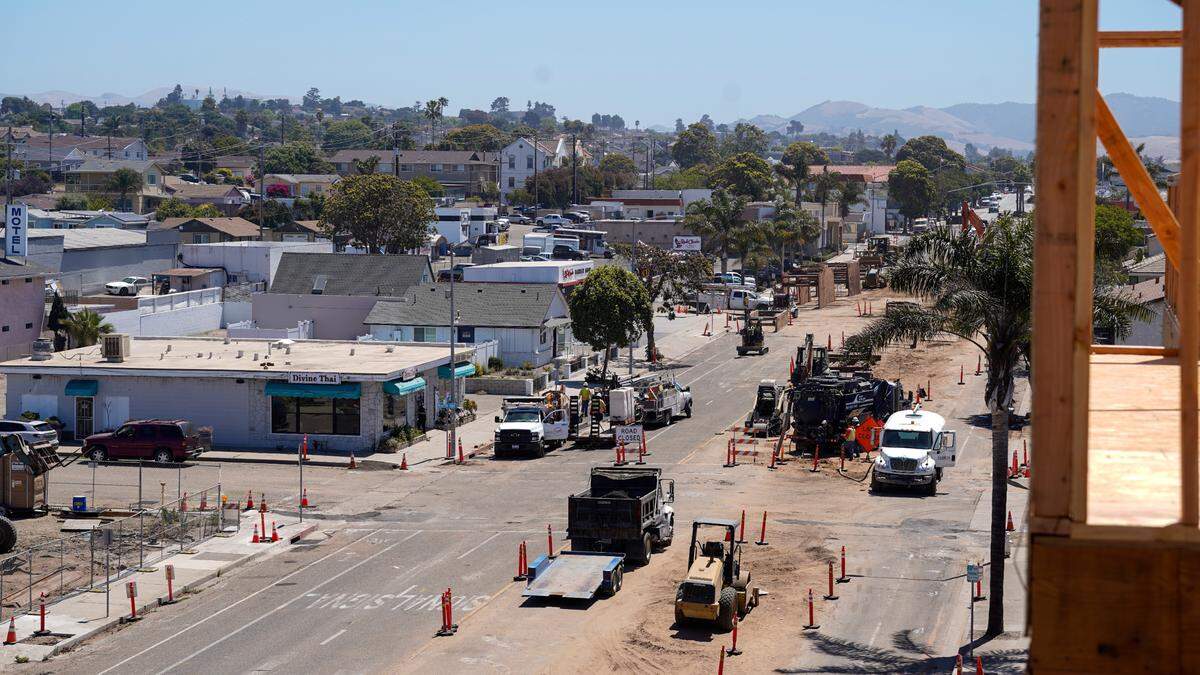
Concern over Grover Beach’s ever-growing West Grand Avenue skyline reached new heights this week, as a group of residents launched a campaign to put building height restrictions on upcoming ballot.
On Tuesday, a group of citizens who oppose higher building heights submitted a notice of intent to circulate a petition to the city that if successful would put the question to voters on the 2026 general election ballot.
The effort, spearheaded by residents Kelvin Coveduck and Mike Wilson, would see buildings in commercial zoning districts capped at 40 feet, while buildings in industrial zoning districts would be capped at 33 feet, according to the group’s notice of intent.
The residents’ ballot measure would also require a minimum of 33% of a mixed-use building be dedicated to commercial space.
The group’s core grievance centers on what they see as the destruction of Grover Beach’s small-town coastal character and views of the Pacific Ocean and Oceano Dunes, according to the notice of intent.
“I understand that there may be those who will tell you how this could go wrong — managers, planners, investors, developers — but I can tell you one way that it will go magnificently well,” Mike Wilson said during a City Council meeting Tuesday. “Simply follow the will of the people.”
Building height is a growing concern for some residents
At the council meeting, residents hand-delivered copies of their notice of intent to Council members before announcing the petition during public comment.
“During the pandemic the city increased heights to as much as 66 feet,” the group’s news release read. “The citizen ballot measure is the culmination of the shock and dismay felt by many locals when they saw two very tall buildings going up at 4th and Grand, with plans for ten more, most of which are being built by Coastal Community Builders, the firm that has been subject to multiple lawsuits by unhappy purchasers in the (San Luis Ranch) development.”
Though the notice of intent claims that increases in the city’s maximum building height made during the pandemic raised the limit to 66 feet high, this isn’t entirely accurate to the language of the city’s building code.
Buildings in mixed-use zones are capped at 55 feet under the current rules instituted in 2022, but the 66-foot height mentioned by the residents was included to account for exceptions to that code for elevator and stairwell towers, chimneys, parapets or other furnishings, Coveduck clarified.
Under the residents’ ballot measure, building height in any zone of the city would be measured from the average natural grade of the project site to the highest point of the structure, including the aforementioned rooftop additions.
Coveduck, who lives near the planned 40-foot-tall Solstice project on Front Street, said the project was the impetus for the group’s formation.
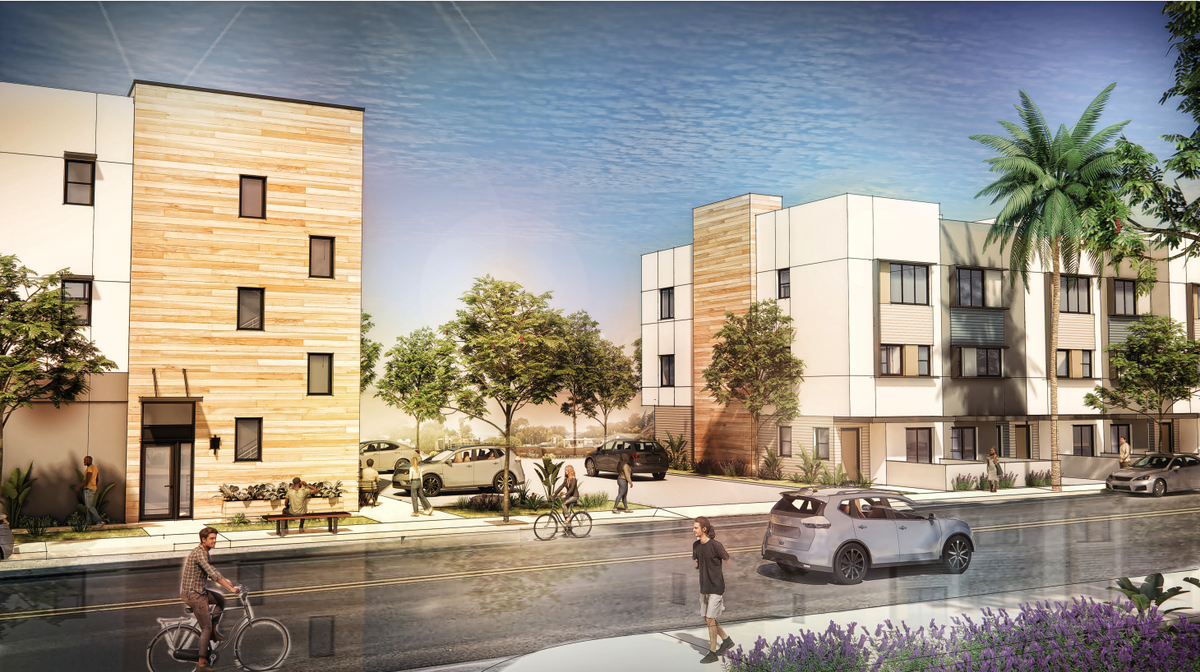
He said while it’s “too late for Front Street,” he intends to find another recourse to try to get Solstice’s height lowered outside of the ballot initiative process.
The 33-foot height maximum was chosen in part because the existing buildings on Front Street currently stand 33 feet high, Coveduck said. The group’s 33% commercial space proposal was included to stop development from skewing too heavily toward residential uses, he said.
“With this proposition, now there is regulation on what should be mixed-use,” Coveduck said. “We chose 33% so you don’t have builders taking advantage of certain zoning, turning them into residential areas when they’re not really zoned that way.”
What’s next for ballot measure?
City attorney Jennifer Thompson said following Tuesday’s petition submission, she has 15 days to determine the validity of the petition and draft a summary that can be used to gather signatures.
Barring any delays from that review, the group of residents will have 180 days to get signatures from registered voters residing in the city, she said.
Thompson said she has not yet determined the signature count required for this petition, but said she expects it to be similar to recent ballot initiatives such as the 2024 petition to make the role of city clerk an elected position, which required signatures from 10% of registered voters, or a minimum of 779 signatures.
At the conclusion of the 180-day window, the city clerk will have 30 days to verify the signatures, which will determine whether the item can appear on the ballot, Thompson said.
The City Council will then have the option to either adopt an ordinance to meet the petition’s request through a regular public hearing or allow it to go to voters in November, she said.
Thompson said it remains to be seen whether the petition’s height restrictions would interfere with state directives to build more housing quickly. She said in a city like Grover Beach, which is almost entirely built out and has little available land for new housing, there is no choice but to build upwards, and capping that upward growth may be an “undecided area of the law.”
“There is some case law that says that ballot initiatives cannot interfere with state housing law,” Thompson said. “I don’t believe there’s a case that’s specific to building height, so from that perspective, I think it’s kind of an undecided matter.”
“Essentially, state housing law says that there’s a lot that local agencies have to do to allow for housing, whether affordable or market rate, and to interfere with that could potentially cause some issues,” Thompson continued.
Coveduck said he has “no doubt” that the resident group can get 1,000 signatures, and said a failure to get the issue on the ballot would not be the end of the group’s efforts to cap building height.
“The main concern is that the Council will find a reason to not even allow us to have the ballot, not giving us the opportunity to get signatures and have democracy take its course,” Coveduck said. “If they do that, then there’s always the legal option to take them to court — we do have a couple of attorneys that have been advising us.”
This story was originally published February 15, 2026 at 5:00 AM.