SLO County records landmark moment in its fight against homelessness
San Luis Obispo County has reached a key turning point in its fight to reduce homelessness.
At the March 10 Board of Supervisors meeting, deputy director of homeless services Linda Belch said that for the first time during the implementation of the county’s five-year plan, more people exited the system than became homeless for the first time — an indication that the county’s practices are working.
The plan, which the board approved in 2022, aims to reduce homelessness by half by 2027, and called for a significant investment in homelessness prevention, outreach and re-housing efforts, paired with an emphasis on affordable housing production.
Now, four years into that five-year period, county homeless services leaders say the county is on track to meet many of its goals.
“Even though more people are being served, we are also moving more people through the system and into that permanent stability that we want to achieve for them,” Belch said.
Data shows decline in first-time homelessness
Depending on who you ask, tracking homelessness accurately is a task fraught with inaccuracies.
Homeless Management Information System program manager Kari Howell, who organized this year’s Point-In-Time Count, said final figures such a per-city breakdown of the homeless population and its demographics will be verified by the federal Department of Housing and Urban Development in late April, followed by a community report this summer.
Howell said the Point-In-Time Count is a useful tool for understanding trends in homeless populations but is “flawed by design” because it captures a snapshot of homelessness on one night rather than repeated data sampling over a longer period of time.
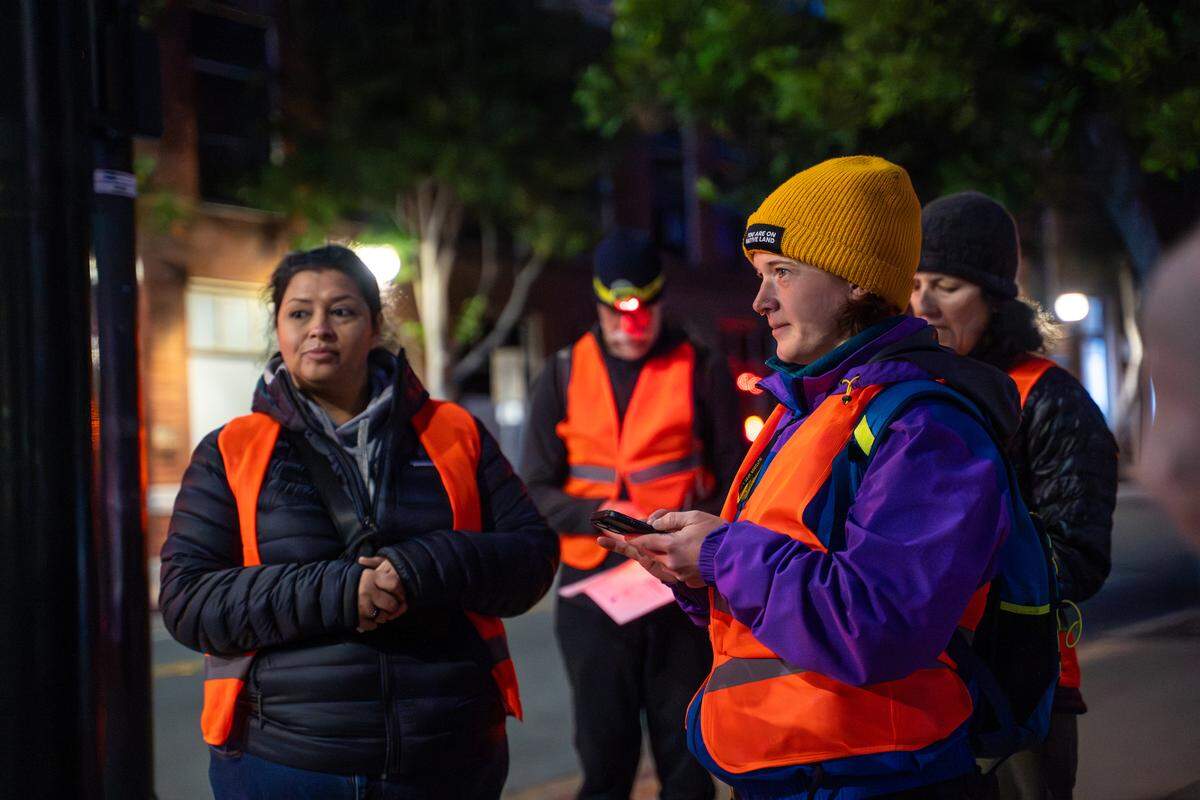
To count the population for the Homeless Services Division’s purposes, two forms of data were used: the Point-In-Time Count and aggregated Homeless Management Information System intake data over the past year, Belch said.
According to preliminary Point-In-Time Count data, unsheltered homelessness in San Luis Obispo County is down 42% since 2022, while homelessness among veterans is down 49% over that time.
Over that same period, the Homeless Services Division saw a 31.7% increase in persons served, according to the county’s report. Meanwhile, first-time homelessness declined by 42.5%.
Practically speaking, 1,104 people were counted as homeless in the 2026 Point-In-Time Count, while 666 of those individuals were counted as unsheltered, while the remaining individuals were counted in shelters, warming centers and other temproary shelters.
In the 2024 count, volunteers tallied 1,171 people experiencing homelessness throughout San Luis Obispo County — a 19% decline from the 1,448 counted in 2022.
In a statement following the meeting, District 4 Supervisor Jimmy Paulding applauded the Homeless Services Division’s work.
“SLO County is making real progress because our staff, service providers and community and city partners are working together to expand housing and strengthen prevention and outreach services,” Paulding said in a statement.
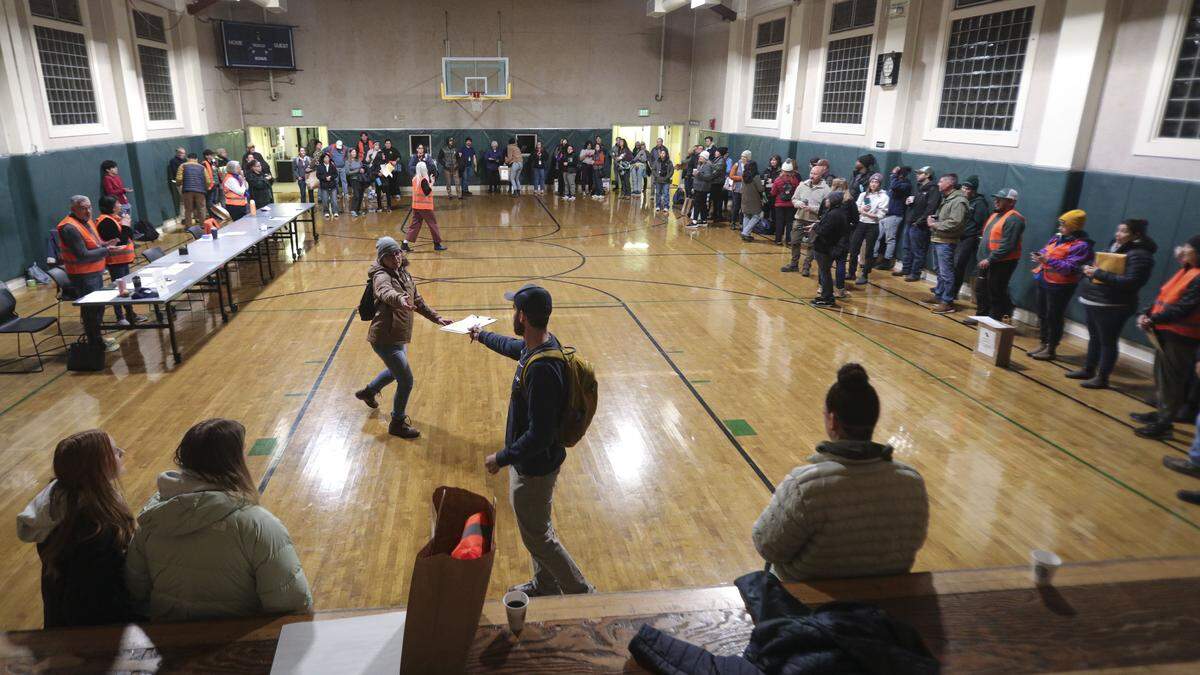
County will face funding challenges sustaining homelessness successes
The county’s improved performance in homeless service and reduction in unsheltered homelessness was mirrored by a 44.4% increase in permanent exits into housing for people who received services.
Belch said the improvements in permanent housing exits are largely due to recent expansions in affordable housing production.
In 2025 alone, 316 affordable housing units were completed, along with 63 permanent supportive housing beds and 16 interim shelter beds, according to the county’s report.
Between 2023 and 2025, the county added 556 affordable housing units, putting the community more than halfway toward its goal of creating 1,667 affordable units by 2027.
Behavioral Health programs also produced measurable impacts, including 459 individuals engaged through the Homeless Outreach Team among full service partnership participants. Of those, 31% secured housing, 89% had a reduction in psychiatric facility days and 99% reduced their jail days.
Belch said while these outcomes are a great indication of the county’s progress on its five-year plan, that growth was made possible by a steady increase in homelessness funding.
One-time funding is set to drop from around $9.2 million in the 2024-25 financial year to around $1.3 million in the 2027-28 financial year, while annual funding from the county is expected to decline from around $7.3 million to around $6.2 million in each of the next two financial years.
How the county will sustain success as the federal government rolls back one-time and recurring funding is “the literally billion-dollar question,” she said.
“At some point, we’re going to have to really look at what are our most effective pathways to .... prevent first-time homelessness, and to exit people to permanency, and if we need to reduce the services as a reality of funding, where do we reduce those?” Belch said. “There’s going to be some really, really hard conversations that are going to have to be had.”
This story was originally published March 25, 2026 at 12:27 PM.