
Good soil can make or break your SLO County garden. Here’s what to know
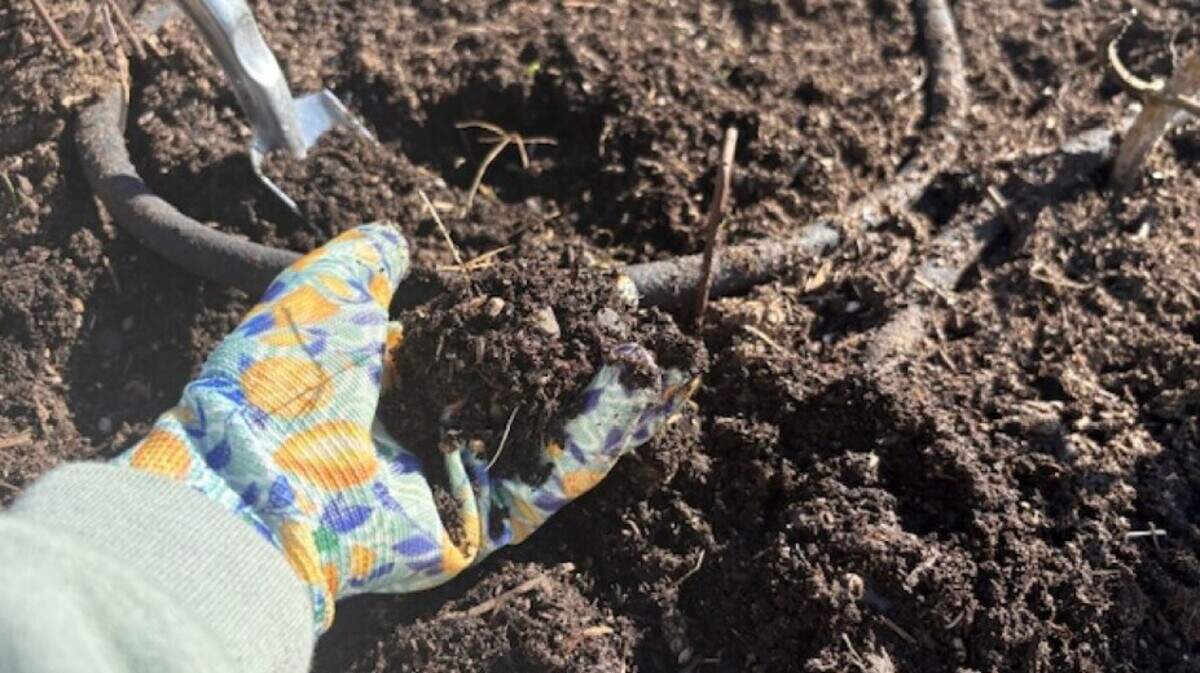
Healthy roots are the secret to successful plants and trees.
Roots take up water and nutrients from the soil and send them to the leaves and stems. Roots, in turn, need good soil to grow in — soil that is not too compacted for them to expand, that provides water without being waterlogged, and that has plenty of organic matter and the right level of acidity to dissolve minerals into soluble salts that plants can use.
Good soils also contain beneficial fungi and microbes that break down organic matter and help roots take up nutrients.
Since plants can’t relocate on their own to find better soil, we need to make sure the ground around them has the qualities they need to thrive. Good soil should provide anchoring, water retention, air exchange and nutrients.
Soils are roughly classified according to their proportional amounts of sand, silt, clay and loam.
In SLO County, there is a lot of variation in those proportions. Near the coast, for example, the native soil tends to be sandy and loose, while further inland, clay soils predominate.
Each type presents gardeners with its own challenges.
Sandy soil doesn’t provide good anchoring support. Also, water drains right through it, and it dries out quickly. Nutrients also leach out quickly from it. But the looseness of sandy soil also means that it drains well and presents little danger of becoming waterlogged and drowning plant roots.
Clay soil is heavy and dense, provides good support and holds water, which is useful during the summer dry season and in times of drought. But if there is too much water, it can accumulate in the ground, filling in air spaces, soaking plant roots, and providing breeding sites for root rot fungus. Because of their density, clay soils can be difficult for plant roots to push through. In addition, nutrients can chemically bind to clay, becoming unavailable to plants.
Soils of all kinds can also be depleted by overworking, compacted by foot traffic or vehicles, disrupted by tilling, or infected with plant pathogens.
Fortunately, there are many ways to improve soil.
The process begins with having the soil on your property tested, a service available through local testing laboratories. Deficiencies in soil nutrients and problems with soil texture can be remedied with amendments, such as compost, mulch, fertilizer, cover crops, and mineral supplements. The right amendment will nourish not only the plants growing in the soil, but also the vibrant communities of beneficial microorganisms that live around their roots. Irrigation can be customized to best meet the needs of different soils and locations.
By learning how to take care of your soil and the complex ecosystem within, you will help your trees, shrubs, vegetables and flowers thrive.
You can learn the basics of creating a good foundation for your plants, at the UC Master Gardeners’ upcoming workshop, Building Healthy Soil for Home Gardens and Landscapes. The workshop will take place Saturday, March 21, from 10 a.m. to noon, at 2156 Sierra Way, San Luis Obispo. There is no charge, but registration in advance is strongly recommended. See our website for more information or to register.
In addition to the workshop, we’ll have a sale of landscape plants propagated by our chapter volunteers.
You can visit our You Tube channel at San Luis Obispo County UC Master Gardeners for informative gardening videos.
For information about events and seasonal gardening topics, visit ucanr.edu/sites/mgslo or email questions to anrmgslo@ucanr.edu.
At our UC Master Gardener Helpline offices, volunteers are available to help answer plant questions at three locations in the county:
- San Luis Obispo: 805-781-5939 (Monday and Thursday 1 p.m. to 5 p.m.)
- Arroyo Grande: 805-473-7190 (Wednesday 10 a.m. to noon)
- Templeton: 805-434-4105 (Wednesday 9 a.m. to noon)