Santa Maria says SLO County isn’t pulling its weight in riverbed cleanup. Is it?
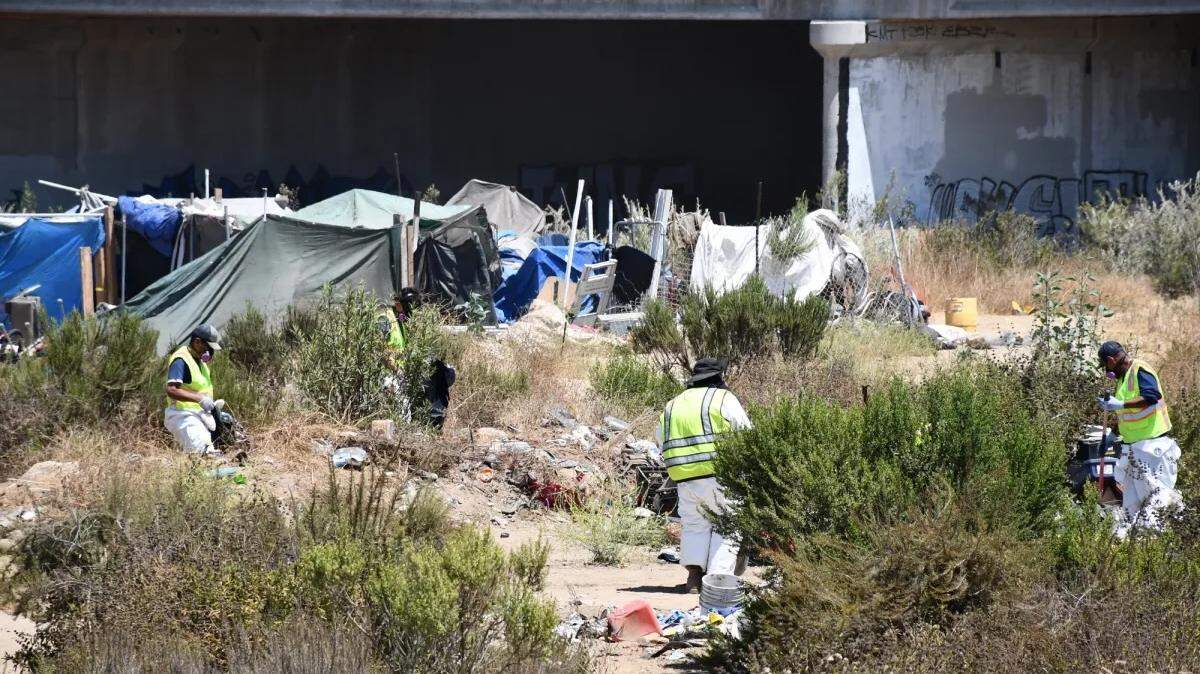
A recent Santa Maria City Council meeting saw members of the council claim that San Luis Obispo County has been negligent of its duties to keep the Santa Maria Riverbed clear of homeless encampments — but does it all come down to lines on a map?
At the Nov. 4 meeting, Mayor Alice Patino said while Santa Barbara County and the city of Santa Maria have done their part in dealing with riverbed encampments, those bodies “need cooperation from San Luis Obispo County.”
“I personally will go to the (San Luis Obispo County) Board of Supervisors and request help and money from them,” Patino said. “I have no problem going to the Board of Supervisors again and saying, ‘We really need your help. This is not just for Santa Maria to do.’”
Santa Maria assistant city manager Chuen Wu said the discrepancy in which municipalities are putting in the time and resources into the riverbed is party due to some confusion on where each body’s jurisdiction starts and ends.
“I’ve had a meeting with SLO County on the riverbed efforts, and I would say that there are still ongoing conversations, and we hope to have a cooperative approach in addressing encampments in the Santa Maria riverbed,” Wu said. “I’ll note that in that discussion, we’re trying to get some clarity on jurisdictional boundaries and property ownership.”

Is SLO County neglecting its responsibilities in the riverbed?
According to representatives of San Luis Obispo County’s Department of Social Services, the Santa Maria City Council’s concerns about sharing riverbed responsibilities caught the county by surprise.
Deputy director of social services Linda Belch said her department was not contacted by the city about its concerns ahead of the meeting.
“We’ve primarily been working with the county of Santa Barbara as our partner on this, kind of relying on them to share information and be our conduit,” Belch said. “Certainly, there could be an element of miscommunication here where maybe not all that information is being shared or known by the city of Santa Maria, but we’ve always been more than open to having those lines of communication and sitting down and being a partner on this, like we have been, and like we’re certainly willing to be moving forward.”
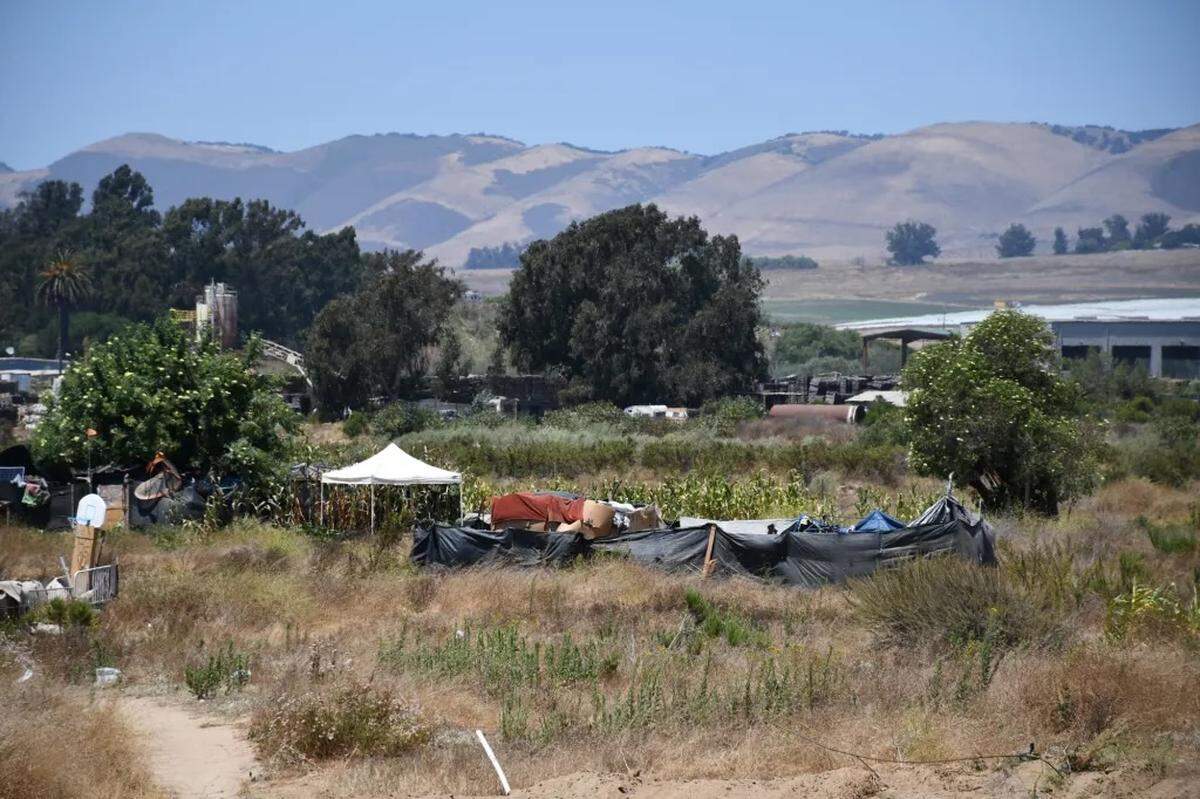
Belch said a memorandum of understanding between Santa Maria and Santa Barbara and San Luis Obispo counties holds all three parties responsible for clearing encampments in the riverbed.
Under that MOU, the three bodies must each contribute a third of the annual salary of a Santa Maria city ranger tasked with patrolling the riverbed each day, reporting any new encampments to law enforcement and performing outreach to the encampment residents.
A separate MOU sets the terms of San Luis Obispo and Santa Barbara counties’ partnership, and holds San Luis Obispo County responsible for providing a Sheriff’s Office deputy when clear out notices are posted and coordinating with Santa Barbara County on debris removal and storing abandoned personal property.
Importantly, it also requires San Luis Obispo County to coordinate outreach to private property owners within its jurisdiction when encampments are built on private land.
That appears to be the sticking point in these conversations, Belch said.
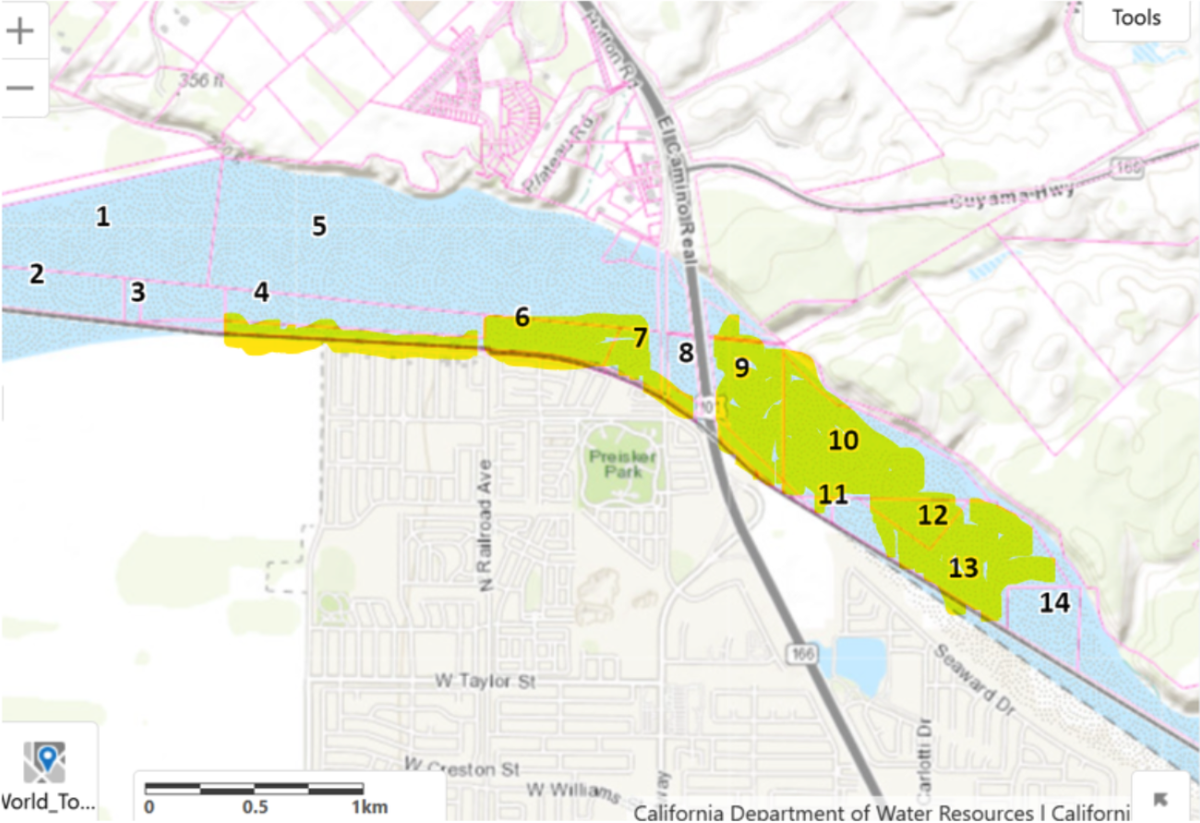
The majority of riverbed encampments tend to appear on the southern bank of the Santa Maria River, almost all of which falls under the city’s jurisdiction, Belch said. On the northern bank, the land is under San Luis Obispo County’s jurisdiction, but most of the land is privately owned, meaning San Luis Obispo County Sheriff’s Office deputies don’t have the ability to freely enter that space without the property owner’s approval.
San Luis Obispo County Sheriff’s Office public information officer Tony Cipolla said that can create issues for how and when Sheriff’s deputies can provide clearance notices to encampment residents.
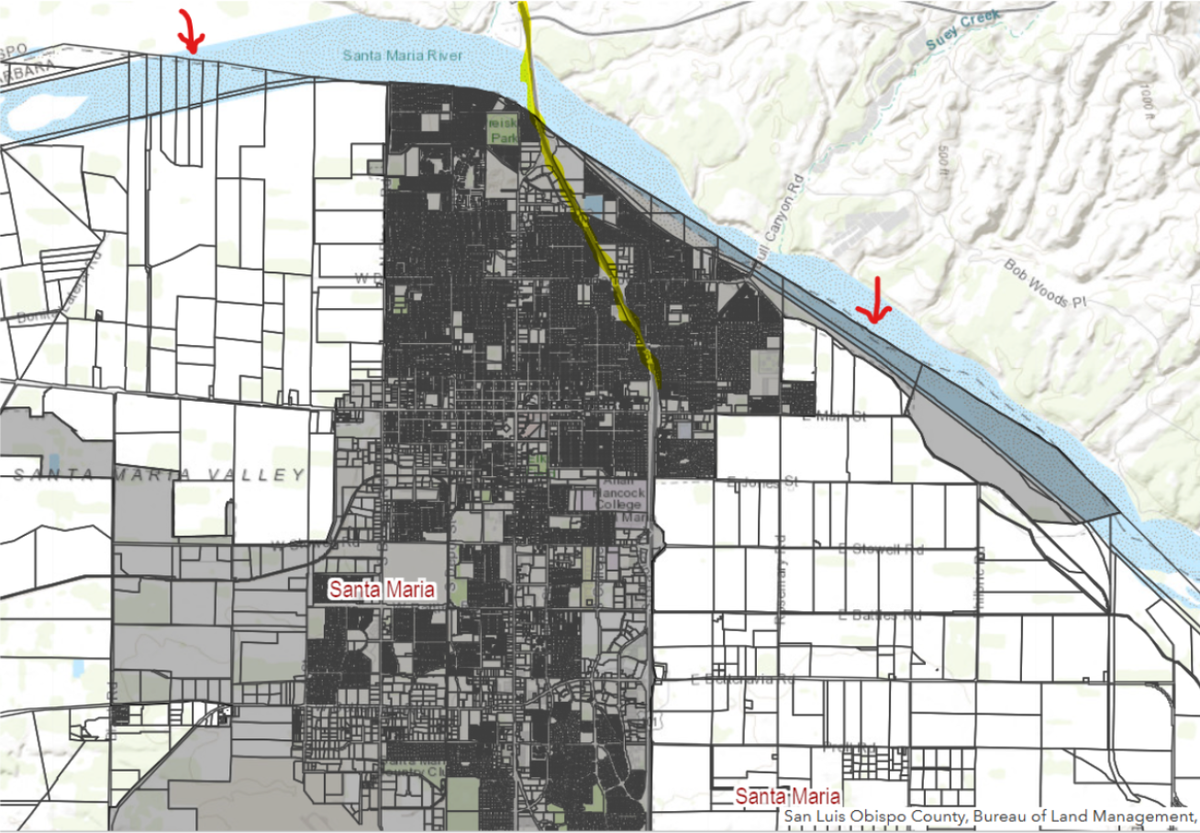
“The problem is that the county line runs through parts of the riverbed itself, some of which is in San Luis Obispo County and some in Santa Barbara County,” Cipolla said.
Can SLO County step up its riverbed responses?
Cipolla said as far as the Sheriff’s Office is concerned, the jurisdictional divide and private ownership of some of the parcels along the riverbed are the main things that slow or prevent responses.
Additionally, the riverbed’s soft, sandy terrain makes it difficult to get response vehicles down to the site of encampments.
“Typically, it is the property owner who contacts us, but other citizens also call us to report issues,” Cipolla said. “Again, simply put, if we receive a call, we are going to respond.”
Last year, San Luis Obispo County Sheriff’s Office deputies responded to around 100 calls for service in the riverbed area, and have responded to 51 calls so far this year, Cipolla said.
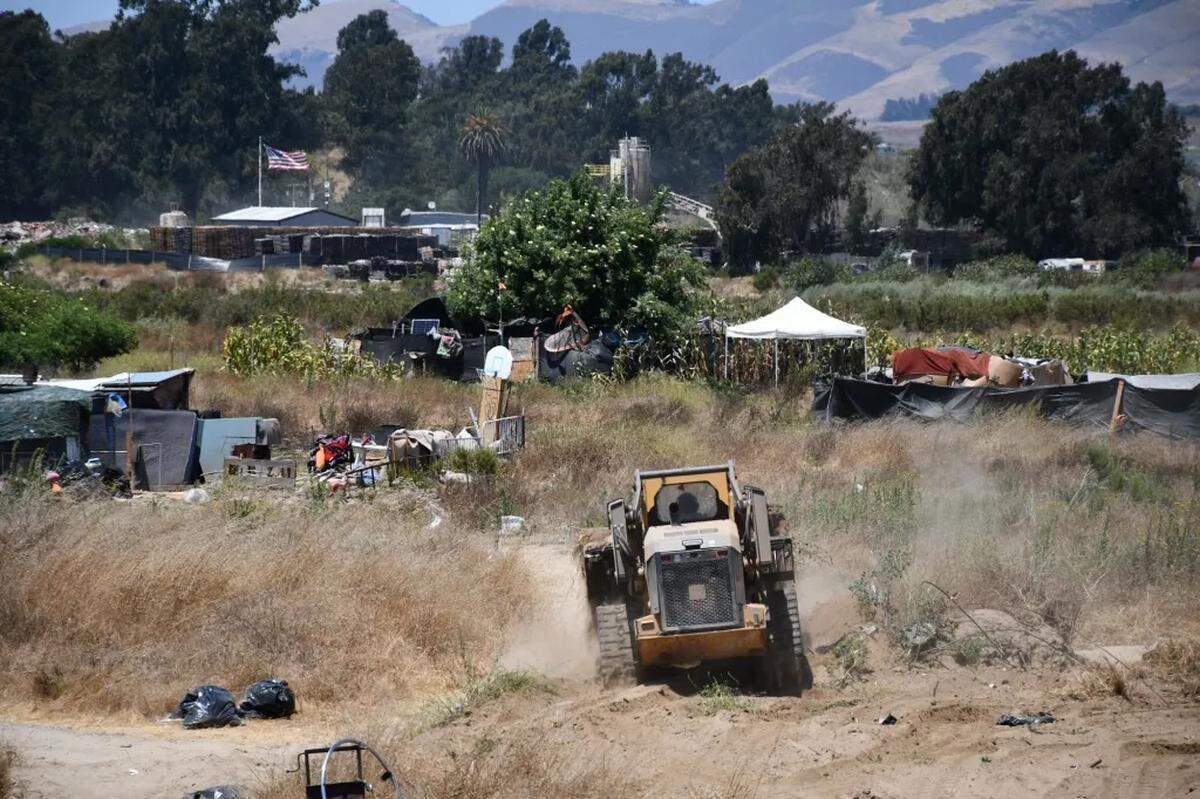
Belch said while most of the encampments are within Santa Maria’s jurisdiction, and around 90% of encampment residents say they started living in the riverbed after becoming homeless in Santa Barbara County, San Luis Obispo County is willing to work with its southern partners to improve riverbed responses.
Earlier this year, San Luis Obispo County paid around $120,000 as its half of a mass cleanup operation, Belch said.
Wu said the city of Santa Maria hopes San Luis Obispo County can find more ways to address the riverbed’s longstanding issue with encampments.
The municipalities involved must develop a “consensus understanding of what the expectations are, and to have an MOU that would sufficiently describe what that is, and for all three jurisdictions to participate in those costs,” Wu said. “We hope to have a more productive conversation so that we can get to that shared understanding of how the river then should be monitored and managed.”