CDC ditched its vaccine rules. What are SLO County doctors telling their patients?
It’s never been a more confusing time to be a parent trying to raise a healthy child — and mixed messaging around lifesaving vaccines isn’t helping.
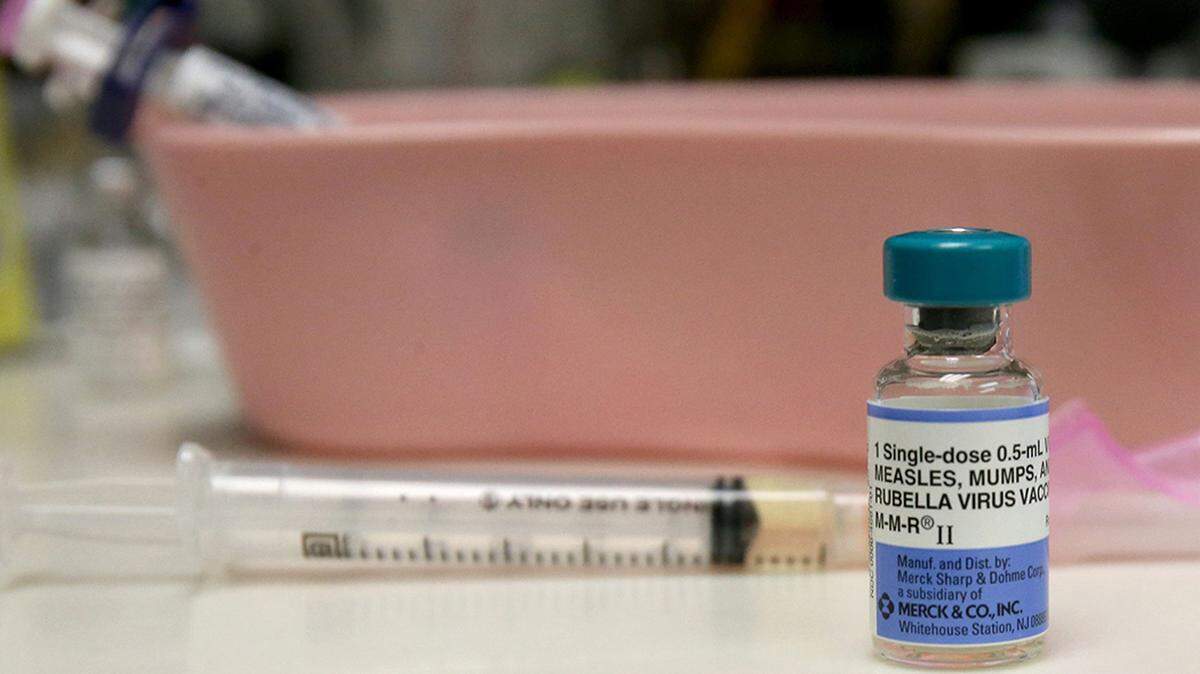
Last week, the Centers for Disease Control and Prevention updated its adult and child immunization schedules to leave the decision of whether to vaccinate for measles, mumps, rubella and varicella — more commonly known as chickenpox — up to parents, breaking from a standard that has been in place since the late 1980s.
And last month, the CDC’s Advisory Committee on Immunization Practices similarly voted to leave COVID-19 vaccinations up to individuals, dropping its previous universal recommendation that everyone older than 6 months should get vaccinated against the disease.
These moves have fundamentally changed the federal government’s approach to vaccination, leaving behind its previous recommendations that as many people get vaccinated against common but sometimes life-threatening diseases as possible in favor of personal choice.
Following mass purges of longtime medical experts at the Centers for Disease Control and HHS — most prominently, new HHS Secretary Robert F. Kennedy’s firing of all 17 members of the CDC’s Advisory Committee on Immunization Practices — Dr. Scott Piazza, a doctor of osteopathic medicine at Dignity Health’s Pismo Beach Pediatric Center, said physicians looking to give the best advice to their patients have to be more discerning than ever.
“I think that the CDC still has a lot of great people working for it, and I think that the work that they do is really important,” Piazza said. “They’ve been the goalpost for a very long time for trying to gather good scientific evidence for these vaccines and putting them through their rigor of making sure that they are safe and effective for everyone.”
How are local physicians handling mixed vaccine information?
Piazza said the gap between what physicians know to be true and what the federal government is now setting as health policy has created a difficult position for health professionals.
Professional medical societies — including the American Academy of Pediatrics, American Academy of Family Physicians and others — have all stood by the previously established vaccine guidance established by the CDC and are still able to independently provide guidance that’s rooted in evidence, Piazza said.
Still, vaccine avoidance was already on the rise prior to the current administration, spurred largely by growing misinformation about the safety and efficacy of vaccines, Piazza said.
In the CDC’s announcement of MMR and varicella vaccinations being left up to families, the agency cited increased risk of febrile seizures — a seizure in response to a fever that can occur in young children as a reaction to infection by chickenpox, measles, some bacterial infections and vaccinations, among other causes — in the seven to 10 days immediately following MMRV vaccination as the reason to leave the decision to vaccinate up to individuals.
Piazza said in practice, the risk of febrile seizures in 12-month-old children as a result of the MMRV combination vaccine is around eight in 10,000 children, while delivering the MMR and varicella vaccines separately cuts that risk to around four in 10,000 children.
However, the evidence on febrile seizures as a result of MMRV vaccination cited by the federal government is questionable, San Luis Obispo County Public Health Director Dr. Penny Borenstein said.
“The science on that is not clear that the reason for increased seizures is due to that combined vaccine product,” Borenstein said. “There’s an unfortunately high rate of young children experiencing febrile seizures, irrespective of vaccination, and those supersede the number that are believed to be tied to vaccination, so at the end of the day, I believe that the overarching rate of those seizures is due to other things.”
However, a direct line can be drawn between parents opting their children out of some or all vaccinations — including the MMR and varicella vaccines that were recently made optional — and the return of measles outbreaks across the United States over the past few years, even 20 years removed from the CDC’s declaration that the disease had been eradicated, Piazza said.
“Unfortunately, in the last year, we’ve seen a marked uptick in cases of measles, and that’s largely been in populations where there’s large numbers of unvaccinated people,” Piazza said. “The MMR vaccine, in of itself, is somewhere on the order of 97% effective at preventing measles cases in folks who have received the two doses of the MMR vaccine, so it’s proven to be extraordinarily effective when given per the schedule.”
Who should you listen to?
In the absence of evidence-based health guidance from the federal government, making informed choices about vaccination is more challenging than ever, Borenstein said.
As the CDC has been remade over the course of the year, several states have set their own health guidelines or, in California’s case, opted into a new “West Coast Health Alliance” with Hawaii, Oregon and Washington, aiming to fill the scientific void, Borenstein said.
Already, California has moved to maintain access to vaccines that may be harder to get without getting the CDC immunization advisory committee’s recommendation, and all children who attend public school in California are still required to receive the MMR and varicella vaccines, she said.
In the United States, the Food and Drug Administration licenses medical products like vaccines, which then go to the immunization committee for recommendations on who should get the vaccine, Borenstein said.
Without the committee’s recommendation, health insurers could opt to not cover a vaccine, and getting one could require a physician’s prescription, Borenstein said.
Under California’s Assembly Bill 144, signed in September, California residents have liability protection for off-label vaccine use — essentially, an approved vaccine that’s used for a different purpose than intended, such as an unapporved age group — to sidestep hurdles that the lack of the CDC committee’s recommendation has introduced, Borenstein said.
“They did say it can be used, but they didn’t say it should be, and the ‘can’ comes with this notion that a healthcare provider needs to prescribe it, and that is a very big challenge for people to get into a doctor’s office, to get in a timely way, to get a prescription, to have a conversation about the vaccine with the doctor, as opposed to with the pharmacist, which is where 90% of COVID-19 vaccine is administered,” Borenstein said. “California made its own recommendation and said, ‘You can follow our recommendation, you don’t need a physician prescription, you’ve got liability coverage.’”

Borenstein said the county will continue to provide accurate information about the availability and effectiveness of vaccines going forward and will follow California’s health guidance over that of the HHS and CDC.
“It is a very unfortunate situation that because of the rhetoric around vaccination and their safety, or lack thereof, that we might continue to see a drop in overall vaccination,” Borenstein said. “That’s taking us back to a day when we didn’t have vaccination.”
“I think a lot of the skepticism around vaccine use comes from people not being old enough to remember the days when we had 100 children a year die from chicken pox, when we had many, many children die from measles, when polio was rampant,” Borenstein continued. “Smallpox was eradicated due to vaccines — that’s the first and last time ever that a vaccine-preventable disease has left our planet.”
This story was originally published October 13, 2025 at 10:00 AM.