It’s about to cost more to use an ambulance in SLO County. Here’s why
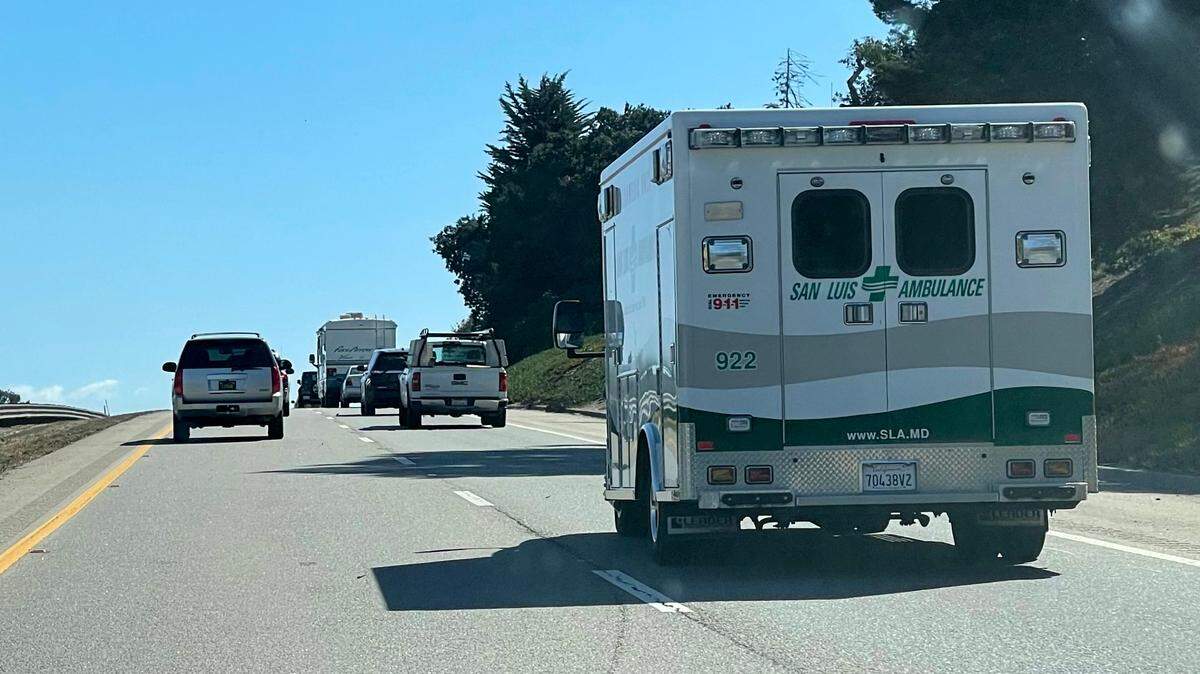
It’s about to get more expensive to call an ambulance in San Luis Obispo County — but by how much isn’t exactly clear.
In San Luis Obispo County, emergency medical care is provided by San Luis Ambulance, which has served the region — with the exception of Cambria’s Community Healthcare District’s ambulance service — for 80 years as of this year.
San Luis Ambulance’s nine stations dotting Highway 101 provide round-the-clock coverage for all of San Luis Obispo County — and over the last five years, those stations’ services have been in higher demand than ever.
Since 2020, when San Luis Ambulance received 25,194 requests for ambulance services, demand has ramped up by nearly 6,000 calls per year, reaching 31,142 in 2024, according to San Luis Ambulance operations manager Kris Strommen.
But as the number of requests has risen, so too have the costs associated with getting an ambulance ride — and those costs will continue to rise when the county Board of Supervisors reviews the rate structure later this year.
“The county is currently in this rate review process,” Strommen said in an email. “It’s also worth noting that the actual reimbursement can vary significantly based on the patient’s insurance coverage, whether they have coverage like Medicare, Medi-Cal, private insurance, or no insurance coverage at all.”
Why are ambulance rides getting more expensive?
In the 2025-26 fiscal year, ambulance rates for the most advanced level of care can max out at $8,699 before getting to any of the additional costs associated with an ambulance ride.
How much of that can be covered by insurance varies wildly from client to client, with many of the largest insurers only agreeing to take on some or all of the bill if the ambulance’s services are medically necessary to keep a patient alive.
Base rates are determined by set by an agreement between the county and San Luis Ambulance and are reviewed each year to make adjustments to how much the provider can charge for core services, using the Consumer Price Index to set how much the rate can increase each year.
For the current 2025-26 federal fiscal year, which started Oct. 1, being transported to the hospital via advanced life support — the most common service provided by the company — costs $3,381, while the less common critical care transport costs $8,699, according to the county.
Other ancillary services can tack on an several additional hundred dollars depending on what a patient needs.
For example, getting oxygen from an ambulance can cost around $115, while receiving preventive care for infections — and the disposal of biohazards — can cost around $29.
Keeping an ambulance on standby for an event can cost a maximum of $249 per hour, according to the county.
Additional fees come into play based on mileage, making it more expensive the farther an ambulance has to travel. An advanced life support ambulance ride costs $71 for every mile driven to the hospital, while the critical care transport costs $82 per mile.
For example, a critical care ride from Nacimiento Lake to Adventist Health Twin Cities Hospital in Templeton could cost more than $1800 one way for mileage alone.
The question of where a resident happens to be when they call an ambulance also can cause plenty of variation in how long it takes to respond.
According to San Luis Obispo County Health Agency public information officer Tom Cuddy, ambulance response times are calculated by zone rather than by individual station, because there is some overlap in station areas and most stations are clustered near larger population centers along Highway 101.
Depending on where you live, to get an ambulance ride it could take anywhere from just under 11 minutes — or 25 minutes during busy periods with extended response times — to around an hour and a half.
In all seven incorporated cities in the county — and a handful of more populated unincorporated communities including Los Osos, Nipomo, Oceano and Templeton — the “urban” zone classification means you’re likely to see an ambulance response closer to the 11- to 25-minute range depending on how busy it is, according to data shared by the county health office.
Rate changes are coming, but how much?
According to county Health Agency public information officer Olivia Montiano, though the 2025-26 CPI-based rate structure is in place as of Oct. 1, more changes are coming.
For example, in the most recent 2024-25 fiscal year, advanced life support would have cost $3,278, but that rose to $3,381 because the country’s core CPI was at 3.1% when the review was completed.
However, there’s another rate review on the horizon — though the exact amount is unknown.
Though the CPI-based rate structure has been in place for several years, a new rate review process by outside emergency medical services firm Page Wolfberg & Wirth will evaluate a number of factors that have contributed to rising ambulance costs, Cuddy said.
“SLO County’s ambulance rate review process looks at whether the current base rates cover the actual costs of providing emergency medical services in San Luis Obispo County,” Cuddy said in an email. “That review typically includes labor and staffing, equipment and supply costs, fuel, vehicle maintenance, insurance, training, and compliance with state and local regulations.
Service demand and readiness requirements are also factored into the equation, he said.
The CPI increase from the current rate cycle will not be factored in on top of the new rate structure, as they have conducted a comprehensive review and incorporated all relevant factors into their recommendations, Montiano said.
Montiano said the firm will present its findings and recommendations on new ambulance rates to the Board of Supervisors, likely by the end of this year.