Paso Robles mayor calls Chris Bausch ‘shameful,’ suggests citizen recall
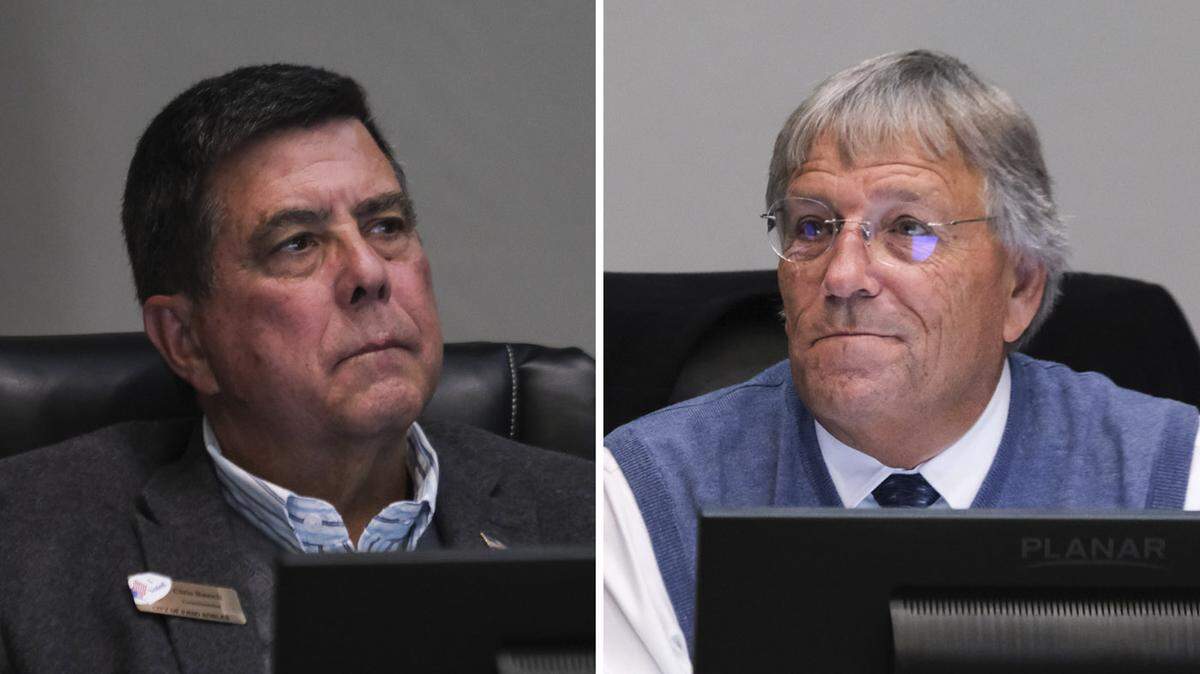
In a scathing address to the public, Paso Robles Mayor John Hamon said the most effective way for Councilmember Chris Bausch to be held accountable for his actions — which he said caused the city to pay nearly $500,000 out of its general fund toward legal fees — was for the citizens of Paso Robles to start a recall campaign.
The statement came toward the end of a lengthy City Council meeting Tuesday night, when Hamon asked City Attorney Elizabeth Hull to report out on the result of the city’s settlement with The Tribune and Bausch over The Tribune’s public records lawsuit that was prompted by Bausch’s refusal for six months to turn over communications from his private devices.
After Hull’s statement, which was similar to the statement the city gave The Tribune following the Sept. 8 settlement, Bausch falsely claimed he was never ordered by the court to turn over records — a statement that was clearly untrue seeing as he only produced 4,500 texts and emails after direction from a judge.
That’s when Hamon took the floor and said that both The Tribune’s lawsuit and former city manager Ty Lewis’ claim against the city occurred because of “Councilman Bausch’s decision-making as an elected official (and) the personal choices of Mr. Bausch.”
“Public officials are entrusted to act with integrity, good sense and respect for the office,” Hamon said. “Instead, Mr. Bausch’s actions have bought up nearly half a million dollars in taxpayer dollars to be diverted from crucial city services — funds that should have been invested in infrastructure, public safety and community programs.”
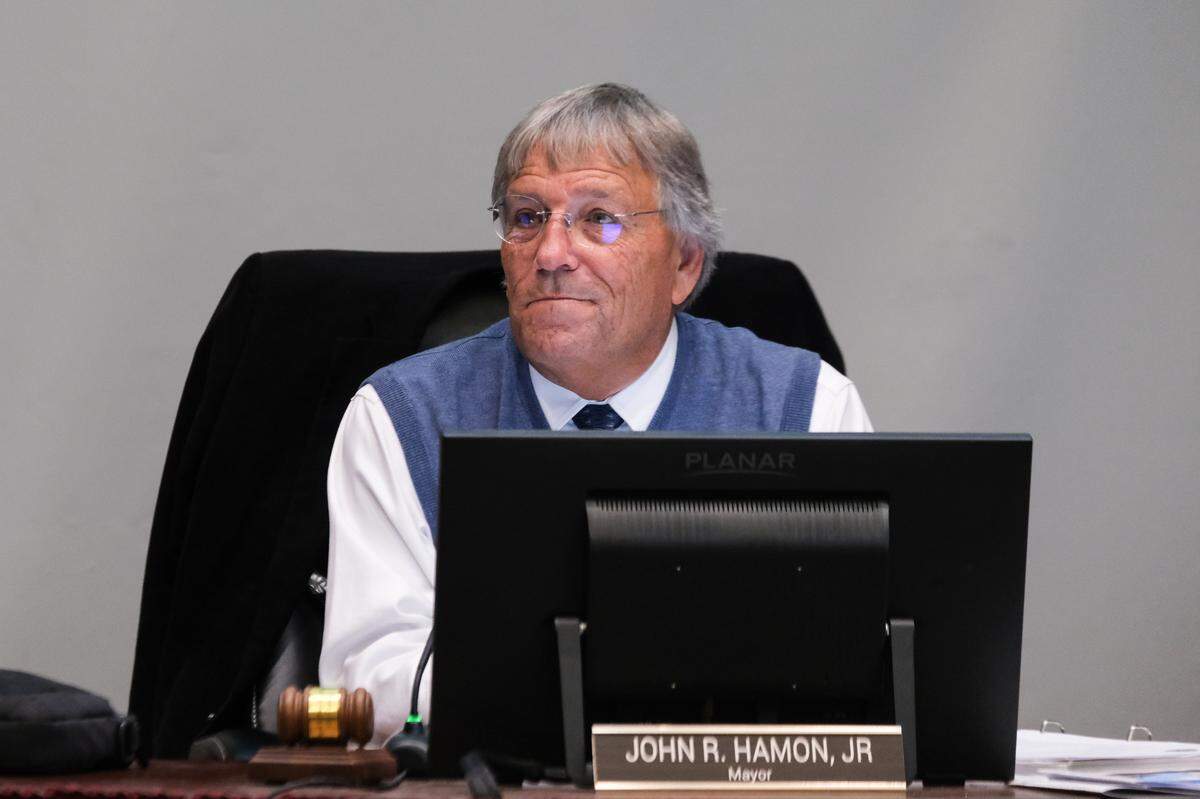
Hamon said those dollars instead went toward legal fees, including Bausch’s own personal defense. Bausch refused to settle the case with The Tribune unless the city paid $27,000 for his legal fees.
In total, the city spent from its general fund $422,954 for legal fees incurred connected to Bausch. The Tribune’s legal fees cost $250,000, Bausch’s legal fees cost $27,000 and Lewis received $145,954 from the city for the settlement of his harassment claim. The other $220,000 of Lewis’ settlement was paid by the city’s insurer.
The lawsuits have not only harmed the residents of Paso Robles financially, Hamon said, but they have also eroded the public’s trust in local government.
“Leadership requires accountability, and it is unacceptable for elected officials to engage in conduct that exposes the city to repeated legal challenges,” Hamon said. “Mr. Bausch owes the people of Paso Robles a sincere explanation for his conduct and lack of professionalism and judgment required of his entrusted city position. Our city deserves leaders who put community first, not individuals whose actions created unnecessary burdens (on) taxpayers.”
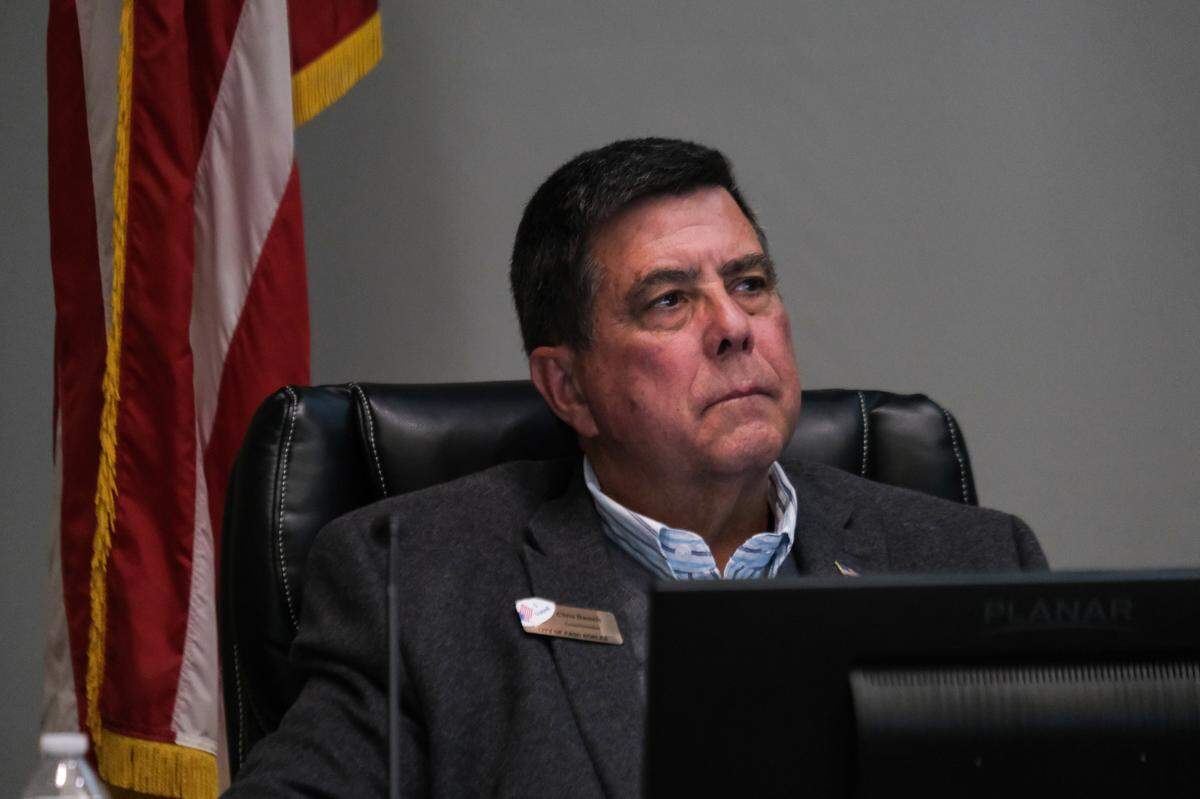
Hamon said many Roblans have asked him what could be done about Bausch’s actions in terms of accountability, to which he responded that the council could take punitive actions, like removing Bausch from official committee assignments. The council could also vote for a public reprimand or a censure of Bausch, which would formally express disapproval of Bausch’s actions, Hamon said.
“The most effective method, however, of the remedy disposal of any elected official is by the citizens,” Hamon said. “Their action through a public recall process can be done.”
Hamon said recalls can only be requested by registered voters within that elected official’s district. Bausch serves District 2 in Paso Robles.
“In closing, I’ve known Chris for over 30 years, but what he has done to the city over these many months has been disrespectful, shameful and dishonorable — not only for our citizens, but also to our employees of the city and to our fellow City Council members,” Hamon said, adding that he was compelled to “publicly state the truth in my huge disappointment” in Bausch after the murder of conservative activist Charlie Kirk.
Hamon then turned to Bausch and said, “I’m sorry to have to say this, Chris, but again, I think we could have avoided a lot of this and I hope we can move on, but it’s unfortunate that we have lost quite a lot of money here.”
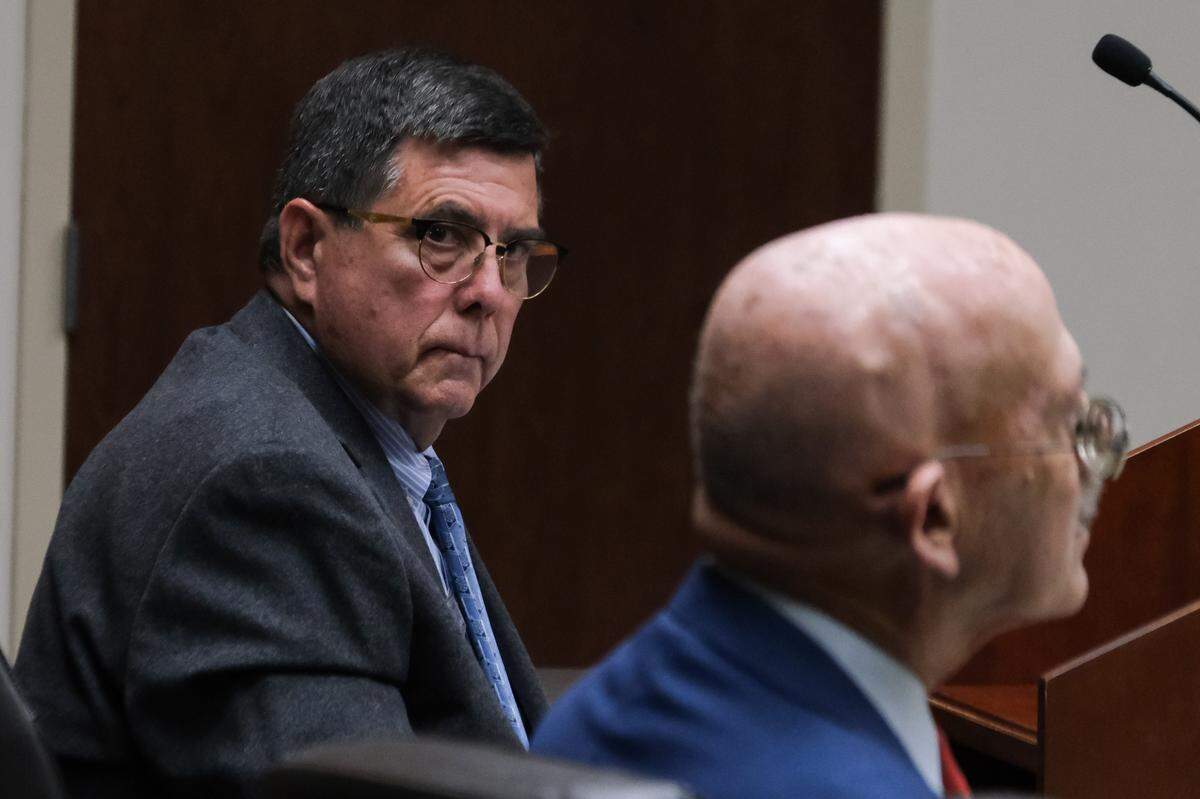
After a few moments of silence, Bausch then responded to Hamon, seeming to blame the mayor for hiring Lewis in the first place.
“John, I would ask you to look at yourself and ask who hired this man that sued me, that lost that claim. It was rejected by this council,” Bausch said. “I did not ask for that claim to happen. I was not part of harassment. I was not part of the conspiracy that you accused me of last October — that you still have not apologized for. You should.”
Bausch appears to be referencing Hamon’s op-ed in Paso Robles Daily News, in which the mayor condemned a “nefarious” plot to remove Lewis from his position, citing a “conspiracy.”
In response to Hamon’s op-ed, which did not accuse any specific individuals, Bausch copied Tribune reporters on an email reprimanding Hamon for publishing the editorial.
The executive summary of the investigation into Lewis’ claim, which was released as part of the settlement of The Tribune’s public records lawsuit against Bausch and the city, showed Bausch apparently refused to participate in the investigation into his own conduct.
With the caveat of Bausch’s “missing interview,” the summary did support many of Lewis’ allegations against the councilman.
In his response to Hamon during the Tuesday meeting, Bausch then accused Hamon of violating the Brown Act in an instance where Bausch believed Hamon should have recused himself, though it is unclear what topic was being discussed.
Bausch then directed his statements back to Lewis.
“You stand responsible for hiring this person,” Bausch said. “Take responsibility, John. Own it. It’s OK. We can move past this, but only when you take responsibility. I didn’t ask for any of this.”
Bausch then went on to read a statement he published in Cal Coast News, where he claimed he had the right to withhold and delay public records.
Elected officials, in fact, do not have the right to withhold or delay public records under the California Public Records Act.
According to David Snyder, executive director of the First Amendment Coalition, individuals working for a government agency — regardless of whether they are elected or employed — do not have the individual authority to withhold public records. That authority resides with the agency.
Snyder added that the litigation exemption in the Public Records Act only applies to records created for litigation — not records that could be the subject of or used in litigation.
“If that were the case, then virtually any record created by any government agency would be exempt because you can make an argument that any document created by a government agency could ultimately be the subject of some litigation,” Snyder said. “Perspective or possible litigation is not a valid reason to withhold records.”
Bausch also claimed he did not conduct public business on his personal devices, but over 972 emails and 3,524 texts showed he did so regularly.
Bausch claimed “all of this could have been avoided had our City Council made better decisions in the past,” specifically pointing out the city’s paid parking program and its hiring of BBK, the law firm that represents the city.
“Something is wrong, and it is time the City Council own up to fixing our mistakes when it comes to our legal counsel,” Bausch said.
This story was originally published September 17, 2025 at 4:24 PM.