SLO County wants to incentivize more affordable housing. How it works
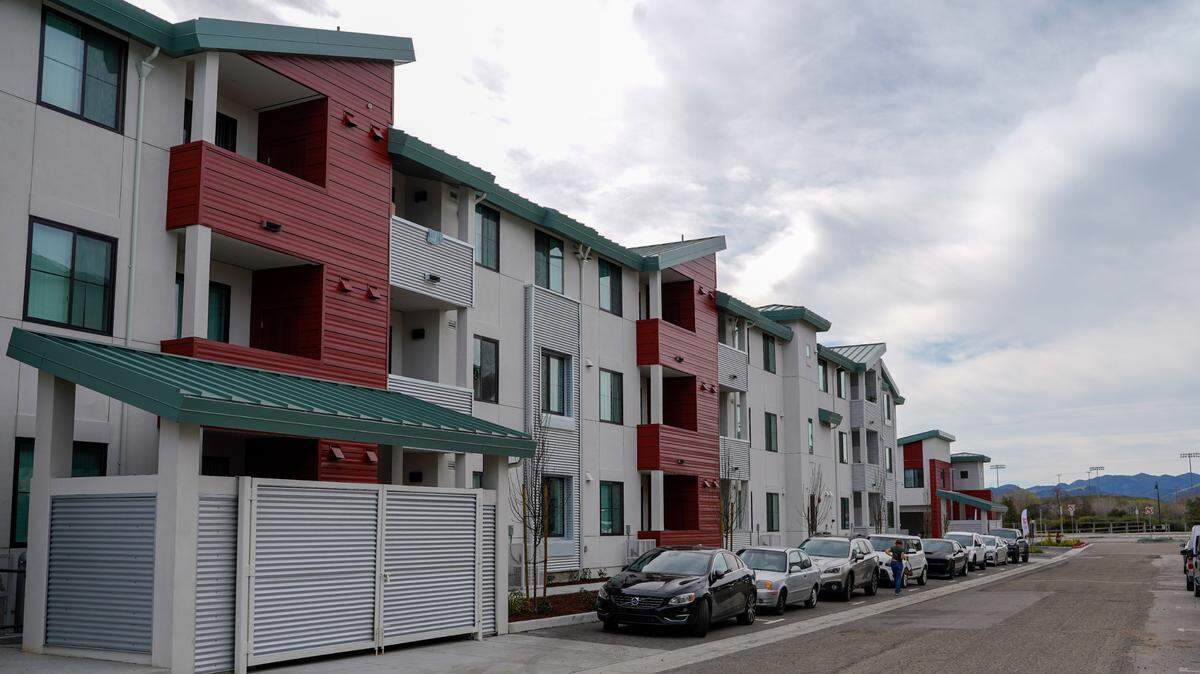
The San Luis Obispo County Board of Supervisors is exploring ways to make building homes — and specifically affordable homes — in the unincorporated parts of the county less burdensome for developers.
On Tuesday, the board held a hearing on two items that could make it easier for developers: amending the county’s land-use ordinance to encourage multifamily development and introducing a Regional Housing Incentive Program that developers can use to get key exceptions for their projects.
The actions are intended to accelerate affordable housing production in the unincorporated parts of the county, a point of need across the county as the current housing cycle goes on without much progress in that category.
According to the meeting’s staff report, there are around 753 entitled affordable housing units on the books as is — around 300 of them in unincorporated parts of the county. The proposed Regional Housing Incentive Program aims to remedy that situation by providing both incentives to include affordable units in new developments and incentives for developers in exchange for making contributions to the county’s affordable housing funds.
“We’re trying to map out an affordable housing program that takes input from the development community, because they know better on how to build things,” District 3 Supervisor Dawn Ortiz-Legg said. “We are so far behind that we have to try to be as bold as we can be right now.”
How proposed Regional Housing Incentive Program works
The ordinance, which amends the county’s Inland Land Use Ordinance, would establish a Regional Housing Incentive Program that supports affordable housing production by giving developers the option to either include affordable units in new multifamily builds from the start or give money to the county’s affordable housing fund in exchange for exclusive benefits that allow the developer to exceed certain building guidelines.
Under the new incentive program, developers can choose to earn “incentive points” by either voluntarily building more affordable housing units into their developments or by contributing in-lieu fees to the county’s affordable housing fund.
For every affordable unit constructed in a multifamily project, a developer can earn two incentive points.
A developer can also earn one incentive point for every $30,000 in in-lieu fees contributed to the county’s affordable housing fund, though the amount of money contributed per point may be subject to change by the Board of Supervisors.
Those in-lieu fees will then be redistributed to local affordable housing nonprofits by the Department of Social Services, according to the staff report. Regardless of how a developer earns those incentive points, they can be spent on a variety of exceptions to existing housing production regulations, with incentives for parking, design standards, density, floor space and land uses, according to the staff report.
The first category of incentives would allow developers to spend an incentive point to waive requirements for commercial use or affordable housing that would be required for a project on land zoned under Option Pending, Commercial Retail and Commercial Service, according to the staff report.
Incentive Category B allows for developers to either exceed maximum residential density or maximum floor area guidelines, according to the staff report.
A developer can spend anywhere from one to six incentive points to get exceptions for additional units, with one point worth two additional units per acre and six points netting up to 12 additional units per acre.
A developer who wants to exceed the maximum floor area typically allowed can spend one or two points to raise the level of intensity — in this case, the percentage of a parcel that will be covered by floor area — of a building plan, while spending three to six points waives the maximum floor area entirely.
Meanwhile, Incentive Category C allows developers to reduce minimum off-street parking, with the amount of points spent dictating how much parking will be required, according to the staff report.
One point waives the minimum requirement for guest parking, while two points waive the guest parking minimum and lower the parking requirement by 0.25 parking spaces per unit and three points lower the parking requirement by 0.5 parking spaces per unit.
Normally, under the updated baseline parking requirements, a developer needs to build one parking space for each one-bedroom unit, 1.5 spaces for two- and three-bedroom units and two spaces for each four-bedroom unit.
Finally, Incentive Category D would allow developers to exceed maximum height guidelines in several ways. A developer can spend one incentive point to get a 5-foot increase in maximum height, two points for a 10-foot increase, three points for a 15-foot increase or four points for a 20-foot increase, exceeding the normal baseline of 40 or 45 feet typical to most types of commercial or residential zoning.
It also allows developers to spend one point to halve the baseline setback requirement for the front of buildings of 20 feet or side and rear setbacks of 10 feet, according to the staff report.
Developers can also reduce the minimum amount of open space required by either 5% for one point or 10% for two to four points.
All of the incentives that a developer can earn can also be stacked with the state’s density bonus program, which allows some multifamily development to pack more units into a lot by accomplishing certain affordability requirements, according to the staff report.
In total, the county hopes to generate around $450,000 each year from in-lieu fees and related funds, which would go into its Regional housing Fund.
At the Board’s previous Aug. 19 discussion of the Regional Housing Incentive Program, the Board requested some modifications to the original version of the ordinance previously approved by the Planning Commission in July.
The Board’s revision limited the building height for projects that qualify for the program to four stories instead of six. It also requested that a requirement for interim residential uses be dropped, and the residential development requirement was lowered from 16% to 10% if a developer wants to qualify for the incentive program.
Gibson: County’s lowered expectations hurt policy goals
As the meeting proceeded, the heads of affordable housing development groups including People’s Self-Help Housing and the Housing Authority of San Luis Obispo said they’re excited to see an incentive program address development in the undeveloped parts of the county.
District 2 Supervisor Bruce Gibson, the sole “no” vote against the program, broke with his fellow Board members, saying that the new program doesn’t go far enough in fixing the root issues with affordability in the housing market.
“It strikes me, that by orders of magnitude, what we’re proposing here, by itself, is not significant, and again, we don’t have the analysis to judge whether that assertion by me is right or wrong,” Gibson said. “I think we’re also lowering our expectations.”
Gibson said he would have preferred the county maintain its Inclusionary Housing Ordinance that the Board voted to repeal in June 2022, which required developers to make 8% of the units produced in their developments affordable or face a fee based on the home’s square footage that would contribute to affordable housing elsewhere.
“I can’t leave the subject without noticing the in-lieu fees from inclusionary housing ordinance, which Supervisor (John) Peschong repeatedly declared to be a failure based against a standard that was never fully articulated,” Gibson said.
He said the previous Inclusionary Housing Ordinance “in its last year, was generating $800,000 a year that was going direct to our affordable housing here program.”
“We come here contemplating an incentive program that’s way more complicated than any of the other options, and generates less than half of that,” Gibson said.
With the program’s details approved, the Board will review its decision one last time at its Oct. 21 hearing, in which the Regional Housing Incentive Program will be established.