SLO County farms rely on temporary visas amid labor shortage. Is it working?
AI-generated summary reviewed by our newsroom.
- Talley Farms employs over 100 H-2A workers annually to offset local labor shortages.
- High visa program costs include housing, insurance and wages nearing $25 per hour.
- Rising wage mandates may threaten long-term viability of H-2A program for small farms.
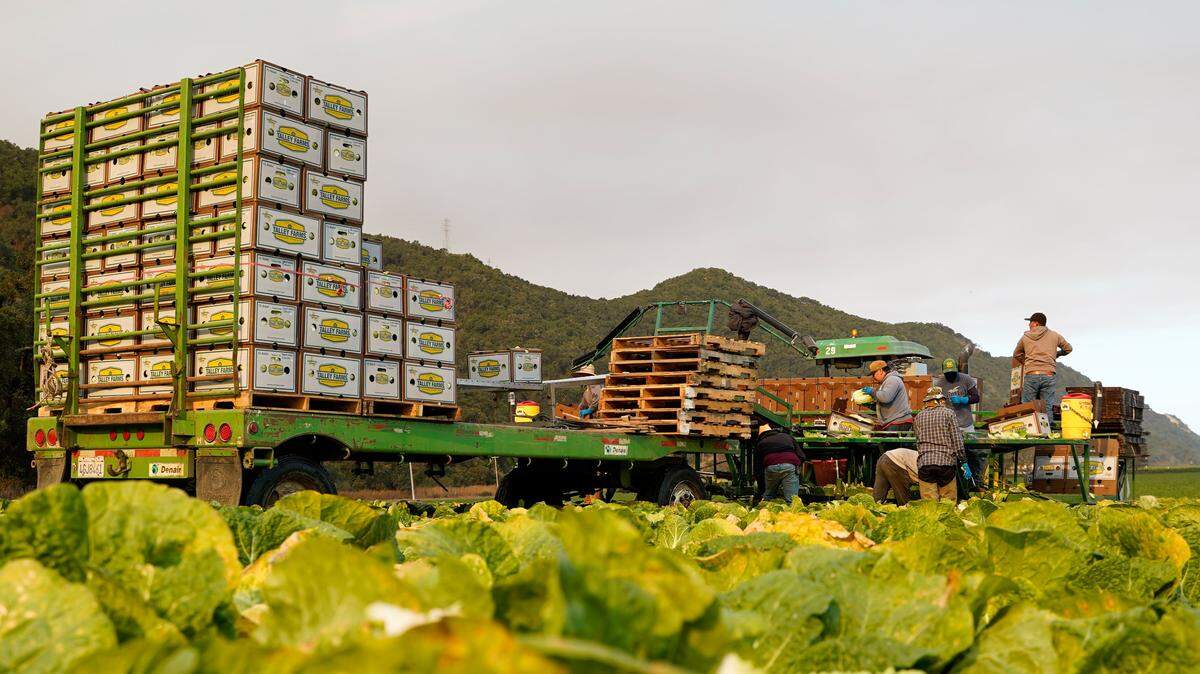
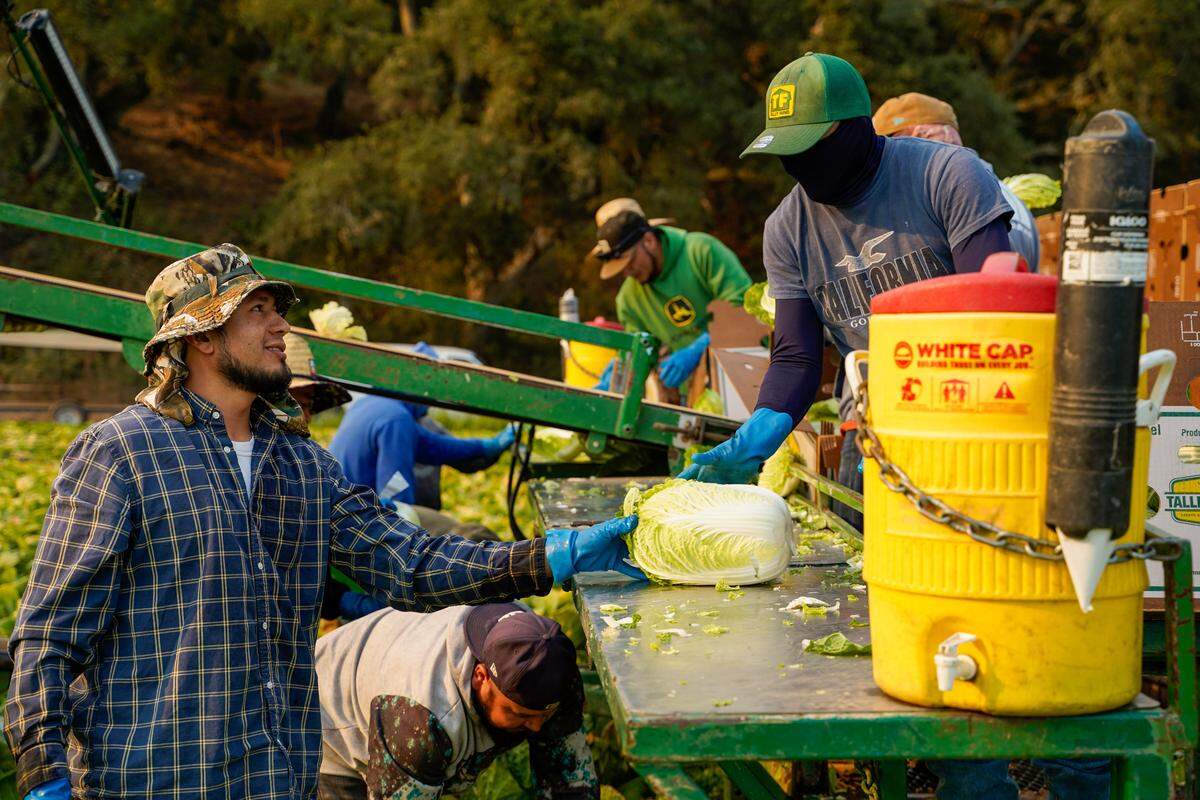
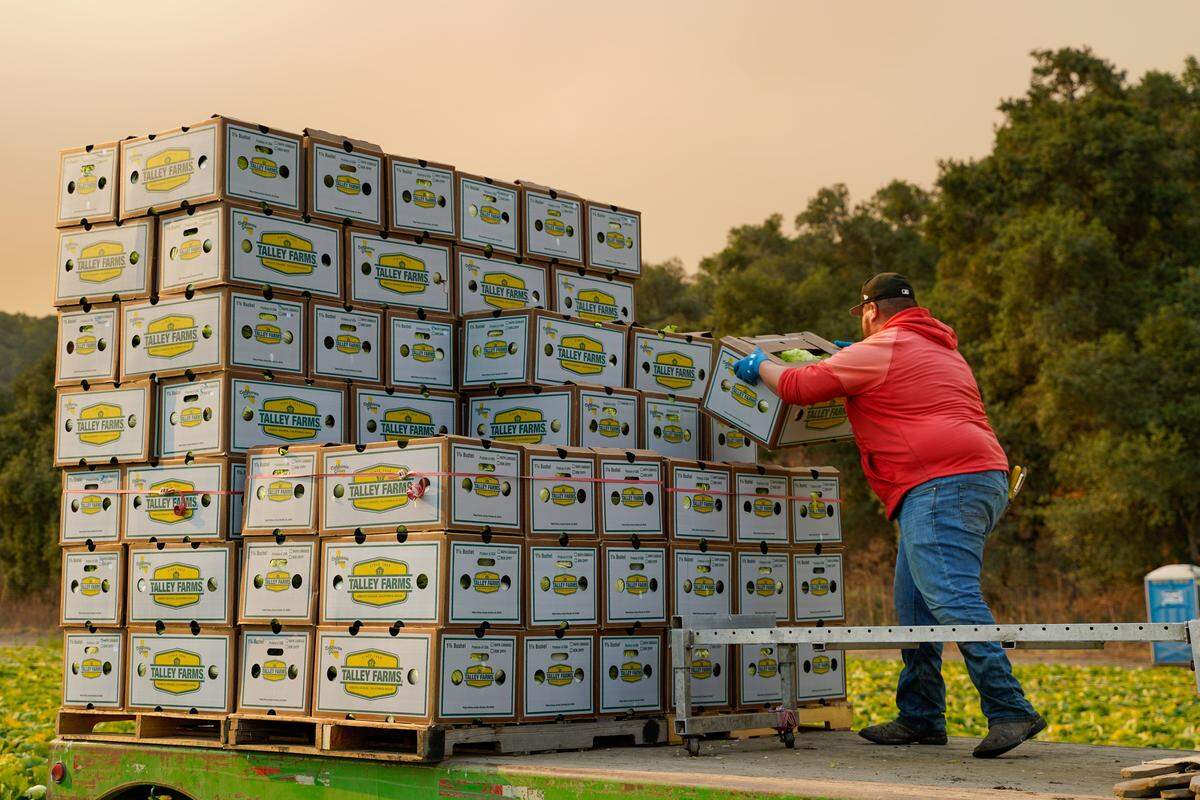
Amid luscious rows of leafy greens, 13 Talley Farms workers plucked heads of Napa cabbages from the ground in rural Arroyo Grande and packed them into 30-pound boxes.
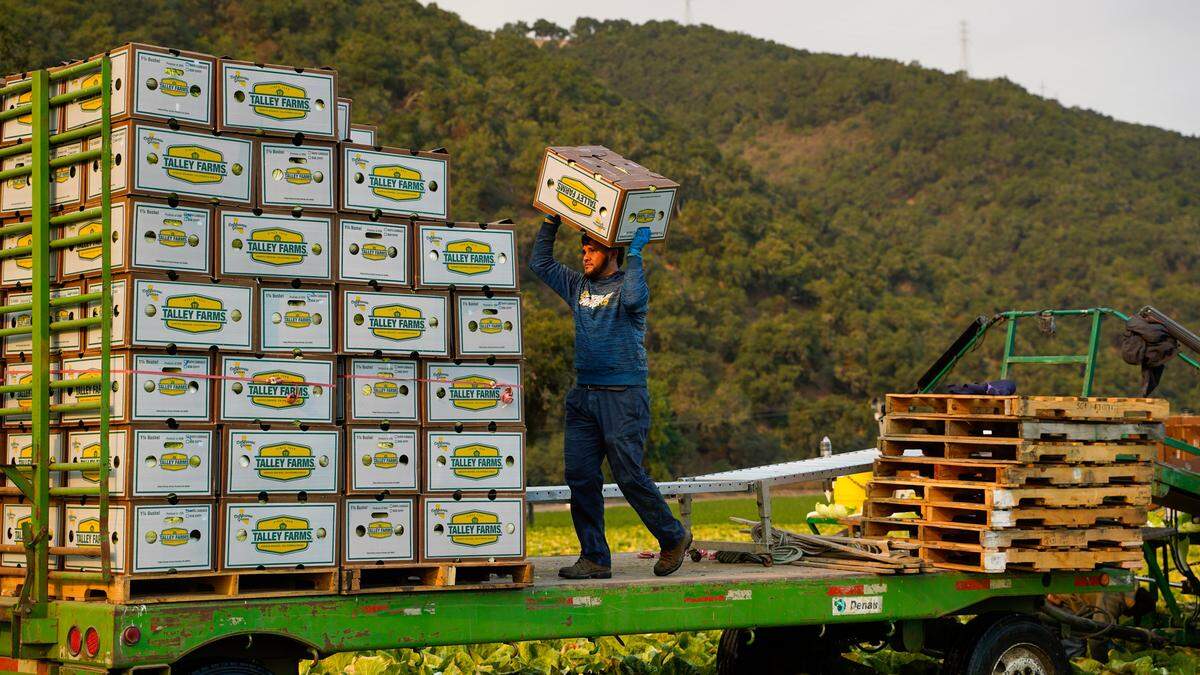
The men filled dozens of containers of cabbage, carefully loading them onto a wide tractor bed. The produce then sat in coolers before being placed in local farm share boxes or packed onto trucks and shipped to grocery stores across California.
By 8 a.m., the group had already been harvesting produce for five hours to beat the August heat set to descend on San Luis Obispo County.
None of the crew members were born in the United States — but all are here legally.
For nearly a decade, Arroyo Grande’s Talley Farms has relied on costly temporary visas to get the workers it needs to continue harvesting bell peppers, bok choy, parsley, cabbage and other crops.
Third-generation farmer Ryan Talley said the program has essentially saved his family farm.
“We were begging our domestic workers to be here working for us, and the H-2A (program) just completely turned it on its head,” the Talley Farms vice president said.
Now, as U.S. Immigration and Customs Enforcement raids target agricultural workers on the Central Coast, Talley Farms sees the program as an interim solution to the agriculture industry's struggles to maintain a large enough workforce.
What is the H-2A visa program?
The H-2A visa program allows foreign nationals to fill temporary agricultural jobs in the United States for up to a year at a time.
Visa holders are not eligible to become U.S. citizens, but visas can be renewed many times over, Talley said.
At Talley Farms, more than 100 employees are brought to the Central Coast from Mexico each year through the H-2A program, with each spending four- to nine-month stints on the farm.
Businesses must provide housing, health insurance, transportation and above-minimum wages to all H-2A workers, according to Talley.
“You’re financially responsible for these individuals, pretty much 24/7,” he said.

Talley Farms has a total of 10 homestead properties and mobile home units to house these workers, along with a soccer field, according to Miguel Rodriguez, the company’s food and employee safety coordinator.
The business also has vans to drive workers on field trips to town.
In rural Arroyo Grande, Talley Farms is too far from large agricultural hubs such as Santa Maria or Salinas to attract many local workers willing to drive upward of 30 minutes to complete extremely physical work for minimum-wage pay, Talley said.
SLO County farmers struggle to find enough local workers
San Luis Obispo County’s agricultural industry has been dealing with extensive labor shortages for at least the past decade, said Paul Clark, executive director of the San Luis Obispo County Farm Bureau.
“There have been times where fields aren’t being harvested because there isn’t enough labor to go around,” Clark said. “Certainly with the current immigration enforcement, that’s exacerbated by people being afraid to come to work for fear of being detained.”
Farmers have no guarantees that workers will stick around, especially if their competitors are offering more money, Clark said.
Increasingly more SLO County businesses, including wineries and strawberry and vegetable farmers, have turned to the H-2A program to secure a more reliable workforce, Clark said.
Over the past decade, the number of H-2A workers in California has increased by more than 500%, according to data from UC Davis tracking the visa program in California from 2013 through 2023.
SLO County was one of nine in California — along with Monterey, Santa Cruz, Santa Barbara and Ventura — to host more than 1,000 H-2A visa holders, according to the university’s most recent data.
In 2023, SLO County farms employed 1,184 H-2A workers — a drastic increase from 2013, when just two visa-sponsored laborers worked in the county.
Jean-Pierre Wolff, owner of Wolff Vineyards in San Luis Obispo, is among the local business owners who has used the temporary visa program to address the worker shortage.
For the past five years, Wolff has used a labor contractor to hire up to 30 workers with H-2A visas to handle harvest season.
Wolff said the H-2A program has been a good, yet expensive, way to supplement the local workforce.
“The cost of farming is so much more significant,” he said, but for now, he has no other choice but to use it.
Lack of reliable workforce hurt SLO County farm for years
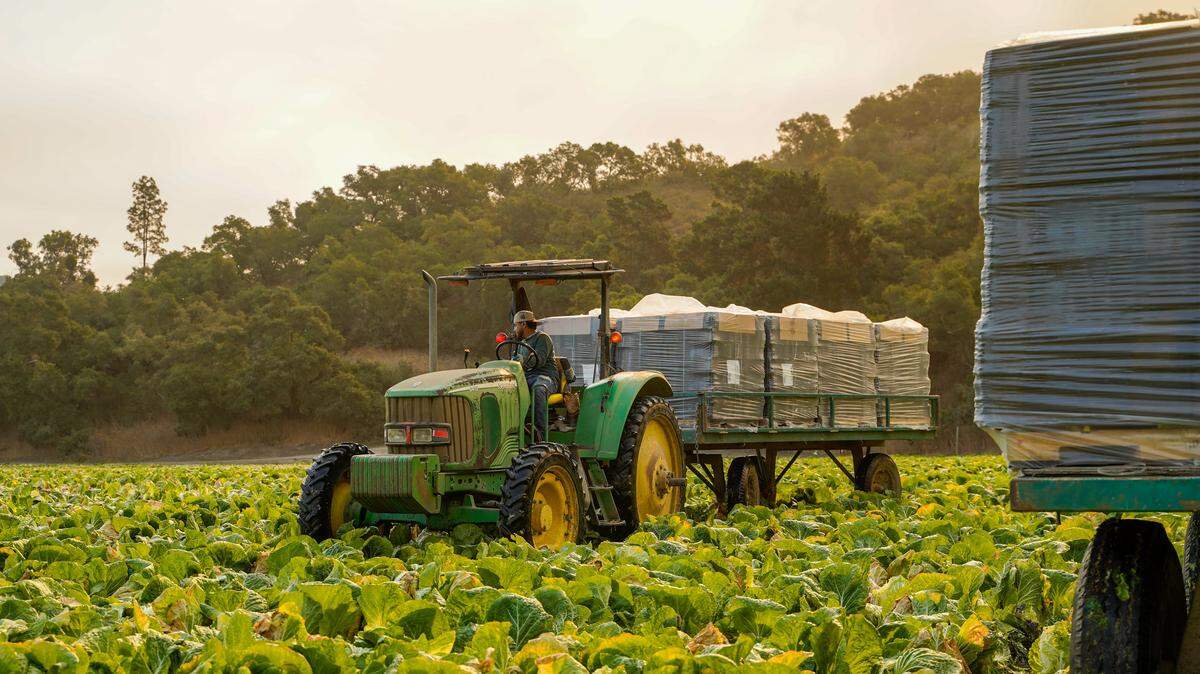
In 2016, Talley Farms embraced the H-2A program after years of labor shortages forced the business to consider alternative employment options.
Talley Farms’ labor issues began popping up in 2008 when local employees stopped appearing for shifts, Talley recalled.
When the workers did show up, he added, many would complain about their duties, sometimes leaving early or not following through with given tasks.
At one point, Talley said, crops were rotting in the fields because Talley Farms didn’t have enough employees to pick produce.
At that time, the family-run farm’s lack of laborers seeped stress and uncertainty into every part of the business. Talley called it an “insane” situation that left company leaders scrambling.
“It was literally sitting down every single day, probably for about an hour ... just strategizing, ‘What can we harvest?’ ” he said. “Because we can’t harvest everything that we’ve grown. The other thing was, ‘Do we have any idea how many people are actually going to show up?’ ”
Anibal Escobar, Talley Farms compliance and employee director, said he dealt with constant complaints during this period.
“If you don’t have a reliable workforce, you will lose hundreds of thousands of dollars by not being able to harvest a product,” Escobar said.
When a labor contractor brought the first eight H-2A visa holders to Talley Farms in 2016, Talley said it was an immediate “breath of fresh air.”
Nine years later, the business’ temporary workforce has grown exponentially, with the farm welcoming 126 employees with H-2A visas in 2025.
Arroyo Grande business embraces migrant farmworkers
Every March, May and August, Talley Farms leaders travel down to Tijuana, Mexico, to complete visa paperwork and transport workers to Arroyo Grande.
Workers primarily come from the Mexican states of Michoacán, Guanajuato and Guerrero, according to Escobar. All are men, with most between the ages of 19 and 25.
Since the beginning, the business’ H-2A workforce has been reliable and motivated, Talley said, calling it “a win-win for the employer and the employee.”
What does visa program mean for laborers from Mexico?
Visa holder Jared Carrillo Duarte has traveled back and forth from Guanajuato to rural San Luis Obispo County for the past five years, he told The Tribune through a translator.
For nine months at a time, he leaves his wife and two children to harvest Napa cabbage on the Central Coast. He said the money he makes at Talley Farms has made an “ocean of difference” in his family’s life.
Before acquiring the visa, Duarte was living under his parents’ roof with practically nothing, he said. Now, he’s been able to buy his own car and house.
“The living style is way better,” he said, acknowledging that he’s missing out on important dates and memories with loved ones.
However, “as long as there’s an opportunity, I’m going to be here,” Duarte said.

Acquiring an H-2A visa can be a life-changing event, Escobar said. He compared it to winning the lottery, while Talley likened it to being drafted into the NBA.
Many of Talley Farms’ temporary workers are making tenfold what they could earn doing similar work in Mexico.
What does Talley Farms pay temporary employees?
Talley’s biggest issue with the H-2A visa program is its cost.
“The financial burden is greater. The regulatory burden, the paperwork burden, all of that is all greater,” Talley said. “In the end, it’s a lot cheaper than plowing under crops and losing business and all of the domino effect of not having adequate labor.”
However, he’s hesitant to say whether the costly and cumbersome visa program will remain feasible for the family-run farm in the future if minimum wage rates continue to rise.
In 2025, the U.S. Department of Labor set the minimum wage for California H-2A employees at $19.97 per hour, a 1% increase from the previous year.

For the five years prior, wages increased an average of 7.3% each year in California, according to the American Farm Bureau Federation.
“The downside is that it’s certainly more expensive and there’s an additional cost to using H-2A labor and complying with all the laws and regulations,” Clark said.
On top of minimum wage, Talley said providing free housing, transportation, health insurance and more adds up to about an extra $5 to $10 per hour for each employee.
To make ends meet, Talley Farms and other agricultural businesses in the area use a combination of local and H-2A workers to fill their crews.
“We have to make money in order to keep our lights on and to keep farming, so there needs to be a balance, and we need to come up with an equitable solution” to California’s farmworker shortage, Talley said.
How much does California rely on migrant farmworkers?
California’s agricultural industry relies on nearly 800,000 migrant and seasonal farmworkers to grow more than half of the nation’s vegetables, fruits and nuts, according to the state Employment Development Department.
California Gov. Gavin Newsom’s office estimated that 50% percent of all California farmworkers are undocumented.
As ICE has ramped up deportations across the United States, some Central Coast farms have been targeted in “major workplace raids,” The Tribune previously reported, resulting in the arrests of 40 people in June.
Talley said he’s relieved to have a large legal workforce that won’t be impacted by ICE, but that the high costs of the visa program are unattainable for many California farmers.
“H-2A saved our family farm, but fast-forward to 2025 and that could be the thing that puts us out of business, because it’s just too expensive,” Talley said.
This story was originally published August 22, 2025 at 5:00 AM.