SLO County lifts boil-water order for some Five Cities residents. Here’s where
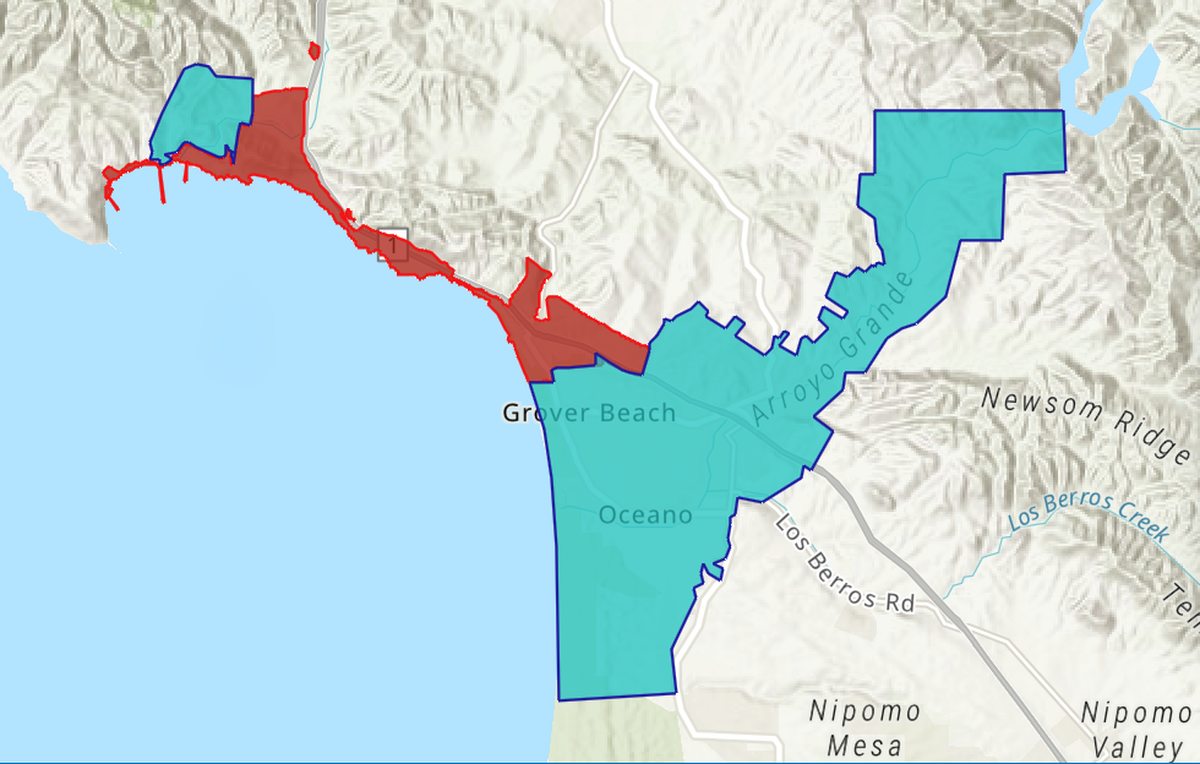
The boil-water order was lifted for some areas of the Five Cities on Friday afternoon, two days after a water-contamination alert was issued for a wide swath of southern San Luis Obispo County.
According to an emergency alert from the county, the boil-water order was lifted in Arroyo Grande, Grover Beach, Oceano and for customers of the San Miguelito Mutual Water Co. The order was instituted Wednesday in response to the “unprecedented” detection of coliform bacteria in the Lopez water distribution system.
Residents of Pismo Beach and the Avila Beach Community Service District service area remained under the boil water order, according to the emergency alert.
Wednesday’s boil-water order encompassed around 50,000 San Luis Obispo County residents and said that all water used for drinking and food preparation should be boiled or purified using bleach or water purification tablets through Sunday.
Coliform bacteria, the contaminant first identified in the Lopez distribution system, is an indicator of the potential presence of E. coli, county Department of Public Works public information specialist Shelly Cone told The Tribune on Thursday.
E. coli is a particular strain of fecal coliform bacteria that can cause illness in humans.
Cone said the county has not detected E. coli specifically since Monday, and it still has not identified the cause of the contamination, though a comprehensive investigation by the State Water Resources Control Board’s Division of Drinking Water and San Luis Obispo County Public Works Department is underway.
A second sample taken on Tuesday found only elements of total coliform bacteria, not E. coli, Cone said. Though E. coli hasn’t been detected since Monday, the initial positive for both coliform and E. coli bacteria triggered the boil water notice, she said.
“The presence of coliform does not necessarily mean the water is unsafe, but it does trigger further testing to rule out the presence of harmful pathogens,” Cone said in an email. “If coliform or E. coli is detected, follow-up sampling is immediately conducted until no evidence of contamination remains.”
Cone said the remaining boil-water orders will be lifted when repeated testing comes back negative for bacteria.
On Friday, tests at the Lopez Lake distribution system came back negative, meaning the remaining boil-water orders could be lifted as early as Saturday, should the next samples test negative, Cone said.
The boil-water order created widespread impacts across the area, shutting some food-service business, forcing others to adopt safety protocols and prompting a run on bottled water from local grocery stores.
How can you protect yourself from E. coli?
According to the Mayo Clinic, symptoms of infection typically begin presenting three to four days after exposure, though you may become ill as soon as one day after exposure or as late as more than a week after.
E. coli bacteria can be harmless or cause mild symptoms such as brief diarrhea, though some strains can cause severe stomach cramps, bloody diarrhea and vomiting.
San Luis Obispo County Health Agency public information officer Thomas Cuddy said residents should seek medical care right away if they experience any of these more severe symptoms:
- Diarrhea or vomiting more than two days
- Bloody stool or bloody urine
- Fever higher than 102 degrees
- Signs of dehydration such as little or no peeing, having very dark pee, being very thirsty, having a dry mouth or throat, feeling dizzy or lightheaded, and crying without tears
- Unexplained bruising or rash with tiny red spots
- Feeling extremely tired or not alert
If you have mild symptoms and are recovering at home, it is important to stay well-hydrated while children exhibiting diarrhea or vomiting symptoms should try to drink extra fluids including Pedialyte, Cuddy said.
How to keep drinking water clean
The county advised residents of Pismo Beach and the Avila Beach Community Services District to continue boiling all water for one minute at a rolling boil, allowing it to cool before drinking.
Boiled or bottled water should be used for brushing teeth, drinking and food preparation, according to the county.
Households that are unable to boil water should use one-eighth of a teaspoon unscented liquid bleach per gallon of water to disinfect water, followed by a thorough mixing and allowing it to stand for 30 minutes before using, according to the county.
Cloudy water can be made clearer by running it through a clean cloth and using one-quarter teaspoon of bleach per gallon of water, according to the county.
It should be noted that any approach using bleach can cause water to taste or smell like chlorine, which means the disinfection has worked, according to the county alert.
This story was originally published May 2, 2025 at 1:49 PM.