SLO County residents told to boil water due to bacteria. How dangerous is it?
Thousands of San Luis Obispo County residents were recently warned to boil or purify their drinking water after tests detected a strain of coliform bacteria in the water supply.
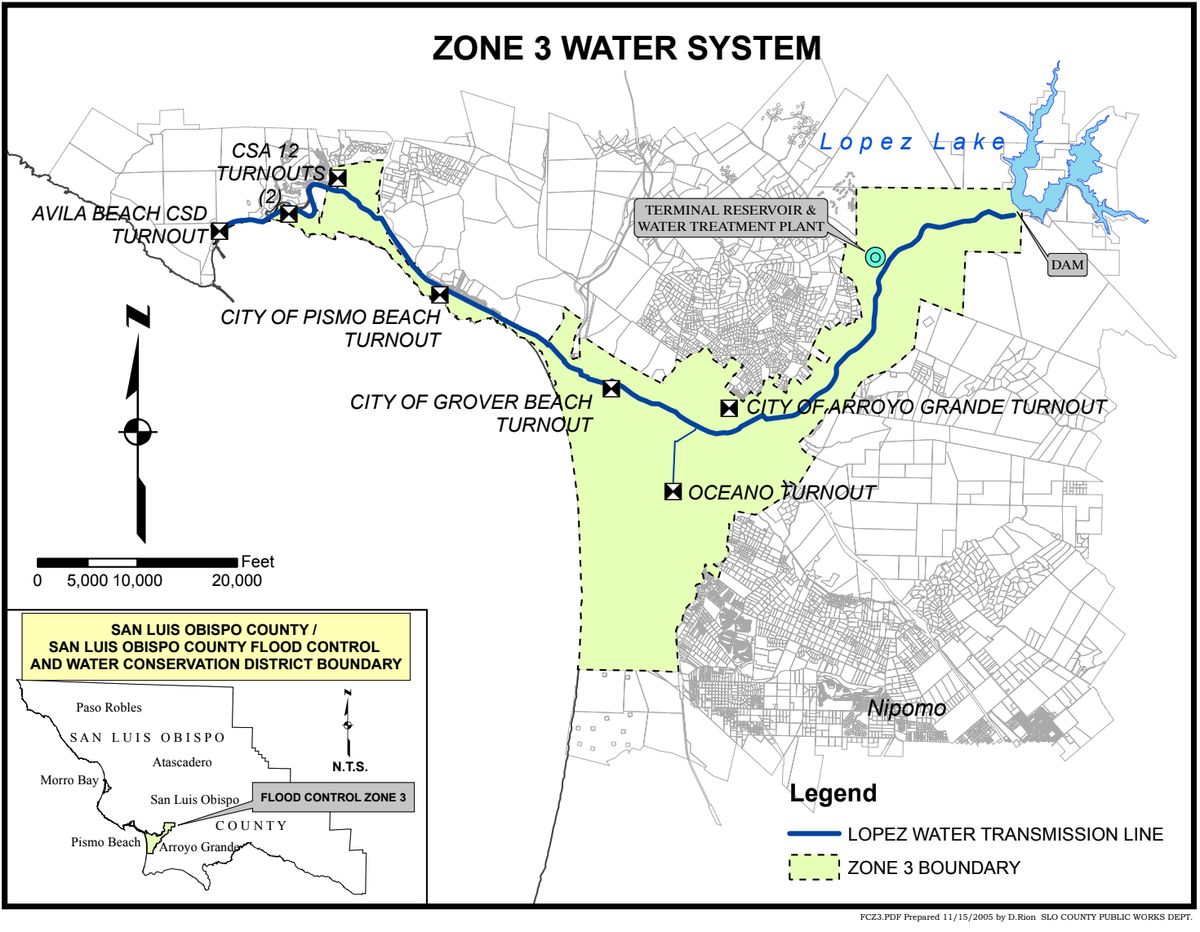
The bacteria, which was found in the water distribution system of Zone 3 of the San Miguelito Water Co., is an early indication of a potential E. coli contamination, according to San Luis Obispo County Public Works public information specialist Shelly Cone,
Cone said the detection of coliform bacteria in the Lopez supply was “unprecedented.”
As many as 50,000 people across the Five Cities area and southern San Luis Obispo County were affected by the boil water alert, according to Cone. That included parts of Arroyo Grande, Grover Beach, Pismo Beach and Oceano.
This is the first time coliform bacteria contamination at the Lopez distribution system has triggered a boil water notice, the county Public Works Department said in a Thursday news release.
On Friday afternoon, the boil water order was lifted for people living in Arroyo Grande, Grover Beach and Oceano, as well as for customers of the San Miguelito Mutual Water Co., according to a SLO County emergency alert.
Residents in Pismo Beach and Avila Beach Community Service District remained under the order.
Here’s what to know about the potentially dangerous water contaminant:
What is coliform bacteria?
Coliforms are a strain of common bacteria that are usually harmless to humans, according to a fact sheet from the California State Water Resources Control Board.
However, the presence of coliforms at any concentration can be a sign that harmful microorganisms are present, the state water board said.
The strain of bacteria is typically found in the environment and is an indicator of potential water supply contamination, according to the Department of Public Works.
“The presence of coliform does not necessarily mean the water is unsafe, but it does trigger further testing to rule out the presence of harmful pathogens,” Cone wrote in an email. “If coliform or E. coli is detected, follow-up sampling is immediately conducted until no evidence of contamination remains.”
If you ingest water containing coliform bacteria, you have an increased risk of contracting a water-borne illness, according to the state water resources board.
What are symptoms of E. coli infection?
According to the Mayo Clinic, symptoms of infection typically begin presenting three to four days after exposure, though you may become ill as soon as one day after exposure or as late as more than a week after.
E. coli bacteria can be harmless or cause mild symptoms such as brief diarrhea, though some strains can cause severe stomach cramps, bloody diarrhea and vomiting, the Mayo Clinic said.
San Luis Obispo County Health Agency public information officer Thomas Cuddy said residents should seek medical care right away if they experience any of these more severe symptoms:
- Diarrhea or vomiting more than two days
- Bloody stool or bloody urine
- Fever higher than 102 degrees
- Signs of dehydration such as little or no urine, having very dark pee, being very thirsty, having a dry mouth or throat, feeling dizzy or lightheaded and crying without tears
- Unexplained bruising or rash with tiny red spots
- Feeling extremely tired or not alert
What should I do if I feel sick?
If you have mild symptoms and are recovering at home, it is important to stay well-hydrated, Cuddy said.
Children experiencing diarrhea or vomiting should try to drink extra fluids, including Pedialyte, he said.
Residents with more severe stomach or intestinal symptoms should visit with their primary care provider or seek out an urgent care facility, the county Department of Public Works said.
How can I keep drinking water clean in SLO County?
A boil water order remained in place for Pismo Beach and the Avila Beach Community Service District as of Friday afternoon.
Here’s how to properly heat your water so that its safe to drink, according to county instructions:
- Boil all water for one minute at a rolling boil
- Let water cool before drinking
- Use boiled or bottled water for drinking, brushing your teeth and food preparation
Here’s what to do if you’re unable to boil your water:
- For clear water, use one-eighth of a teaspoon unscented liquid bleach per gallon of water to disinfect water
- For cloudy water, filter through a clean cloth and use one-fourth of a teaspoon of bleach per gallon of water
- Mix well
- Let water stand for 30 minutes before using
Any approach using bleach can cause water to taste or smell like chlorine, which means the disinfection has worked, according to the county release.
Water purification tablets can also work to purify tap water, though manufacturer’s instructions may vary.
Garcia further warned that taps with water filters or reverse osmosis filtration systems are not safe against the bacteria and still require water to be boiled.
Dishes can still be washed under tap water so long as the water is hot — at least 150 degrees — so bottled water may still be preferable for washing dishes and brushing teeth.
Is it safe to shower?
Bathing and showering is still safe under the contaminated water, so long as you limit the amount of water that gets in your mouth, Garcia said.
However, babies and toddlers should be washed with sponge baths out of an abundance of caution, he said.
Can my pet get sick from drinking contaminated water?
Pets are similarly susceptible to the bacterial contamination, Garcia said..
Household animals should also only drink bottled or boiled water until the issue has been resolved.
When will boil water order be lifted?
Multiple cities have been cleared of coliform contamination, including Arroyo Grande, Grover Beach and Oceano.
Though the level of coliform contamination is above acceptable levels at the Lopez distribution facility, not all cities have detected the contaminant to the same extent.
In its Thursday update, the county Public Works Department said all affected cities and community service districts were conducting their own water testing, meaning the boil water notice may be lifted on a community-by-community basis.
“Residents are advised to continue to boil water or use bottled water for consumption and for pets until the order is lifted,” the Department of Public Works said.
In a video posted to the city of Pismo Beach’s Facebook page, Pismo Beach city manager Jorge Garcia said that tests on the city’s water all came back negative for contamination.
However, Garcia said, Pismo Beach will continue abiding by the county and state mandates to boil water.
Arroyo Grande city manager Matt Downing similarly said that contamination levels were within acceptable levels there, but he still advised residents to boil water as a precaution on Thursday.
In a Reel posted to Instagram, Arroyo Grande Mayor Caren Ray Russom said the city was operating under an abundance of caution on the contamination.
“Please take every precaution,” Russom said. “Please use bottled water or boiled water.”
In an email, Grover Beach city manager Matt Bronson said the city’s water testing has produced negative results so far, but has temporarily disconnected its water system from the Lopez distribution system, relying on groundwater for the time being.
Grover Beach will continue sharing information today through posts to its website, social media platforms and its existing email distribution list, Bronson said.
How to sign up for water alerts
You can sign up for alerts at AlertSLO.org to find out when the boil water order is lifted in your area.
This story was originally published May 1, 2025 at 5:13 PM.