SLO has a new plan to provide safe parking for homeless community. Here’s how it would work
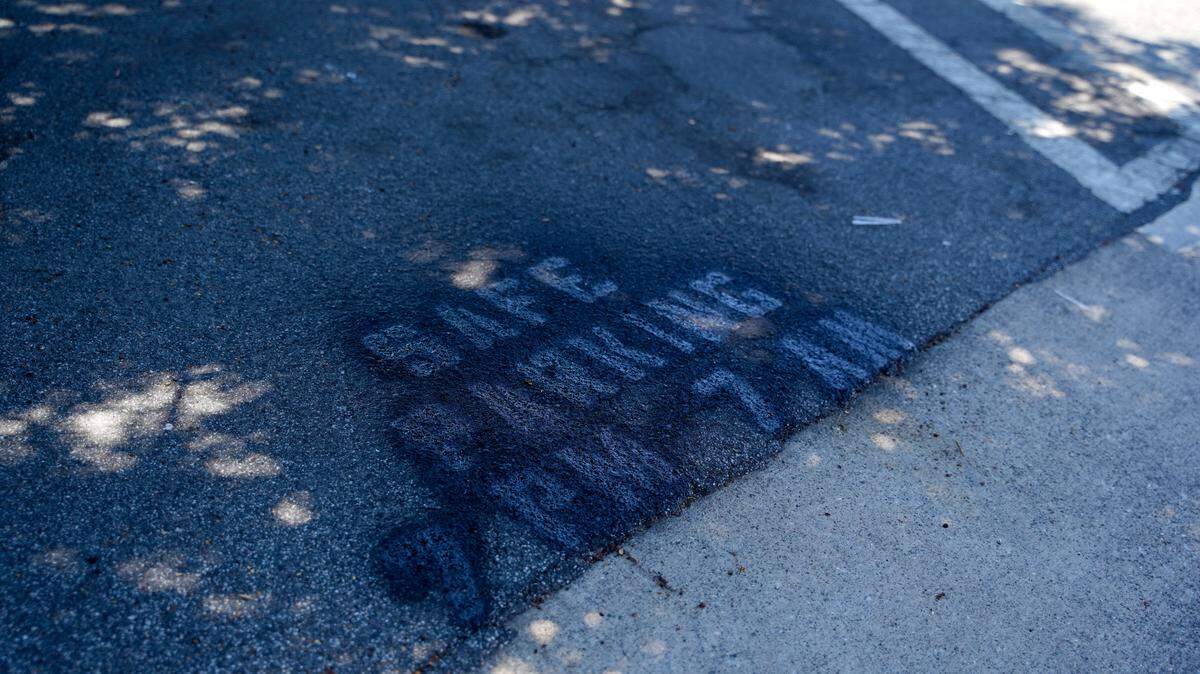
San Luis Obispo’s program that would give homeless residents living in their vehicles a safe place to park overnight is looking to make a comeback this week.
Following the August 2023 closure of the city’s Railroad Square Safe Parking Program — which provided 20 parking spots for safe parking near the train tracks — the city looked to implement a replacement program, but failed to find willing locations to host the site.
That meant for the past year and a half, homeless residents living in vehicles had nowhere to legally park and sleep overnight in San Luis Obispo, with the exception of a handful of spaces at 40 Prado Homeless Services Center.
Now, after failing to re-launch the program due to neighborhood backlash at proposed sites at the 1700 block of Palm Street and the parking lot of SLO Naz Church, the city is looking to bring back the program through a total of six parking sites spread across the city modeled on the city of Fremont’s Safe Parking Host Site Program.
In an email to The Tribune, San Luis Obispo homelessness response manager Daisy Wiberg said the new model is designed around the feedback that previous programs received, and will minimize the impact of safe parking in any one place.
“The rotating model minimizes localized impacts of the program on any one area of the city, or on any specific property,” Wiberg said. “The rotating model is also intended to decrease occurrences of non-participants attempting to enter or loiter on site.”
Where would new safe parking sites go?
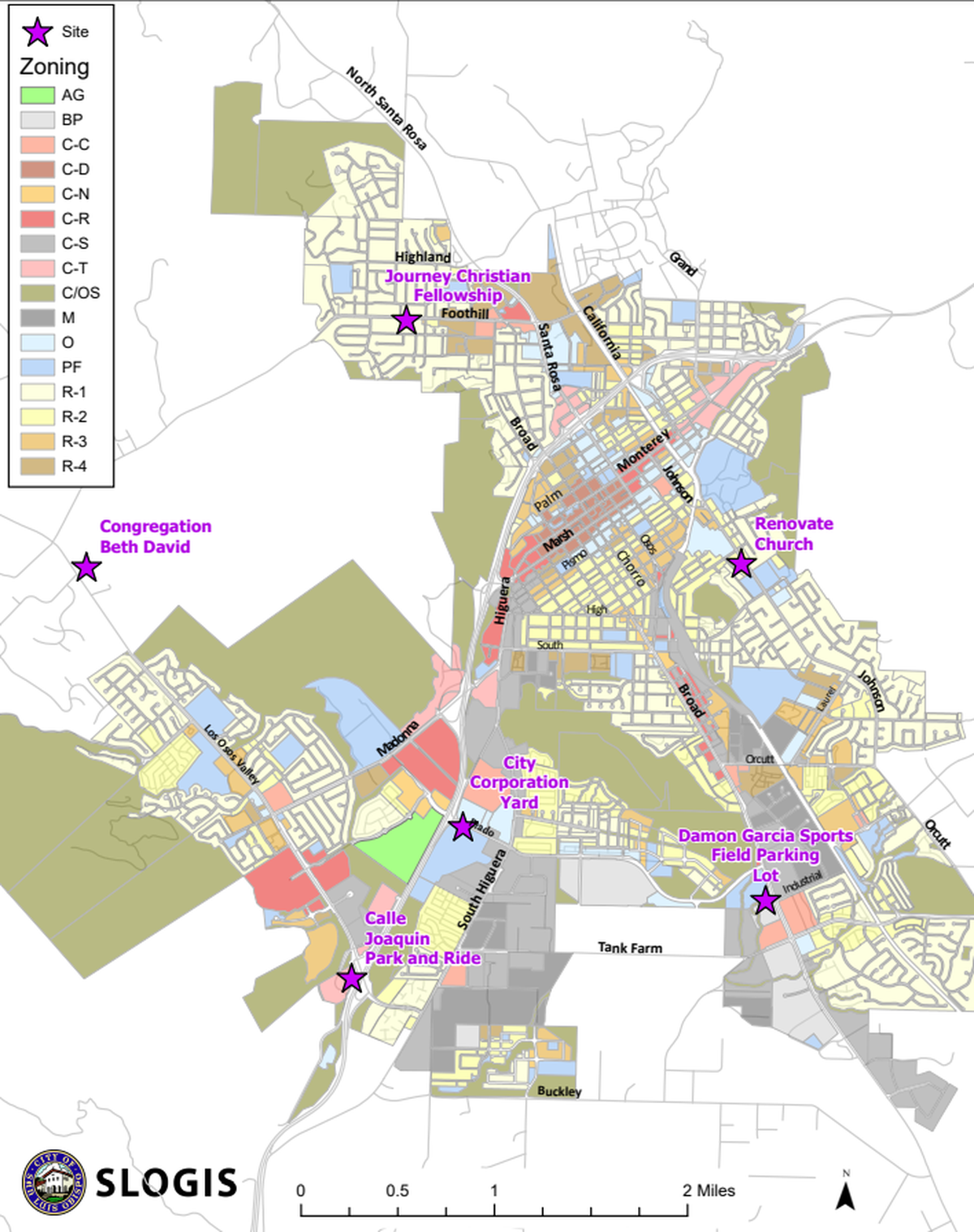
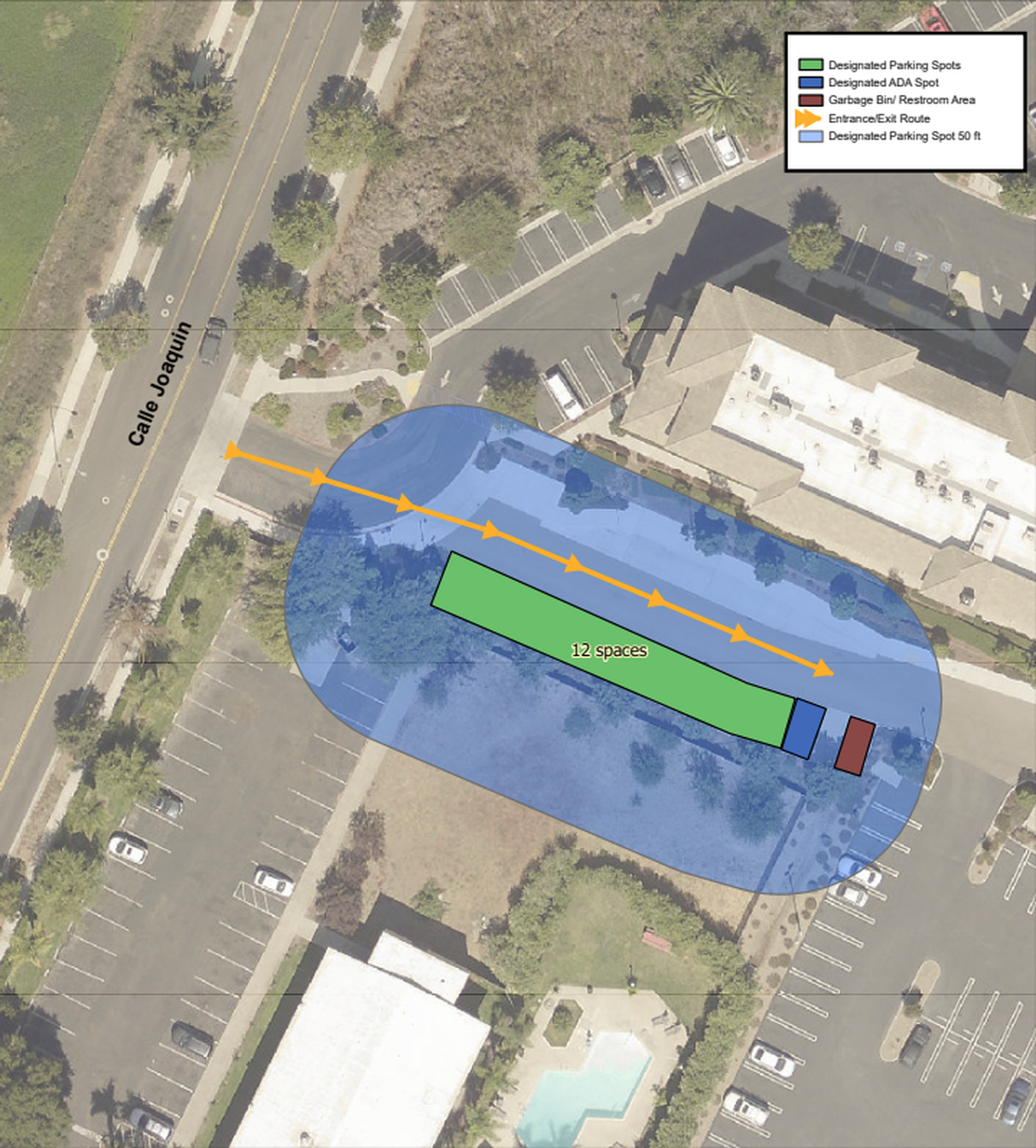
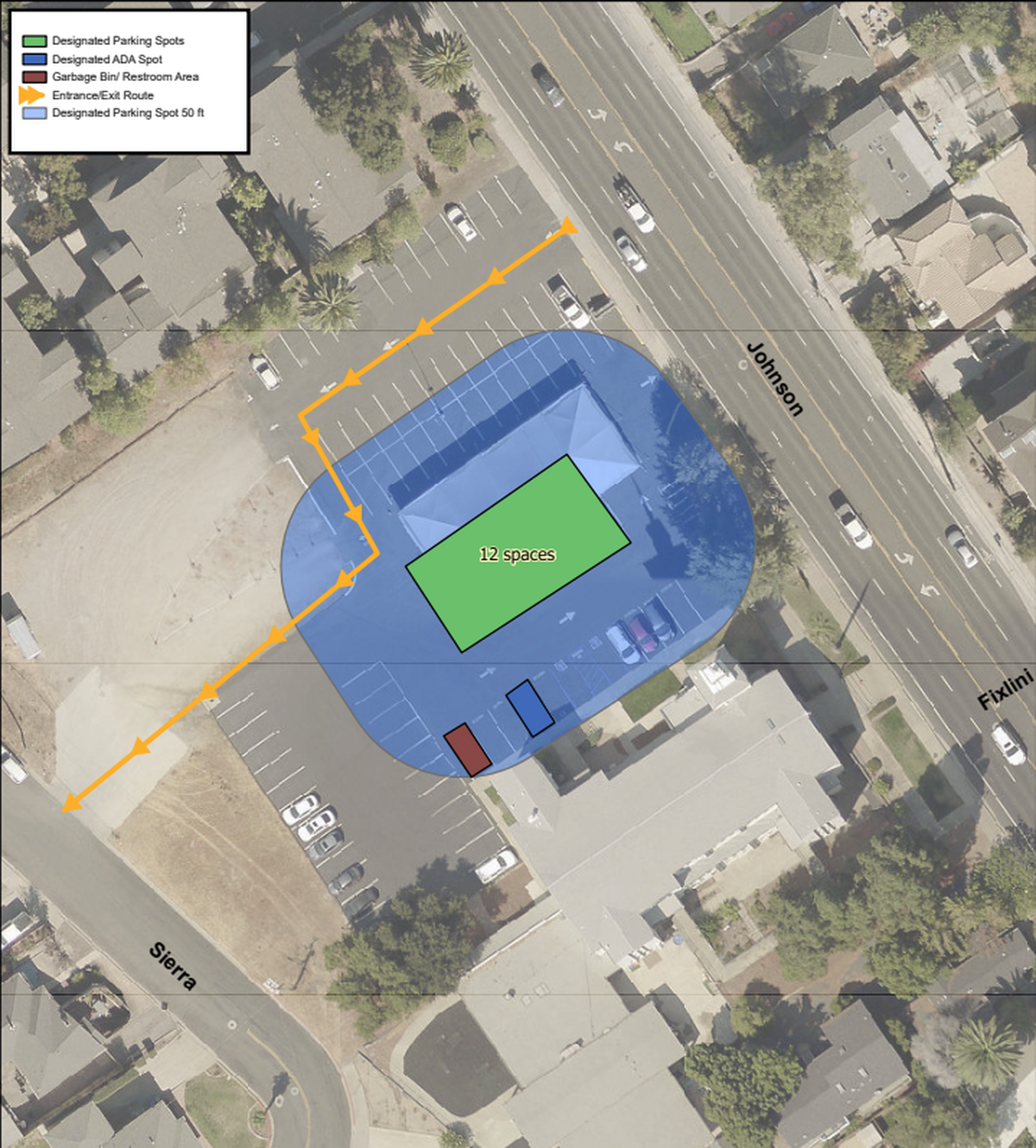
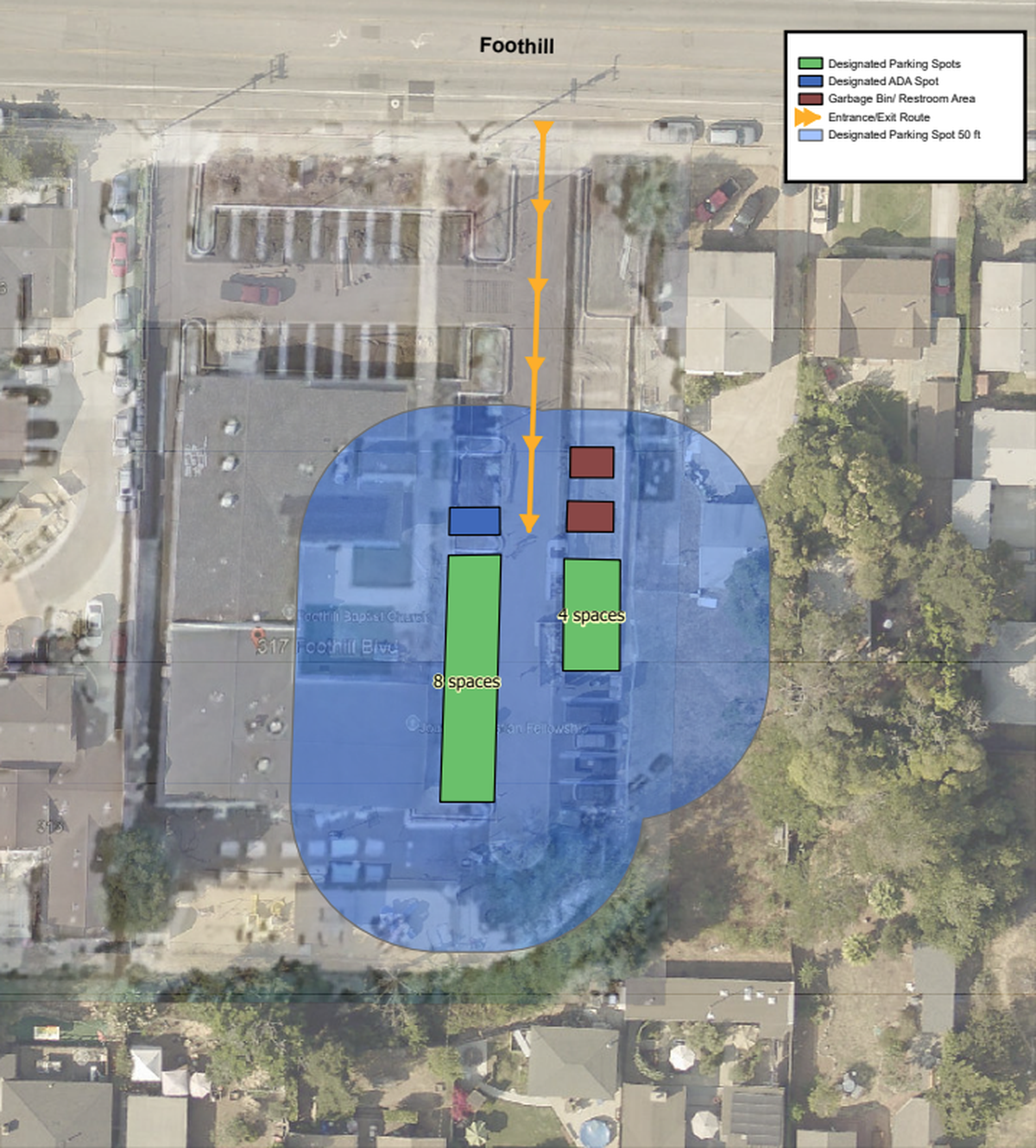
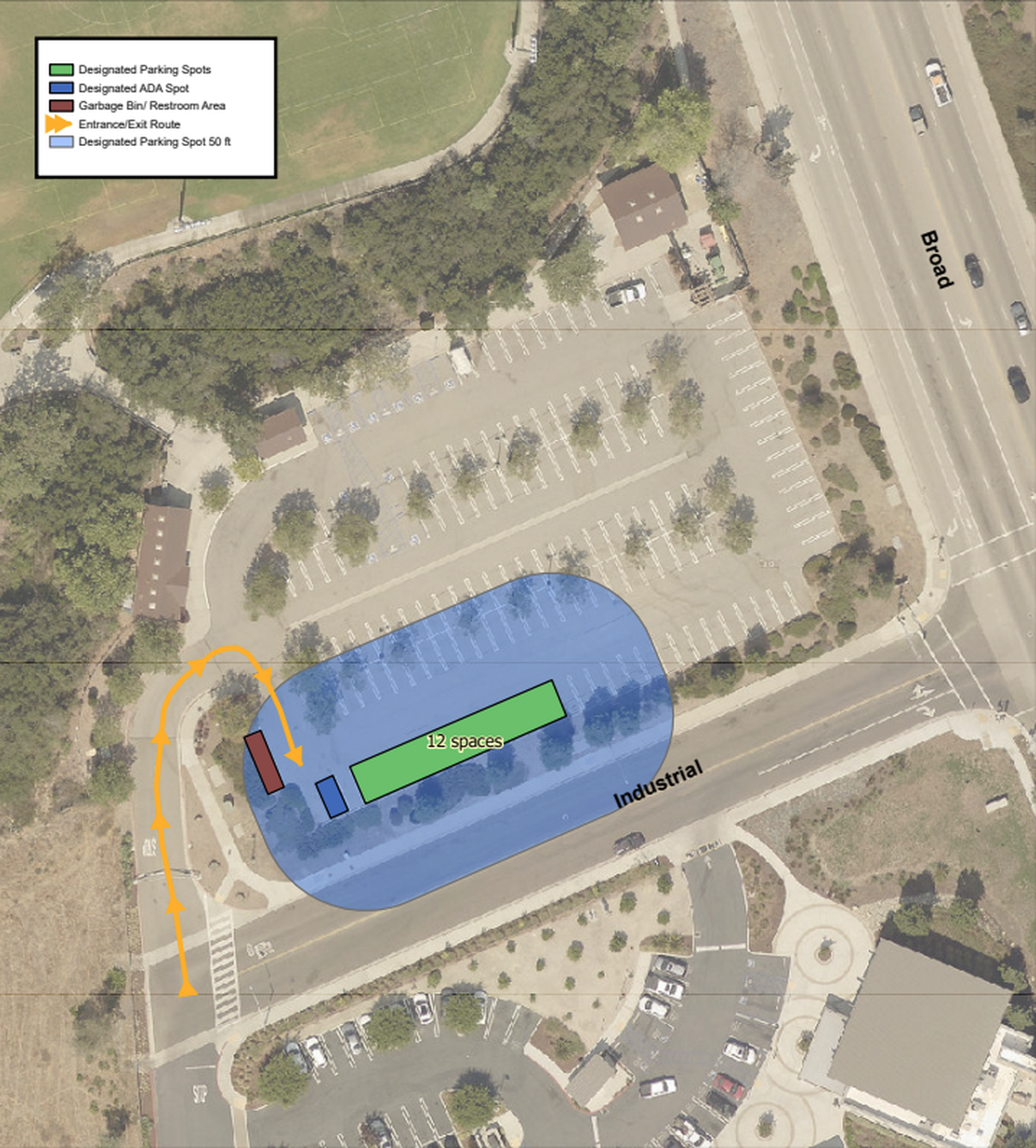
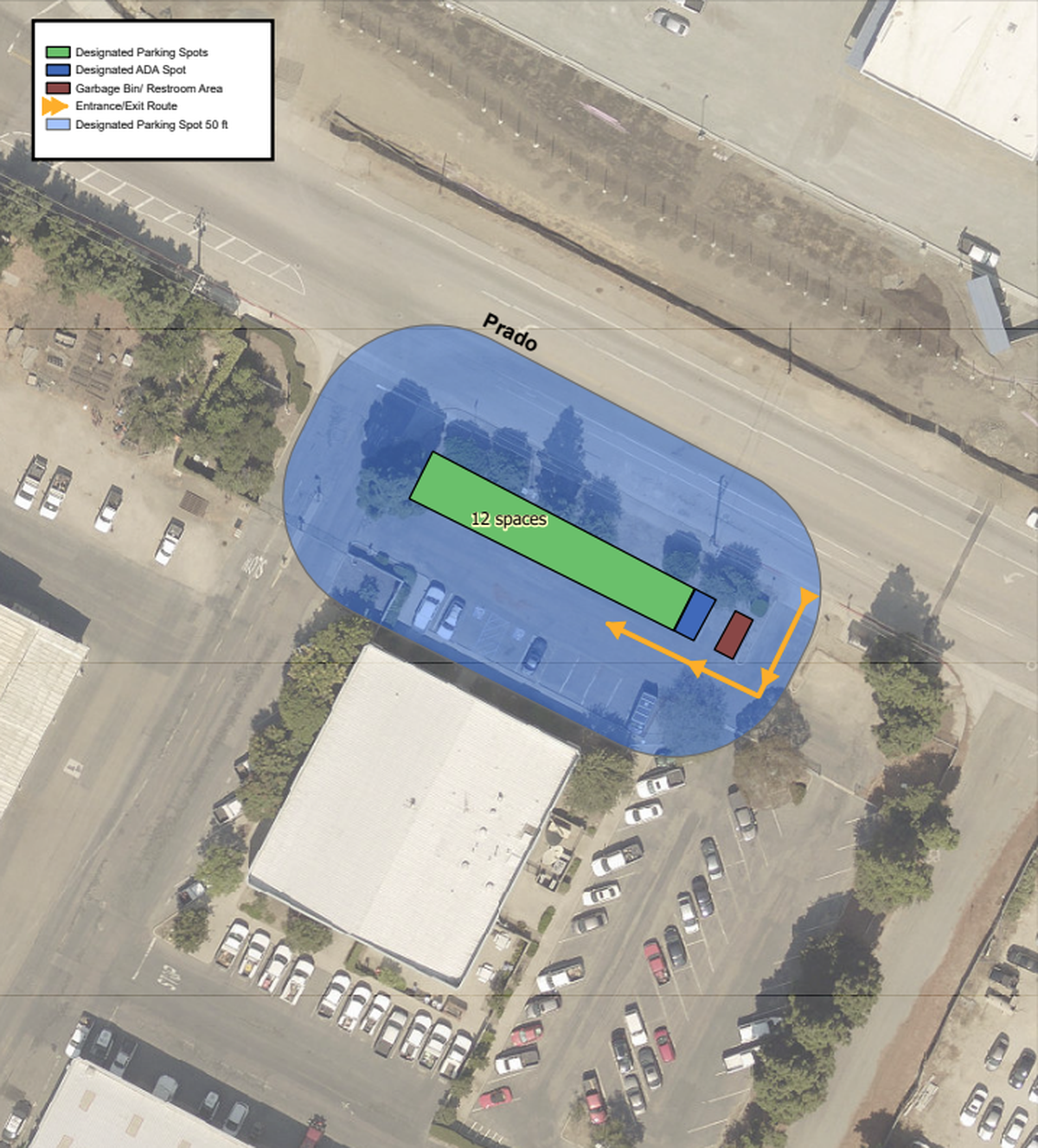
The latest version of the program would see the establishment of parking sites at five locations: the park and ride at 1545 Calle Joaquin, the city Corporation Yard at 25 Prado Road, the Damon Garcia Sports Field parking lot at 680 Industrial Way, Congregation Beth David at 10180 Los Osos Valley Road, Renovate Church at 2075 Johnson Ave. and Journey Christian Fellowship at 317 Foothill Blvd., according to the Planning Commission staff report.
Similar to the Railroad Square site, the sites would be authorized by the city and operated by the Community Action Partnership of San Luis Obispo, which would also be the main service provider on-site.
Wiberg said the sites were selected over the past year, with an increased emphasis on using city-owned sites and less centralized locations.
The city held monthly meetings with partners in the faith community to develop and refine the program model, Wiberg said.
The program is set to rotate monthly between the six locations, with each faith-based site hosting the program for one or two rotation within a 12-month period and city properties hosting for one to four rotations over that time, Wiberg said.
According to the staff report, each site would only allow 12 vehicles to park overnight between the hours of 7 p.m. and 7 a.m., and will include basic amenities such as water, trash and restroom facilities.
“The city and CAPSLO have been meeting with faith community stakeholders for over a year to continuing refining the program model,” Wiberg said. “Feedback from those stakeholders — as well as business owners, community members, and safe parking participants — has been incorporated into the current program, including timing for the rotational schedule, neighborhood-specific considerations, overall security concerns and lessons learned from the previous Railroad Safe Parking site.”
How will sites work?
Participants will be able to bring one vehicle onsite when they complete the intake process.
The process starts at 40 Prado, where participants will be enrolled in the shelter’s existing safe parking program for an initial 30-day period, Wiberg said.
During the intake process, participants will undergo a Megan’s Law background check, as no sex offenders will be permitted to stay at the rotating sites, according to the staff report. From there, CAPSLO will assign individuals out to the rotating program on a case-by-case basis if the program is a good fit for their needs, Wiberg said.
Once a participant has agreed to the terms of the site, they will be enrolled for a 90-day period in which they can use the program overnight, during which they will be engaged by CAPSLO case managers, Wiberg said. If a participant is actively engaging with their case manager, but has not been able to secure permanent housing, a 30-day extension may be granted by CAPSLO, she said.
No intakes will be performed on-site, meaning people can’t drop in and enroll without first being screened and approved by CAPSLO, Wiberg said.
Participants will agree not to possess or use any illegal drugs or alcohol onsite, and are not permitted to keep or use weapons or firearms. Fires will not be allowed, and physical violence of any kind will not be permitted, according to the staff report.
No music audible outside of participant vehicles will be allowed, with the San Luis Obispo city noise ordinance taking effect at 10 p.m.
Participants must also follow CAPSLO’s Good Neighbor Policy, which requires vehicles to stay 50 feet from any residential property, vacate the neighborhood by at least half a mile during daytime hours and to be respectful and courteous to neighbors, fellow participants and site operators.
According to the staff report, CAPSLO will maintain a roster of safe parking participants that will be shared between site hosts and the city, and will offer coordinated entry assessments to get participants paired with services.
Wiberg said several security measures will be put in place for the protection of participants and community members, such as periodic site checks every two hours overnight by a dedicated CAPSLO staff member.
The San Luis Obispo Police Department will respond to requests for enforcement and will patrol host sites as resources allow, Wiberg said.
According to the staff report, CAPSLO will maintain a roster of safe parking participants that will be shared between site hosts and the city, and will offer coordinated entry assessments to get participants paired with services.
A participant who has proven to consistently follow site rules will also be designated as site captain, a paid role that will support the staff by helping move barricades, monitor the restroom and dumpster facilities and help settle site issues.
Most importantly, CAPSLO will ensure that local residents receive preference in admission and will enroll participants in CAPSLO’s case management to connect participants to housing.
What happens next?
Though a new plan is in hand, that’s no guarantee that it’ll be accepted by neighbors or the San Luis Obispo Planning Commission.
A hearing for the rotating program will be held at the Planning Commission meeting Wednesday at 6 p.m.
CAPSLO homeless services director Jack Lahey said in the future, CAPSLO plans to apply for an anticipated request for proposals from San Luis Obispo County for a pilot safe parking program of its own.
“If we are awarded these funds through that process, this program could be implemented as a one-year to two-year pilot program,” Lahey said in an email. “We must undertake this process before we apply for funding to implement the Rotating Safe Parking Program.”