Dana Reserve clears another hurdle at packed meeting. What’s next for the housing project?
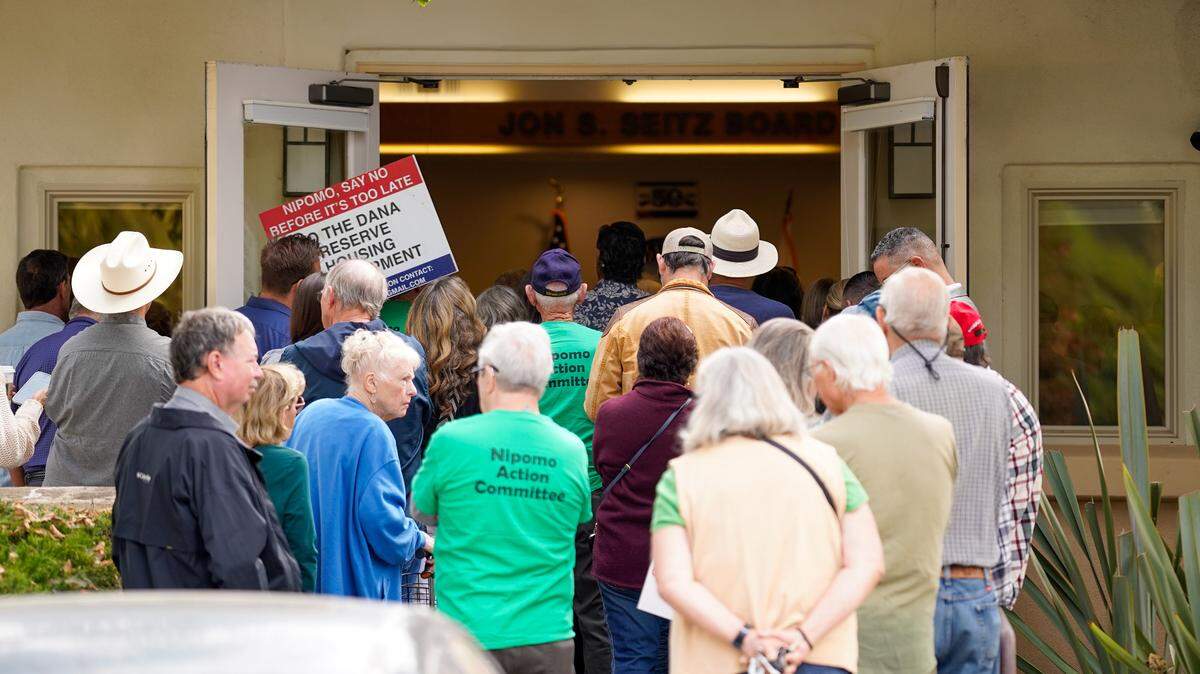
The Dana Reserve housing project cleared another procedural hurdle at a particularly well-attended Nipomo Community Services District meeting Wednesday.
Before an assembled crowd of around 100 people that overflowed out of the Nipomo CSD’s meeting room, the Board of Directors — which governs water, sewer and solid waste services for Nipomo residents living in its service area — was faced with the decision of whether or not to annex Dana Reserve’s land near Highway 101 into its service area.
With nearly 1,500 housing units included in its buildout, Dana Reserve will greatly increase Nipomo’s overall population and water consumption.
While the project land was considered part of the CSD’s “sphere of influence,” directors had to approve the terms of the annexation agreement that will go before the Local Area Formation Commission before the CSD could start supplying critically needed water.
Previously, the San Luis Obispo County Board of Supervisors approved a resolution that ensured the Nipomo CSD will not receive any base property tax from the county, but will receive annual tax increments starting in the 2025-26 fiscal year at a rate of just under 2.4%.
Though this agreement will likely result in an annual net deficit between $139,707 to $882,618 to the county budget, staff recommended the Board of Supervisors waive its policy and accept the financial hit.
At Wednesday’s meeting, NCSD directors voted unanimously to approve the annexation agreement and 4-1 to approve the tax sharing agreement, with director Ed Eby voting against the agreement.
“I am disappointed,” Eby said ahead of the vote. “I told the negotiators that I would support a 3.7% share, but I would not be enthusiastic as low as 2.7% — and what is now being asked for is less than 2.4%.”
Water rights at core of complaints
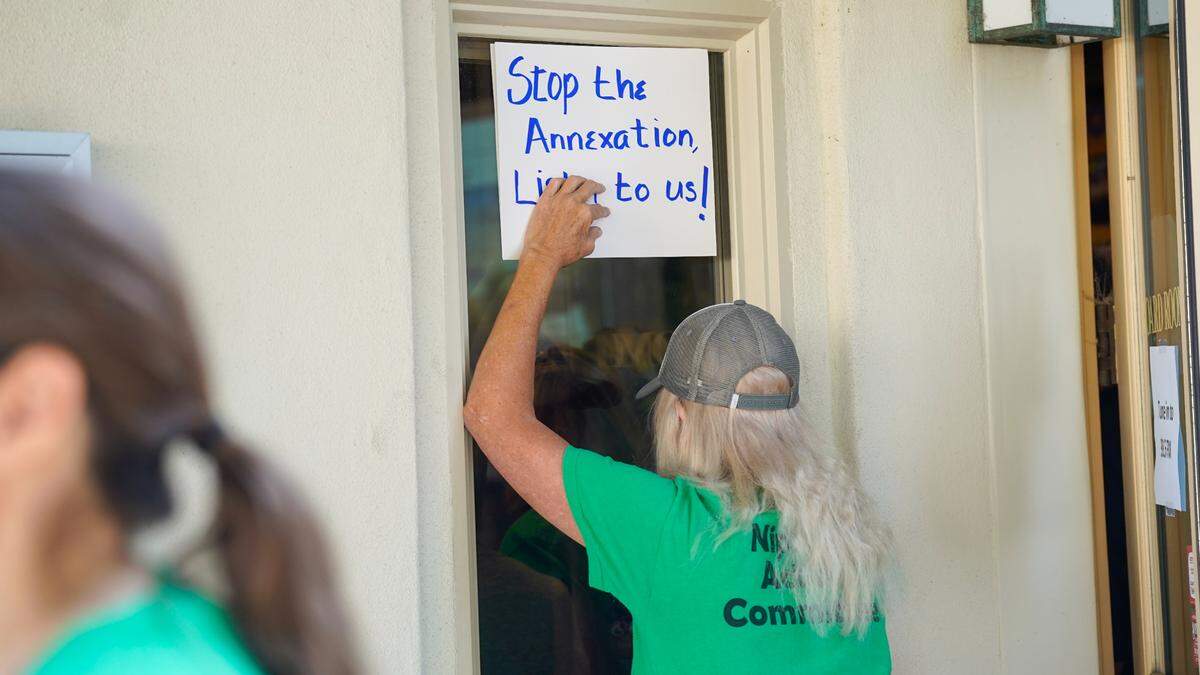
At the meeting, many opponents of the project from the Nipomo Action Committee said they had concerns about the amount of water the project would consume each year.
Since the start of the project’s approval process more than two years ago, opponents have highlighted water as a concern, often claiming that Nipomo lacks the sufficient water supply to meet the increased demand.
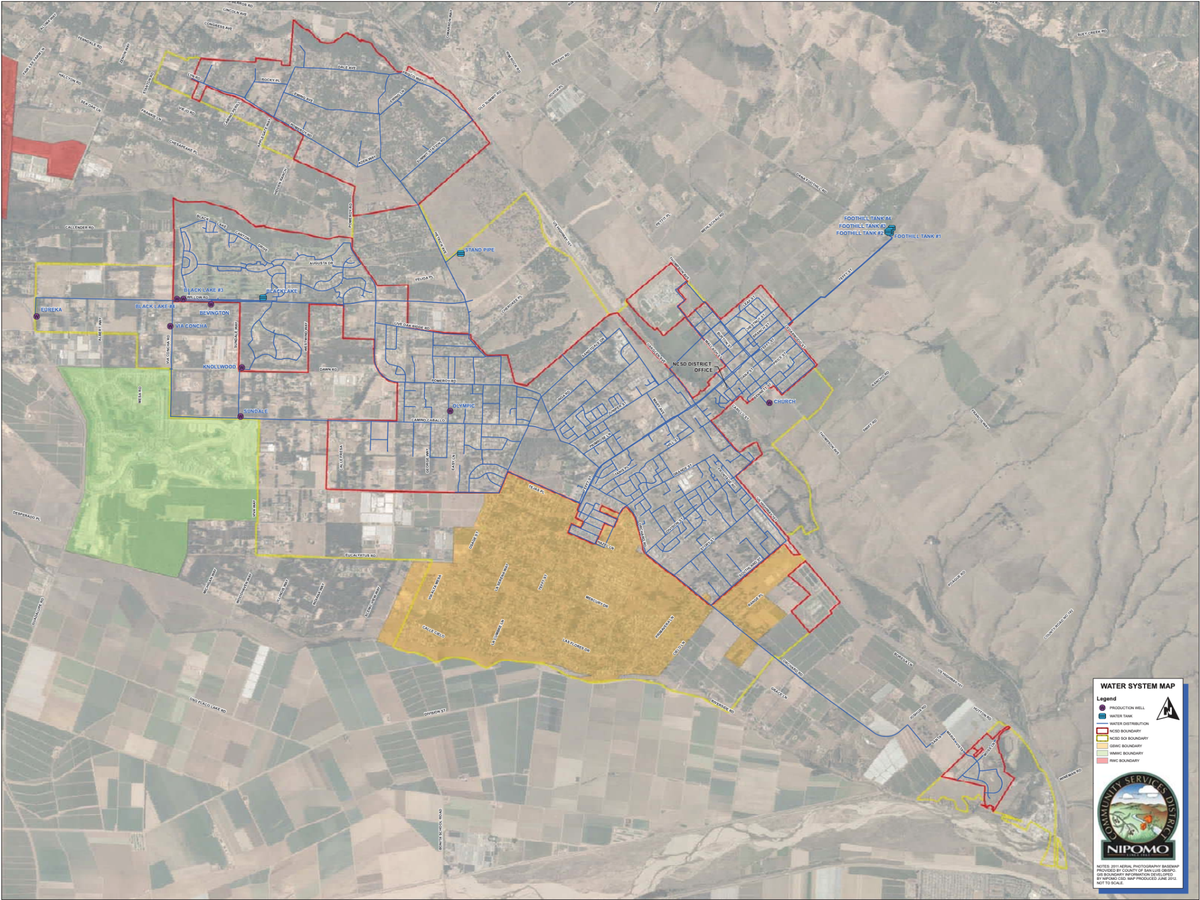
The NCSD gets its water from the Santa Maria Valley groundwater basin, which extends from Orcutt to Pismo Beach and provides water to northern Santa Barbara County, the Nipomo Mesa management area and the North County management area that includes Los Osos.
The NCSD, Golden State Water, Woodlands Mutual Water Company and Rural Water Company get an additional 650 acre-feet water from the city of Santa Maria via the Nipomo Supplemental Water Project Water Management and Groundwater Replenishment Agreement.
Each year starting in July 2025, the district must purchase 2,500 acre-feet of water from Santa Maria each year, compared to 1,133 acre-feet in 2023, according to the staff report.
Of that, a third will go to other service providers in the region, according to the staff report.
At full size, the Dana Reserve project will consume 377 acre-feet of water each year.
An analysis of the Nipomo CSD’s expected water levels in the year 2045 found that there would still be a surplus of 415 acre-feet.
In the absence of Dana Reserve’s population, current ratepayers would be on the hook for a 35% increase in water rates, whereas an expanded customer base would be able to absorb the added water costs, according to developer NKT Commercial’s presentation. The additional population would likely result in a 30% decline in sewer rates for rate payers for that same reason.
Still, many Nipomo residents said they were concerned the project would overexert the district’s water supply, citing previous examples of extended drought in the region.
Across the lifetime of the project, NKT Commercial will pay a total of $45 million to the NCSD and will either install or pay for all water and sewer improvements necessary to serve the Dana Reserve, according to NKT Commercial’s presentation.

What’s next for Dana Reserve?
During the meeting, developer Nick Tompkins said a full buildout could take around seven years, not counting the legal challenge.
“The time for the planning and engineering approval for the basic infrastructure going in ... is 12 months, but that 12 months is now tied to completion or resolution of any legal objections that are currently out there,” Tompkins said.
Attorney Babak Naficy, who’s representing the NAC in a California Environmental Quality Act lawsuit against the county, said there’s still a few more hurdles Dana Reserve would need to clear to start breaking ground.
Naficy said even though the annexation agreement is next headed to LAFCO at a date uncertain for final approval, it could be some time until the Dana Reserve breaks ground due to the lawsuit.
“We will be amending the complaint, very likely, to add another claim against NCSD for what they approved today, and then the focus of activity will shift to LAFCO, because all they really approved today was a decision to move to apply to LAFCO to approve annexation,” Naficy told The Tribune.
This story was originally published August 30, 2024 at 10:00 AM.