Are parklets going away? Or are more coming? SLO County considering new rules for businesses
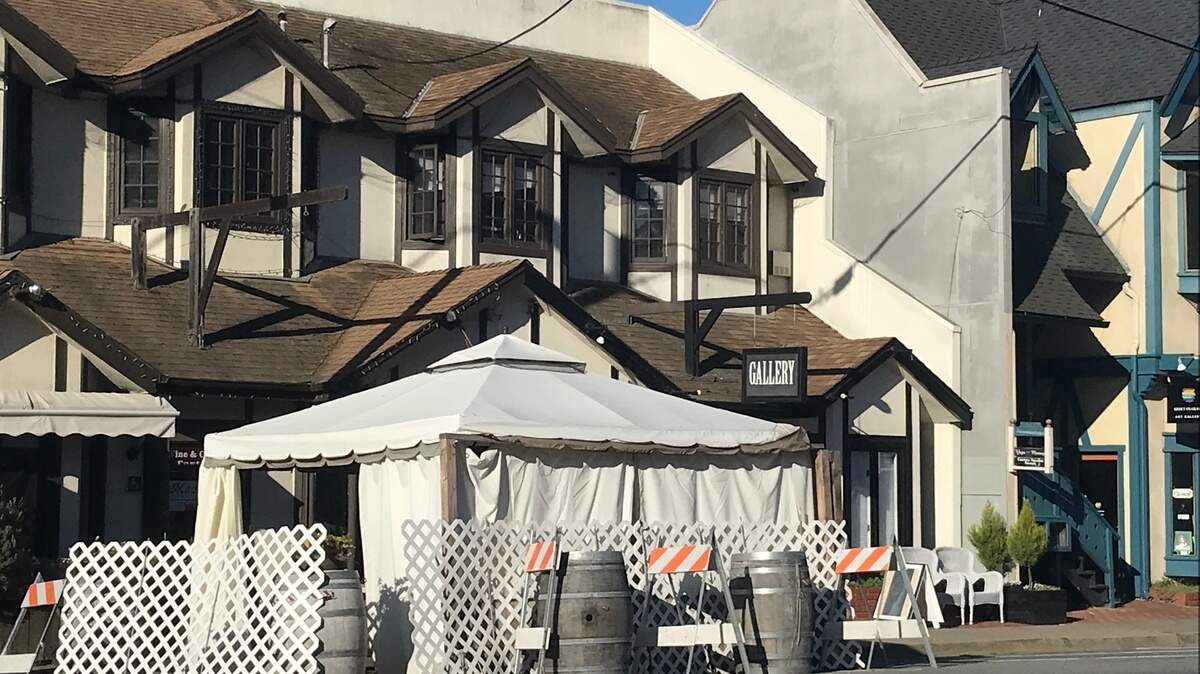
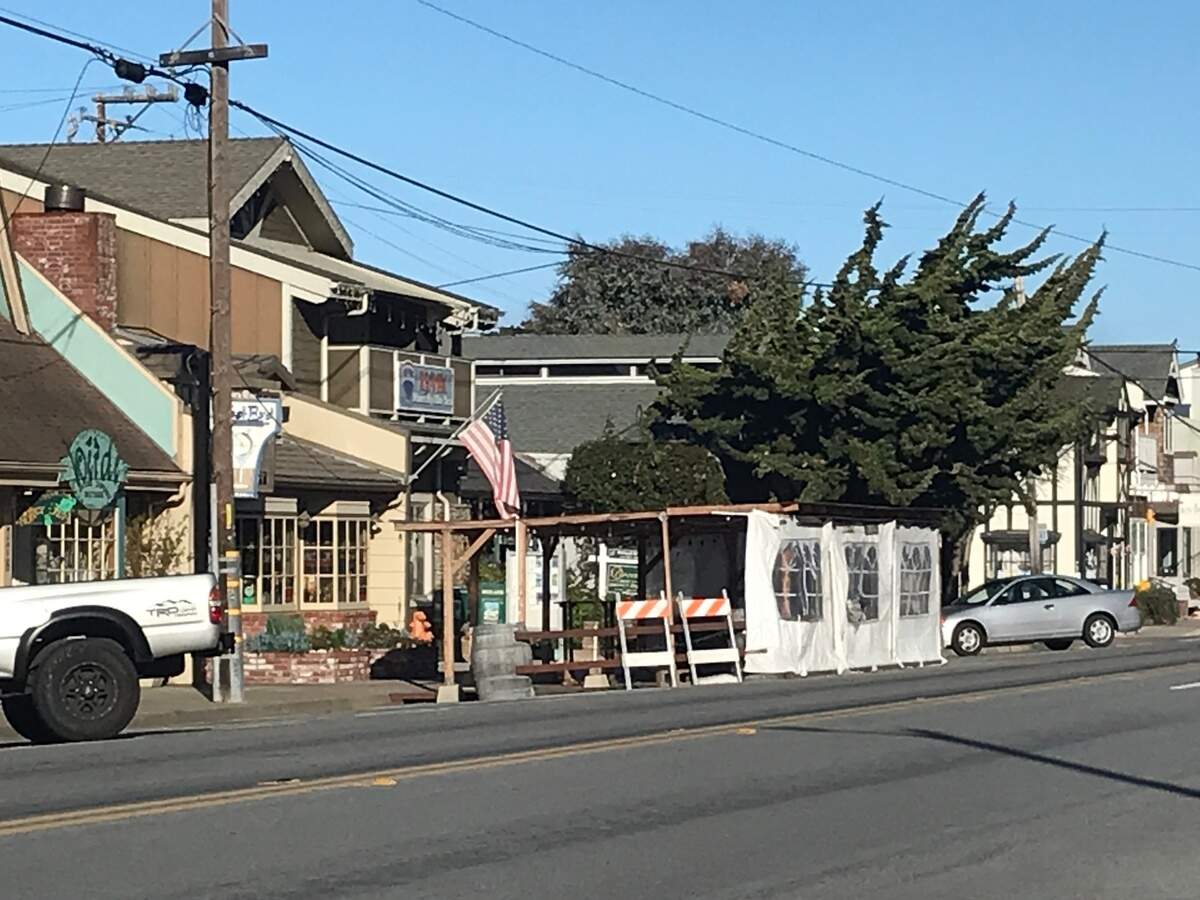
A quick spin through downtown Cambria shows a changed view: Only two temporary, street-side parklet structures for outdoor dining are still in place as a county deadline to remove them looms.
Of those West Village parklets, one is for Madeline’s restaurant and the other for West End Bar and Grill. Representatives for both eateries say they plan to remove them by April 15, but would welcome being able to keep the outdoor structures in place.
That might happen, if the structures can meet county codes and regulations, both existing and future, according to David Grim, development services manager for San Luis Obispo County Public Works.
Removing the parklets opens up numerous parking spots that, during the pandemic, had been occupied by the covered units that provided tables and chairs when diners were unable or unwilling to eat inside the restaurants.
According to Phillip Bettencourt of the Public Works encroachment team, during the pandemic there were seven outdoor dining areas or parklets throughout the town. Bettencourt said there was an additional request for one, but that establishment never followed through.
“These permitted parklets were only associated with dining establishments throughout Cambria, with most of them along Main Street,” Bettencourt wrote in an email to The Cambrian.
Bettencourt added that in Cayucos there were only three parklets at that time, two of which are still in place at Duckie’s Chowder House and the Sea Shanty.
A few other restaurants and businesses from San Simeon to Cayucos developed outdoor dining areas during the pandemic, but those were on their own property, and didn’t need easement and other permits for encroachments on public property.
Cambria, San Simeon and Cayucos are in the unincorporated area, so county rules apply.
Cities set their own standards and requirements. Some cities, like San Luis Obispo, have established regulations that allow improved parklets to stay. Paso Robles ruled that they had to be removed, but the city council is reexamining that decision.
County asks businesses to remove parklets
The county allowed the parklets to be put in place in some communities under emergency-declaration pandemic guidelines that had shuttered many businesses, restricted restaurants to take-out or outdoor dining service only and threatened to force some businesses to close permanently.
Since then, through the ebb and flow surges of the COVID-19 virus and its variants — along with guidelines that varied in degree of restrictions — the sometimes ramshackle-looking enclosures remained.
Until the county issued its 30-day removal edict on March 15, that is.
The original email that Public Works sent to the business owners didn’t seem to include much wiggle room.
Once the emergency declaration expired in mid-March, the county “asked all parklet owners to remove anything that is in disuse or disrepair,” Grim said in a recent email reply to The Cambrian.
This has left some who like the experience of outdoor dining to wonder what happens next.
County may allow some parklets with new standards
But according to some restaurateurs, as new variants have emerged, some customers still prefer to dine outdoors, rather than inside the eateries.
The parklets also allow small, tight-space cafes to expand the number of customers they can serve at the same time.
Since the mid-March missive was sent, the way forward may have eased a bit, according to Grim.
He said the department wants to work with the four businesses “to allow their parklets to remain in place until we get the new standard approved” and “as long as they are not in disrepair or disuse, maintain them according to the conditions of their current temporary permits and the community appears generally amenable and we don’t get a lot of complaints.”
The county is also preparing a parklet standard design concept, that could be used to establish semi-permanent parklets in appropriate locations in the county right of way, Grim said. Those could be added sometime this summer, he said.
When the department introduces the concept and the process for reviewing any future parklet applications, that process would include public input, he said.
So what happens to the four restaurateurs who have existing parklets?
“After the new standard is approved,” Grim said, “they will need to re-apply for the new permit and redevelop their parklets according to the new design and materials standards.”
Of course, if the supervisors don’t approve the new design standard, he added, the parklets would need to be removed permanently.
In the end, it will probably come down to a cost-benefit balance for each business. Grim said based on the department’s research, it could be “a substantial expense” to restaurateurs to meet the county’s eventual parklet standards.
“In the interim, any costs incurred by business owners will be at-risk in the event that the county does not move forward on allowing parklets in the public right of way post-pandemic,” Grim said.