
Could ‘cohousing’ tiny-home villages help end homelessness in SLO County? Expert says yes
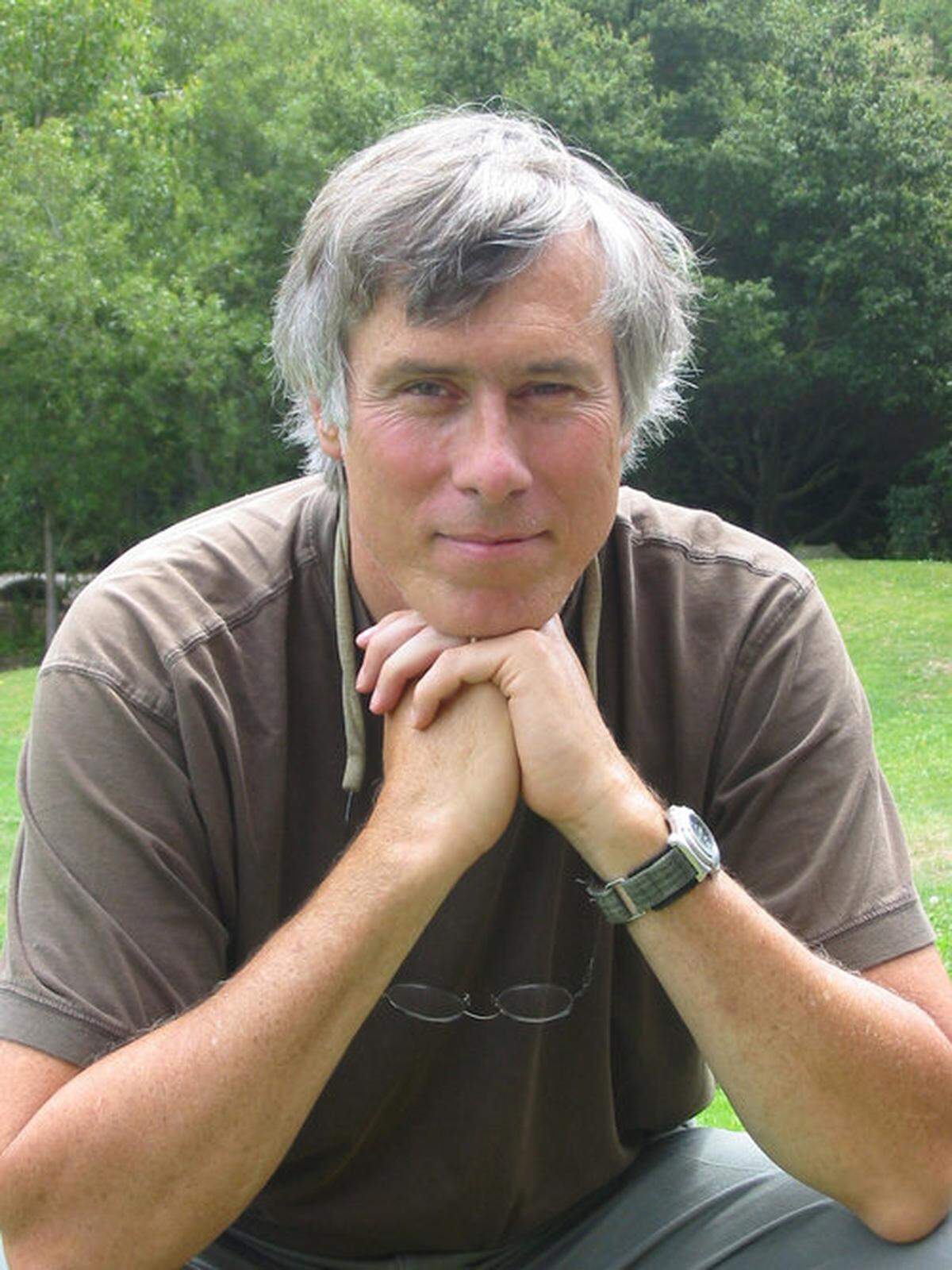
A developer and author who has built more than 50 affordable and supportive housing projects across the nation will give a free presentation Saturday in San Luis Obispo.
Charles Durrett will address “cohousing” options for communities such as San Luis Obispo County that could serve homeless residents through tiny homes, cottages and shared communal spaces.
The event, titled “A Solution to Homelessness in Your Town” (Durrett has penned a book with the same title), is open to the public. The presentation takes place at 7 p.m. at Mountainbrook Church at 1775 Calle Joaquin.
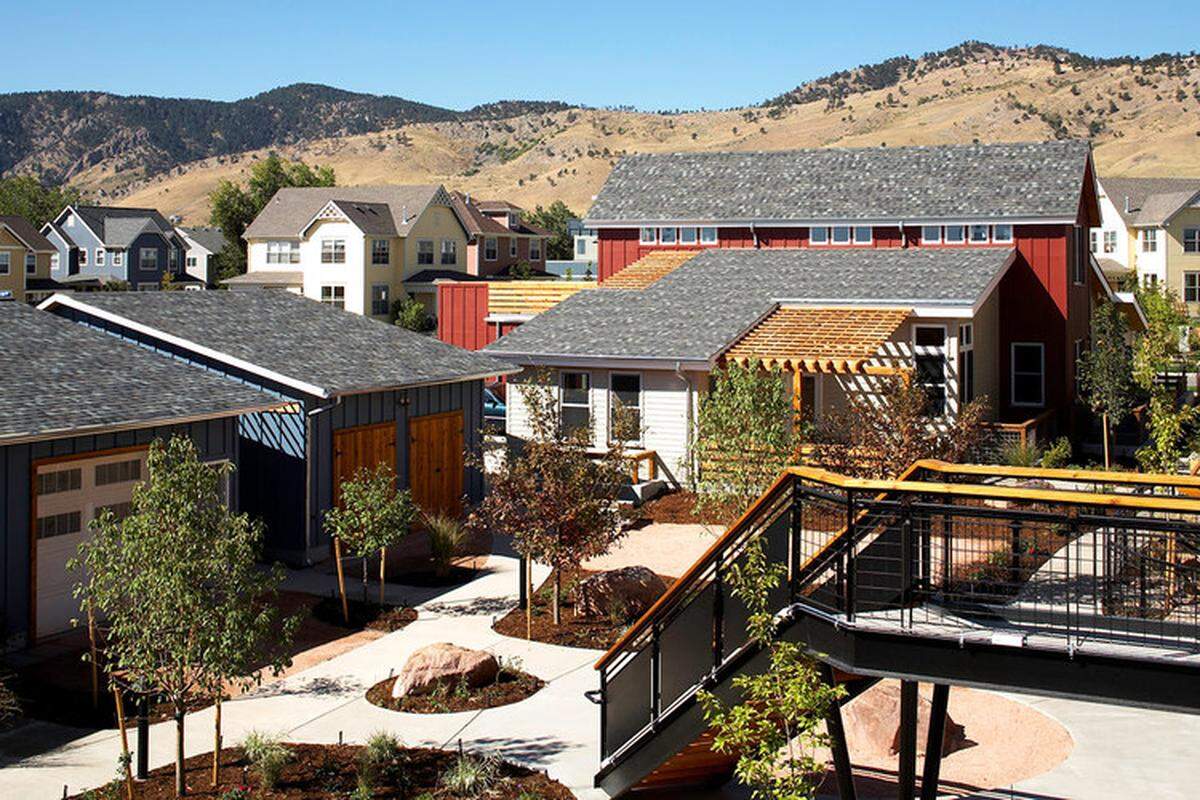
Durrett’s Nevada City, California-based firm, The Cohousing Co., has built cohousing projects in Grass Valley; Sacramento; Stillwater, Oklahoma; Boulder, Colorado; and Port Townsend, Washington; among other locations. And the firm completed a 70-unit development in 2019 serving formerly homeless residents in Napa County.
His company’s projects are modeled after a Danish architectural style, which encourages common facilities, social interaction and support through models that serve seniors, families with children, veterans and those with low or no incomes.
The San Luis Obispo-based nonprofit organization Hope’s Village of SLO invited Durrett to speak, calling him “a proven homeless community developer” whose ideas can contribute to creating “a model community for San Luis Obispo County.”
“Homeless people don’t just need services,” said Becky Jorgeson, Hope’s founder. “They need housing, and they need community. We want to build a model, a community village of tiny houses, that are more amenable and affordable to our local people. The No. 1 reason I invited Charles down here was to help get a groundswell going, and to get a movement going, because I have a lot of people who want to help.”
Economics and compassion
Durrett said cohousing brings economic and humanitarian benefits.
Homeless deaths around the country are alarming, he said, such as the 162 fatalities last year recorded in Spokane, Washington, where’s he’s also giving a presentation soon. He considers those statistics a prompt for an emergency response.
Between January 2020 and July 2021, at least 33 people believed to be homeless have died in San Luis Obispo County, according to a list provided by the San Luis Obispo County Sheriff-Coroner’s Office.
Durrett said homeless deaths are typically higher than what communities document because of how death records are kept and whether someone is documented as homeless by law enforcement or not.
“I don’t know of any deaths that have occurred in tiny house villages,” Durrett said. “I can point to many deaths of those living on the streets. Basically, one death is too many, and one person sleeping outside is too many. And it astounds me that we let it happen.”
The U.S Interagency Council on Homelessness estimates that it costs taxpayers between $30,000 and $50,000 annually for each homeless person, including hospitalizations, detox programs, psychiatric institutions and jail services.
Durrett said his firm built tiny homes in Eugene, Oregon, for $8,000 per unit.
“We can’t afford $8,000 one-time costs, but we can afford $40,000 per year?” Durrett said. “The economics are upside down. This is infinitely doable. So, there’s no more time for excuses.”
Cohousing models
The term “cohousing” applies to projects with both physical and behavioral benefits, Durrett said.
“If an entire covey of neighbors that surround you really care about who lives next door — and who can act to support them — then the need for external behavior control mechanisms (from outside the community) diminishes immensely,” his company’s website notes. “Likewise, the need for outside care or support, like psychological therapy, are less frequently outsourced from the community or not outsourced at all.”
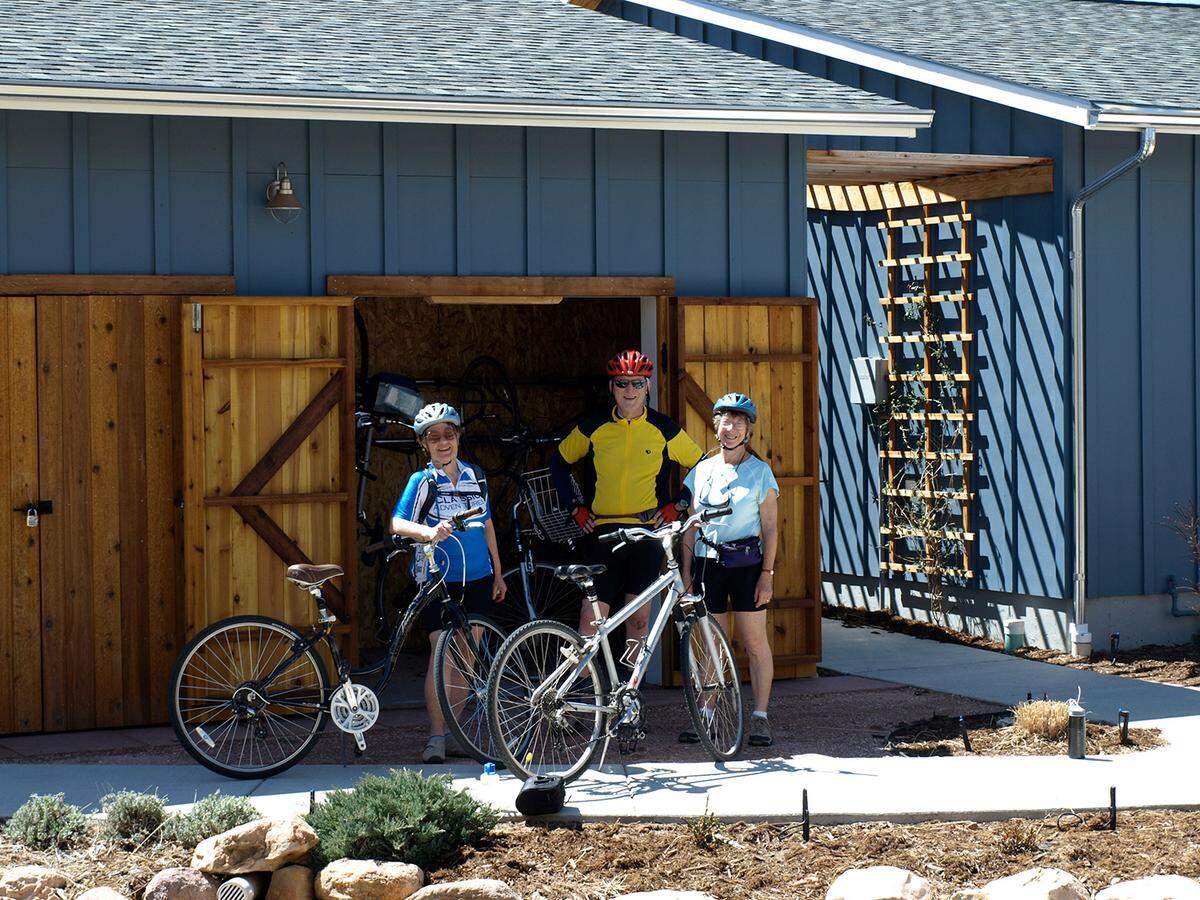
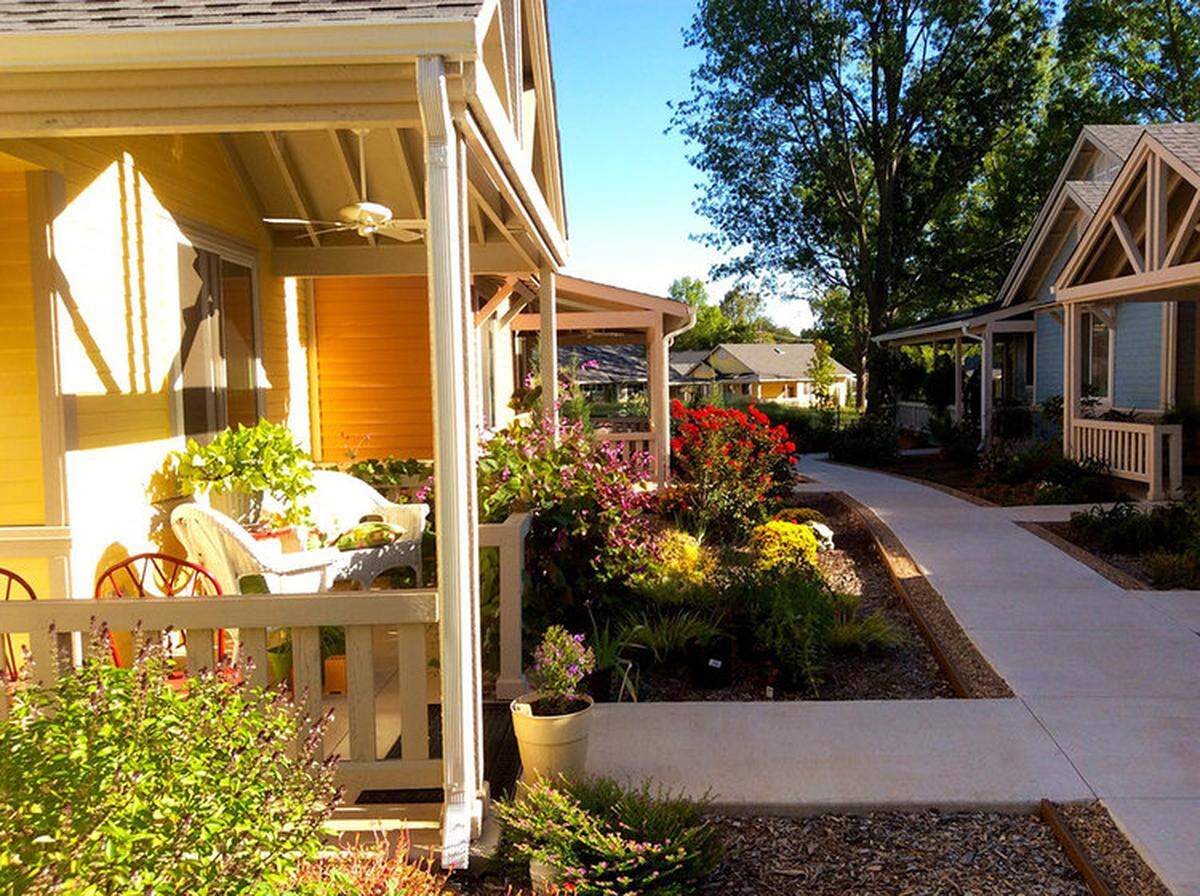
Cohousing sites consist of private, smaller dwelling spaces, with common areas or facilities that people share, including kitchens or community rooms, and encourage social interaction.
They can be bigger, but in the case of a Cohousing Co. project that the company built in Eugene, tiny homes consisted of 8-by-8-foot units, built by volunteer labor.
Initially, water was trucked in and portable toilets were provided. Then, gradually, common facilities were added such as permanent bathrooms, showers and laundry, as well as a computer to find a job, mental health services, and consulting for veterans and Social Security recipients, Durrett said.
Hope’s Village also invited Durrett to do a feasibility study in San Luis Obispo County to look at the various options for a potential project on the Central Coast.
“It requires so many things, but it’s doable when you have a plan,” Durrett said.
Starts with impetus
Durrett said community willpower can effect change and collaborative public agency and private solutions.
Jorgeson said: “We’ve already always said we want to build a model ... sustainable community village of tiny houses. Then it can be repeated all over the county.”
The community also plays a critical role in helping to build the homes through donations of money, labor or materials, Durrett said.
“Typically, I start out with the question, ‘Is there an interest?’” Durrett said. “Is there a market? We all know that there’s a need and a market for housing. But do we have a market for the advocacy necessary? ... It’s complicated, but it’s also so doable.”
Durrett said “rookies” on building tiny home villages, from church groups to good Samaritan groups, have succeeded. But he said “it does require a little partnership with the local officials, and that requires a heart there.”
“The project we did in in Eugene, Oregon, the building officials just relaxed the building codes because homelessness is an emergency,” Durrett said. “I don’t know if that takes more risk than the average bureaucrat is willing to exercise. But I’m going to argue that it probably does.”
Government role
Efforts that employ this kinds of strategies are already occurring here.
A county project approved by San Luis Obispo County Board of Supervisors for pallet homes in Grover Beach envisions adding 20 modular cabins at 286 South 16th St. this year. They’ll be roughly 100 square feet in size with around-the-clock case management. The project is a joint effort with the Five Cities Homeless Coalition and the city of Grover Beach.
The city of Grover Beach also is purchasing a property at 955 South 4th St., formalized through City Council action Monday, that is intended for a homeless housing facility thorugh a partnership with Five Cities Homeless Coalition.
“That could be used for a non-congregate shelter location as well,” Grover Beach Mayor Jeff Lee said. “We’re trying to advance several actions.”
Options for use include an emergency shelter, adult transitional housing, a winter warming center and other ideas, according to a city staff report.
Durrett said that while government agencies don’t have to be directly involved, it often takes public funding, land or agency flexibility on development permitting to coordinate projects.
In the American Canyon community project where his group built 70 homes, Napa County contributed $2 million, and $1 million came from the state of California, with additional funding generated from 16 private donors of smaller amounts, including $50,000 from Home Depot.
“And that project was very expensive,” Durrett said. “It was not only built to the building code, but there were lots and lots of other requirements that all the 16 funders wanted. That made the project extremely expensive. But as soon as we needed more money, we just got another funder.”
Durrett said that most of the projects can be planned and built privately for cheaper, such as the $8,000 per unit project in Eugene (which came with donations of lumber and other materials) with planning and design collaboration.
But agencies should be open to ideas that help bring costs down, he said.
“There are people around the country that are getting some relaxed rules from cities and counties to build units for the homeless,” Durrett said. “And because the city and county jurisdictions are relaxing things a little bit, they’re deciding not to let their good people die.”
Durrett said that living on the streets, even for a short time, can have lasting effects on a person’s mental health.
“I can’t even imagine how dire it would be to be left outside for a week,” Durrett said. “I mean, it’s just devastating.”
He said that 90% of the cohousing work can be done privately, but government help still is needed and part of the solution.
“The No. 1 job (of government agencies) is to protect citizens, and if these people live in your county, they’re citizens,” Durrett said. “It is partially a government responsibility.”
Those interested in attending the forum on Saturday are asked to RSVP Becky Jorgeson at beckyrjorgeson@yahoo.com or call 805-234-5478.
This story was originally published March 17, 2022 at 9:00 AM.
%20Cropped.jpg)