
Morro Bay ditches waterfront RV camping program after citizen opposition
Morro Bay is scrapping a pilot program allowing RV camping along the Morro Bay waterfront after it drew the ire of local residents.
On Tuesday, the City Council voted 4-1 to adopt language into its city code that effectively will end the program that inspired a citizen petition opposing the city’s fee-based program.
The pilot program established in 2020 allowed RV parking and tent camping for $65 to $75 per night in prime designated locations with views of the bay and Morro Rock.
The council will add the language from the citizens’ initiative — organized by Morro Bay residents Betty Winholtz, Jim Curnutt and Carole Truesdale — into its municipal code.
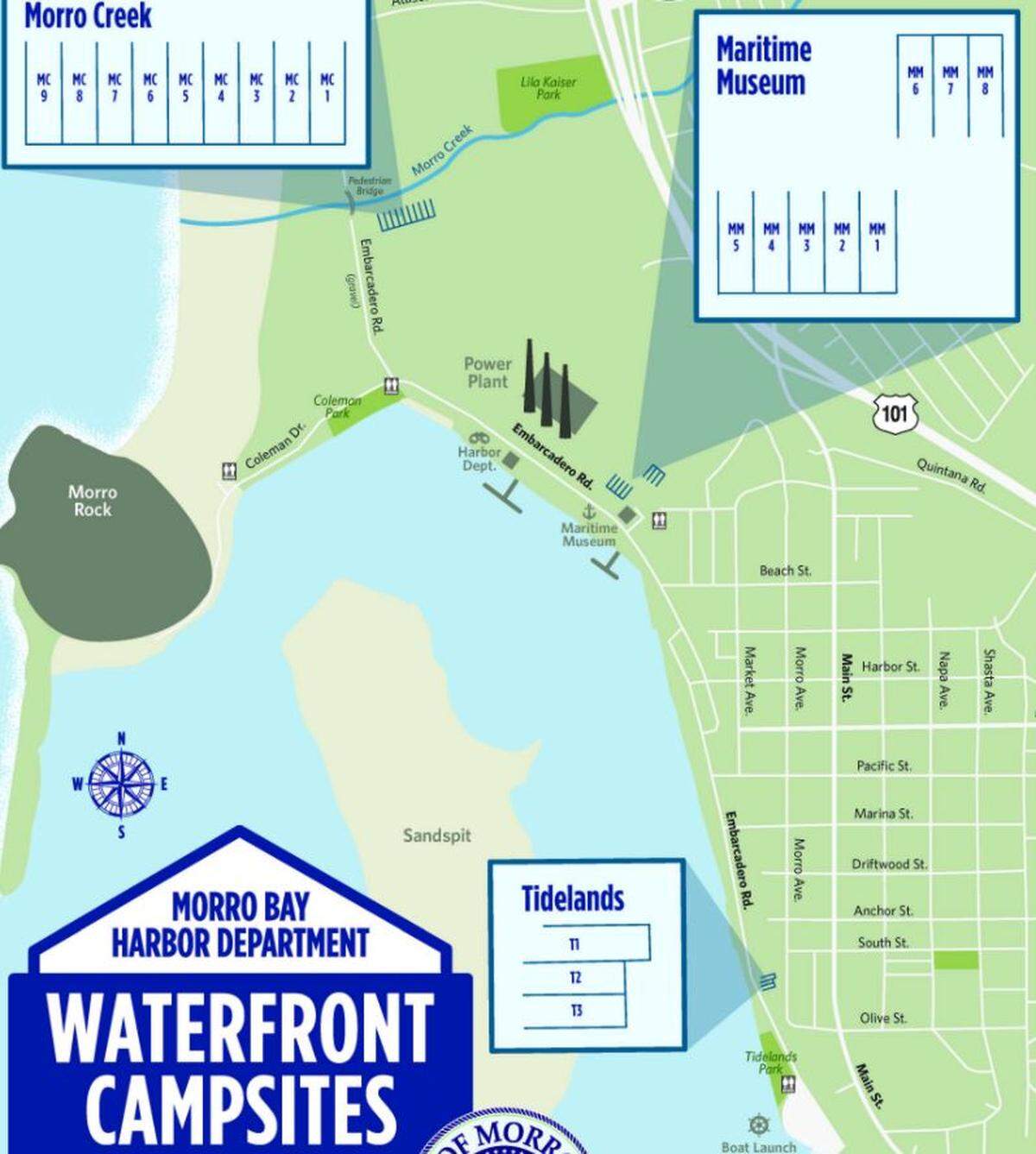
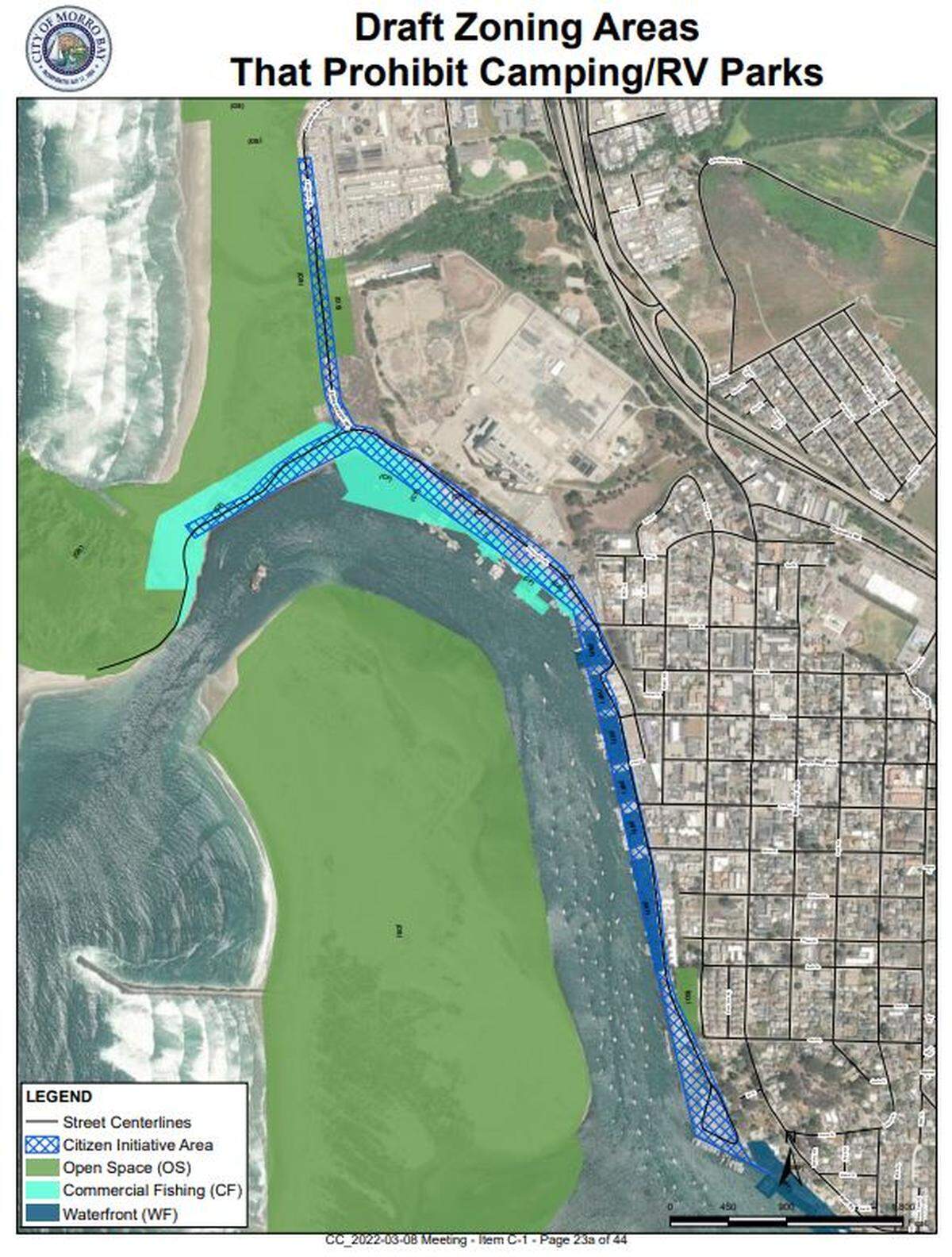
The new ordinance prohibits RV and tent camping along Embarcadero Road, including Tidelands Park, Coleman Drive and Morro Bay parking lots.
The citizen’s initiative met the required 10% minimum number of signatures (869 confirmed of the city’s 8,196 registered voters) to take the proposed ordinance to a vote in either the upcoming June or November elections.
But the council decided not to proceed further with the concept that was in the midst of a Coastal Commission application for permanent adoption. That application now will be withdrawn.
“I think it was important for council to take a risk but also to listen to the people of Morro Bay who elected us,” said Councilmember Dawn Addis. “They have spoken clearly across time, and the message has been very, very clear.”
The city implemented its pilot program to help generate needed revenue for a Harbor Department that is estimated by Morro Bay officials to be underfunded by “approximately $600,000 to $800,000 per year over the next 10 years,” the staff report said.
The RV and tent camping program went through various iterations, as the city previously removed locations such as three parking spots established along Coleman Drive that generated numerous public complaints.
At present, there are 19 camping spots being operated by the city in three areas at the designated “Tidelands, Maritime Museum and Morro Creek” sites.
Winholtz said that residents have voiced complaints about the RV camping program, saying that campers are noisy, leave behind trash and disturb natural settings in locations near bayside pathways and public spaces.
“This puts our town back to being quaint,” Winholtz told The Tribune. “It’s not going to be a parking lot full of RVs anymore.”
The new ordinance crafted by citizens will be a short addition to the municipal code. It doesn’t apply to current private businesses such as the Morro Dunes RV Park, located at 1700 Embarcadero Road.
Once added to the city’s books after a second reading at its next meeting, followed by a 30-day period before it’s enacted, the ordinance would require a public vote to be changed.
“It has the same effect as adopting the ordinance by vote, meaning that if you want to unwind (the ordinance), you have to go back to the voters to unwind it,” said Scot Graham, the city’s community development director.
Harbor needs
Mayor John Headding said he appreciated the Harbor Advisory Board’s work in recommending the program to try to find a new way to generate revenue for the self-sustaining Harbor Fund.
The Harbor Department primarily relies on revenue generated from its Tidelands property leases and isn’t allowed by law to receive any General Fund allocations.
The agency maintains waterfront facilities such as the boardwalk and bathrooms. It also provides boater assistance, emergency response and code enforcement.
“The Harbor Fund is sick,” Headding said. “It is in dire straights, in my opinion, with regard to not only the operational needs to increase staffing, but mainly the unmet capital needs.”
The RV and tent camping program was projected to generate about $115,000 to $155,000 (net) revenues for the Harbor Fund, $13,500 to $18,500 in General Fund transient occupancy tax revenues, and $2,000 to $2,800 for the county tourism marketing district on a long-term annual basis if permanently established.
Headding said Harbor Department revenues have remained flat over the past decade, while operational costs have increased 4%, which is a testament to the Harbor staff’s ability to manage the budget and keep costs down.
“The leases will never generate enough money to fund the capital budget needs,” Headding said. “In years to come, the (Harbor Fund) will crumble and we’ll be hit with huge dollars to meet the capital needs in the future.”
Headding, while supporting the citizen’s ordinance and avoiding the process of taking it to a vote, is calling on residents, including those who opposed RV camping, to try to find ways to address the Harbor Department’s funding needs.
City officials say federal or state grants will help but likely won’t make up the difference with budget gaps.
“We need to really garner all of the resources that we can, including the group that brought this forward, to assist us in trying to determine how to get a sustainable revenue stream into the Harbor Department to meet future needs,” Headding said. “Grants won’t do it.”
“I think it’s time to continue to look at other ideas, and I join (Headding’s) call,” Addis said. “I encourage folks to help council, help staff, help one another be creative and find those funding mechanisms that are going to be meaningful and last over time.”
Winholtz said she believes that the federal infrastructure money could be a mechanism.
“I think there’s great opportunity with the budget coming out of Washington to get some grant or loan money,” Winholtz said.
Councilman Jeff Heller cast the dissenting vote on the ordinance, advocating for altering the existing pilot program to try to address public concerns (removing the site near the Maritime Museum site, where tent and RV parking is allowed).
Heller wanted to continue to generate revenues until there’s a “sustainable funding source in place.”
“I’m very concerned about the financial condition of this department,” Heller said. “Much of the Harbor infrastructure was built in World War II and is currently failing us. If you go on the Harbor walk in any location, starting from the loading dock out to the Rock, all you have to do is look over the edge of the boulders and see how it’s eroded and how it’s undermined.”
This story was originally published March 9, 2022 at 12:18 PM.
%20Cropped.jpg)