
Morro Bay tests RV camping near waterfront. Is it an economic boost or blight?
The city of Morro Bay has extended a controversial pilot program that allows for limited recreational vehicle camping near its waterfront.
The Morro Bay City Council voted unanimously Feb. 9 to continue the program until Sept. 30, with plans to use all but two of the six originally designated locations if details can be worked out.
The program will allow for a total of 23 to 25 RV parking spaces between the various locations, with some modifications to the original plan.
Many residents have voiced complaints about the RV camping program, saying that campers are noisy, leave behind trash and disturb natural settings — particularly when staying in prominent areas near Morro Rock.
“Morro Bay’s biggest asset and attraction is the natural beauty,” Morro Bay residents John Collette and Martin Gottlieb wrote in a joint letter to the council. “Inserting RVs in the various locations proposed would directly and negatively impact this natural beauty, and in some cases, the peace and quiet to residents in their homes.”
But RV camping can provide a new, much-needed revenue stream for the Morro Bay Harbor Department, said Harbor Director Eric Endersby, noting that the agency is dealing with a constrained budget and aging infrastructure.
“Demands have gone up, and our revenues really haven’t kept up,” Endersby said. “We’ve counted as many as 19,000 cars visiting the Rock in a weekend and that is costly to manage. It’s costly to keep up our harbor facilities, respond to emergencies and provide overall maintenance of our natural areas. It all adds up.”
Endersby said that the city will continue to charge $65 or $75 per night for RV camping, possibly increasing prices in prime areas near Morro Rock.
The RV camping program is expected to generate $100,000 to $185,000 per year in net revenue to help the Harbor Department’s $2 million annual budget. The city expects the amount to grow year over year if a permanent program is adopted.
“We all love the harbor, but our harbor facilities are disintegrating,” Councilman Robert “Red” Davis said at the Feb. 9 meeting. “For me it is all about the money. I’m not sure I could support the camping program if our harbor fund were not in such dire straits.”
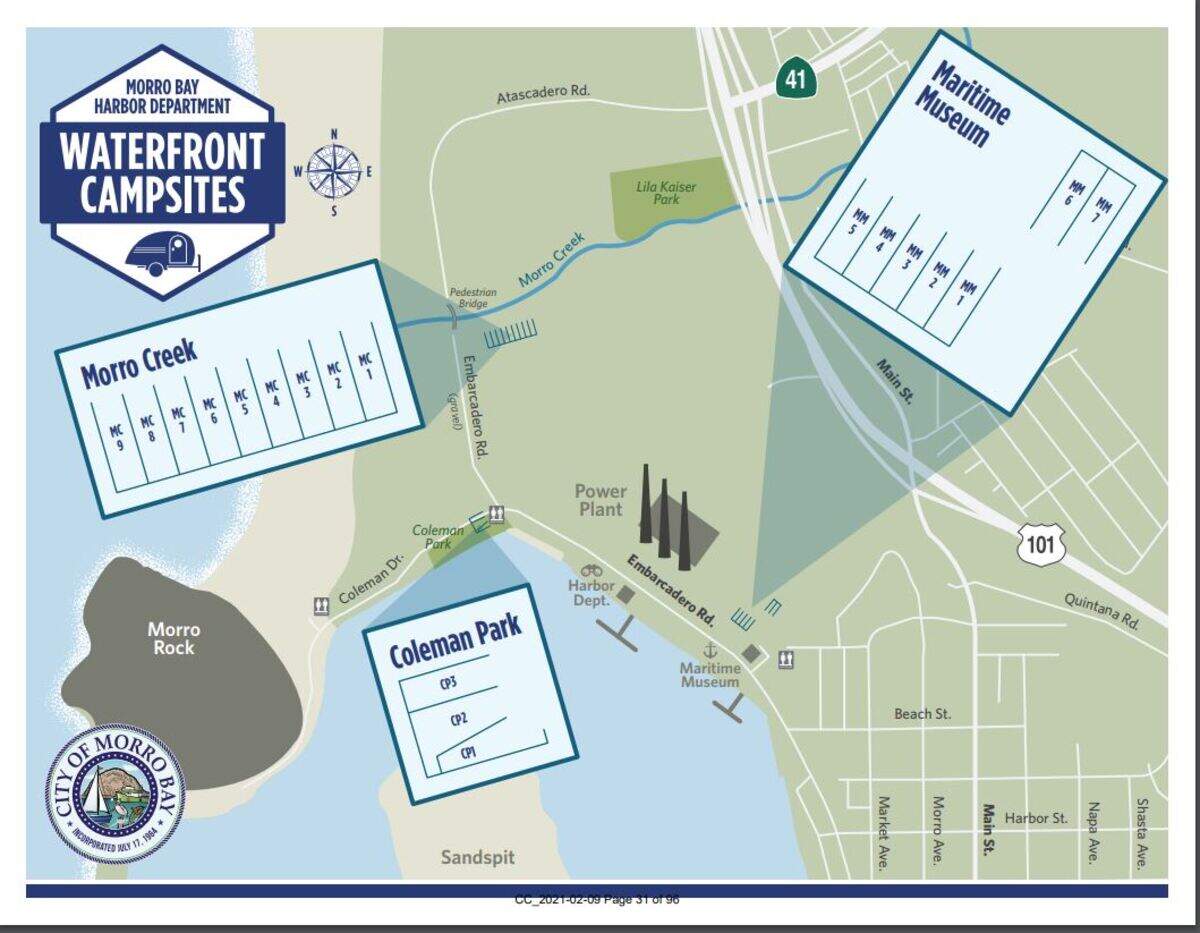
Where is RV camping allowed in Morro Bay?
The city started allowing recreational vehicle camping near the waterfront in September, via an emergency coastal development permit from the California Coastal Commission.
That permit is valid through the end of March. The council voted Feb. 9 to authorize continuing the program for a full year, but the Coastal Commission will need to grant the extension.
The initial city program laid out six sites for RV camping use near the waterfront.
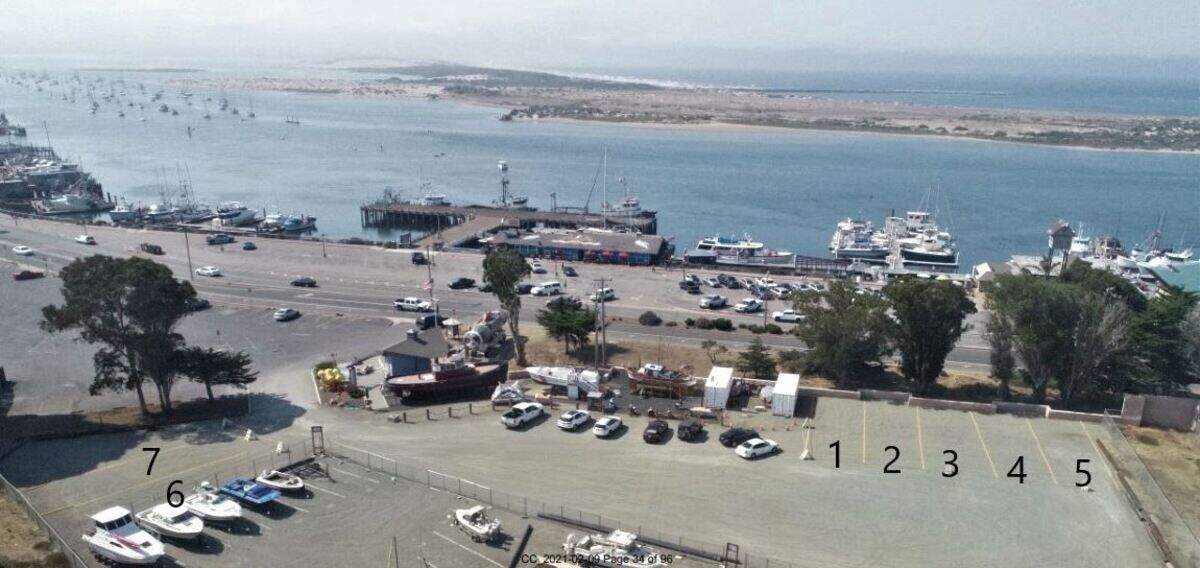
Before the Feb. 9 meeting, the city was using three locations — including sites in the triangle parking lot near the Maritime Museum and along Morro Creek RV near the Harbor Department’s storage yard.
The council also opted to allow RVs to park in two spaces along Coleman Drive near the basketball courts, if the vehicles can be visibly and physically separated from the adjacent Morro Bay Harborwalk.
The Coleman Drive site is the most popular, as well as the most controversial, because of its proximity to Morro Rock and the path used by walkers, cyclists and others visiting the area, Endersby said.
The council will continue using each of those, incorporating some changes to the Coleman Drive site, while using a planned zone in a public parking area near 456 Embarcadero in place of a planned site at the public boat launch ramp parking lot.
In response to complaints from residents, the City Council decided Feb. 9 to remove or modify some of the locations that were initially available for RV camping — such as its Target Rock spot, adjacent to Morro Rock to the south and facing the bay.
The council also nixed RV parking in an area known as “the pit” that’s adjacent to Morro Dunes RV Park.
But the city is allowing RVs to park at two spaces in the Morro Rock parking area to the north of the landmark, both boasting spectacular ocean views.
Endersby said that he’s reaching out to the Northern Chumash Tribal Council to seek their input on allowing RV parking in those spaces. The tribal council considers Morro Rock a sacred landmark, and the city is hoping to gain voluntary consent from the group, Endersby said.
City argues need for RV camping
According to Endersby, revenues from RV camping will help pay for a host of needs, including updating aging city infrastructure.
The harbor fund is balanced but has little money left over for repairs to infrastructure such as docks, restrooms and walkways, he said.
It was been partly funded in past years by $250,000 in annual tax revenues from the former Morro Bay Power Plant, which closed in 2014.
The Harbor Department mostly depends on Embarcadero lease revenues to support itself. The agency provides emergency response and maintains waterfront restrooms, parks, the boardwalk, beach access areas and parking. It also manages open space and promotes environmental stewardship.
“We have the same number of people in the department as 25 years ago, and we’re trying to keep up with much higher demand,” Endersby said.
“If this harbor becomes condemned because we can’t maintain it,” Councilman Jeff Heller asked Feb. 9, “what will become of the city?”
Endersby said the city has hired a consultant to research the viability of requiring paid parking in city business areas and on the waterfront, which could also contribute to Harbor Department revenues.
That report is yet to be made public, but Endersby expects it to be presented to the City Council in coming months.
In the summer of 2020, Morro Bay increased fines for illegal RV camping from $60 to $250 “in response to the unprecedented numbers of RV campers illegally camping in various locations throughout the city,” according to a city staff report.
“This (RV camping pilot program) gave people a place to send them to,” Endersby said. “This program provides a unique experience, which is one of the things we market.”
Endersby said the Morro Rock parking lot was packed during many weekend days in 2019, adding that the coronavirus pandemic brought an increase in activity in 2020 as many looked for socially distanced outdoor activities.
“This is the new norm,” Endersby said. “It’s truly remarkable compared with 20 years ago. Morro Bay has been discovered. Our marketing is working.”
Davis said that extending the RV camping program to September will give the city further time to evaluate it over the summer and determine if any changes are needed.
While the city has a temporary California Coastal Commission permit to allow RV camping, it would need to secure a permanent permit to continue RV camping over the long term.
Morro Bay residents respond to campers
While the program is economically beneficial, it’s not universally loved by Morro Bay residents.
Dozens wrote in to the City Council to express their displeasure about the presence of RV campers in the normally peaceful beach area.
“When I walk on the boardwalk or stroll through Tidelands Park (which I do many times a week), I expect to be in a beautiful, serene and natural environment,” Morro Bay resident Colleen Ray wrote. “I don’t want to listen to generators run or smell their fumes, and I can’t imagine that visitors will either.”
In another letter, SLO County resident Kelly Lewis noted, “Please do not destroy our open spaces by turning them into camping sites. I grew up here and have loved how we have done a fair job protecting the nature of our small town. The thing that attracts tourists to Morro Bay are the open spaces. You will destroy us if we turn our town into a campground.”
But Jeremiah O’Brien, a member of the city’s Harbor Advisory Board, stressed the city’s challenges with maintaining the Harbor Department and its need for funding in a letter to the council.
O’Brien said that the city’s decision to allow RV camping near the waterfront was the result of many hours of discussion to find solutions for funding.
“The harbor is truly the gem of the Central Coast, and we must protect it while keeping it the beautiful area that it is,” he said. “The bottom line is they need our support and money, so we must solve this dilemma.
“The folks that wrote in are concerned and hopefully will come up with or assist in helping to come up with funding ideas. We all love Morro Bay and need to help the harbor. We do not want to upset the people but need to solve this problem.”
This story was originally published February 25, 2021 at 5:00 AM.
%20Cropped.jpg)