Who was Julia Morgan? New book illuminates life of trailblazing Hearst Castle architect
Even in this era of more egalitarian workplaces and industries, some people still are astonished to learn that one of California’s most popular destinations, Hearst Castle, was designed by a trailblazing, glass-ceiling-breaking woman, Julia Morgan.
In fact, when Victoria Kastner — the author of the new book, “Julia Morgan: An Intimate Biography of the Trailblazing Architect” — began working as a trainee tour guide at Hearst Castle in 1978, she was told simply that “the Castle was designed by a woman, but we don’t know much about her.”
Kastner has been studying, learning and writing about Morgan ever since.
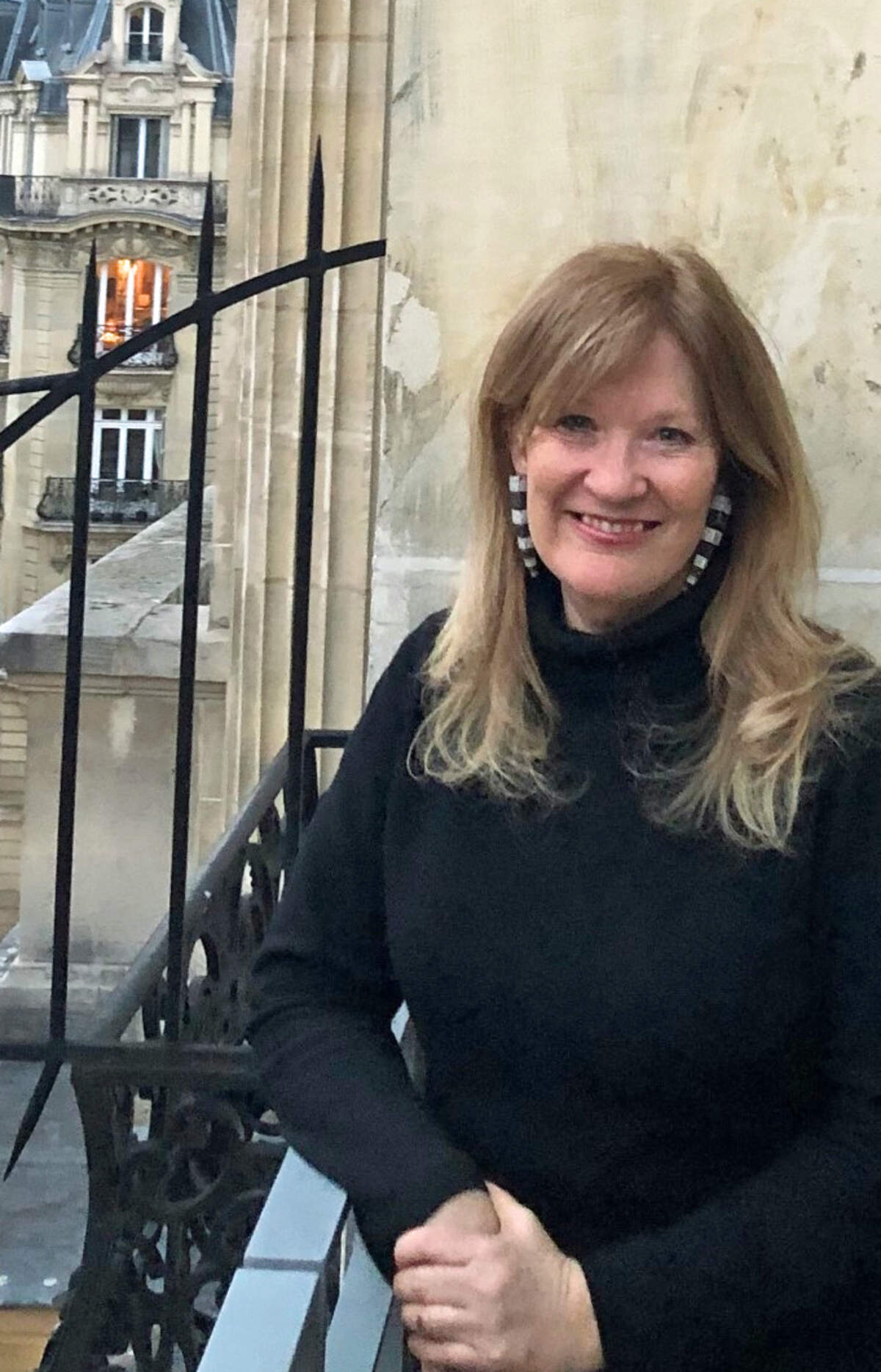
The Los Osos author shared some of her newfound knowledge in three other hardcover, large-format, Hearst-related books before zeroing in solely on the architect and her astonishing story of talent, challenges and determination.
Some of the Kastner’s knowledge was acquired during her 30 years of working at the Hearst Castle, including two decades in the respected post of Castle historian.
Kastner learned the rest about Morgan through good, old-fashioned grunt work and digging, combing through archives and books, newspapers, collections of letters, drawings and photographs to learn more about the architect’s professional and personal life. The author said she and her team ultimately amassed about 800,000 words of documentation.
While it had been reported that Morgan was so protective of her privacy that she’d “burned her papers before closing her San Francisco office in 1950,” Kastner said that’s false. Instead she believes “that woman saved nearly everything,” including letters, school notes, sketchbooks and more.
“Julia continues to amaze and impress me,” the author marveled, “even when she’s writing to herself in her diaries. She had such nobility of self.”
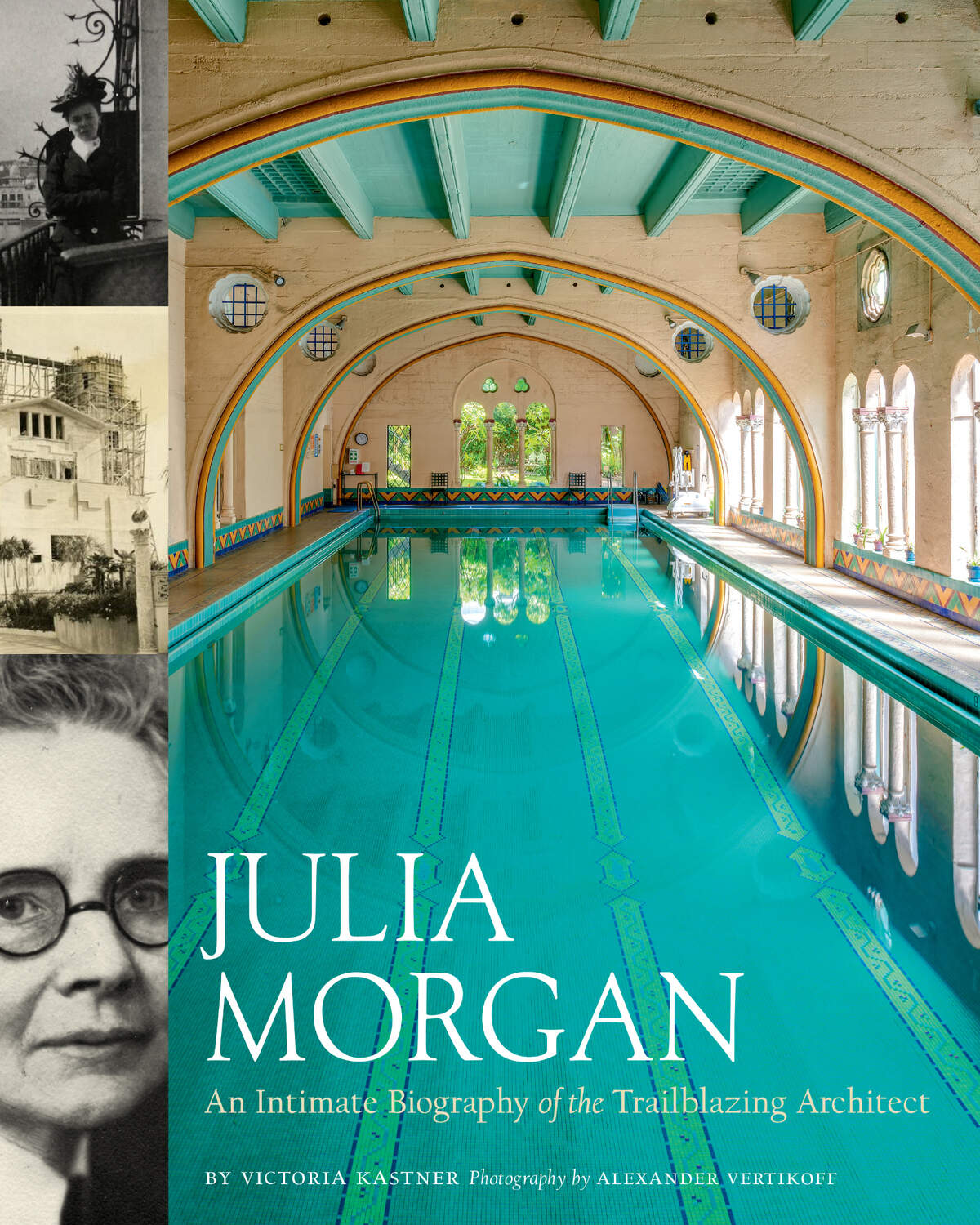
Chronicle Books is publishing the 240-page biography on March 1, during what would be the sesquicentennial of Morgan’s birth. Of those pages, 23 showcase Kastner’s background as a precise historical researcher; nearly 600 endnotes itemize her sources in detail.
The new Morgan biography also includes many historical images unearthed during Kastner’s research and dozens of color images captured by noted architectural photographer Alexander Vertikoff.
Hearst Castle architect was a groundbreaker, earning many honors
When Julia Morgan was born in San Francisco in 1872, ladies were expected to marry well, obey their husbands, produce heirs and entertain skillfully.
Morgan never achieved those predestined destinies, instead focusing her prodigious energy, architectural genius and true grit on racking up an astonishing list of accomplishments and “firsts” for anyone, much less a woman raised in the Victorian era.
Undaunted by those patriarchal traditionalists, Morgan showed them all.
She was the first woman to earn a civil-engineering degree from UC Berkeley and first woman to study architecture at the prestigious École des Beaux-Arts in Paris, earning her certificate there at the age of 30 in 1902.
Morgan capped that by becoming the first woman licensed to practice architecture in California.
About 35 years after Morgan earned her civil-engineering diploma, the architect became the proud recipient of an honorary doctoral degree from her alma mater, which Kastner described as being additional tangible evidence of Morgan’s growing reputation as one of the most prolific architects of the 20th century.
The degree was delivered with this introduction: “Designer of simple dwellings and of stately homes, of great buildings nobly planned to further the centralized activities of her fellow citizens … architect in whose works harmony and admirable proportions bring pleasure to the eye and peace to the mind.”
In 2014, Morgan became the first female recipient of the American Institute of Architects Gold Medal, awarded posthumously.
Morgan’s work is spread throughout California
During her decades-long career, Morgan designed about 700 structures in the West, mostly in California, including the entire Castle estate, Hearst buildings in Old San Simeon Village, the Monday Club in San Luis Obispo, the sprawling Asilomar complex in Pacific Grove, the L.A. Examiner and San Francisco Examiner buildings and the post-earthquake rebuild of San Francisco’s Fairmont Hotel (which reopened a mere year after the devastating 1906 quake).
Morgan also was a pioneer in using reinforced concrete in her buildings, a skill that served them well through earthquakes such as the 1906 quake-and-fire disaster in San Francisco, and the 2003 San Simeon Earthquake with an epicenter geologically close to Hearst Castle.
Many Morgan-designed buildings include a unique blend of modern and traditional elements, with a heavy emphasis on wood, archways, windows and skylights, staircases with windows and other elements.
Her wide range of work covered everything from classical to contemporary, each with her own design imprint, but always including practicality, strength and longevity.
“She designed buildings to be lived in,” Kastner said.
Morgan and Hearst: a ‘strange comradeship’ over decades
Starting in the spring of 1919, Morgan’s resume expanded exponentially with her extended professional relationship with wealthy, eccentric media magnate William Randolph Hearst, who became her longest, best and likely most difficult client.
Hearst and Morgan had probably met casually before he commissioned her to “build a little something” on the San Simeon hilltop that was “his favorite place in the world,” Kastner wrote.
Morgan had long loved and respected his mother, Phoebe Apperson Hearst. The matriarch, wealthy philanthropist and art collector had become a friend and mentor to the young architect two decades earlier in Paris when Morgan was at École des Beaux-Arts.
Hearst was 56 when he and Morgan held their first consultation in 1919 at the San Simeon site his family called “Camp Hill.” He wanted Morgan to design a bungalow or home for the cherished hilltop, as Kastner wrote, “because he was getting too old for camping in tents.”
The media magnate was tall and stout, nearly always dressed in a three-piece suit and hat. Morgan was 47, petite, slight of build with her own customary dress code of white blouse, gray or blue suit, a cape, hat and eyeglasses.
Sometimes, she’d wear a pair of men’s trousers underneath the suit’s skirt, so she could retain her dignity on the job site, while fearlessly climbing a scaffolding that was high enough to terrify some of her macho male employees.
The architect’s relationship with Hearst blossomed into one of close, platonic friendship and mutual respect, according to Kastner’s research. He treated his architect like an equal, often deferring to her judgment — not a trait the hard-driving media businessman employed often in his dealings with others.
Kastner quotes a comment by Morgan architect and longtime friend Walter Steilberg about Hearst and Morgan’s “strange comradeship.”
“They were both long-distance dreamers,” he said.
A quote from another fellow architect, Dorothy Wormser Coblentz, said Morgan probably “was the only person in the world who never tried to take advantage of him; he had complete faith in her and she was utterly loyal to him.”
As Kastner noted, “W.R. frequently changed his mind and was often slow in his payments, but Julia felt these difficulties were recompensed by the design opportunities his projects provided.”
The author quoted Morgan’s sister-in-law Flora North’s comment that, “Hearst was probably a windfall in a sense (for the architect), because she had the training for what he had in mind, and the imagination and the ability.”
Hearst and Morgan often communicated in letters, many of which are preserved in the valuable collections at Cal Poly’s Robert E. Kennedy Library, UC Berkeley’s Bancroft Library and other archives.
The pair’s collaboration on a variety of projects extended from 1919 through the nearly three decades of Castle construction, and into the 1950s on other sites, including the post-fire recreation of the Hearst Wyntoon complex in the shadow of Northern California’s Mt. Shasta.
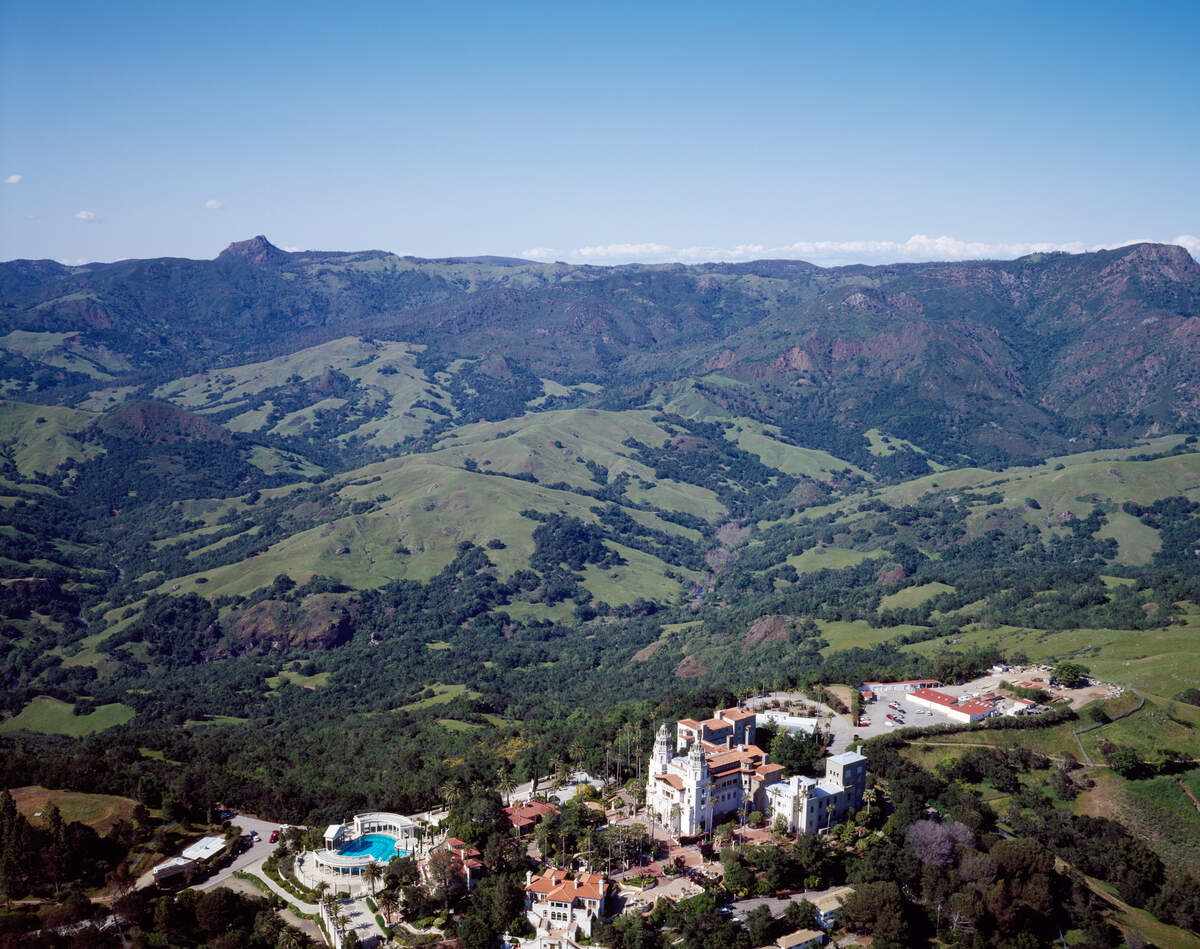
The most famous Hearst-Morgan co-creation remains Hearst Castle, now a well-known California State Parks historical monument and house museum that serves as a tourism magnet for the entire county and the state, though it currently remains closed.
What was Morgan like in her personal life?
Strong-willed, determined and forceful while remaining ladylike and polite, Morgan eventually was respected and even revered in her trade.
She wasn’t afraid of making waves if it meant that her creations would ultimately meet her exacting standards. Kastner recalled a favorite quote about her heroine: “I’ve seen grown men tremble when she said, ‘No, it won’t do.’ ”
Many of her clients gave her subsequent commissions.
All that brought to the personally private Morgan something she never sought, never wanted but always handled with her customary dignity: fame.
In Kastner’s enjoyably readable book, she gives readers a peek behind Morgan’s privacy curtain, a revealing overview of stories and legends, quotes, excerpts and details that flesh out the heretofore somewhat scanty public information about the legendary architect.
Morgan’s personal life was wrapped around her family and her work. She loved children, never married or had any of her own, but adored her nieces and nephews and treated her employee’s offspring as part of her own family.
Kastner and other researchers have never uncovered evidence of any Morgan romantic relationships, probably because “her work was her life,” the author said.
Morgan endured intermittent illnesses that included a childhood bout of the dreaded scarlet fever. The disease likely contributed to her recurring ear infections and mastoiditis serious enough to require various surgeries, one of which late in her life caused facial deformity and exacerbated her loss of equilibrium.
She also had poor vision and vehemently didn’t like to be photographed.
Morgan died of a cerebral thrombosis at age 85 on Feb. 2, 1957, in San Francisco. It was the same medical crisis that, six years earlier, had ended the life of her most famous client, W.R. Hearst.
Throughout Morgan’s life and career, as Kastner noted in the book, the architect also “was famously reticent about being interviewed, since she believed that architecture was an art of form, not an art of words.”
Kastner’s book counteracts that belief, in part because her years of research are based to a great extent on those thousands of preserved pages of Morgan’s “personal correspondence and diaries, making it possible for future generations to be inspired by the story of her extraordinary life.”
This story was originally published February 22, 2022 at 5:00 AM.