Damaged and silenced for years, the melodic bells atop Hearst Castle may finally ring again
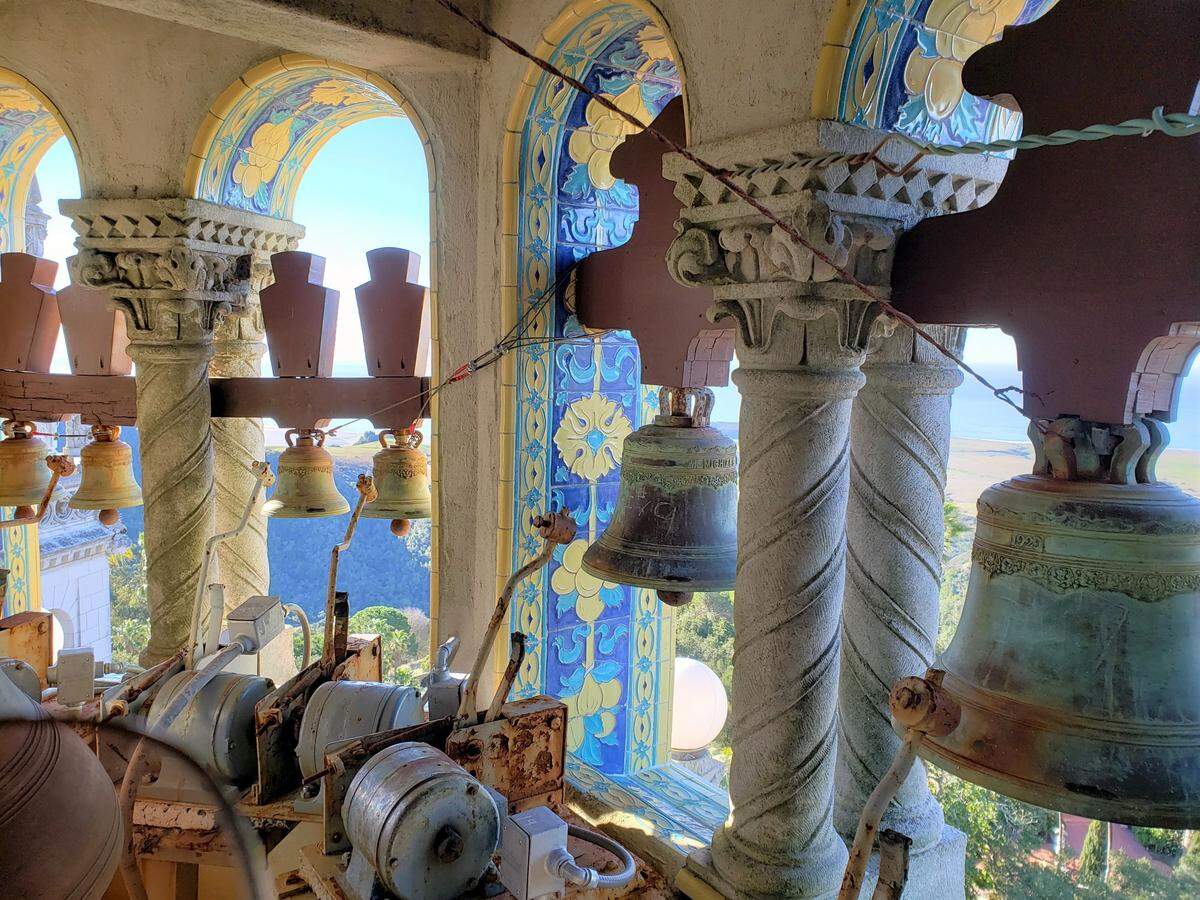
Hearst Castle’s bells and the systems that make them ring are getting a vital makeover.
A $50,000 grant from California State Parks’ Cultural Resources Division has paid for the first phase of a three-phase project to restore the 36 carillon bells and their support components, according to district historian Amy Hart.
For nearly a century, the bells’ metallic, melodic sounds — much like what could be imagined as coming from a giant, complex music box — wafted periodically over the hilltop compound. But in the process, exposure to rain, humidity, wind, earthquake and other forces took a toll on the bronze artifacts and other elements.
After State Parks took over the former estate of William Randolph Hearst in 1957, the bells’ melodies could be heard at scheduled times (every day at noon, on holidays, etc.) and on random occasions.
The music was activated by pressing keys on a player piano in the theater lobby of La Casa Grande, the Castle’s largest structure and the center of much of the indoor social activity at the estate during Hearst’s residency.
In recent years, Hart said, gradual deterioration of the bells meant that some of them had to be detached from the system. That severely limited which music could be played on the carillons.
Then when the Castle closed down in March 2020, due to pandemic restrictions, the bells went totally silent.
The closure has continued since then, in part because repairs had to be made to the road leading from the visitor center and bus-loading area to the hilltop former estate of the wealthy media magnate.
While the Castle’s long closure has been an ongoing disappointment to visitors, area businesses and others, it has proved to be a boon to a three-phase project to rehabilitate the bronze bells, plus the remotely and electrically controlled striker mechanisms, wooden and iron support hardware and even the internal bell clappers which serve no other purpose than to make the bells look complete.
Hearst Castle bell rehabilitation project will be 3 phases
Hart said in a Jan. 5 phone interview that the initial restoration phase includes rehabbing the eight smallest bells, each of which weigh about 25 to 30 pounds. Those are the highest-toned bells that hang in the towers’ windows and can be seen by people below.
She wrote that those bells were the most “directly exposed to coastal weather patterns and thus were showing the worst signs of rust and discoloration.” A contracted conservator is working to remove rust and reseal the bells, she added.
Meanwhile, Earnie Riley and his Castle restoration staff have been working to rehabilitate the eight playing mechanism systems that make those bells ring.
“He’s been able to retain the vast majority of the original materials,” Hart said. “(But) when rust puts a hole in the metal, we have to replace it.”
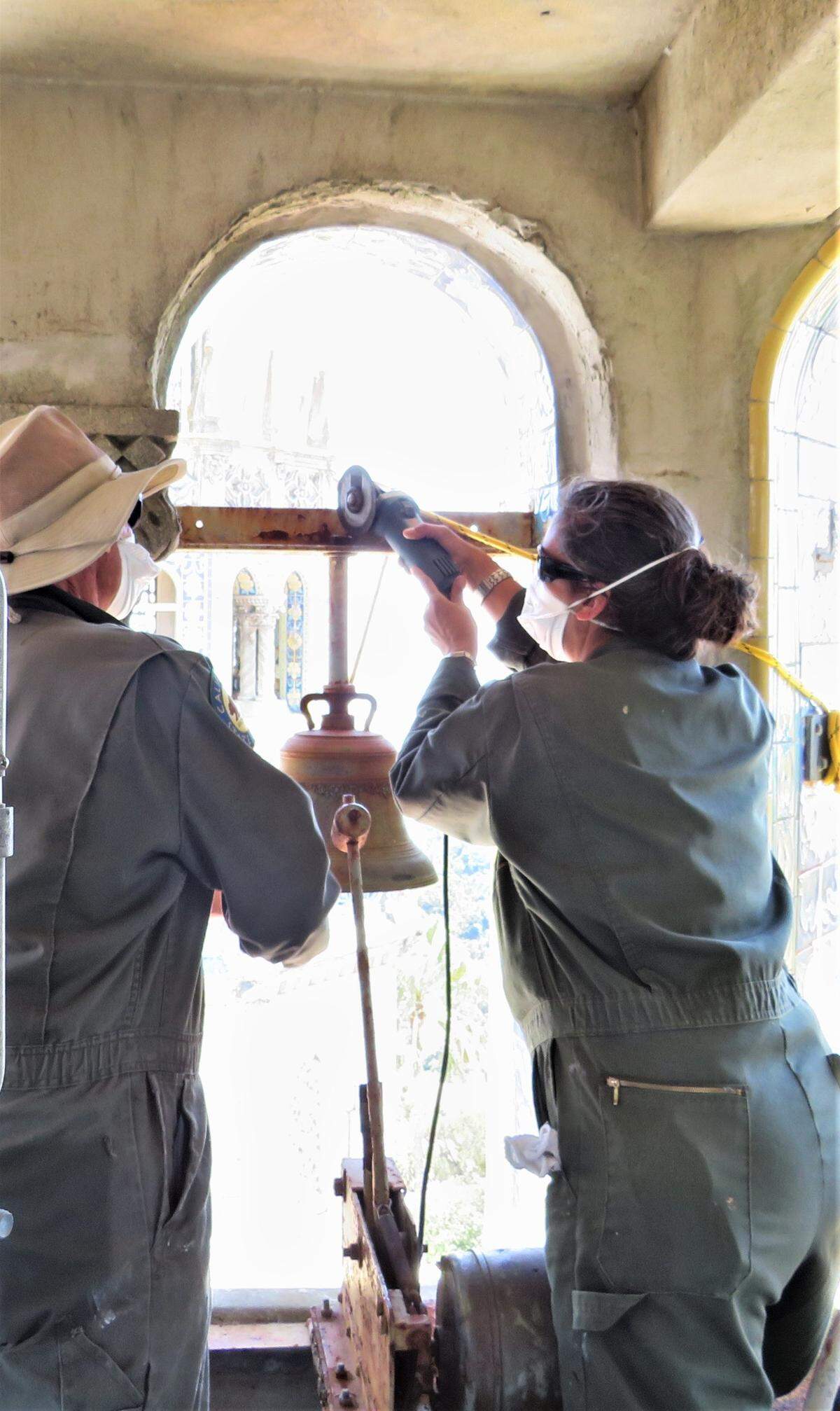
Some of the treatments include “passivation,” she explained, which is coating a material or metal with corrosion-resistant material “to help protect them when they go back into the bell tower.”
Hart said the 20 bells scheduled for the project’s second phase weigh from 50 to 175 pounds apiece, but those repairs likely will require scaffolding and more complex, tricky removal techniques.
And the eight largest bells, in the center of the bell towers, weigh up to 1,800 pounds each. Hart said those deepest-toned bells probably “will have to be treated in place, because the towers weren’t constructed to let them be removed.”
She didn’t estimate how long it would take, or how much it would cost, to complete all three phases of the project. But after years of knowing that the work needed to be done soon, it’s finally underway.
How did the bells get to Hearst Castle?
Hart’s detailed written history of the Castle’s carillon bell system details how Hearst knew “almost from the beginning of construction … that he wanted a bell tower.”
Later, that plan expanded into two matching towers atop the estate’s main house, an arrangement Hart wrote is unusual for a single carillon system.
It took five years of negotiations and correspondence between Castle architect Julia Morgan and bell-founder Marcel Michiels of Tournai, Belgium, to finalize the plan before Morgan ordered the bells in 1926.
The bells arrived in December 1931, and were installed the next February by Michiels’ son.
“Iron crowns were hastily constructed by Michiels and his staff to connect the bronze bells to their structural supports on site,” Hart wrote in her history, “eventually leading to corrosion caused by interaction of the incompatible iron and bronze materials.”
Now, modern science, technology, ingenuity, artistry and determination are working to return those bells to a condition that officials hope will allow them to ring out over the state historical monument for another century or more.
“We’ll be so excited to be able to ring the bells again,” Hart said.
As will the visitors who have long thrilled to the magical musical sounds coming from a historic house museum, the same ringing melodies heard by Hearst and his legendary guests for decades.
Those who want to donate to the carillon rehabilitation project can do so through the Foundation at Hearst Castle, either through a tax-deductible one-time or recurring donation or by becoming annual members of the foundation.
For details, go to foundationathearstcastle.com.