
SLO launches program to plant 10,000 trees by 2035 — and hotels are funding initial costs
The city of San Luis Obispo and the local hotel industry have launched an innovative program that aims to plant 10,000 trees by 2035.
Through the Keys for Trees program — announced earlier this month — SLO’s Tourism Business Improvement District will dedicate 1% of its annual $1.5 million revenue toward planting trees citywide, or $15,000.
San Luis Obispo is the first U.S. city to fund urban reforestation through hotel assessments, according to a news release issued by the SLO Chamber of Commerce on behalf of city tourism.
In June, the San Luis Obispo Tourism Business Improvement District’s (TBID) Board approved dedicating 1% of the $1.5 million generated from its annual 2% assessment on hotel stays (for example, a $2 assessment on a $100 hotel stay) — traditionally used for marketing and promoting hotel visitation — toward the program.
The allocation generates $15,000 in the 2021-22 fiscal year for the pilot program with the possibility of continuing it in future years, said Molly Cano, SLO’s Tourism Manager.
In September, the TBID board formally decided to partner with Environmental Center of San Luis Obispo (ECOSLO), a local nonprofit dedicated to protecting and preserving SLO’s natural assets, to coordinate the plantings.
The work begins early next year, according to ECOSLO, which has planted trees in the city through other programs in the past.
SLO aims to reach a carbon neutrality goal in 2035, and the tree plantings align with its Climate Action Plan.
“Urban tree planting cleans the air we breathe, filters the water we drink, and provides habitat to more than 80% of the world’s terrestrial biodiversity,” the news release said. “Once planted, the 10,000 trees will be enough to offset more than 40 cars’ worth of carbon produced during an entire year.”
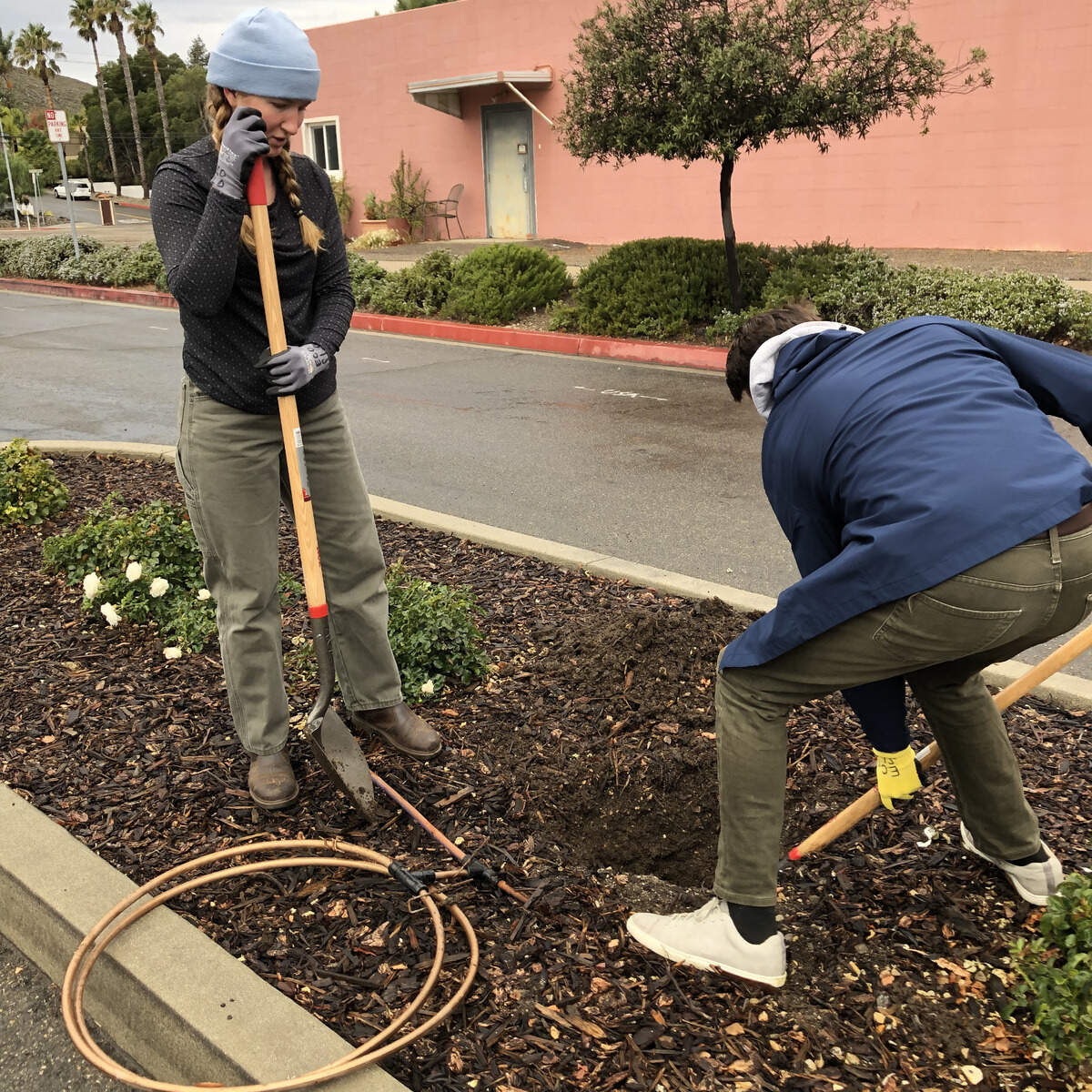
Tree planting project
ECOSLO plans to plant 15-gallon, adolescent trees on public property with varieties such as pistachio, coast live oak, pittosporum, and cassia.
“These include both native and non-native trees that are already characteristic to the landscape and provide great diversity,” said Hannah Romano, an ECOSLO communications assistant. “We focus on trees that work well for the urban environment, meaning they have moderate to low root damage potential, moderate to low water use, provide a sufficient amount of shade when grown, and are efficient at sequestering carbon.”
The city and ECOSLO will plant on sidewalk parkways and around downtown and the surrounding neighborhoods, according to program coordinators.
“Our goal is to expand the benefits of urban forests to the entire community and hope to impact areas that need it the most,” Romano said.

The trees will take three years of watering and maintenance, and then be able to survive on their own in the environment, Romero said.
“We typically keep the trees staked for about two years depending on the tree and how quickly it develops,” Romano said.
“We water the trees five to 10 gallons per week, depending on weather, for three years and have a fantastic network of volunteer tree keepers to assist with this.”
Trees can take up to 30 years to reach maturity, Romano said.
SLO’s hotel participation
The program includes “all lodging properties in the City of San Luis Obispo such as hotels, motels, bed-and-breakfasts, hostels, inns and owner-occupied homestays,” consisting of 41 establishments that make up the group, Cano told The Tribune.
The TBID supports an “environmentally conscious tourism marketing program,” Cano said.
“The investment in this pilot program helps us achieve those objectives,” she said.
As the program will take time to reach the 10,000 tree goal, Keys for Trees allows the TBID “to support those efforts early on and inspire others to take action,” Cano said.
Volunteers are needed and those interested can go to ecoslo.org/plant-trees.
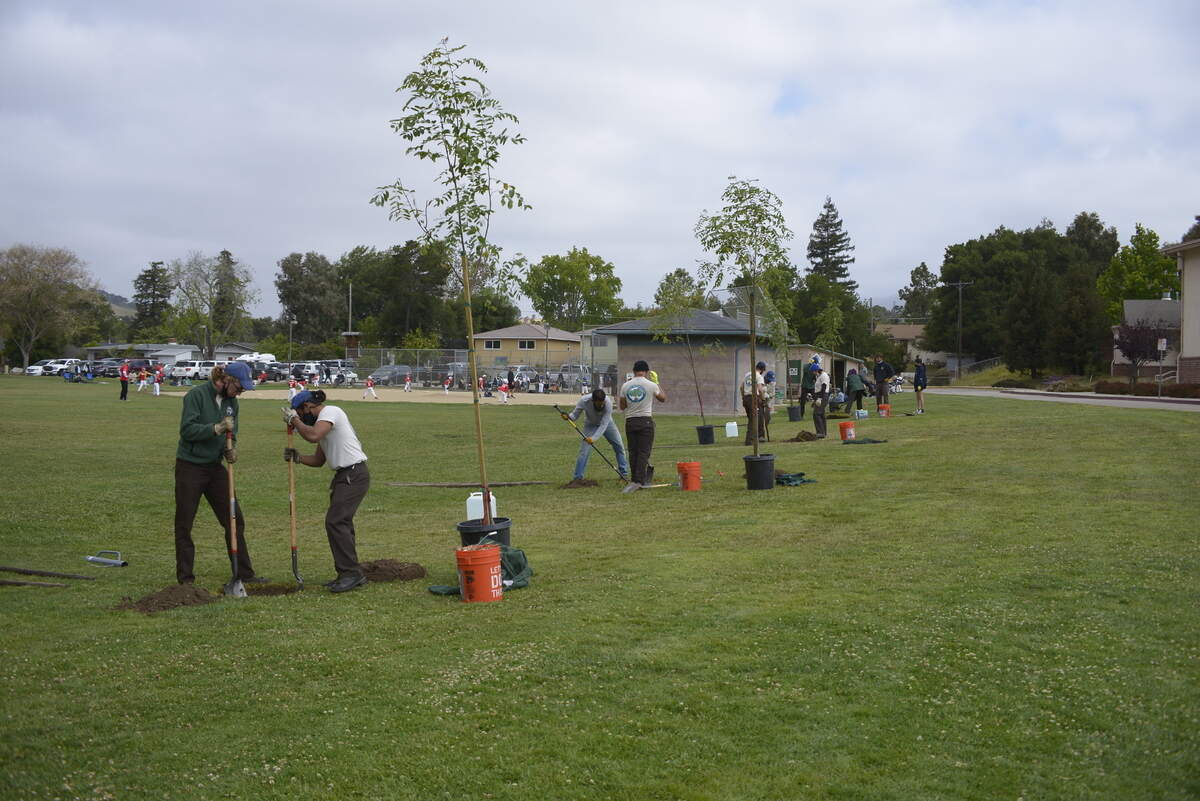
Other SLO climate action initiatives
Carbon neutrality is the concept of reducing as much carbon dioxide and other greenhouse gases from the atmosphere as possible, with the overall goal to achieve a zero carbon footprint.
Already the city, along with other local governments, has joined Central Coast Community Energy, which provides SLO residents with carbon-free electricity options, unless residents opt out.

And SLO’s City Council passed a policy in 2020 that encourages new homes to be built all-electric through incentives and local amendments to the California Energy Code.
The city also is taking measures to encourage people to walk, ride or take the bus and increase use of electric vehicles, among other initiatives such as diverting food waste from the landfill.
Correction: This story was updated to reflect accurately the amount of funding used toward the tree program as part of the TBID process.
This story was originally published December 16, 2021 at 5:00 AM.
%20Cropped.jpg)