1 of SLO Superior Court’s longest serving judges retires after 19-year judicial career
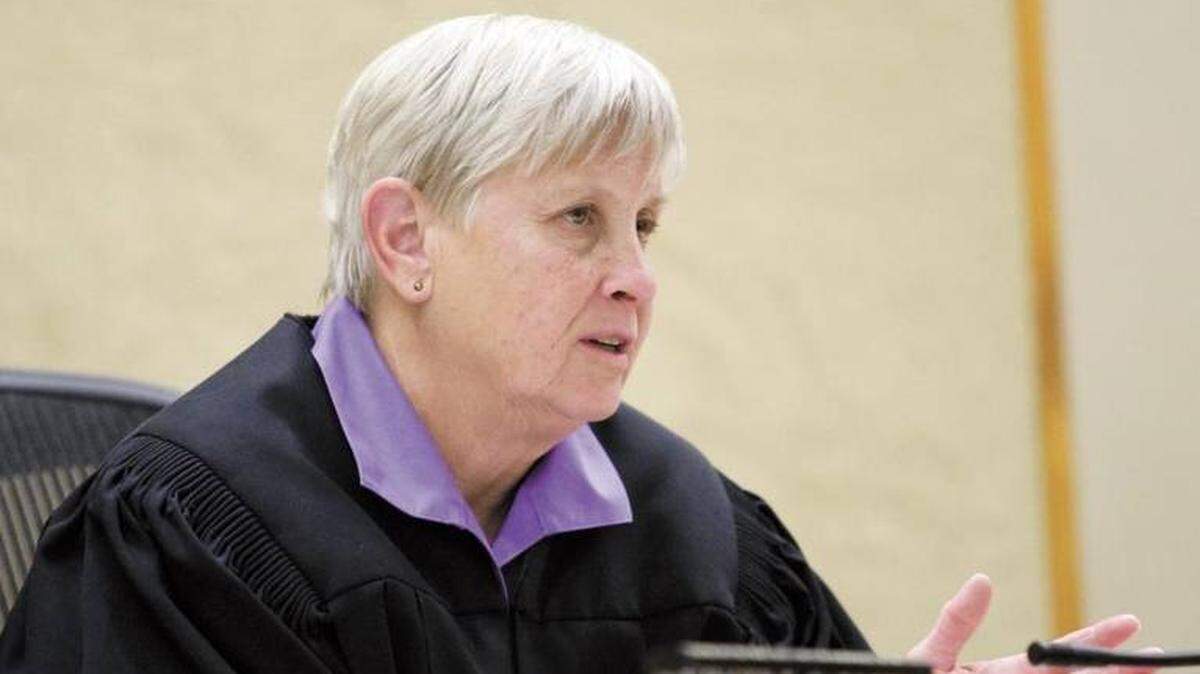
One of San Luis Obispo Superior Court’s longest serving judges will retire in October, capping a judicial career most recently known for her deep legal analysis in often complex civil cases.
Superior Court Judge Ginger Garrett, who was appointed to the bench by former Gov. Arnold Schwarzenegger in 2005, will officially retire Oct. 13.
Her last day on the bench was Thursday, when she told The Tribune she was retiring to pursue other interests such as writing and travel.
“Sometimes it’s just the right time,” Garrett said. “I feel like I’ve done everything I can do (at the courthouse). I have no idea right now how much I’m going to miss it.”
She said that contrary to some news reports that questioned the timing of her departure, her decision was not sudden and had been planned for some time.
“It’s not sudden at all,” she said. “This is not unusual for a judge to retire.”
Her ongoing cases will be taken over by any of the more than a dozen local judges who continually rotate assignments as well as a handful of retired judges who still hear certain types of cases as necessary through the court’s retired judge program.
Garrett, who was re-elected to a six-year term in 2020 after running unopposed, had most recently been assigned to civil court, where she presided over an array of civil litigation spanning a diverse variety of issues.
An Alabama native, Garrett began her legal career in Tuscaloosa as a staff attorney for Alabama Legal Aid before going into private practice, according to her state bar biography.
She relocated to the Central Coast in 1993, practicing family and juvenile law until 2002, when she was appointed as a family law court commissioner at San Luis Obispo Superior Court.
Garrett, a Democrat, was appointed judge by the Republican Schwarzenegger in 2005.
During her tenure on the local bench, Garrett presided over cases in every department of the court — criminal, civil, family law and appeals — and served a term as the court’s presiding judge.
Her favorite assignment, she said, was presiding over the Behavioral Health Treatment Court program, which offers treatment opportunities for people who become involved in the criminal justice system for reasons related to their mental health needs.
The court works with defense attorneys and prosecutors to provide services such as case management, therapy, required psychiatrist visits, medication management and housing services in lieu of incarceration.
Garrett was known as a compassionate magistrate who worked to get individuals in San Luis Obispo County Jail custody the mental health treatment they needed.
In April 2018, fed up with the amount of time it was taking the California Department of State Hospitals to accept and treat county jail inmates who were found mentally incompetent to stand trial, Garrett set a hearing to consider fining the state over refusing to accept the patients despite the court’s order for treatment.
The issue of wait times for jail inmates deemed incompetent to stand trial was at the time the subject of at least eight county, state and federal civil rights lawsuits against the Department of State Hospitals, and had been highlighted locally by the death of 36-year-old Atascadero resident Andrew Holland at the San Luis Obispo County Jail in January 2017.
At the time of his death, Holland, who was diagnosed with schizophrenia, had been deemed mentally incompetent to stand trial and was ordered by a San Luis Obispo Superior Court judge to be transferred to the county’s 16-bed psychiatric facility for treatment.
Garrett ultimately did not end up sanctioning the state after the Department of State Hospitals admitted the county jail inmates whose cases were before Garrett at the time.
She said by phone Thursday that presiding over cases involving behavioral health issues was among the most rewarding assignments of her career. She said she’s heartened to see that public awareness about mental health issues is growing.
“I think the public is recognizing those (issues) need to be addressed and the stigma is fading, hopefully,” she said, adding that she’s proud of the successes of many “loving and talented” defendants who came through the court program.
Garrett was also a proponent of transparency in the courtroom, where she was known to thoroughly explain the judicial process and reasoning behind her own rulings from the bench.
She said Thursday that she recognizes that most people who find themselves in a courtroom have little idea about how the judicial system works and that judges should take steps to demystify that process for the public.
Also an advocate for government transparency, Garrett in March 2020 presided over The Tribune’s civil case against the Lucia Mar Unified School District, which she ruled must release public records related to the district’s handling of a wrestling coach accused of molesting student athletes.
Garrett rejected the district’s allegations that the newspaper’s lawsuit was frivolous — as well as its attempt to charge the Tribune more than $200,000 in legal fees to defend the case, which was filed a year after the district first denied the Tribune public records requests.
In November 2020, Garrett made national headlines after ruling that the state overstepped its power when it began allowing billboards advertising cannabis products along roughly 4,315 miles of interstate and state highways that traverse state borders.
The local lawsuit was filed on behalf of a San Luis Obispo County resident who argued that, by allowing the “proliferation” of marijuana-related billboards along highways, the state was exposing his children to cannabis products against the will of state voters.
In her ruling, Garrett wrote that the state’s Bureau of Cannabis Control promoted interests ”inconsistent with the protection of the public,” and ordered state regulators to notify every licensed cannabis brand in California of the law change.
Asked about what cases were most important to her, Garrett said she’ll look back most fondly on the people she’s encountered in court.
“It’s important for judges to remember there are real people behind every case,” she said. “The hope is that you can make someone’s day better.”
Garrett said she plans to remain on the Central Coast, and after a break, is considering volunteer work in the mental health field and assisting the local court as needed through its retired judge program.