SLO County judge says cannabis billboards must come down on some major CA highways
The state overstepped its power when it began allowing billboards advertising cannabis products along many of California’s highways, a San Luis Obispo Superior Court judge ruled recently.
San Luis Obispo attorneys Stew Jenkins and Saro Rizzo said in a news release Saturday that they filed a public interest lawsuit on behalf of a local father who argued that, by allowing the “proliferation” of marijuana-related billboards along highways, the state was exposing his children to cannabis products against the will of state voters.
Proposition 64, which voters passed in 2016, allowed for recreational adult use of cannabis in California, but prohibited cannabis billboard advertising — similar to restrictions on ads for tobacco products — along roughly 4,315 miles of interstate and state highways that traverse state borders, such as Highway 101, which stretches to Canada.
It does not prohibit such advertising along major local roadways such as Highway 1 and Highway 227, Jenkins said Monday.
Though the attorneys say the Nov. 20 ruling by Superior Court Judge Ginger Garrett means the days of seeing cannabis billboards along many state highways have “come to an end,” it’s unclear if the state plans to immediately enforce the ruling.
Asked if the agency plans to appeal the decision, Alex Traverso, spokesman for the state Bureau of Cannabis Control, said Monday the bureau is “currently reviewing the ruling and are weighing next steps.” He declined to comment further.
Cannabis billboards target teens, attorneys say
Rizzo and Jenkins filed a petition for a court declaration and injunction on behalf of San Luis Obispo resident Matthew Farmer against Lori Ajax, chief of the California Bureau of Cannabis Control, as well as other state officials, in October 2019.
Specifically, it argued that Proposition 64 added a section to the state’s Business and Professions Code that no cannabis licensee shall advertise or market on a billboard or similar advertising device located on an interstate highway or state highway which crosses the border of any other state.
“(Voters) didn’t want there to be a Marlboro Man of cannabis,” Jenkins said Monday.
But in January 2019, the Bureau of Cannabis Control enacted several regulations, including a section of the state’s Code of Regulations, which regulates the placement of cannabis ads. One regulation essentially allows for such advertisements along interstates and state highways so long as the billboards are located beyond 15 miles from the California border.
Jenkins said his client, Farmer, is a local contractor with two teenage children who supports Proposition 64.
Jenkins said Farmer took the legal action after he was forced to routinely drive his children past a cannabis billboard on Highway 101 from San Luis Obispo to Avila Beach.
“He feels these billboards are and will continue to unnecessarily expose himself and millions of people, including hundreds of thousands of minors, throughout the state to cannabis advertising on daily basis contradictory to the intent and purpose” of Proposition 64, the petition says.
Though not specifically addressed in the petition, Jenkins and Rizzo in their news release referenced a 2018 study by the RAND Corporation, a global policy think tank, that higher exposure to advertising for medical marijuana was associated with higher average use, intentions to use and negative consequences.
Marijuana use during adolescence is associated with neurocognitive deficits and poorer functioning across several developmental areas.
In San Luis Obispo County, there are several cannabis-related billboards along Highway 101, including one for Coastal Dispensaries & Delivery next to the parking lot for the Bob Jones City to Sea Bike Trail in San Luis Obispo. Jenkins on Monday pointed out that the ad contains what appears to be a young woman on a surfboard.
“They’re trying to advertise to kids,” he said.
The successful petition sought a court declaration voiding the Bureau of Cannabis Control’s billboard regulation, an injunction preventing the state from spending funds enforcing the regulation, and a writ requiring the Bureau of Cannabis Control to notify all licensees that they may not advertise on interstate and state highways.
‘There is a public interest’ in marijanua ad enforcement, judge says
The Bureau of Cannabis Control, which was represented in the case by the state Attorney General’s Office, argued in a court filing in September that Farmer didn’t have a public interest standing to file the case and that it wasn’t “ripe” due to a lack of public controversy over the issue.
The Attorney General’s Office argued that Farmer didn’t show how the public would suffer from the alleged offense of commercial cannabis billboards, and only showed “some sort of particular harm to (Farmer) and his family and does not show any harm to the public.”
In response to Farmer’s argument that he’s an interested party because he’s a state taxpayer, the agency also argued that the Bureau of Cannabis Control is funded by licensing fees, not state or local income taxes.
The agency furthermore argued that the burden of complying with an injunction would require “not only reorganizing local land use controls that have been properly put in place by local jurisdictions ... but also regulating conduct between licensees and other parties to private billboard placement agreements across the entire state, verifying that billboards are removed from every local jurisdiction on any Interstate Highway or State Highway which crosses the border of any other state — within 30 days.”
“It has long been settled that a court shall not issue an injunction that would be inconvenient or inefficient to administer,” the filing reads.
A request for comment from the state Attorney General’s Office on Monday was referred to the Bureau of Cannabis Control.
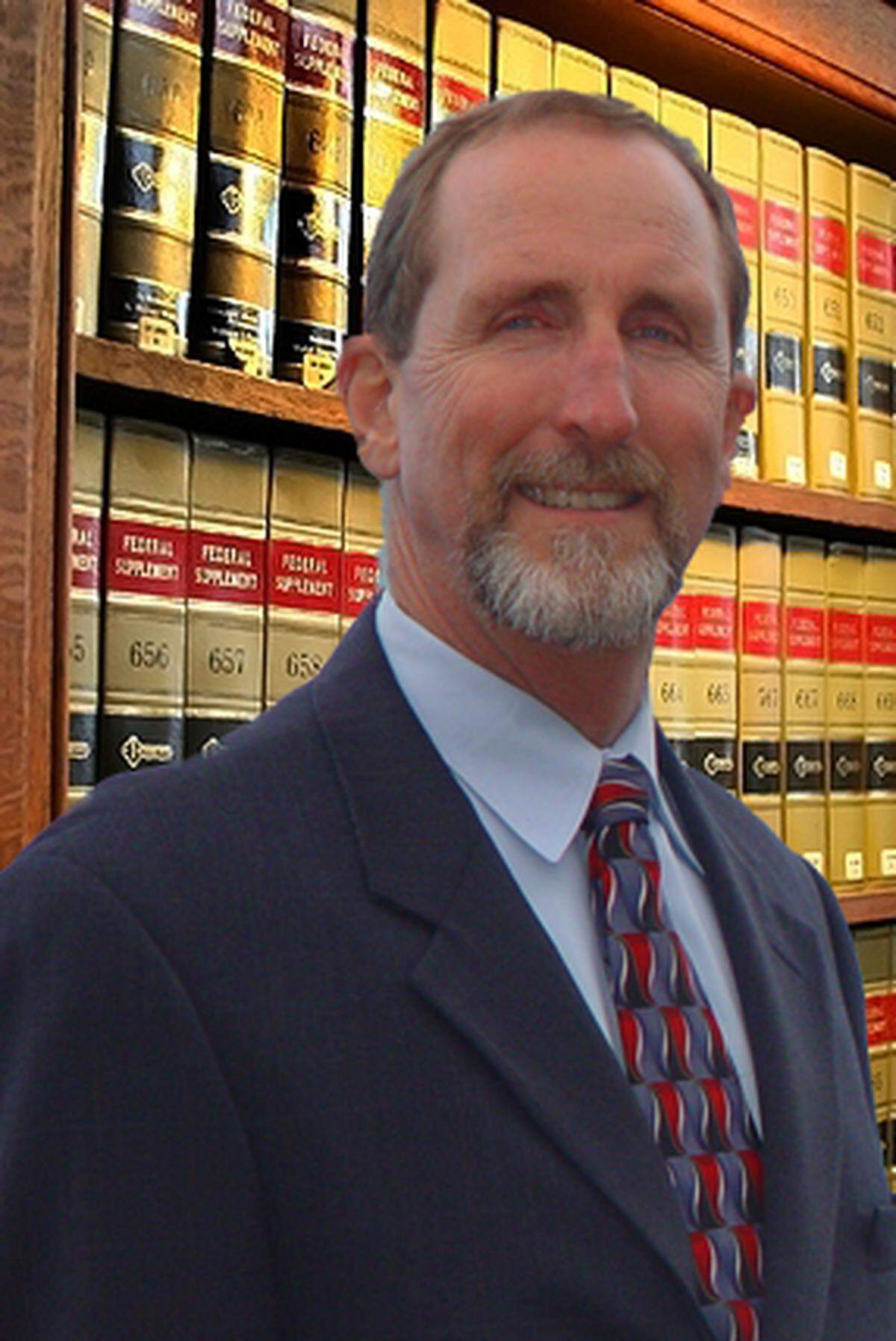
Following a roughly hour-long court trial Oct. 21, Garrett on Friday issued a final ruling that there is “a concrete dispute” over billboard cannabis advertising and without resolution in Farmer’s case, “there will be a lingering uncertainty in the law.”
Garrett ruled that “there is a public interest in the bureau’s compliance with the law in exercising its its regulatory authority.”
She also found that Farmer did have public interest standing to bring the petition.
“The court finds that the bureau’s compliance with (Proposition 64) is a strong public duty, that the interpretation and scope of the law is strongly in the public interest, and that (Farmer) is seeking to procure enforcement of the bureau’s duty to comply with (Proposition 64), the proposition’s purpose and intent,” Garrett wrote in her ruling.
“This is all about protecting kids from these cannabis products before their nervous system has matured,” Jenkins said. “Thankfully, in California, anybody who can demonstrate they’re doing something in the public interest can go to court and compel the state to follow the law.”
The Bureau of Cannabis Control announced that Ajax will step down from her post Dec. 2, though various media reports have not released a reason behind the departure. She has served the agency since its creation five years ago.
Rizzo and Jenkins were previously successful in requesting a judge’s injunction on the city of San Luis Obispo’s crackdown of people sleeping overnight in their vehicles on city streets. Nearly 100 criminal citations were dismissed in the 2012 lawsuit which a Superior Court judge ruled was brought in the public interest.
Jenkins said he and Rizzo will be back in court in the billboard case in March to ask the court to recover their legal fees.
This story was originally published November 23, 2020 at 5:29 PM.