
How can Central Coast boost commercial space activity? ‘We have a lot of work to do’
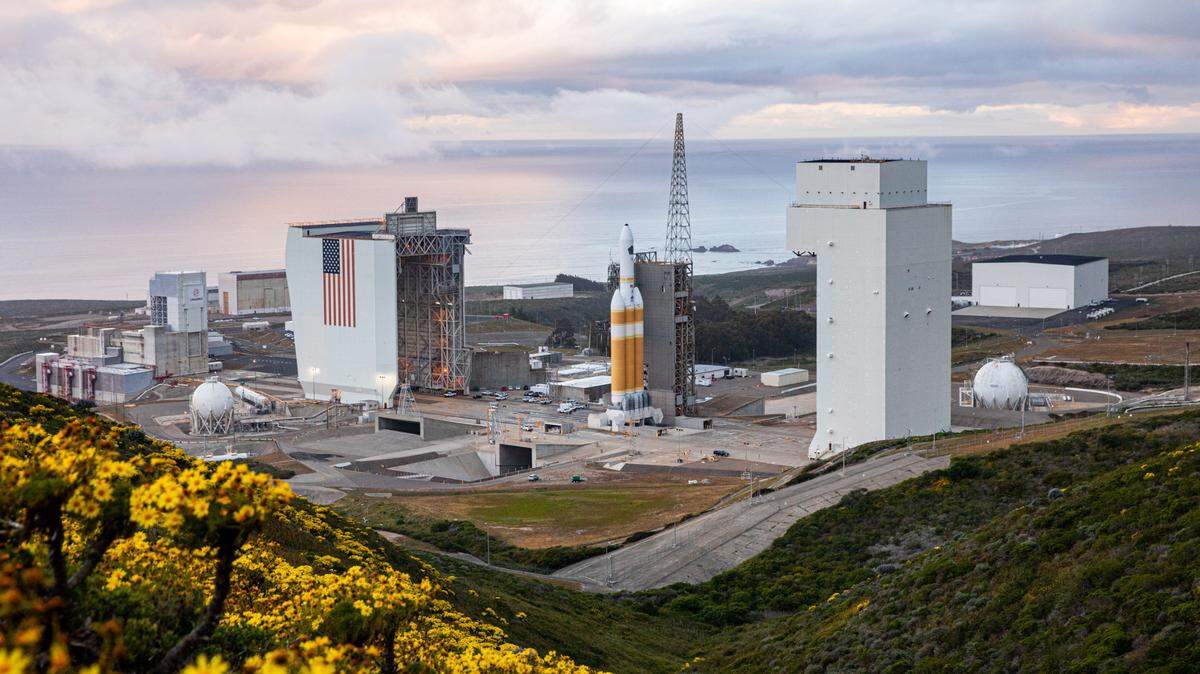
A blueprint released Thursday spells out the next chapter for boosting commercial space activity, contending that the Central Coast and especially Vandenberg Space Force Base could benefit from the industry’s expected growth.
The regional effort, led by development group REACH but supported by Santa Barbara County and others, led to the completion of a 57-page master plan that identifies a vision, assesses assets such as existing launch pads, sets goals and determines actions for fostering the growth of aerospace on the Central Coast and in California.
“The Phase One Master Plan states that we believe the Central Coast is in a unique position to capitalize on current industry trends and has an extraordinary opportunity to achieve new space industry milestones and promote inclusive economic development in the process,” said Josh Nisbet, managing director of Deloitte Consulting LLP.
The master plan establishes three main goals — attract space industry activities, modernize and invest in infrastructure, and market and strengthen the Central Coast space identity — along with actions.
The region has started making progress toward attracting aerospace businesses but still has “a long way to go,” REACH chief operating officer Andrew Hackleman said.
“We have to focus on making the business environment as competitive as possible and there’s progress,” he said.
Actions include streamlining the approval process, looking at tax breaks and establishing a space roundtable to support the industry.
A mission development zone is proposed for Vandenberg Space Force Base land north of Ocean Avenue to foster commercial space activity, including offices and payload processing facilities.
One promising step is the fact that the state has focused on supporting the aerospace industry after minimal attention in recent years.
The Governor’s Office of Business and Economic Development (GO-Biz) recently awarded the third-largest California Competes tax credit of $30 million to aerospace firm Relativity Space.
The firm has said it will lead to 900 jobs in the state with many on the Central Coast, where plans include developing a launch site at Vandenberg.
A second goal seeks to modernize infrastructure — various aspects such as roads, utilities, Internet access and more — to foster a thriving community space industry.
“There are opportunities to create the conditions and the capabilities needed to meet future demand, which is great for innovation and development, but it’s also great for Central Coast residents in terms of the types of sustainable future jobs we’re trying to create,” Hackleman said.
A third goal calls for strengthening the region’s space identity to attract space companies as well as tourists while looking to increase educational activities centered on science, technology, engineering and math. Actions include establishing a brand for the “Central Coast space ecosystem.”
“We have a lot of work to do, but we have so much to work with,” Hackleman said.
While prior efforts had lukewarm support from Vandenberg commanders and higher-ranking defense leaders, they have taken an active role this time.
The newly renamed base near Lompoc is moving to create a mission development zone on unused land north of Ocean Avenue, with the area intended to remain outside the base security gates.
“With the enterprise zone, we’re envisioning space that will be more accessible to the community, more accessible to our partners and yet proximate to the launch capability, which is so critical to the whole enterprise,” said Col. Joseph Tringe, who represented Vandenberg’s primary unit, Space Launch Delta 30.
Vandenberg’s efforts include assessing roads, electricity, water, traffic flow and other aspects for the area to become home to assorted commercial space companies, academic research and others.
“All these are part of the planning process we have started already, and we envision being completed in the coming months so these new facilities can actually be used by the community and by commercial partners,” Tringe said.
Similar efforts to boost Vandenberg, including one with ties to the state and led by a former congresswoman, have fizzled over the years as others promoted their space launch capabilities.
“It’s an exciting time, and where others have failed in the past I believe that we’re at a crossroads where we’re going to be able to take the public-private partnerships, along with the technology improvements we’re seeing, from reusable launch systems and 3-D (printed) rockets, to turn the Lompoc Valley back into the gateway of innovation,” said Bob Nelson, chairman of the Santa Barbara County Board of Supervisors and the Fourth District representative.
This story was originally published June 4, 2021 at 2:20 PM.