
How this 23-year-old Cal Poly student rose to respected SLO racial justice leader
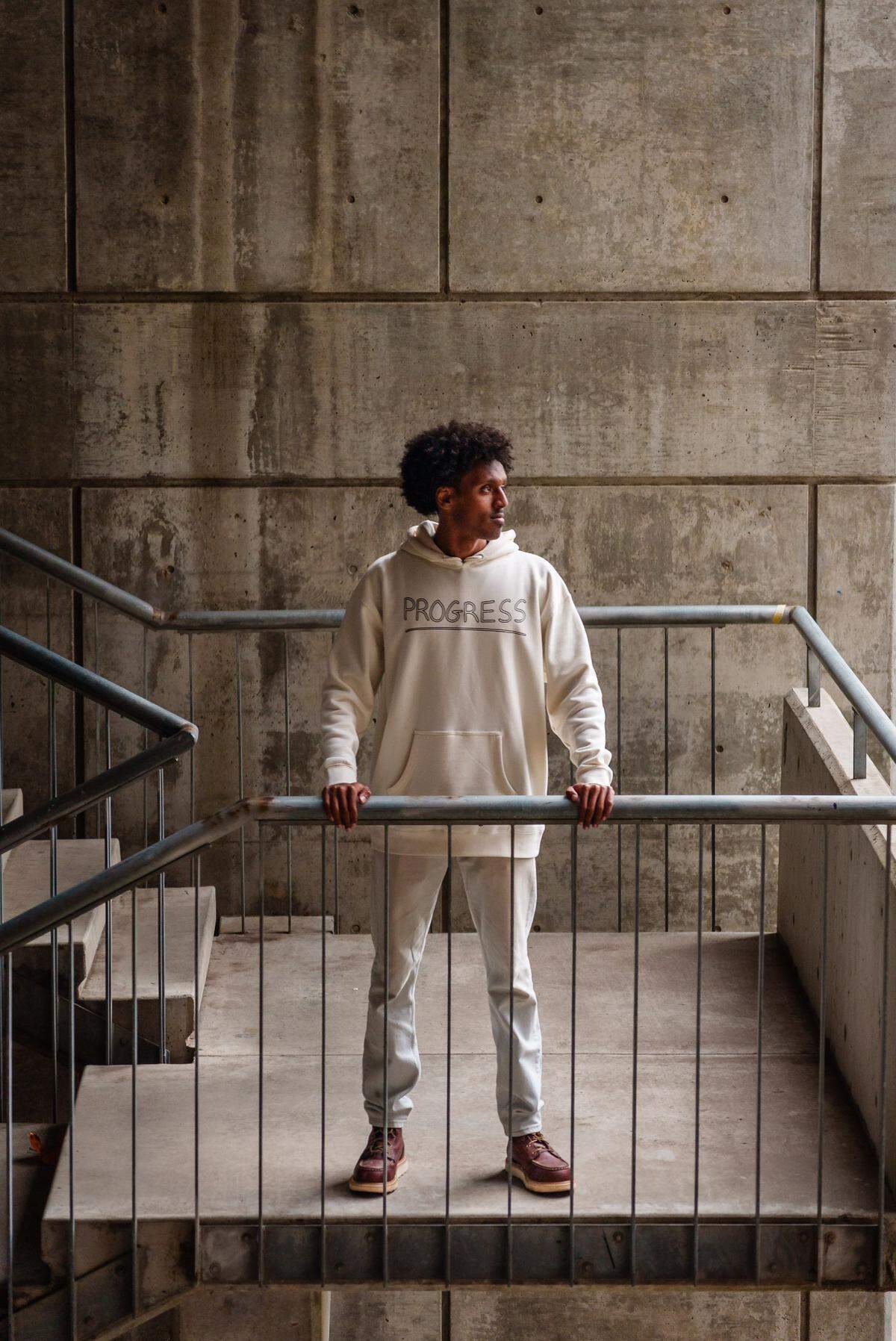
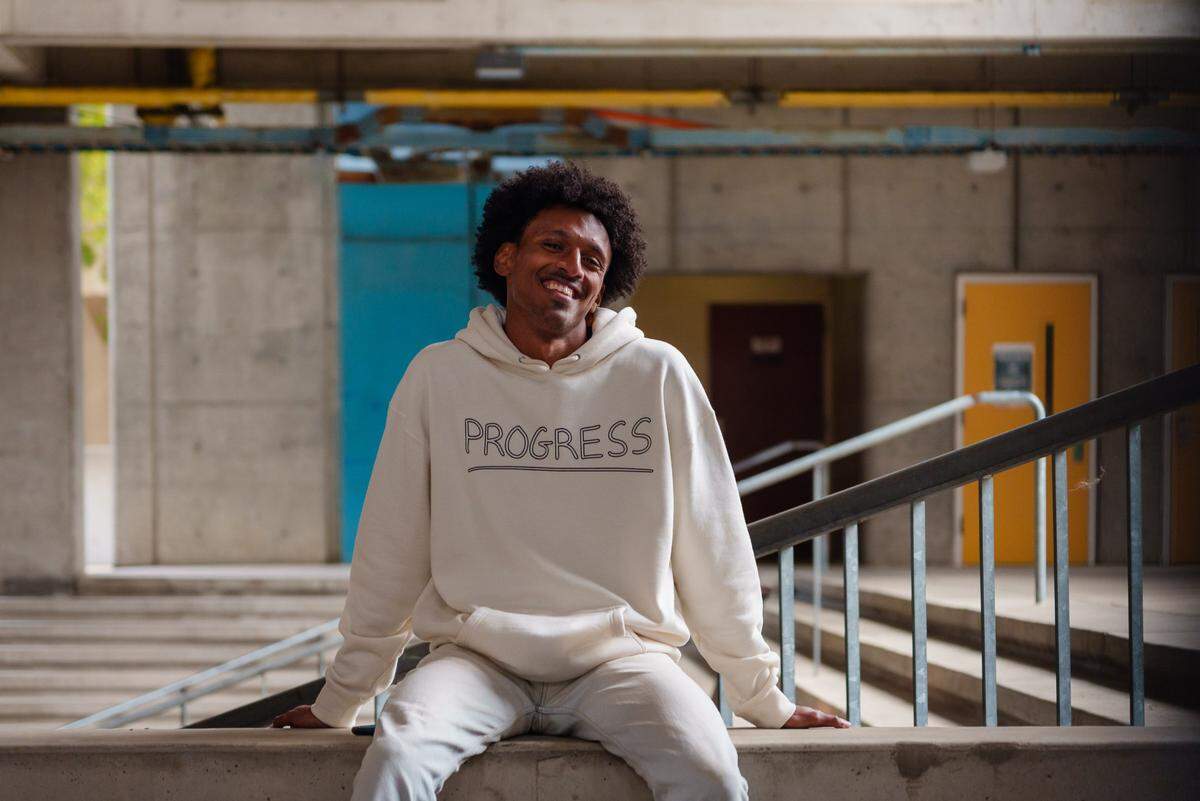
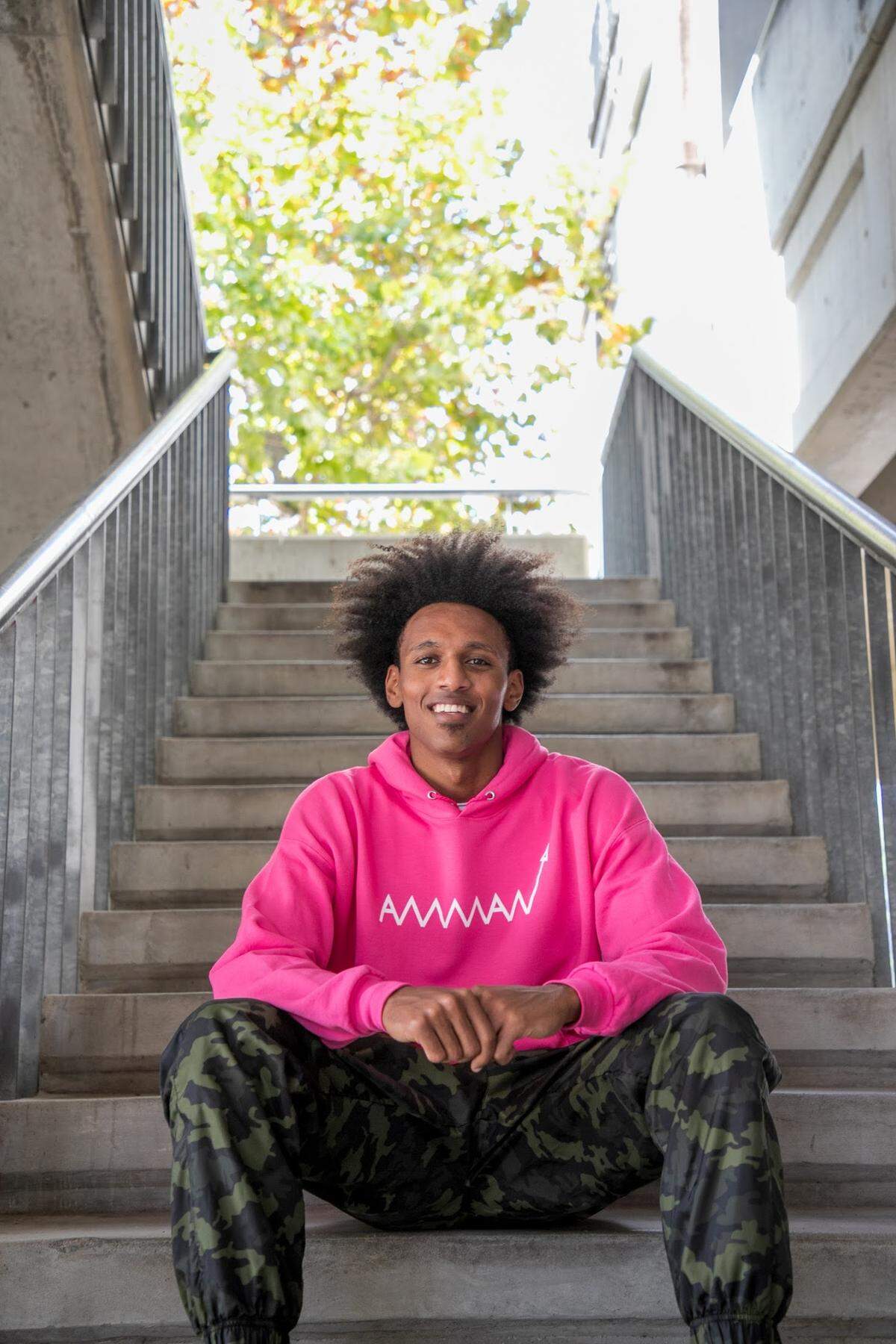
Amman Asfaw wears a shirt featuring a logo with his first name and an arrow pointing skyward at the end of the “n.”
The symbol represents upward trajectory in all aspects of life, he says.
Asfaw, 23, a Cal Poly electrical engineering graduate student, has taken on weighty leadership and activism roles through the local Black Lives Matter movement and San Luis Obispo’s diversity task force — activities that now have him facing a criminal charge.
Over the past nine months, he has been arrested and charged with a protest-related misdemeanor crime of false imprisonment; held the top position on the city of SLO’s Diversity, Equity and Inclusion Task Force; and embarked on a book project about his experience as a Black student at Cal Poly, whose student body is predominantly white.
When he completes his master’s degree in June, Asfaw, whose parents were born in Ethiopia, will be the first in his family to attend and finish college at the undergraduate or graduate level (his younger sister currently attends UCSB).
He could have just stuck to his studies, but when the racial justice and equality movement rose to the forefront of the nation’s collective consciousness over the past year, Asfaw said he wanted to do his part to make a difference as “one person who’s part of a larger global movement.”
“This is what gives me hope, that despite the vagaries in life, the trajectory is up,” Asfaw told The Tribune in a Zoom interview. “... I’m not too worried about the downs of life because I know there’s going to be ups and downs at the end of the day.”
In April, Asfaw spoke to The Tribune about the tumult of the last year, what it’s like to experience racism, the impact of the Black Lives Matter movement and his plans for the future.
Impact of SLO racial justice protests
Asfaw grew up in Thousand Oaks, a Southern California community that’s predominantly white, like San Luis Obispo.
Yet, despite being raised in a progressive area of California, he wasn’t immune to mistreatment based on his race.
Has he faced instances of covert or overt discrimination in SLO or in Ventura County?
“The answer is yes, but generally, I have trouble remembering those instances,” Asfaw said. “If I was able to recite all the microaggressions, discriminatory experiences, number one, it would be a long list, and, number two, I would not be in a good mental state because I’d be constantly be thinking about these instances or feeling like I was at the end of the stick of prejudice.”
While he doesn’t dwell on individual incidents, they do collectively motivate his activism.
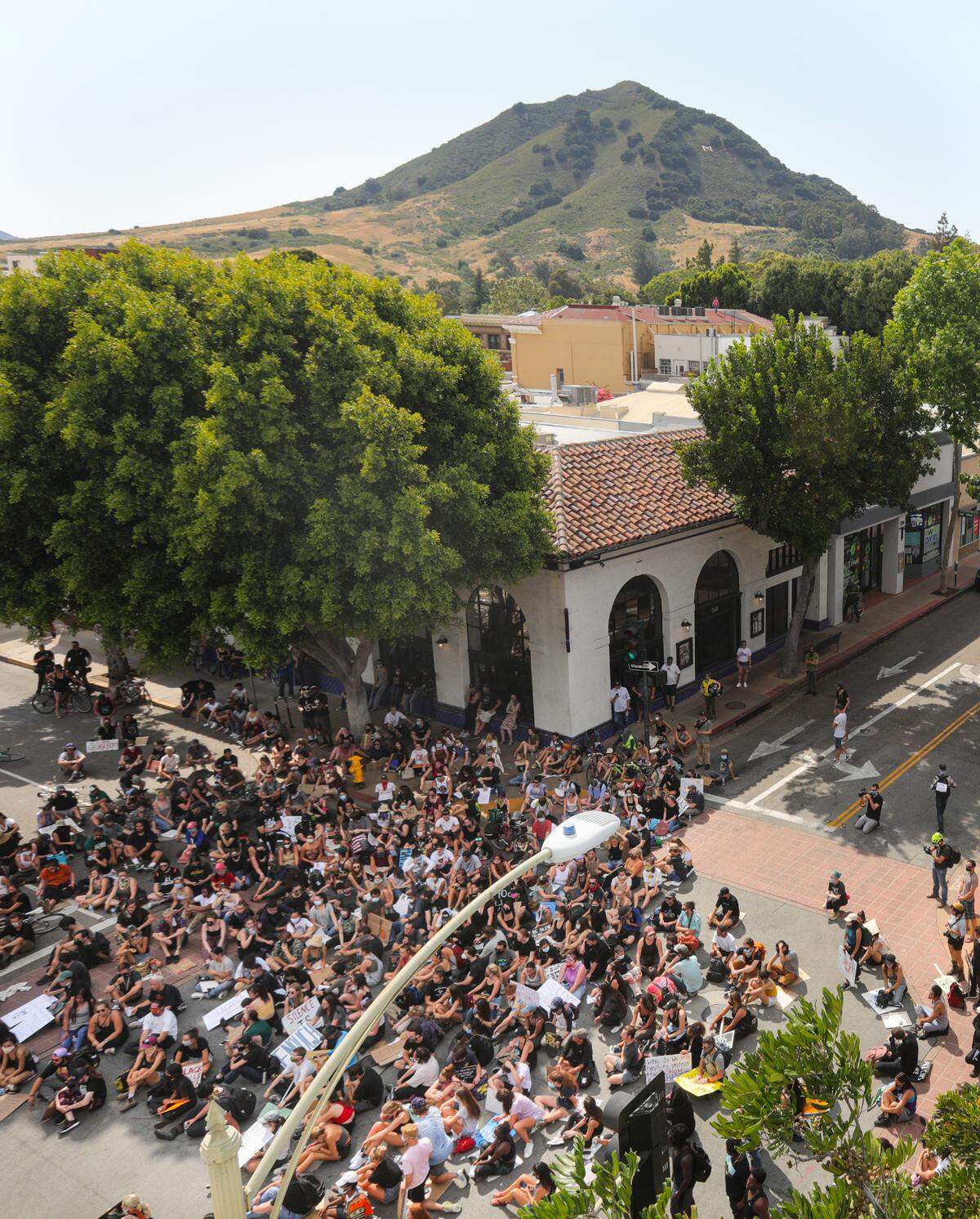
Day after day last summer, he was one of many local students and others who took to the streets of San Luis Obispo to protest societal inequities and the deaths in police custody of George Floyd and others.
For weeks, the movement kept the demonstrators busy, as they raised their voices and joined a global call to end discrimination, Asfaw recalls.
Now, nearly a year later and following the recent conviction of Derek Chauvin, the officer who killed Floyd, he said he’s proud.
“When I look back at it, we definitely made an impact,” Asfaw said. “This is still unfolding and we’re still seeing the impact of the BLM movement nationwide and locally. As an individual, I’m proud to say that I was a part of the protests. I appreciate it even more considering what I see going on across the world today.”
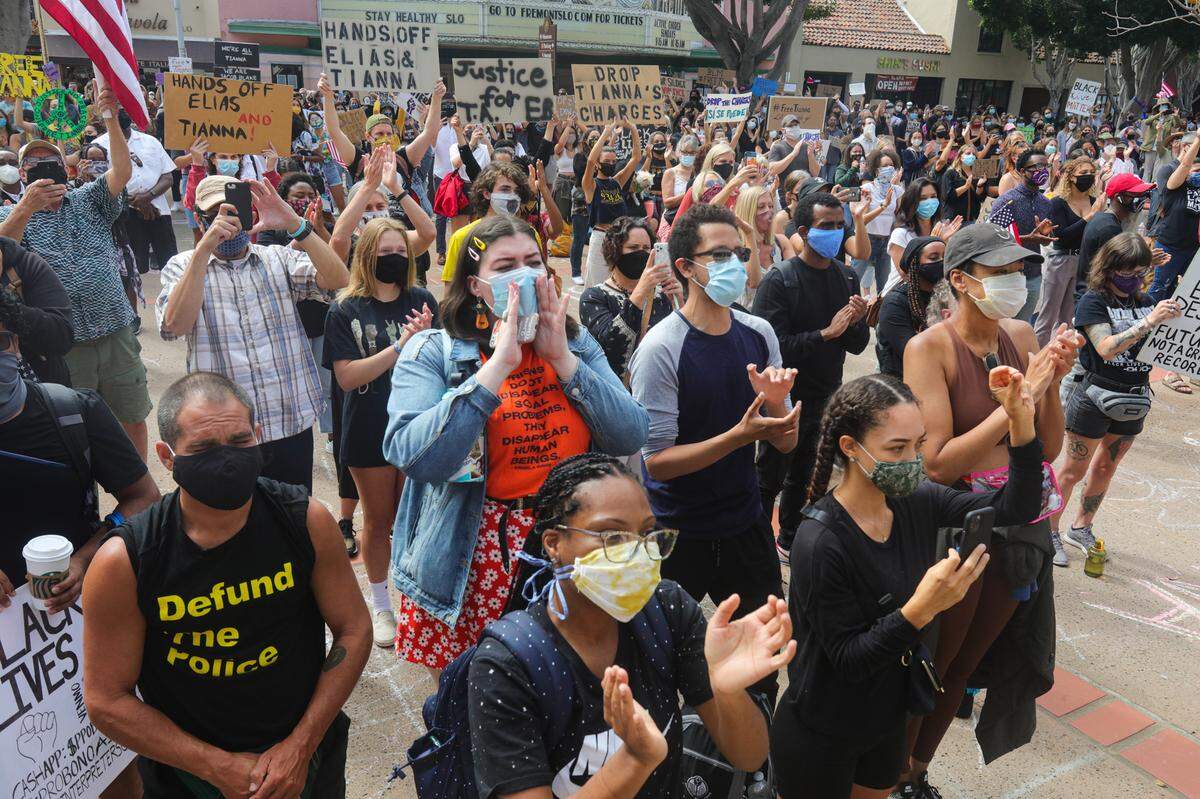
Asfaw said he believes it’s the role of protesters to speak for those who don’t have that right.
“As Americans, if we take those rights for granted, then we kind of lose sight of the big picture,” he said. “We’re speaking for those who can’t — and setting an example for other countries as a way to go about getting their voices heard and struggles known.”
It was at a July 21 demonstration in SLO — in which protesters marched through downtown and blocked Highway 101, resulting in BLM leader Tianna Arata’s arrest — that Asfaw also was accused of wrongdoing.
He faces a single count of misdemeanor false imprisonment for allegedly blocking a vehicle at a downtown intersection.
Asfaw is one of eight protesters facing charges for their actions that day.
He, along with four others, declined prosecutors’ offer for diversion, a pre-trial option that allows defendants to accept community service, often along with writing an apology letter, to avoid conviction.
Asfaw didn’t want to discuss details about the case and his opinion of the charges, but he said that when the full information comes out, people will say, “Wow.”
He added: “If I stay true to myself and true to my mission, I’ll be just fine and I’ll be good and truth will be revealed. ... I’m not trippin’.”
He talks to his grandmother in Ethiopian language every night
Despite growing up in California, Asfaw’s ties to his African heritage are strong. His parents left Ethiopia in the 1990s to come to America, settling in Ventura County.
Because they weren’t able to attend college, his parents view their children’s education as the path to a better future.
“Their dream is very simple for us, to go to college, get a degree and get a job. That’s it,” Asfaw said. “I just always try to put things in perspective, and it’s easy to look at life and our problems with blinders on. It’s our life, but there’s so much more. So much has happened before you that’s super important, and knowing how far my family has come is part of that.”
Asfaw was born in the United States, and doesn’t speak any of the Ethiopian languages fluently, but he’s learning. He keeps in close contact with his grandmother who lives in Thousand Oaks with his parents.
Each night, he talks to her as much as he’s able, in the only language she speaks — Tigrinya — used in Northern Ethiopia.
His grandmother grew up in Ethiopia at a place and time when young girls didn’t get educated to read and write in their own language, and she’s illiterate.
“I have only elementary-level conversation ability,” Asfaw said. “I have a two- to three-minute conversation with her each night. I only have so much vocabulary.”
He’s also been glued to the coverage of the country’s Tigray War, which has racked Ethiopia with ethnic cleansing and genocide. He said his family hasn’t been able to get in touch with some relatives in the country for weeks.
“People have been displaced,” Asfaw said. “The massacres have been covered by CNN, BBC, Al Jazeera. Light has been shed on what’s been going on there for the past five months.”
Leader of SLO’s DEI Task Force
Asfaw’s leadership during the BLM protests made him a natural choice to join SLO’s Diversity Task Force. And he didn’t just participate. He was named its chairman.
In a town that’s 70% white, dozens of applicants from underrepresented communities shared painful experiences of feeling unwelcome and discriminated against as part of the task force’s member selection period.
Eventually, the group was narrowed to 11 volunteer community members, along with SLO City Council member Erica Stewart, City Manager Derek Johnson and consultants Dale Magee and Beya Makekau.
“Amman was definitely a standout leader,” said Vice Chair Michael Boyer. “Even prior to the task force choosing the leadership, he was outspoken as he should be, and also very humble and open to all voices. He was serving at the same time of being under immense pressure with a public arrest.”
Boyer said he was impressed with Asfaw’s humility and ability to “understand the need and also the opportunity to serve the community,” especially at a young age.
The task force met weekly during the fall to form recommendations on advancing diversity, equity and inclusion in SLO before submitting a 23-page report to the City Council.
The report cited programs, policies and initiatives to welcome a diverse community and reduce barriers of systemic racism and discrimination.
It also stressed the need for a multicultural center; systemic planning and funding of city programs and initiatives promoting diversity; active support and attraction of minority-owned businesses; and increased community-based policing and restorative practices by SLOPD, among other ideas.
The task force presented the report in January, and the council adopted it.
Since then, the City Council has gone on to adopt diversity, equity and inclusion as one of its major city goals.
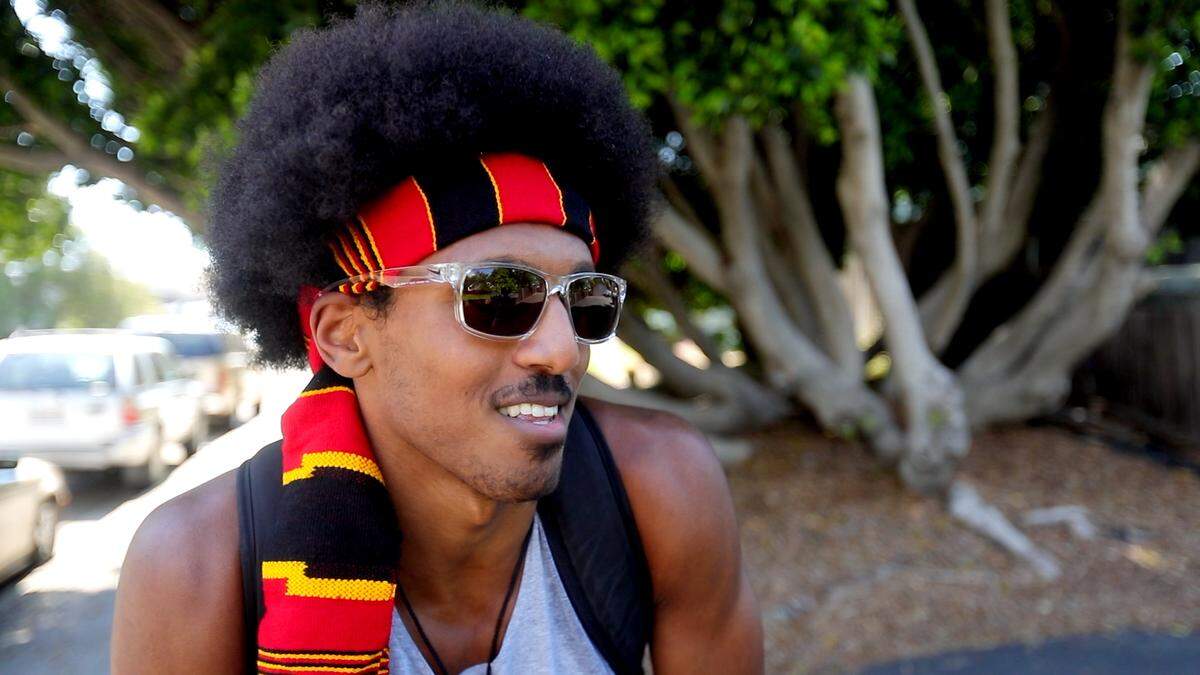
Asfaw said the task force’s work was stressful, as members discussed how to overcome bias and discrimination in SLO.
“Tears were literally shed about what went into the task force,” Asfaw said. “I only bring that up because people should be compensated for emotionally taxing work.”
He hopes any future group would be receive a stipend or scholarship because the work was “an exhausting process for everyone.”
Going forward, city staff has proposed spending more than $2 million of its budget over the next two years on diversity-related issues, which the City Council will formally decide on in June in advance of the new July 1 fiscal year.
The council also directed city staff to increase to $40,000 a drafted $5,000 in the proposed city budget for a feasibility study of a new multicultural center.
Asfaw says the budget, this cycle and moving forward, is the most revealing aspect of a city’s position on diversity.
“Once the city budget comes out, it doesn’t matter what anyone says at that point,” Asfaw said. “You made your statement by releasing your budget. That is your stance. You made your message clear with the numbers.”
What’s ahead for Asfaw?
In the wake of the past year, Asfaw is working to finish his graduate degree before leaving San Luis Obispo to move on to new endeavors.
He is president of Cal Poly’s National Society of Black Engineers, and one of his initiatives at Cal Poly has been a research paper on confronting and replacing terminology such as “master-slave,” “female-male” and “blacklist-whitelist” used in reference to engineering terms.
He says his book, which he hopes to finish by summer, will explore what it’s like to be a Black student at Cal Poly.
One of his professors, Andrew Danowitz, said he sees a bright future for Asfaw.
“As a student, Amman engages his peers and teachers in conversations about diversity, inclusion and race, and is very effective at making his points in a thoughtful way that welcomes other viewpoints,” said Danowitz, speaking on his own behalf, not as a representative of the university. “I think it’s this thoughtfulness and willingness to have a discussion that really make Amman a powerful leader.”
Danowitz added: “I wouldn’t be surprised if he ultimately ended up as a business and thought leader in Silicon Valley. He could also be a great engineering educator, inspiring new generations of students to find solutions to society’s problems. I also imagine he could go into politics and work directly to serve his fellow citizens. Regardless of where he ends up, I’m confident he’ll make a big difference.”
In the meantime, Asfaw recently accepted a contract job offer in the Bay Area on a confidential project that came up through a Cal Poly National Society of Black Engineers alumnus.
Asfaw concluded: “My goals are lofty and my ambitions are out there. If you set some ambitious goals and you chase them, that distance between you and your ambition is what keeps you going.”
This story was originally published May 10, 2021 at 5:00 AM.
%20Cropped.jpg)