
Santa Barbara Zoo welcomed 4 cuddly newborns — including a lion cub — in 2020. Here’s how
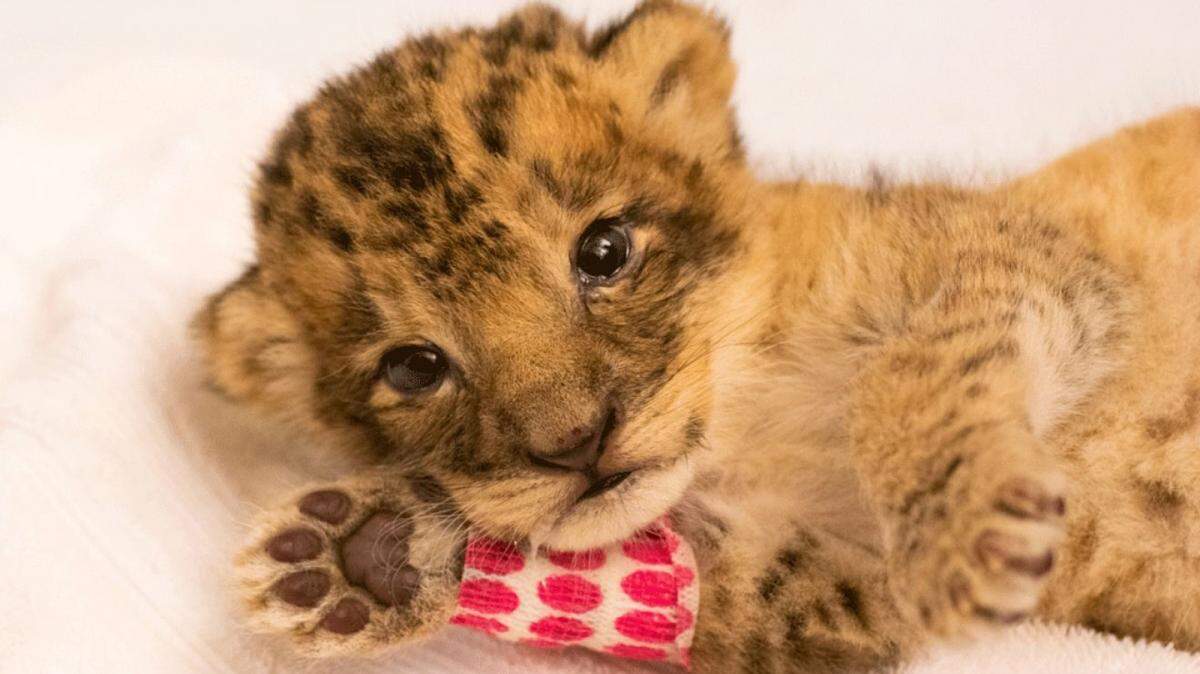
Santa Barbara’s newest residents are some of the cutest and furriest.
A baby lion cub and a baby giraffe at the Santa Barbara Zoo are the results of ongoing planning, and support the Association of Zoos and Aquariums’ cooperative breeding of a select species and conservation program.
“It’s not just random breeding,” said veterinarian Dr. Julie Barnes, the Santa Barbara Zoo’s vice president of animal care and health. “It is all calculated based on studbooks, breeding coefficients, and these populations are managed well from a genetic diversity and a health and biology perspective.”
There have been four births and several animal arrivals since the zoo at 500 Niños Drive first closed in March 2020 because of the COVID-19 crisis.
The zoo and other industries must close to the public under the state’s regional stay-at-home order for Santa Barbara County and the Southern California region. Before the second wave of stay-at-home orders, the zoo shut its doors for at least three months because of the COVID-19 pandemic.
The zoo staff has been offering people a behind-the-scenes look at the newborn animals on social media posts during the closure, including the Santa Barbara Zoo’s newest Masai giraffe. Updates as well as adorable photos and videos are posted on the zoo’s Facebook, Instagram and Twitter accounts.
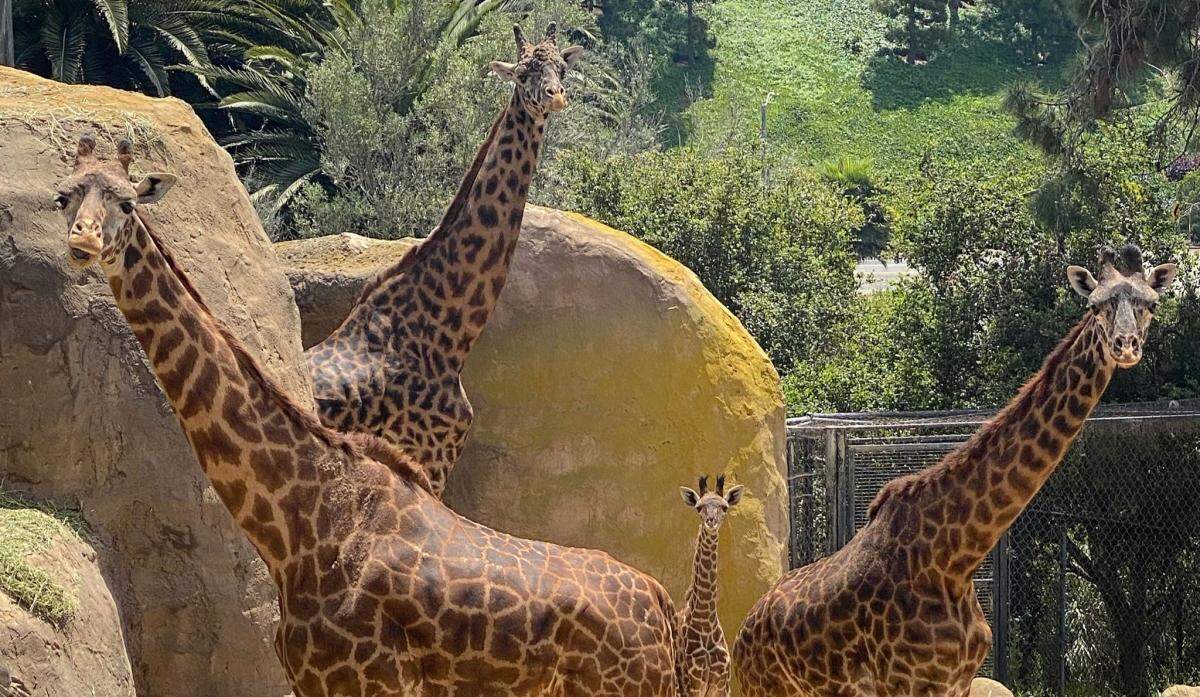
Born to first-time mother Adia, her calf Twiga stood 6 feet tall and weighed in at more than 125 pounds when born in late March. He is thriving at more than 9 months old.
“He is a strong, healthy calf,” Barnes said. “He’s inquisitive. He likes to know what is going on.”
Twiga is the eighth calf born to proud father Michael since he arrived from Canada in 2011.
Several of his calves have moved to other accredited zoos as part of a cooperative breeding program among the Association of Zoos and Aquariums-accredited members. Births at the Santa Barbara Zoo are given the go-ahead by the association’s Species Survival Plan (SSP).
Zoos have a limited amount of exhibit space available for animals of each species.
Masai giraffes are on the endangered species list because of significant decline in the wild in recent decades, the Santa Barbara Zoo reports.
Michael is the most genetically valuable male Masai giraffe in the North America population, Barnes said.
Every calf of his plays an important role in the SSP, as they will go on to have calves of their own and help maintain a robust genetic pool for the animal population, the zoo reports.
Zoo experts think about breeding decisions and pairs, plus compatibility and other factors as part of the SSP program.
“Sometimes, if two animals are not matched genetically, then we might put a hold on breeding,” Barnes said. “Or two animals genetically look good on paper, but are incompatible in real life; much like humans, sometimes it doesn’t work out.”
If it doesn’t work, Barnes said, an animal might move to another facility or continue to live its life without breeding. It depends on the species, she added.
Not every individual SSP animal breeds and not every animal maintained at the zoo is in the SSP program.
The zoo’s female Chilean flamingo, hatched Oct. 8, has been named Hope.
Why her name?
“We gave her that name as an ode to everything that is going on at the moment,” Barnes said. “Hope for the new year and hope for a better 2021.”
Another new resident is a female Chilean flamingo chick born on Nov. 27.
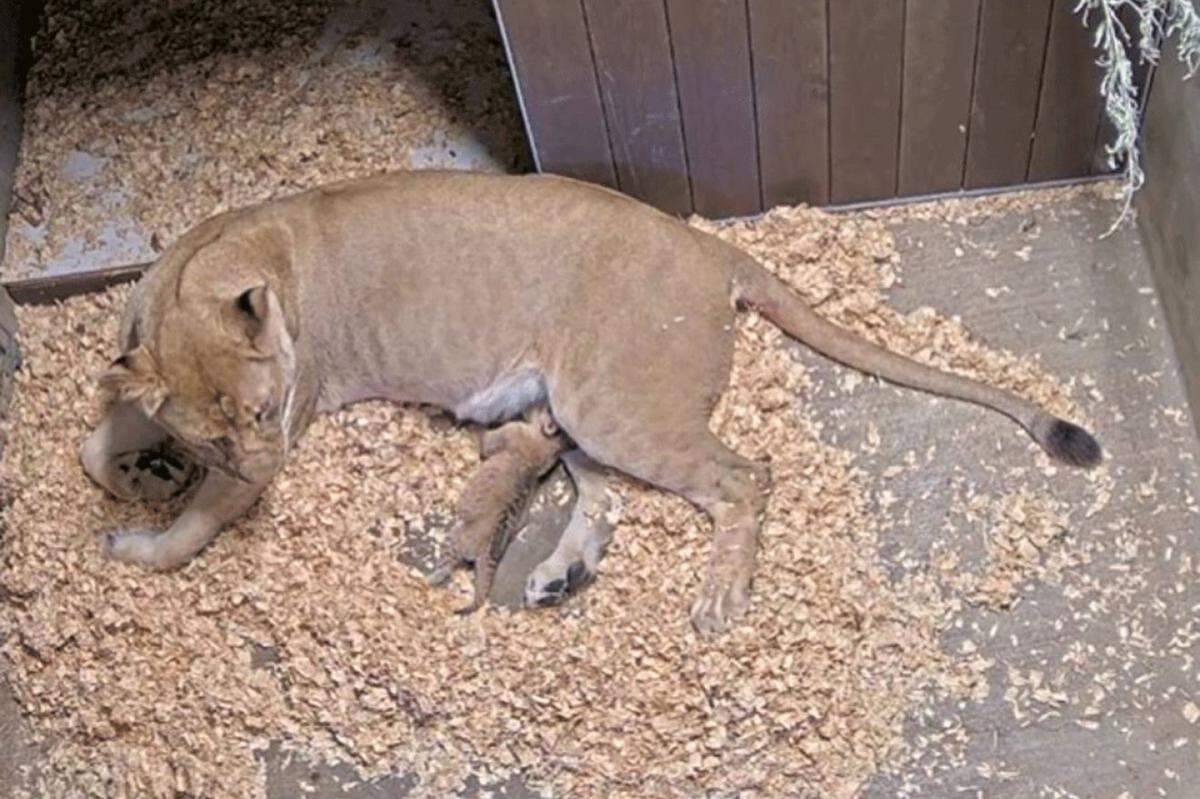
The Santa Barbara Zoo’s African lion Pauline was born Nov. 5, six months after its mother and father, Ralph, arrived at the Santa Barbara Zoo.
Pauline’s father, Ralph, came from the Indianapolis Zoo, and her mother, Felicia, is from the Riverbanks Zoo & Garden in South Carolina.
Pauline is the first cub for both 2-year-old Felicia and 5-year-old Ralph.
The AZA recommended pairing Felicia and Ralph as part of its SSP to maintain a sustainable population of lions in North America, according to local zoo officials.
The SSP is a cooperative population management and conservation program for selected species at AZA-accredited zoos and aquariums, according to the association. The SSP is a more than four-decade effort by the AZA. Each plan manages the breeding of a species to maintain a healthy and self-sustaining zoo population that is demographically stable and genetically diverse, according to the AZA.
“It’s important that we continue SSP programs,” Barnes said.
As part of the AZA’s program, the Santa Barbara Zoo began the planning process to get new lions before the longtime lion, Chadwick, was humanely euthanized in 2019.
In addition to the African lions, the zoo’s Masai giraffes, Chilean flamingos and other species are in the SSP program.
“We are happy we can contribute to the conservation of the mandated population of those species,” Barnes said.
Other breeding programs were put on hold because of the zoo facing financial hardship from state-ordered closings during the months-long pandemic.
“Some other breeding that we had potentially planned for the year, we had sort of put on hold until things are a little bit more stable,” Barnes said. “That’s unfortunate, but a bit of the reality of where we are right now, and a lot of zoos have to do that at the moment.”
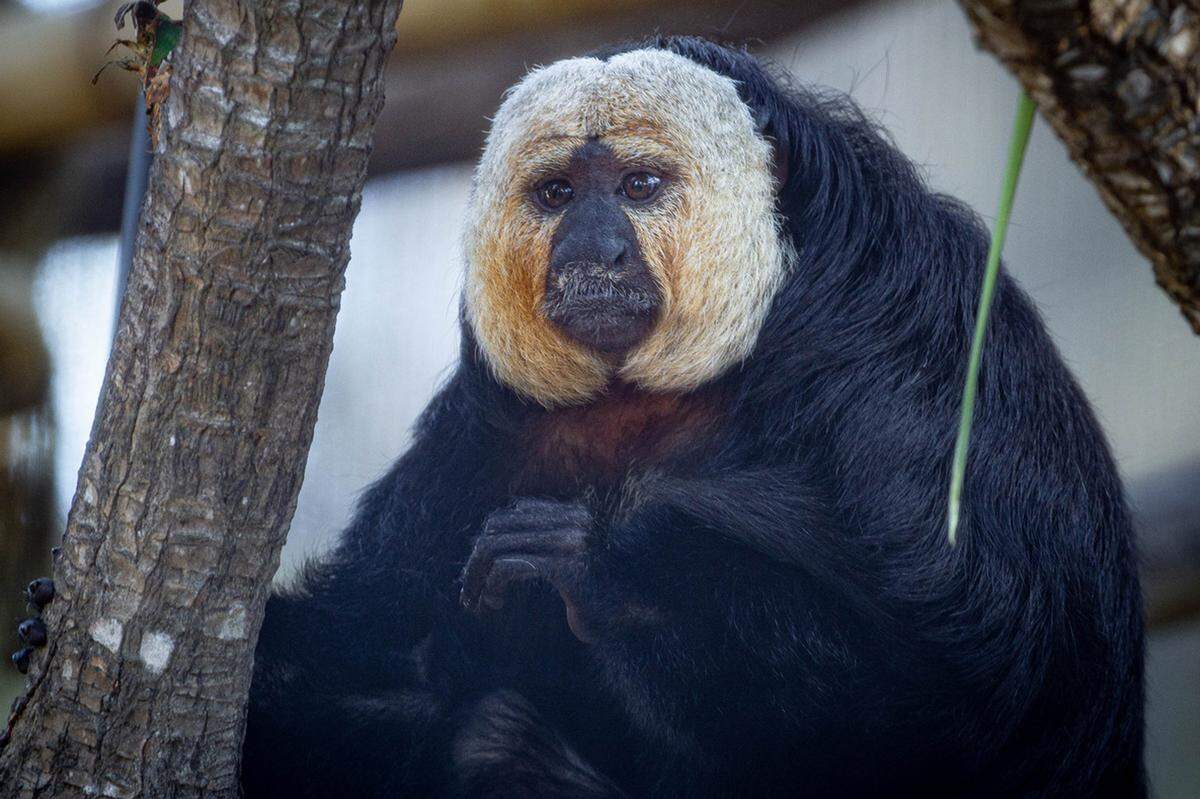
Two white-faced saki monkeys joined the Santa Barbara Zoo in mid-December.
Calabaza is 3 years old and arrived in Santa Barbara from Zoo Miami. Penelope is 2 years old and came from Gladys Porter Zoo in Brownsville, Texas.
The two were matched by the SSP, and have a breeding recommendation.
Following COVID-19 safety measures, essential zoo employees continue to work to care for the facility and hundreds of animals, according to zoo officials. About 500 animals have a home at the zoo.
With 97% of the zoo’s annual budget relying on earned revenue from operation, officials said, the shutdown is creating challenges far greater than any experienced in its 57-year history, and the zoo said revenue loss will not be recovered.
There are a lot of animal mouths to feed daily, Barnes said, adding that it costs the zoo about $6,000 a week to feed the animals.
The health and welfare of the animals is a critical operation at the zoo during the COVID-19 pandemic, Barnes said.
“We continue to provide them with the best nourishment that we can offer,” Barnes said. “We don’t change their diet in a situation like this (COVID-19 pandemic). They are a priority.”
The Santa Barbara Zoo has launched an emergency operations fund during the COVID-19 crisis. Monetary donations can be made online at sbzoo.pivvit.com/support-the-zoo-during-covid-19-recovery, and by sending a check (payable to “Santa Barbara Zoo”) to the attention of Lauren Winnewisser, 500 Niños Drive, Santa Barbara, CA 93103.
The Santa Barbara Zoo is a private, nonprofit organization.
“If anyone is interested in supporting us, we would be grateful,” Barnes said. “Certainly it’s a critical time for us now.”