
Seagulls are a nuisance at Morro Bay condo complex. Is ‘hazing and harassing’ birds OK?
The Morro Bay City Council is helping homeowners combat a winged nuisance that’s threatening residents’ health: seagulls.
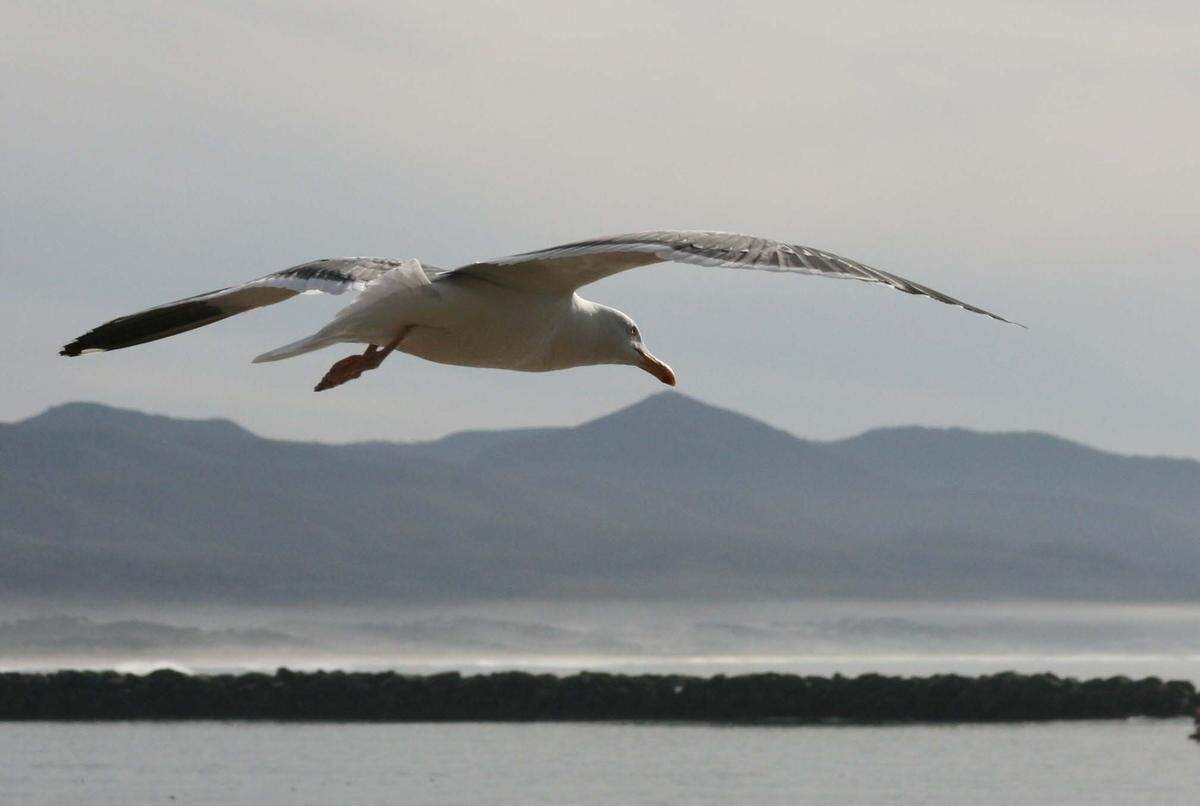
Large numbers of gulls tend to gather at the Bayshore Village condominium complex, which stands about about a block from the bay, causing concerns about property damage and health risks, the president of the complex’s homeowners association said.
“Each year (the problem) is getting worse,” said Janet Gould, president of the Bayshore Village Homeowner’s Association. “The human health hazard is obvious by the amount of gulls and guano. ... The damage to our property is ongoing.”
While “the exact amount of loss is unknown,” she said, “This year we spent over $10,000 on control issues.”
For the past five years, the homeowner’s association has had City Council authorization to remove gull nests from the roofs of the condominium units. The authority was set to expire on Dec. 31
At a Nov. 17 meeting, the City Council extended the association’s authorization, exempting it from an ordinance prohibiting use of nuisance remedies such as destroying nests.
The council also authorized other measures to help homeowners deter the gulls.
Bayshore Village, which has a total of 72 units, is located at 171 Bayshore Drive, near Morro Bay Golf Course and Morro Bay State Park.
That puts it directly in the path of seagulls — and the diseases they can carry with them.
Seagull droppings are known to carry salmonella and people can inhale particles after the excrete dries. Numbers of seagulls carrying the bacterial increase when birds inhabit areas near sewage outfalls, according to a study published in the National Library of Medicine.
Bayshore Village residents said the birds’ droppings also damage roof shingles.
How to shoo away Morro Bay seagulls
Thanks to the City Council, the homeowners’ association can continue to use a host of tools and techniques to scare off the birds, also referred to as “hazing and harassing.”
At its Nov. 17 meeting, the City Council authorized the group to use so-called “whirly birds,” wind-powered spinning devices and battery-operated artificial spiders that drop down from fake webs, as well as “spikes, bird wire, mylar tape, electrified tape, coiled wire, distress calls and laser lights,” according to Morro Bay officials.
In addition, the city authorized the “addling” of seagull eggs, or coating the eggs in oil to stop the embryos from developing and prevent chicks from being born.
“My main concern was the addling of the seagulls, which is approved by the Humane Society,” Councilmember Dawn Addis said at the Nov. 17 meeting. “Somebody wrote in and asked us not to kill any seagulls and it seemed to me this will not kill any seagulls. There are safe practices being used.”
Bayshore Village previously obtained a U.S. Fish and Wildlife Services permit to use the deterrence techniques.
Morro Bay Mayor John Headding said he used to live in the Bayshore Village complex, calling his four-year residency “an excellent experience except for the seagulls.”
The gull issue has been a problem at the complex for the past 15 years, and the measures haven’t completely eradicated the nuisance,” Hedding said, “but without them the situation would be unlivable.”
“I think Alfred Hitchcock would definitely support this resolution,” Councilman Jeff Heller said. “When I elected, I had no idea anything like this would ever come before me. ... ‘Hazing and harassing,’ those words are loaded, and these words are being used by Fish and Wildlife and those agencies.”
SLO takes measures to curb pigeon population
Morro Bay isn’t the only Central Coast city that’s struggled to curb its nuisance birds.
The city of San Luis Obispo has used measures to curb its pigeon population, which attracted swarms of house flies to the city in 2019.
In addition, the pigeons’ droppings have contaminated San Luis Obispo Creek, which has tested positive for excessive fecal coliform levels, said Freddie Otte, the city’s biologist.
San Luis Obispo’s mitigation plan included placing pigeon feed laced with birth control on the roofs of private properties in the downtown area. The bait interferes with the ability of the pigeon’s eggs to hatch, making them sterile.
Pigeons have a life span of two to three years, so it likely will take a few years to see the downtown pigeon numbers dwindle, city officials said after initiating the plan.
Otte said that environmental permits aren’t required to use the pigeon birth control.
Morro Bay community development director Scot Graham said the Bayshore Village Homeowner’s Association didn’t propose using any contraceptive measures, beyond the addling of the eggs.
%20Cropped.jpg)