
SLO seeks diversity task force members in wake of Black Lives Matter protests
More than a month after a series of protests calling for racial justice drew thousands of protesters to downtown San Luis Obispo, the city is moving forward with forming its Diversity, Equity and Inclusion Task Force.
San Luis Obispo is seeking applicants to serve and help guide the city on activities, programs and use of funds designed to make the city a more inclusive community.
The task force will include up to 11 members over the age of 18 who may come from throughout San Luis Obispo County.
City officials are seeking people with community ties to San Luis Obispo, whether they previously lived or work in the city, or have some other type of familiarity with the community.
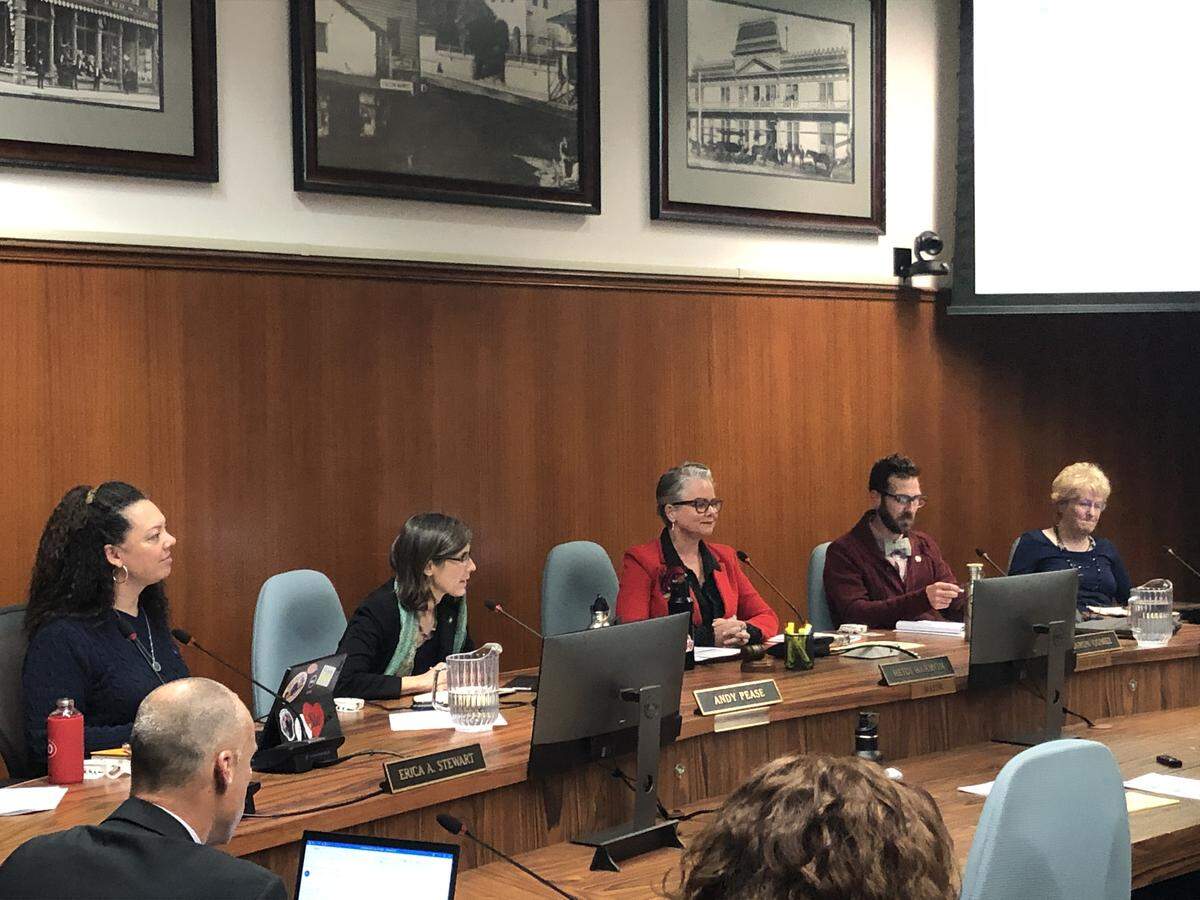
The task force will be led by San Luis Obispo Mayor Heidi Harmon and City Council member Erica Stewart with the first meeting expected to begin in September.
Then there will be weekly meetings through mid-November and then roughly every other week through Jan. 7.
“Not only is stepping up and engaging in anti-racism work the moral and ethical right thing to do, but it is the biggest hope in creating a more diverse and inclusive community,” Harmon said. “Our deep lack of diversity in our community is one of the most significant barriers to our economic success as well.”
What will SLO diversity task force do?
The San Luis Obispo City Council set aside $140,000 for diversity and inclusion spending at its budget cycle this year, to add to an additional $20,000 previously earmarked, totaling $160,000 in available funds.
Harmon said the city has received “a lot of support for this and some detractors” for its amount of spending on racial justice during an economic crisis.
“This is a moral and ethical decision,” Harmon said. “A lack of diversity limits economic vitality. This can be an exciting evolution. ...Our blossoming innovation and clean technology ecosystem will never evolve into its highest form without a more diverse community supporting it.”
The city created a vision for the task force that states San Luis Obispo is a “welcoming, inclusive, and safe. Our city values diversity, promotes equity and belonging, actively denounces systemic racism, and actively works toward racial justice.”
The task force’s charter includes five key points:
▪ Focus on activities that support marginalized racial, ethnic, and cultural groups;
▪ Collect information and insight about advancing diversity, equality and inclusion (DE&I) in San Luis Obispo;
▪ Develop a notice of funding availability to support the DE&I work of proven organizations and best practices for change;
▪ Provide guidance and a foundation for creating a potential 2021-2023 DE&I-focused major city goal, and
▪ Strengthen the focus and role of the city’s Human Relations Commission to support the city’s vision..
City manager Derek Johnson said the task force will have an expert to guide and assist with conversations, and share knowledge and bodies of work of what has been compiled in the area.
“Several experts are available to us, and we may not have just one,” Johnson said. “They will be selected based on depth and breadth of experience, and won’t have a conflict of interest.”
Protests inspire City Council racism resolution
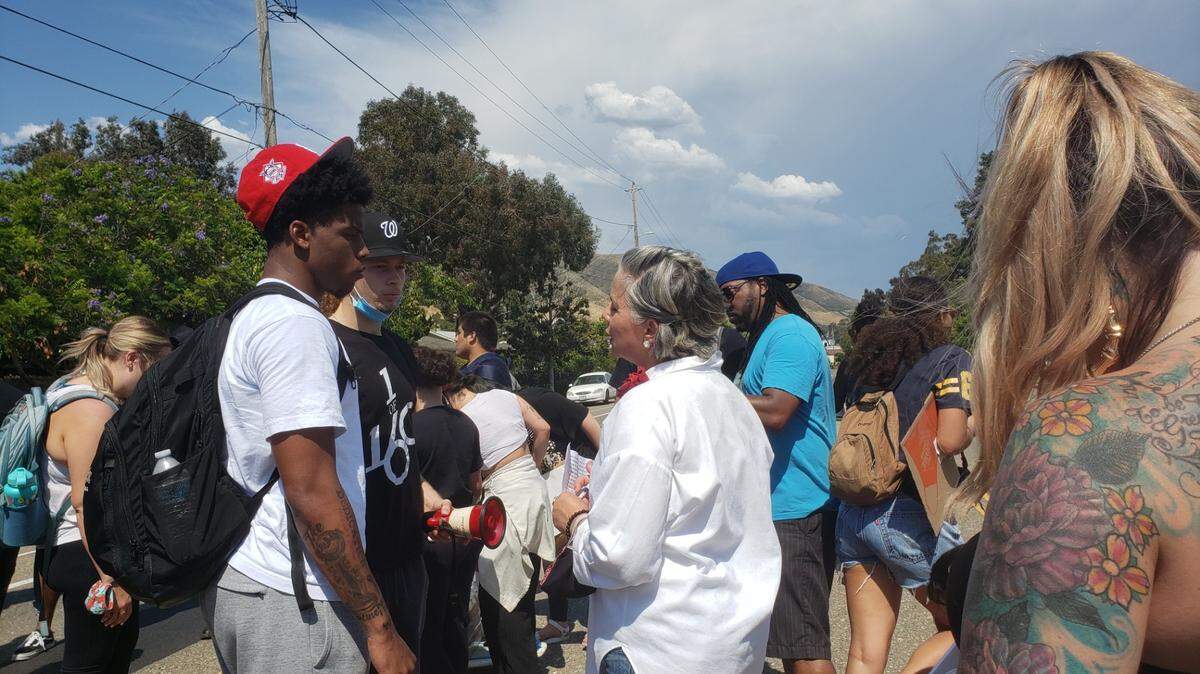
In the wake of the death of George Floyd in Minneapolis police custody, San Luis Obispo County saw protests every day for about two weeks.
On June 1, a Black Lives Matter march temporarily shut down Highway 101 in San Luis Obispo after protesters took to the freeway. The march came to an end hours later when, after a two-hour standoff, police in riot gear used teargas to disperse a crowd near the San Luis Obispo police station.
A June 4 rally organized by the National Association for the Advancement of Colored People drew more than 3,000 people to downtown San Luis Obispo calling for racial justice and equity, and an end to police brutality.
At a June 16 meeting, the San Luis Obispo City Council unanimously passed a resolution affirming racism as a public health crisis.
Harmon said that she recognizes that San Luis Obispo has a relatively small minority population that doesn’t reflect many communities of broader ethnic diversity in California.
But the goal of the task force isn’t to set a quota for increasing minority populations, but rather to lay the foundation of a welcoming, tolerant and inclusive place.
“This is a conversation that does need to be led by people of color and informed by people in these various groups who tend to be marginalized,” Harmon said. “There’s no specific quota. … We shouldn’t think in terms of quotas, but in terms of creating a community belonging. Right now, folks are not feeling that.”
Harmon said she has had heartfelt conversations with members of the local NAACP chapter and R.A.C.E. Matters SLO, a group that provides anti-racist education.
“This moment feels different than in the past,” Harmon said. “There has been a huge shift about how we feel about it and long-lasting commitment.”This is an issue that’s 400 years old. We are all participating in it and impacted.
“All of us to have to do our part from big initiatives down to when people in your family say and do things that cause harm. That’s going to mean being present and hearing that we have caused harm.”
The deadline to apply for the city’s Diversity, Equity and Inclusion Task Force is Aug. 3.
%20Cropped.jpg)