
SLO council passes resolution calling racism a public health crisis
The San Luis Obispo City Council unanimously passed a resolution Tuesday affirming racism as a public health crisis.
The council, in its resolution, also urged public health officials to declare racism a public health emergency, which could provide for opportunities to direct funding and resources to address racial inequities.
The request urges “formal action by other governmental entities with jurisdiction over such emergencies.”
Mayor Heidi Harmon said the organization R.A.C.E. Matters, as well as young black leaders who have been organizing local demonstrations and work on racial justice, emphasized recognizing racism as a public health crisis as a top priority.
“When I was speaking to them, this was one of their number one things they were asking for,” Harmon said. “Just for context, this was really important to them.”
Harmon added: “Recent data shows Black, Latino, indigenous, and immigrant communities are disproportionately affected by COVID, just by way of example of the public health impacts of racism, in large part because of the legacy of structural racism ... practices and policies systemically benefit white people and harm people of color.”
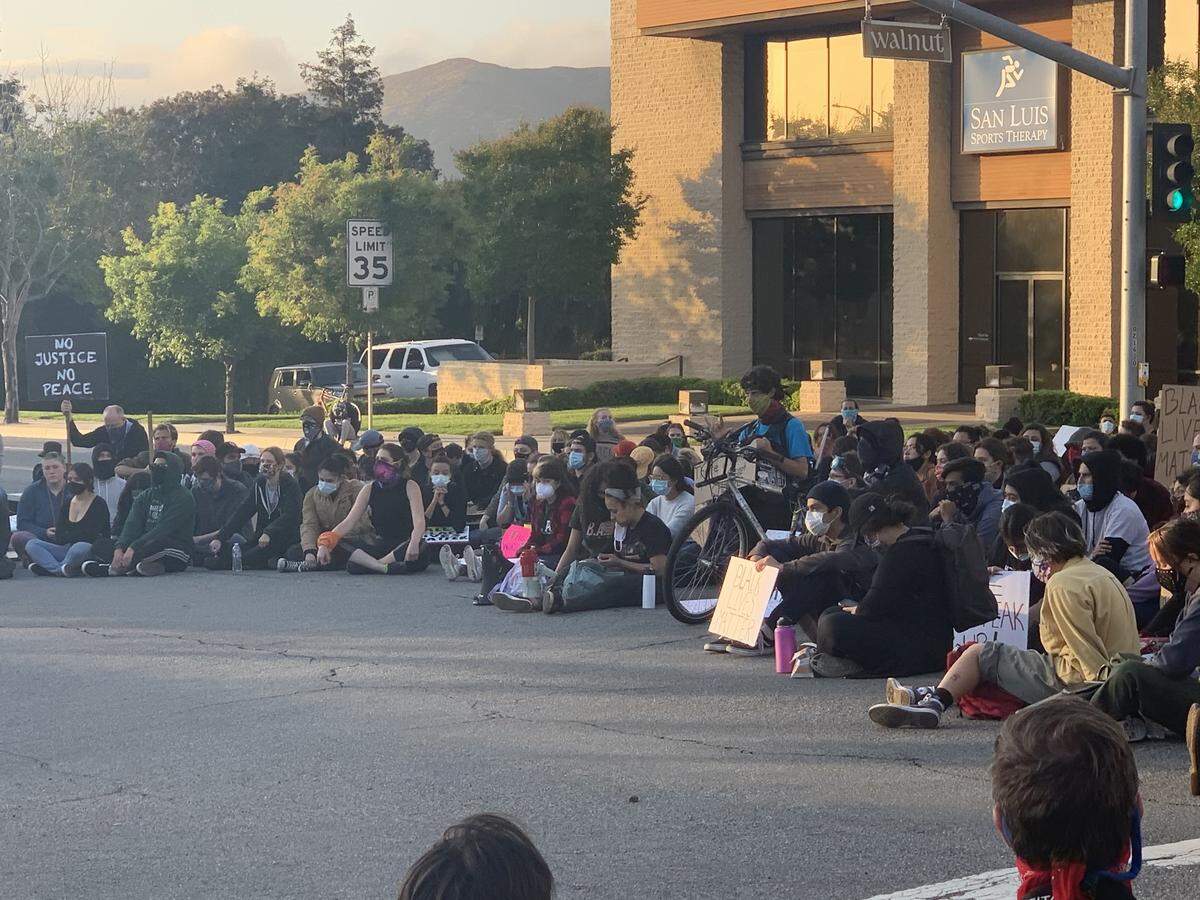
The resolution comes on the heels of widespread protests in the nation and city, along with more than 1,500 letters to the council from community members and organizations.
Earlier this month, the council directed $160,000 of city funding to be used toward diversity and inclusion, and the city is in the process of forming a task force to help guide the initiative.
A voice for change
“We are currently embroiled to survive an onslaught of two global pandemics,” said Leola Dublin Macmillan, in public comment about three hours into the regular City Council meeting, while supporting a statewide initiative on the emergency measure. “The first is COVID-19. The second is racism. It has been a pervasive toxin in this country for centuries. ... Racism is a public health emergency. Until we recognize it as such, and treat it as such, we are living a lie.”
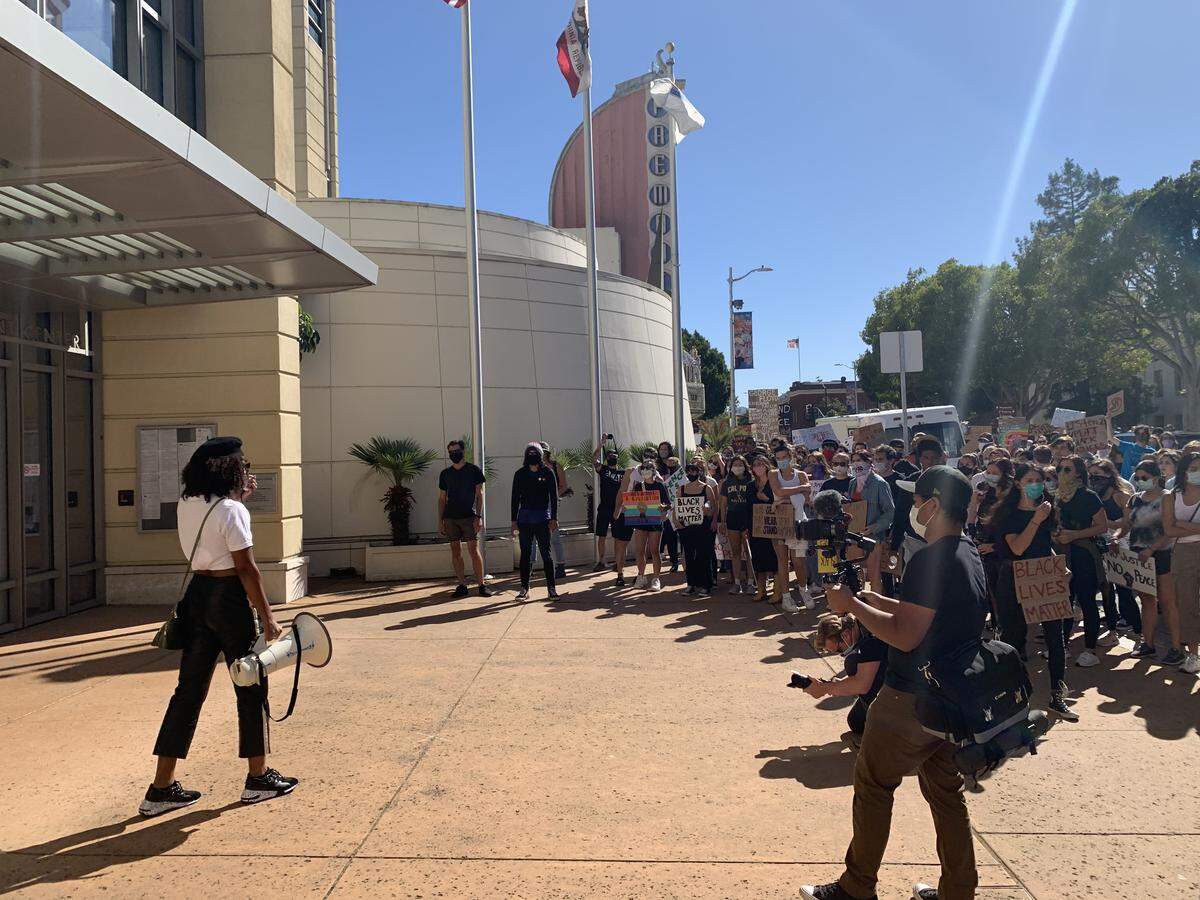
Dublin Macmillan was one of the speakers at a press conference in the aftermath of the June 1 protest in SLO that ended in the use of tear gas by police against protesters.
She said she had no formal affiliation with the city but urged the community to participate in the work to create racial equity.
“America is supposed to be a country that recognizes structural inequality and actively works to dismantle it,” Dublin Macmillan said Tuesday.
She cited “a wealth of scholarly literature and data that details racism’s damage to America in general and to the black community,” including from Harvard University.
“Racism affects the lives of all of us, Black, white, Latinx, Asian and indigenous,” Dublin Macmillan said. “... Racism denies many Americans the right to life, liberty and the pursuit of happiness.”
SLO police chief addresses black leadership demands
Also at Tuesday’s meeting, the city’s police chief, Deanna Cantrell, addressed questions posed by the community about use of force and police funding, responding to black leadership demands on a range of issues, including use of tear gas and body cameras, as well as funding issues.
“De-escalation will always be the priority and requires cooperation to be successful,” Cantrell wrote. “If the protest remains peaceful, then it will not be declared an unlawful assembly. If, however, protesters assemble to do an unlawful act, or do a lawful act in a violent, boisterous or tumultuous manner, such assembly is an unlawful assembly, and an unlawful assembly order may be given.”
Multiple speakers at Tuesday’s meeting criticized the department’s reliance on Lexipol, the private company based in California that provides policy manuals.
They contended Lexipol, used by police across the country, doesn’t adequately prevent use of excessive force and leaves the city vulnerable to liabilities.
Cantrell responded that the company cites policy language based on updated laws, which police rely on, and said she believes SLO’s policy fairly addresses use of force.
Cantrell said in general use of force is governed by California’s penal code, which supercedes all of the city’s policies.
In response to reallocation of funds from the city’s police budget, as demanded by some as a shift to social services, Cantrell said that decision would need to be made by the City Council.
She also noted in a written response the city doesn’t administer education, the jail system or social services, functions of the state and county governments.
“When Chief Cantrell joined this community four years ago, she and her team collaborated with many community partners rooted in different races, ethnicities, and religions, engaging the community as a whole and cultivating inclusion,” city officials said in a news release. “We have confidence that our police chief and the department are committed to a collaborative process of review and change.”
This story was originally published June 17, 2020 at 12:47 PM.
%20Cropped.jpg)