
SLO will close downtown streets on the weekend to open space for outdoor dining
Big changes are coming to the look and feel of downtown San Luis Obispo.
In an effort to boost business opportunities following the coronavirus shutdown, the city is rolling out a one-year pilot program that will close streets to vehicles, encourage people to walk, eat and shop downtown, and open public spaces to new uses.
The City Council unanimously approved the $200,000 pilot program on Friday. It will temporarily close parts of city streets and parking lots for up to a year to allow for outdoor dining and pedestrian uses in several commercial hubs.
The move comes as several restaurants in the city reopened this week for dine-in service, though with limited indoor capacity. Adding outdoor seating will help them stay afloat financially, city officials said.
“This is a very hopeful and positive renaissance of what is and what will be San Luis Obispo,” Mayor Heidi Harmon said.
Some of the measures were being planned before the pandemic, including a “parklet” pilot program.
“When COVID-19 hit, we started thinking about ways to free up space,” said Luke Schwartz, the city’s transportation manager. “Some of these measures were in visionary documents, such as the Downtown Concept Plan, encouraging walking and being outside, and this (pandemic) presented unique opportunities for test projects.”
Schwartz said the closures in the downtown could happen within the next couple of weeks.
“The focus is really trying to help these businesses survive,” Schwartz said. “A lot of businesses are saying they won’t be able to survive, even opening at half capacity, and this is one way we can help.”
A look at SLO’s plan
The pilot program calls for a number of strategies, but the most significant would shut down vehicle access on the weekend to a couple key streets, opening the space for outdoor dining, walking, biking and social distancing.
From Friday afternoon through Sunday, Higuera Street will be closed to vehicle traffic between Osos and Nipomo streets — retaining side-street traffic flows during the ongoing Marsh Street Bridge project closure.
Monterey Street also will be blocked off to cars between Chorro and Osos streets to serve as an extension of Mission Plaza.
Connecting streets that run through Higuera and Monterey in the closure zones — such as Broad, Chorro and Osos — will remain open to through traffic with barriers to separate pedestrians and those in dining areas from cars.
As much as possible, Schwartz recommends that people park in city parking garages, which are currently free, while the city encourages any street parking near businesses to turn over more quickly with signage for curbside pickups and 10-minute parking stops.
The Monterey Street idea was envisioned as a pedestrian-friendly improvement in coordination with the city’s Downtown Concept Plan, a document that helps guide future planning decisions.
Businesses may reserve dedicated space for outdoor dining by applying for a sidewalk dining encroachment permit.
“This is an innovative approach that protects community members when they are shopping and dining in the downtown and throughout the city while supporting our local businesses as we gradually reopen,” City Manager Derek Johnson said in a statement. “We want the community’s input on this new program to ensure it is a success.”
Another major change calls for reducing Higuera Street to two lanes from Santa Rosa Street to Nipomo Street, allowing parking only on one side and converting the outside travel lane to a buffered bike lane, with traffic calming measures. That change would also last up to a year and then be re-evaluated.
The city will conduct surveys through May 31 to invite input from community members and local businesses and guide implementation, with the potential for extensions and permanent installations moving forward.
To complete the survey, people can submit comments at www.opentownhall.com/portals/189/Issue_8859 or visit the city’s website at www.slocity.org.
New uses for Mission Plaza and parking lots
The pilot program isn’t limited to street uses.
Mission Plaza and city-owned surface parking lots also will be made available for broad public use at set times, possibly weeknights and throughout the weekend. That would include tables and chairs for “to-go” dining.
The city pointed to the parking lot near Old San Luis Barbecue at the corner of Higuera and Nipomo streets (Parking Lot 10) as one of the lots that could be converted to outdoor dining.
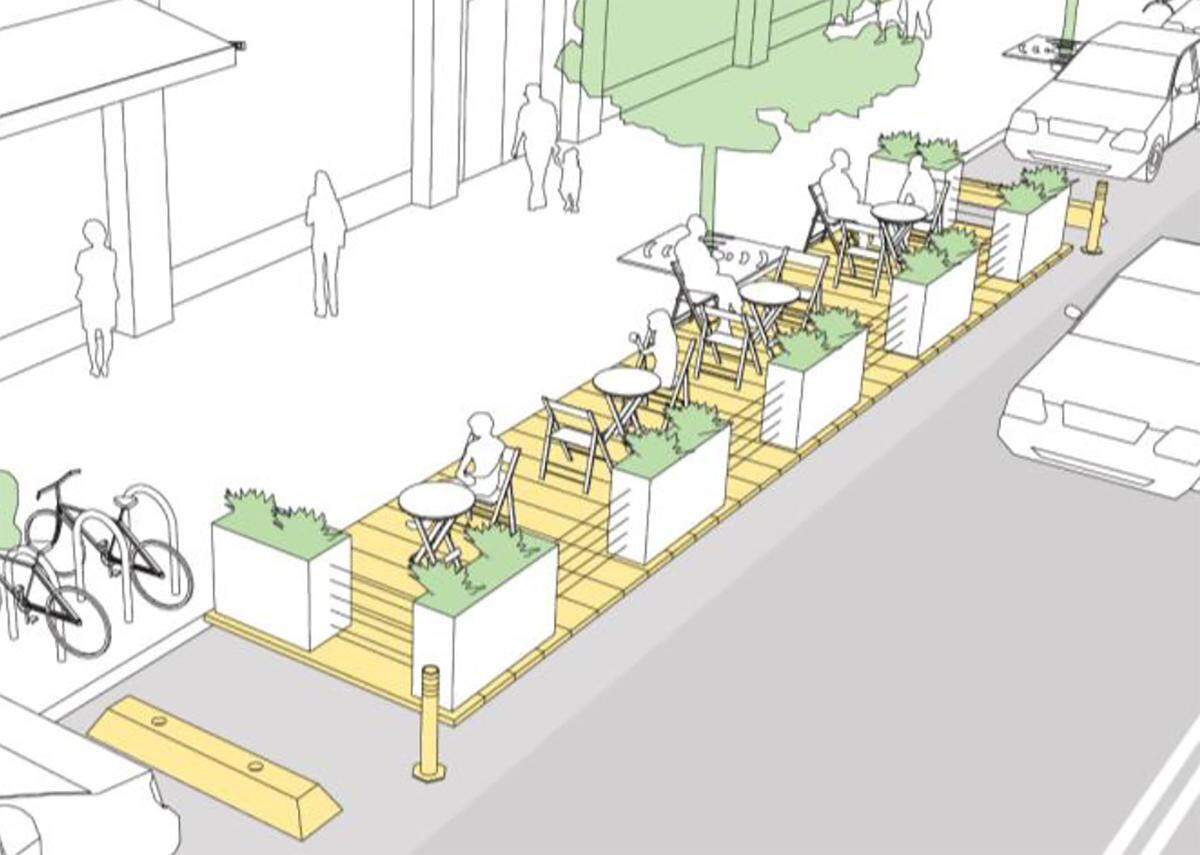
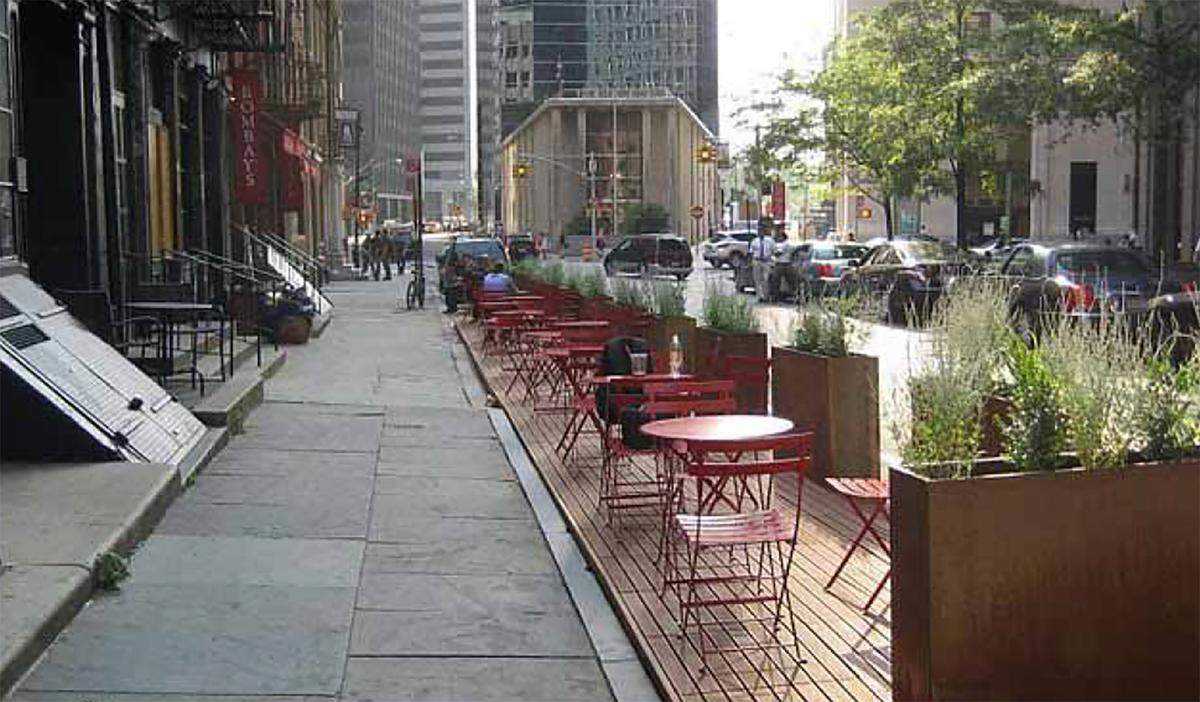
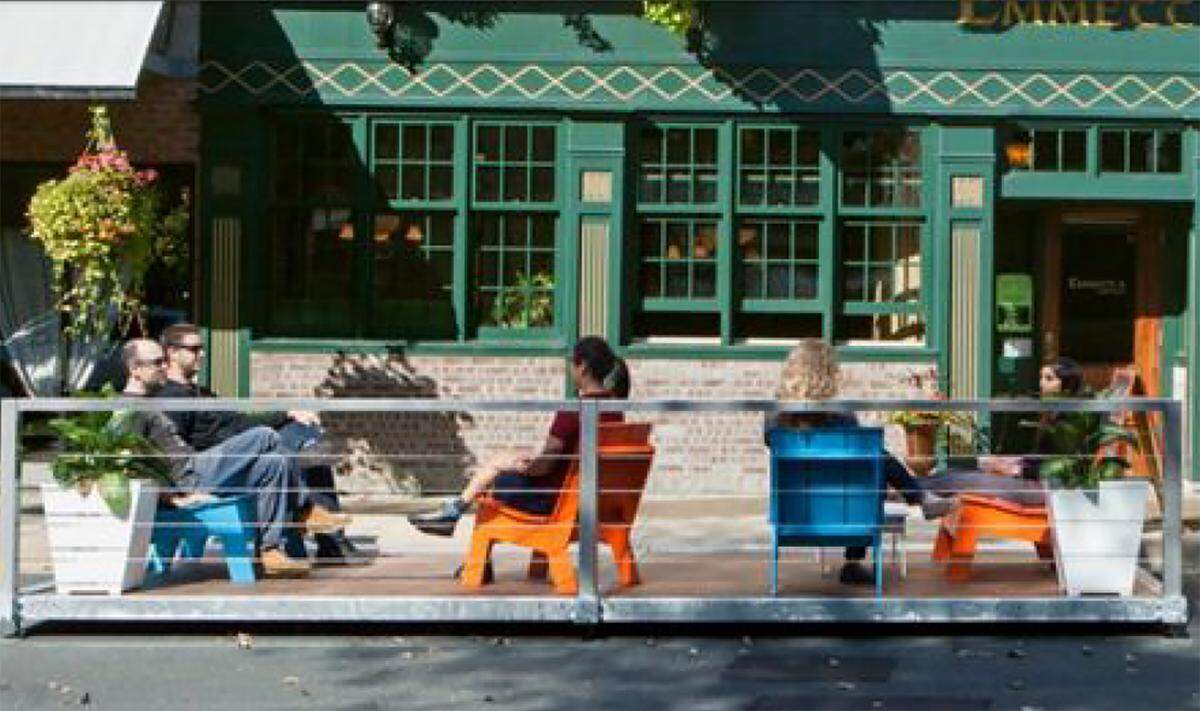
It also will convert some downtown on-street parking spaces into “parklets,” acting as extensions of the sidewalk for outdoor dining space, lines for retails shopping, or other pedestrian uses.
Specific locations for the parklets haven’t been identified, but one will be outside the downtown with the rest in the city’s core.
Specific locations will be determined based on local business interest and community feedback.
Other cities nationwide have adopted similar changes, city officials said, including Oakland, Portland, Salt Lake City and San Diego.
Businesses participated in the planning
The Downtown SLO association, whose mission is to foster an economically vibrant city core, weighed in heavily on the city’s “Open SLO” plan and will continue to participate in decision-making as the trial measures are rolled out.
Outside downtown, the plan also includes “temporary partial closure of select neighborhood streets to through traffic using low-cost temporary traffic control,” allowing vehicle access to area residents, delivery services and emergency response.
Streets envisioned in this pilot program include: Cerro Romauldo Avenue, Flora Street, Nipomo Street, Islay Street, Galleon Way and Atascadero Street.
Additionally, city sidewalks may also be used for “low-cost opportunities to improve public safety and activate street space for community benefit,” SLO officials said, including for merchandise, queueing, art and cultural pop-up exhibits.
With streets closed to car traffic, SLO will prioritize “nearest side-street parking for quick turnover parking needs (restaurant take-out, passenger loading, curbside retail pickup, deliveries, ADA parking).“
Johnson said parking in the city has dropped significantly due to stay-at-home precautions and he expects the parking demand will remain low over the next few months as well.
%20Cropped.jpg)