
SLO thought about banning public art of real people. Then a backlash erupted
A controversial proposed policy banning statues commemorating specific individuals in San Luis Obispo will not be adopted.
The SLO City Council, voting 4-0 Tuesday with Mayor Heidi Harmon absent, voted against the idea of changing an existing public art policy to include banning public art that highlights specific people.
The policy proposal supported “ideas, ideals and concepts” instead of specific people, such as controversial former President Teddy Roosevelt, whose statue was proposed for Mitchell Park.
Instead, the council will review works on a case-by-case basis.
On Tuesday, the city added language to its public art policy to align public art with San Luis Obispo’s core values, including “civility, sustainability and diversity,” according to the amended policy, while supporting “all members and facets of the community.”
San Luis Obispo’s public art includes works such as statues, murals and box art, but not plaques.
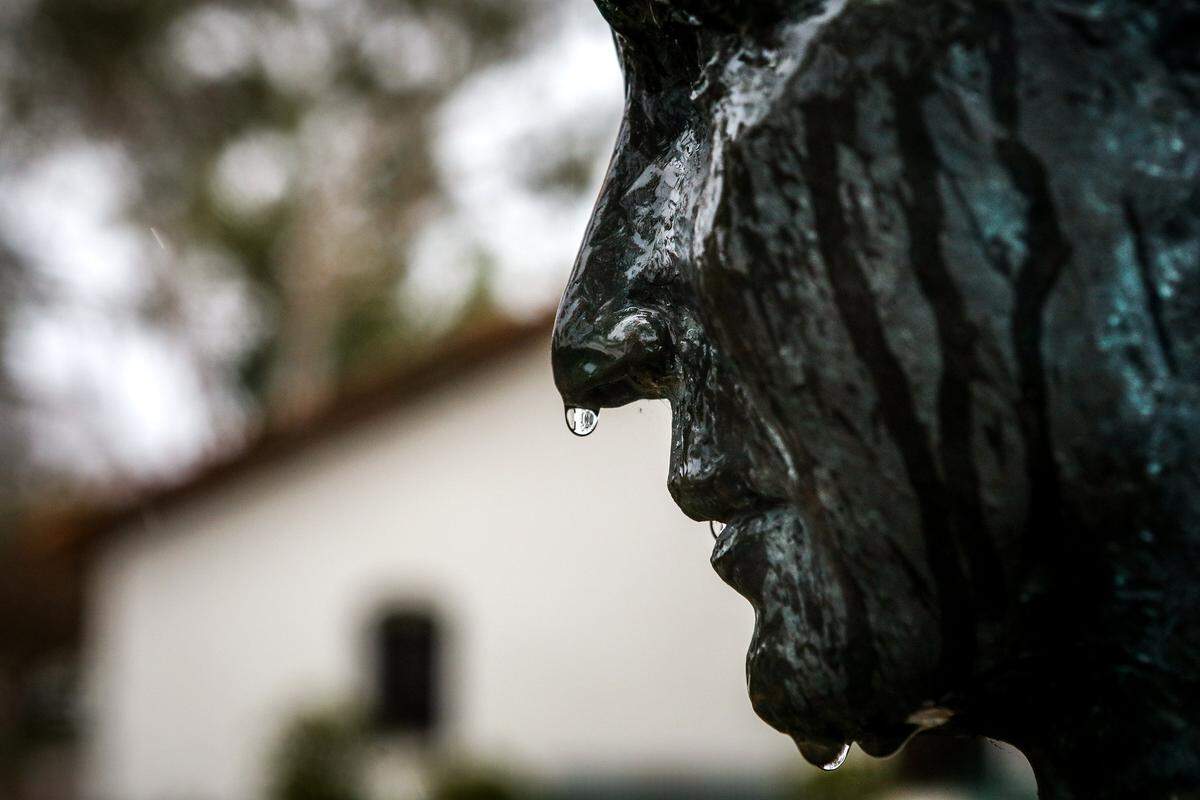
At Tuesday’s meeting, the council heard vehement objections to the proposal of banning public art depicting actual people —as opposed to nondescript representations — from local historians, artists and community members in public comment.
Prior to the meeting, the city received about 50 letters nearly unanimously opposing the proposal.
“For the city to censor the content of public art by prohibiting depiction of real living or deceased human beings would be bad public policy, and likely unconstitutional,” former San Luis Obispo Mayor Jan Marx wrote in a letter. “I urge the council to leave the present policy in place and consider public art on a case by case basis.”
Marx, who also spoke in public comment, added that if the council doesn’t want a statue of Teddy Roosevelt in Mitchell Park, council members can vote it down.
“But do not allow your poor opinion of one man to serve as an excuse to engage in wholesale censorship of public art,” Marx said.
Teddy Roosevelt statue idea sparked SLO debate
The idea of a Teddy Roosevelt statue in San Luis Obispo was first proposed in 2016 by a committee of community members, including former City Council member John Ashbaugh, under the auspices of ARTS Obispo, the San Luis Obispo County Arts Council.
Roosevelt visited San Luis Obispo briefly during a train stop in 1903, speaking to a crowd of thousands after touring Mission San Luis Obispo.
The statue concept was inspired by Roosevelt’s visit and his instrumental role as a president in setting aside 230 million acres of public land, including portions of the Los Padres National Forest for permanent preservation.
Artist Paula Zima, who created several public sculptures in the region including Mission Plaza’s iconic “Bear and Child,” was set to create the monument for display at Mitchell Park.
The Northern Chumash Tribune Council wrote the council a letter opposing the proposed monument in January 2019, calling for San Luis Obispo to “stand against racism and violence towards the Indigenous communities, and stand with the Native Peoples building a stronger partnership for the future.”
The council wrote that Roosevelt’s tenure as president was marked by his support of the Indian allotment system.
But in February 2019, Harmon questioned raising up certain individuals, particularly those with questionable pasts, so not to provoke division and controversy in the community. She expressed concern of “more monuments of white men.”
“I think by allowing monuments, it’s essential to understand there’s a certain lifting up of the person,” Harmon said. “Implicit in a monument is appreciation, validation and commemoration. I think we need to decide whether this is necessary? What issue is it really trying to highlight and illuminate?”
The council floated the policy change in July 2019, leading up to Tuesday’s meeting when council members expressed mixed reactions.
SLO council members talk public art policy
Councilwoman Carlyn Christianson expressed her objection to the proposed policy change to mandate ideas and ideals, saying that has been her position from the beginning.
“I never supported this in the first place,” said Christianson, supporting case-by-case review. “This is a terrible idea. It’s the dumbest thing I ever heard of. I said it months ago and it still is.”
Councilwoman Erica Stewart, however, said the genesis of the idea was avoid public art that “offends entire groups of people.”
“I definitely have an opinion about Teddy,” Stewart added, expressing concerns about the process of who is chosen for funding and execution of monument status.
Council members Andy Pease and Aaron Gomez expressed similar concerns about how public art can be perceived.
“I wasn’t connected either way (to the issue),” Gomez said. “But I think it’s strange that we like to put people on pedestals through art forms. While some may look at a (work of art) as inspiring, others may view it as destructive.”
City has no public art honoring specific people
James Papp, a local historian, lobbied against the city imposing a blanket policy that attempts to determine how the public will perceive art.
Papp cited the example of former New York mayors including Rudy Guliani who turned down the proposed works of public artist Christo and his wife and collaborator Jeanne-Claude.
When Mayor Michael Bloomberg was elected and supported “The Gates” installations in 2005, the reaction drew widespread joy, Papp said, in addition to millions of tourists who came to see the free exhibit.
Papp said that it’s impossible to predict how the public will perceive art, saying it’s like dictating to a community whether to “eat our artistic broccoli or not eat our artistic broccoli.”
The city doesn’t currently have any pieces of public art that fall into the category of public art that honors specific people.
The statue of Father Junípero Serra in Mission Plaza is on private property. And plaques depicting figures such as former San Luis ObispoMayor Ken Schwartz and businesswoman and civic leader Queenie Warden Bridge don’t fall under the city’s definition of public art.
Moving forward, applicants of public art works will need to submit a financing and maintenance plan that projects how ongoing upkeep of the art would be paid for, said City Manager Derek Johnson.
This story was originally published January 22, 2020 at 12:10 PM.
%20Cropped.jpg)