SLO County may prohibit kratom products as overdoses rise
San Luis Obispo County took the first step toward prohibiting a supplement that’s come under increasing scrutiny as an unregulated opioid by health officials.
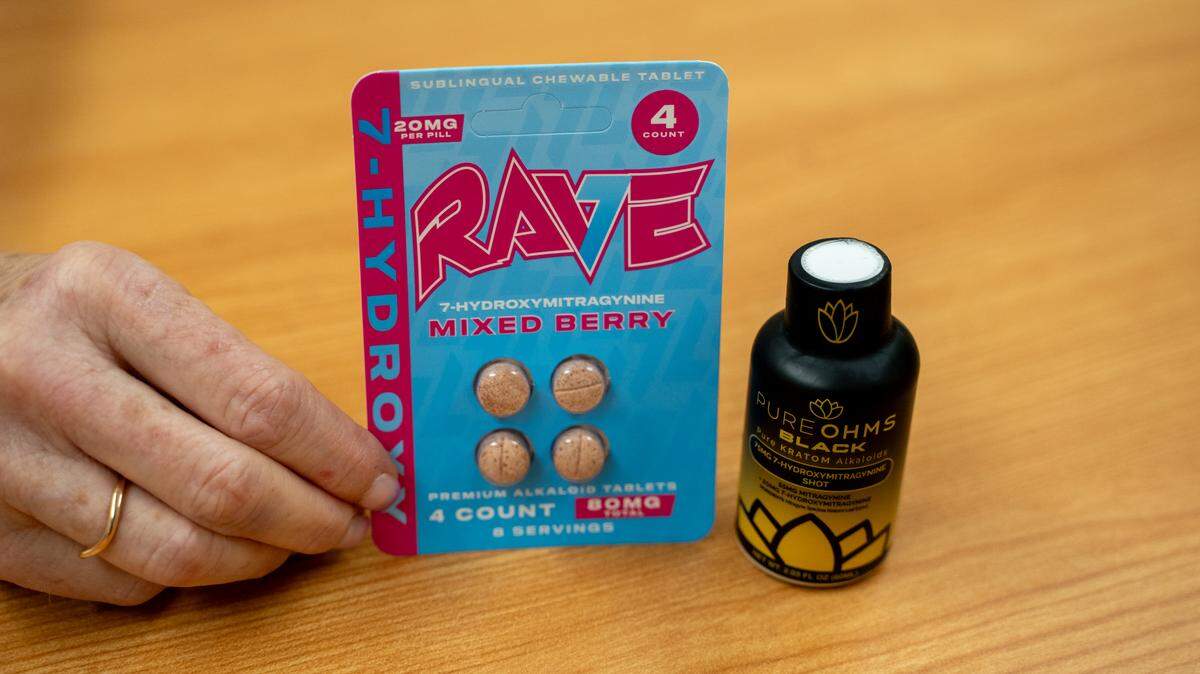
As the California Legislature weighs its options on a statewide prohibition of kratom — a naturally-derived substance used to relieve pain and increase energy that can produce an opioid-like effect after being chemically concentrated to boost its 7-hydroxymitragynine content — the Board of Supervisors voted unanimously to start the process of prohibiting the substance locally.
At Tuesday’s Board of Supervisors meeting, the board heard a presentation by the county Public Health Department recommending the prohibition of nitrous oxide and kratom, two substances commonly sold at gas stations, smoke shops, liquor stores and online retailers.
While both substances have come under increased scrutiny as legal means of getting high, the state started taking action against kratom earlier this year, when all kratom products were removed from liquor store shelves by the state Department of Public Health.
The substance has been linked to at least nine overdose deaths over the past five years in San Luis Obispo County, and local treatment centers have seen a steady increase in cases over the past two years, county Health Promotion Division Manager Jen Miller said.
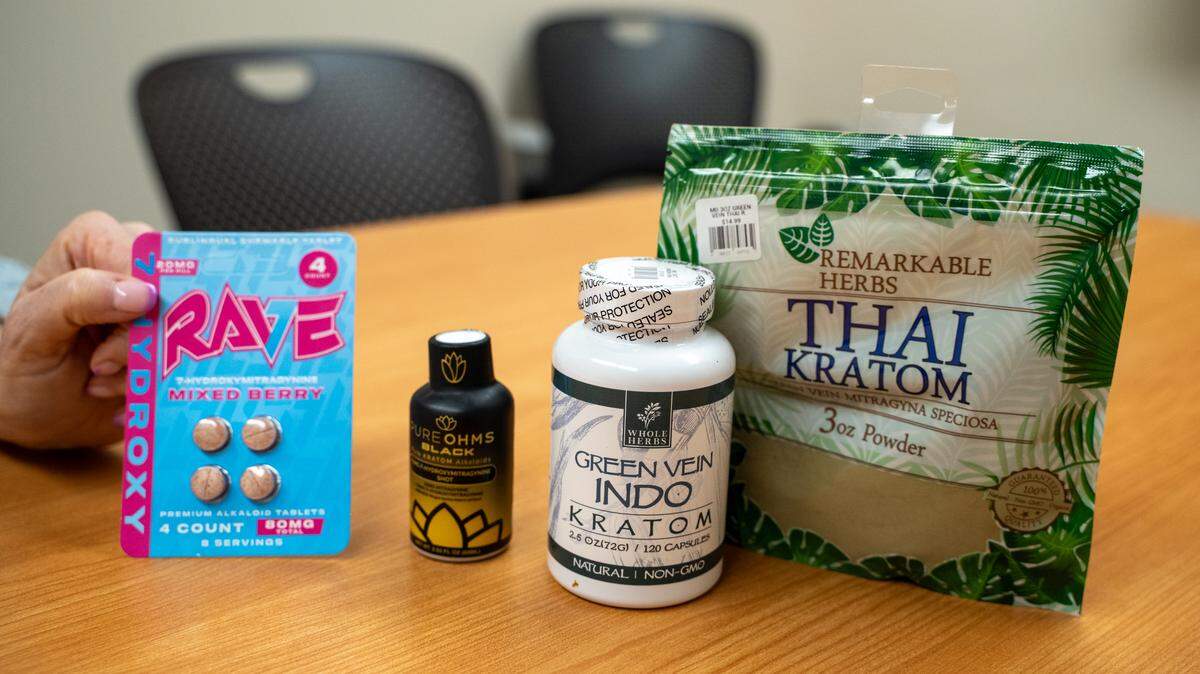
At the state level, Assembly Bill 1088 would classify kratom products containing 7-OH under the Sherman Food, Drug and Cosmetic Law, while setting specific parameters for the quantities of alkaloids in kratom products that may stay on shelves.
However, county health officials urged the board to pursue an ordinance prohibiting kratom regardless of the Legislature’s decision.
“Our team would like to monitor closely and have a game plan, depending on how 1088 shakes out,” Miller said. “If 1088 doesn’t pass or dies, we would like to have a policy ready to go to present to you in September following the 2026 legislative session.”

Will supervisors take action on kratom?
Any ordinance prohibiting the sale of kratom would apply only to the unincorporated areas of the county and would set specific parameters for how and when the ordinance would be enforced.
While AB 1088 would place statewide enforcement of a ban under the control of the state Department of Public Health’s Food and Drug Branch, enforcement of a county ordinance would fall to the Sheriff’s Office, Miller said.
As is, around 20 California counties have passed a local ordinance limiting the sale of kratom, though most of those ordinances allow for the sale of non-concentrated kratom products that contain less than 2% 7-OH, which is generally considered the threshold for producing an opioid-like effect, Miller said.
She added that most county ordinances have fully prohibited all kratom products, but partial and total bans both have their own pros and cons.
“I think that there are many people that use natural kratom products right now, and a complete ban would cause significant disruption,” Miller said. “If we allow for the sale of natural kratom leaf, and only ban the higher concentrated potent products — the 7-OH products — we run the risk of not being able to test to know if what’s in the stores is actually natural kratom product or if it’s a highly concentrated product.”
Supervisor John Peschong, who made the motion to start the ordinance process, said he was proud to back the prohibition effort.
“I do believe it’s a pretty big deal in the community, at least the community I represent, and it is hurting a lot of our young people,” Peschong said. “Anybody who follows my career, you know, through the last 10 years on this board, I’ve advocated (for this) because of my nephew dying of a heroin overdose as a Cuesta College student, so to me this is something that we’ve got to deal with, and we’ve got to deal with it now.”
Supervisor Jimmy Paulding also voiced his support for a local ban.
“The county did take the lead with regard to vapes back in 2020 — I remember when I was on the Arroyo Grande City Council, we then went, and other cities did as well,” Paulding said. “I want to make sure that we do think the city keep the cities in mind as we go to implement these new prohibitions and work through that countywide task force.”
With the board’s support, county staff will start developing an ordinance banning kratom in one form or another, which the board will review in September following the conclusion of the 2026 legislative session.