Is kratom the next wave of the opioid epidemic? What to know in SLO County
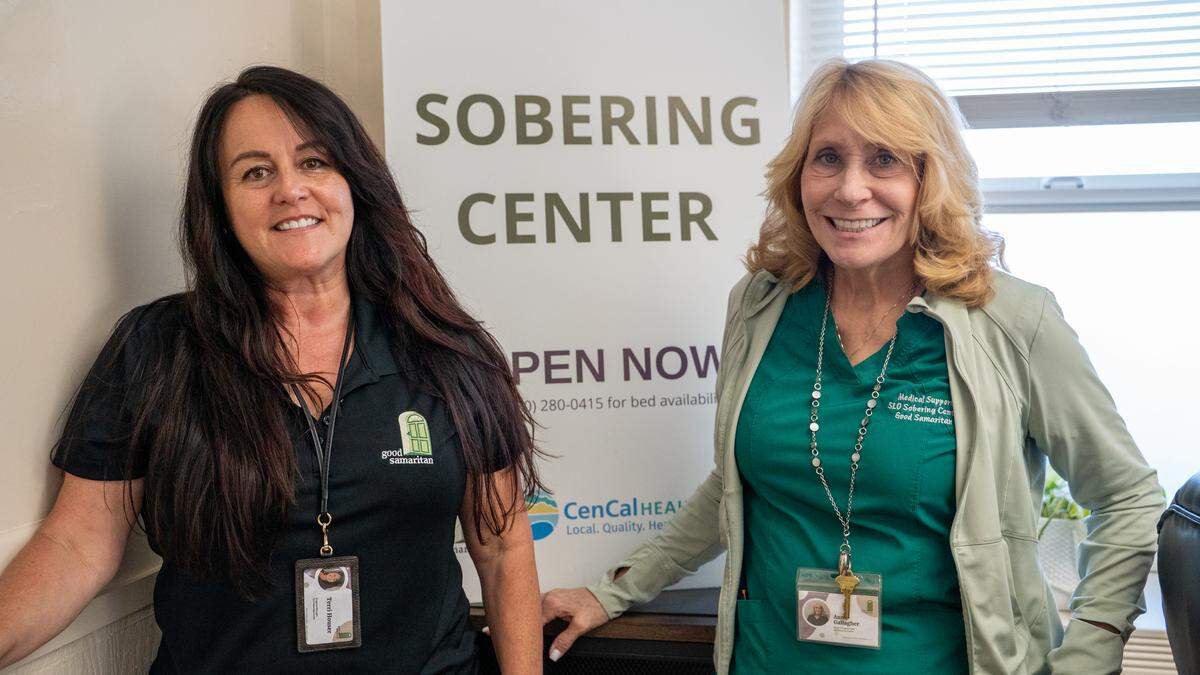
During a graveyard shift like any other at the San Luis Obispo Sobering Center, a man who had previously been treated for alcohol addiction once again turned to the Good Samaritan-operated clinic for help.
Registered nurse Annie Gallagher, who’s been with the clinic since it opened a year and a half ago, said the client appeared agitated, was quick to anger and was experiencing flu-like symptoms — all the hallmarks of a potential opioid withdrawal.
“The craving was so intense he would do anything to get discharged — he didn’t want to get any other treatment,” Gallagher said. “He just needed to get the fix. I haven’t seen that with any other drug here.”
But it wasn’t fentanyl or a prescribed opioid that was causing his withdrawal issues, Sobering Center program manager Terri Houser said.
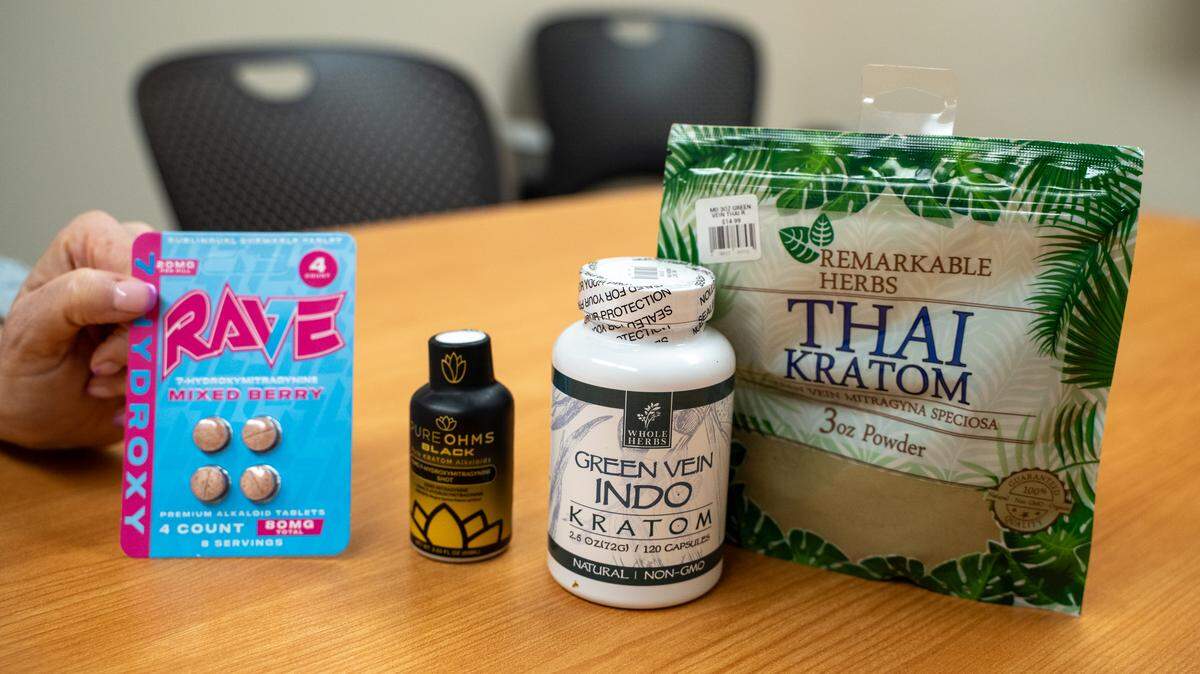
Instead, it was kratom — a supplement used to relieve pain and increase energy that’s sold at gas stations, smoke shops, liquor stores and online — that he was begging the staff for, Houser said.
“He was in denial that the kratom was the reason that was creating his erratic behavior and his cravings,” Houser said. “He thought it was just the alcohol, or so he said, but three hours later went by, and it was ‘I need kratom,’ and he started screaming here at the center.”
He wasn’t the first to seek treatment for kratom withdrawal at the Sobering Center, and he certainly won’t be the last, Houser said.
In the past two years, the SLO Sobering Center and other treatment programs have marked an increase in kratom-related addiction cases, at least one a month — no more than around 2-3% of their overall caseload, but a growing share all the same, Houser said.
As cases have spiked over the past two years, authorities at the state and local level have started rolling out laws and ordinances to prevent what some health experts are describing as the next frontier of the opioid crisis.
On Tuesday, the San Luis Obispo County Board of Supervisors was set to hear an update from the county Health Agency on the changing legal status of kratom products — and the ways the county can clamp down on sales of the products locally, San Luis Obispo County tobacco control program manager Amy Gilman said.
“This really, I think, will get attention of a lot of different spectrum of people, because the way that it is being presented is, quite frankly, just misleading, and misinformation is all over it,” Gilman said. “I think that’s a good reminder of how this kind of touches on so many different populations and people in our community, and how they can maybe resonate with why it’s on the board’s agenda, and why we’re talking about it.”
What is kratom?
Though kratom products are increasingly being linked to cases of opioid addiction, the products start as a plant known as mitragyna speciosa native to Southeast Asia, according to Dr. Siddarth Puri, county medical director of Behavioral Health and Drug and Alcohol Services.
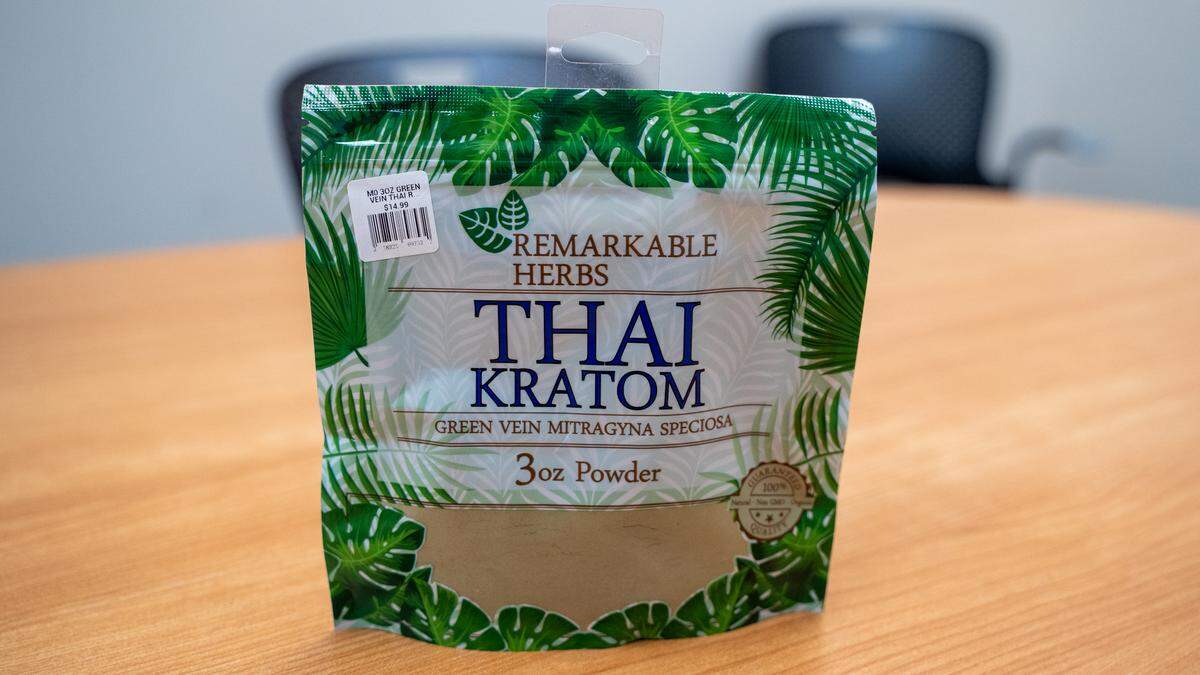
Traditionally, the plant’s leaves have been crushed into powder and ingested through tea or food in low doses to help increase energy and manage pain, he said.
These lower doses of kratom are not necessarily bad for consumers, but in recent years a market for higher and higher concentrations has taken off, promising to deliver more potent effects than the natural product, Puri said.
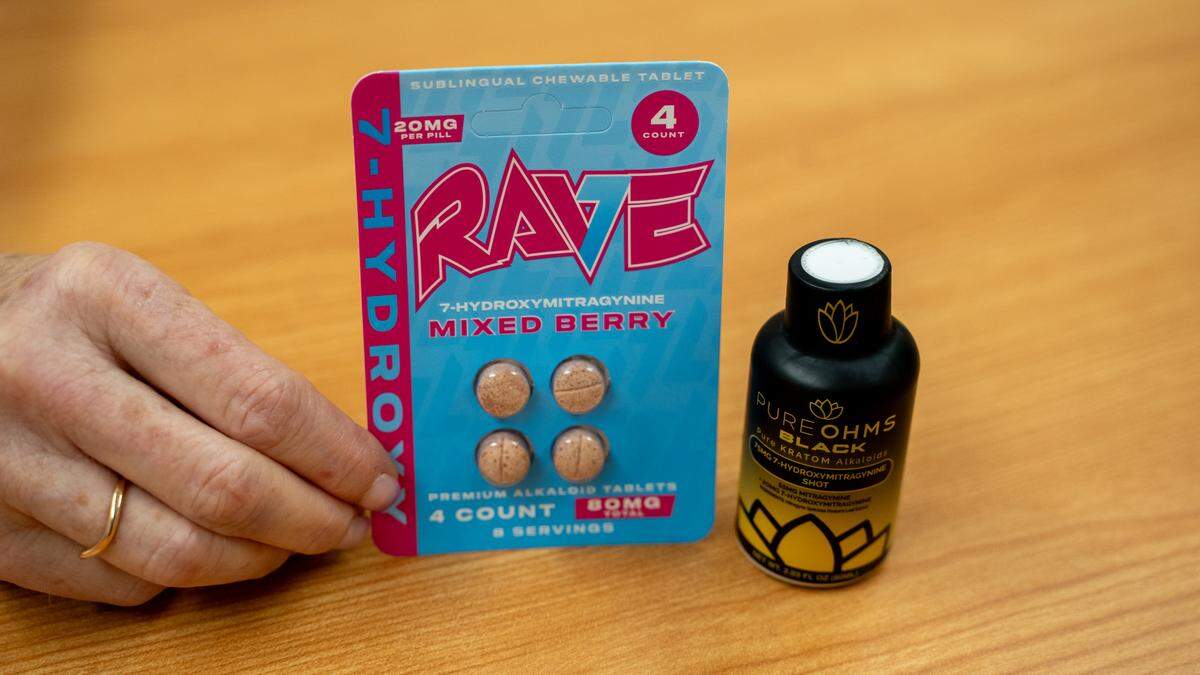
“When we see it now, (it’s) moving away from the traditional products, which are powders and teas,” Puri said. “Now we’re seeing things in extract shots, we’re seeing concentrated tablets, we’re seeing gummies, we’re seeing enhanced extracts, capsules full of powder as well.”
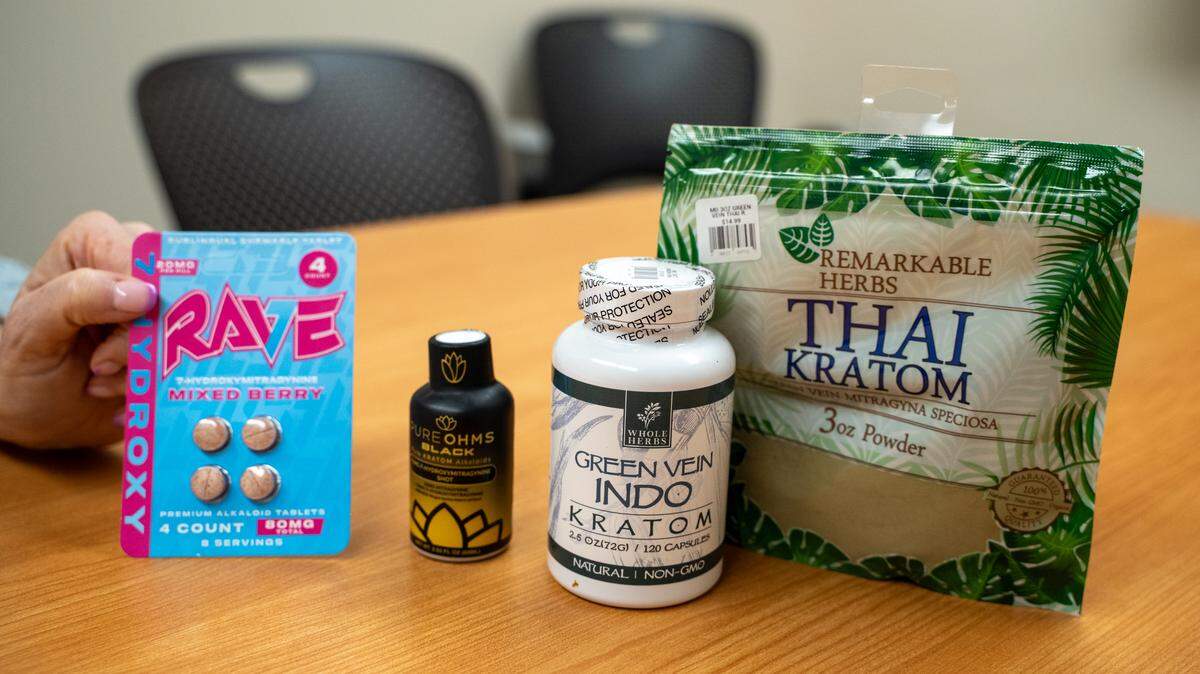
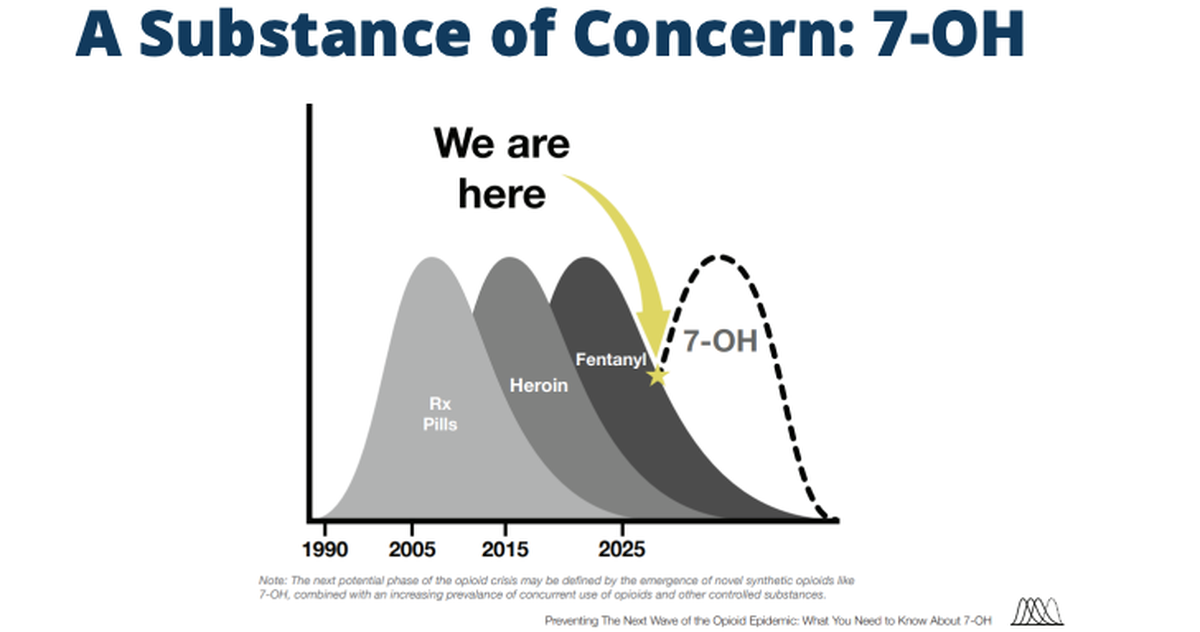
Higher-concentration kratom products usually contain a higher dose of 7-hydroxymitragynine — also known as 7-OH — far exceeding that found in natural kratom, he said.
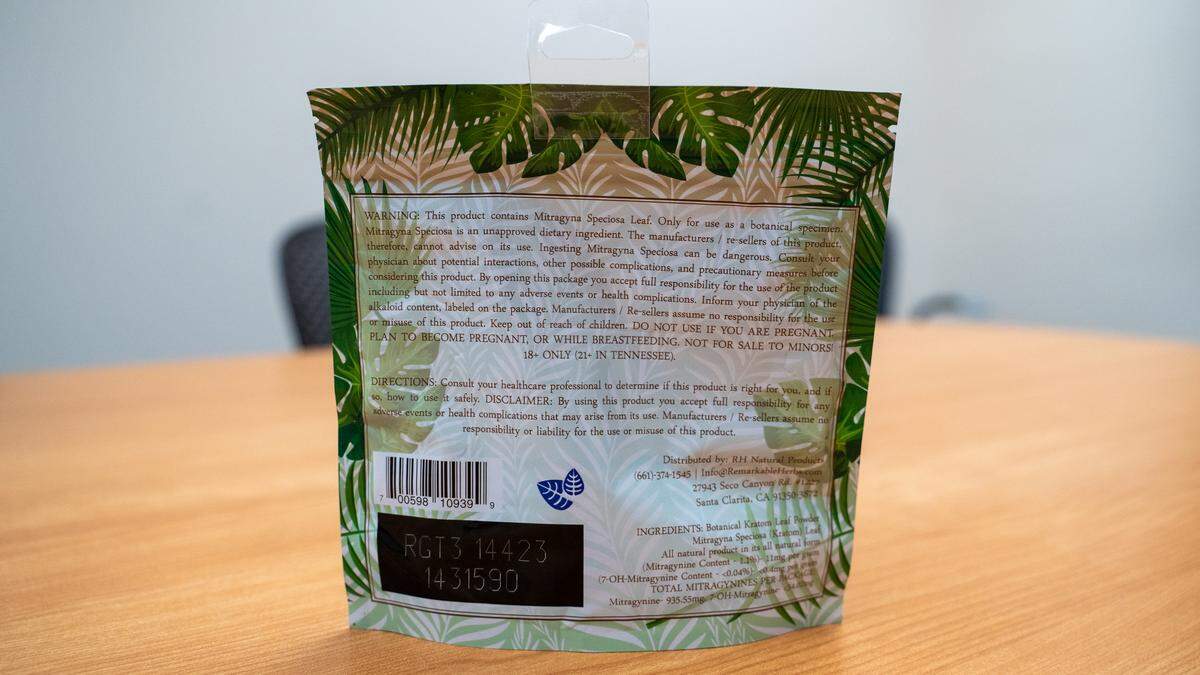
“Natural-occurring kratom I would say (contains) 1 to 2% mitragynine, less than .05% 7-OH, but if you concentrate that like several times, then it could be anywhere from 100 times more potent to 200 or 1,000 times more potent, depending on what’s actually on the label,” Puri said. “When you think generally about kratom, 1-5-ish grams is on the lower end, which is giving you possibly more of that, like, stimulating focus energy, and then above 5 grams is generally the cutoff, where we think ... that’s going to go and work more as an opioid in your brain.”
Puri said there is some uncertainty in exactly how high of a dose of kratom will interact with the brain’s opioid receptors for a variety of reasons.
There has been relatively little research conducted on its effectiveness at different concentrations, and crucially, as a supplement it cannot be reviewed by the federal Food and Drug Administration, allowing the product to appear on store shelves with little review beforehand, he said.
The Centers for Disease Control and Prevention’s best estimates on kratom’s danger to humans showed a 1,200% increase — from 258 to 3,434 — in the number of calls to poison centers due to kratom exposure over the past decade, with the majority of calls occurring in the last year, Gilman said.
Locally, around 40% of intakes at local drug treatment centers involve 7-OH products, and kratom has been linked to at least nine overdose deaths between 2020 and 2025, according to the county Department of Public Health data.
Complicating the matter, kratom can be hard to identify as the trigger of an addiction because it’s often commingled with other opioids and is rarely the first drug an individual will use, Gilman said.
There are a variety of different vectors through which a person can be introduced to kratom, Puri said.
Some may come to it seeking an alternative to prescribed pain medication, while others may seek out high-concentration kratom with the knowledge it can be used to get high, seeing it as a legal means to get opioids or a way to wean themselves off of a harder opioid.
“The patients we’re seeing now who are on kratom, oftentimes maybe didn’t have a history of substance use disorder, and are now like, ‘Holy shit, what have I done?’” Puri said. “’I’ve gotten myself into this, and all of a sudden I’m on, maybe it’s only 5 to 6 grams of kratom, but getting off of it makes me feel so disgusting and nauseated, and my muscles are aching, my eyes are watering, and I just can’t focus, and it’s all the classic opioid withdrawal symptoms.”
Kratom’s legality is narrowing, but not everywhere
With cases of addiction on the rise, kratom’s legal status is starting to come under greater scrutiny from the California Legislature and local jurisdictions.
In late February, the California Department of Alcoholic Beverage Control and California Department of Public Health announced it would enforce statewide prohibition against kratom products at alcohol and beverage license holders, from natural products to the high-concentration 7-OH products.
Since then, Gov. Gavin Newsom has touted 95% compliance with the prohibition of kratom at businesses that carry alcohol and beverage licenses, seizing 3,308 illicit products in the first three weeks of enforcement.
Prohibition of the substance started with Southern California counties such as Orange County and Los Angeles County before trickling up to the state Department of Public Health, Gilman said.
However, loopholes in jurisdictions have kept kratom products on shelves in some places, including San Luis Obispo County, Gilman said.
While the Department of Alcoholic Beverage Control has been effective in removing kratom from liquor stores, enforcement at other places of business falls to field inspectors from the California Department of Public Health’s Food and Drug Branch, which have limited time to conduct enforcement operations, Gilman said.
Even when the County Department of Public Health put out a letter notifying business owners in unincorporated areas of the county about the change in legal status, it relies heavily on businesses voluntarily removing the products, as enforcement actions can take time the county and state Departments of Public Health don’t have.
“The way the law is currently set up — how CDPH is identifying that kratom products are illegal — only CDPH has authority, through its partnership with ABC, to enforce,” Gilman said. “Locally our environmental health, or tobacco control, or the sheriff, do not have authority to address kratom.”
Wild Side Smoke Shop manager Aaron Hernandez said his San Luis Obispo store was subject to one of those enforcement actions not long after the Department of Public Health started its crackdown on kratom products, assisted by the San Luis Obispo Police Department.
Hernandez said “kratom was really never on the radar whatsoever, but as soon as that 7-OH came out, people started getting addicted.”
“There was some issues with some people and issue with law enforcement, so then they got involved and eventually came and grabbed all the kratom and took it off the shelves,” he said.
Hernandez said he was informed that shops carrying kratom won’t receive misdemeanors during enforcement actions, but it can be a misdemeanor if the product stays on the shelf.
His shop complied by following Wild Side’s corporate policy, shipping its stock of kratom products to the company’s Oklahoma City offices. Still, sales took a hit as a result, and the enforcement left people who rely on natural kratom for pain relief without an immediate alternative, Hernandez said.
“I feel like it was a little detrimental for everyone taking it away completely,” Hernandez said. “I mean, I think they should at least let some low-dose kratom — just regular kratom — just to kind of help the people that are actually using it responsibly.”
Status of kratom still being decided
At the state level, Assembly Bill 1088 would classify kratom products containing 7-OH under the Sherman Food, Drug and Cosmetic Law, while setting specific parameters for the quantities of alkaloids in kratom products that may stay on shelves.
The bill has cleared the Assembly but has not yet gone to committee in the state Senate, according to CalMatters’ Digital Democracy tracker.
Tuesday’s Board of Supervisors will see the board receive an update on the proliferation and legal status of both kratom and nitrous oxide, giving the supervisors the option to pursue future ordinances regulating the substances in unincorporated areas of the county, Gilman said.
If the board pursues an ordinance, it can draw its own lines on whether the sale of kratom would be an administrative code enforcement violation or a criminal act and could include the Sheriff’s Office in enforcement actions, Gilman said.
Still, there’s no true consensus among local experts on exactly what should be allowed and what is a step too far — or whether even the mildest doses of kratom can send users down the path to opioid addiction.
Houser, who has herself been clean and sober from drugs and alcohol for 22 years, said leaving a door open in any capacity will allow people seeking 7-OH’s worst effects to find them, one way or another. Gallagher agreed.
“I think, it’s just prone to being abused, even if it’s just the super-natural stuff,” Gallagher said.
“As an addict, I would just take more,” Houser said.
This story was originally published June 2, 2026 at 9:00 AM.