French Hospital is building SLO County’s second NICU. Here’s why local doctors are opposed
Babies born at one San Luis Obispo hospital that require a higher level of care will soon be treated at a new neonatal intensive care unit on site instead of being loaded in an ambulance and transferred to a nearby facility.
That sounds like a beneficial addition for local patients, but it hasn’t been greeted with uniform support from the local medical community.
French Hospital Regional Medical Center already offers prenatal care, labor and delivery services and acute care for infants 32 weeks and older at the Stollmeyer Family Birthing Center, according to hospital officials.
Now, the new Stan and Barbara Clark NICU will allow newborns that require more medical attention to be treated at French Hospital instead of leaving the facility for a higher level of care, hospital officials said.
“As we rebuilt our woman’s program a few years ago, we were told by members of the community that .... in the unique situation where they felt that their baby may be at risk, they liked the idea of having the technical expertise of a NICU available,” French Hospital President and CEO Alan Iftiniuk said.
The new NICU at French Hospital, which is part of Dignity Health, would be the second neonatal intensive care unit in San Luis Obispo County.
Sierra Vista Regional Medical Center in San Luis Obispo has had a NICU since 1995.
But not everyone in the medical community supports French Hospital’s NICU project — including local pediatricians, retired physicians and neonatologists at Sierra Vista.
Local clinicians feel that building a higher-level NICU at French Hospital is unnecessary, noting that SLO County has fewer complex births requiring NICU services compared to other, more populated cities and counties throughout the state.
Critics say the creation of a second NICU could potentially contribute to the duplication of services and dilution of physician expertise as a relatively small patient population is split between two competing facilities.
“I just gotta be truthful and tell you I think it’s not necessarily in the community’s best interest to do this,” San Luis Obispo pediatrician Dr. Rene Bravo said.

French Hospital NICU will feature large rooms, modern technology
According to Iftiniuk, French Hospital’s plan to build a level 3 NICU “enjoys very, very, very broad community support.”
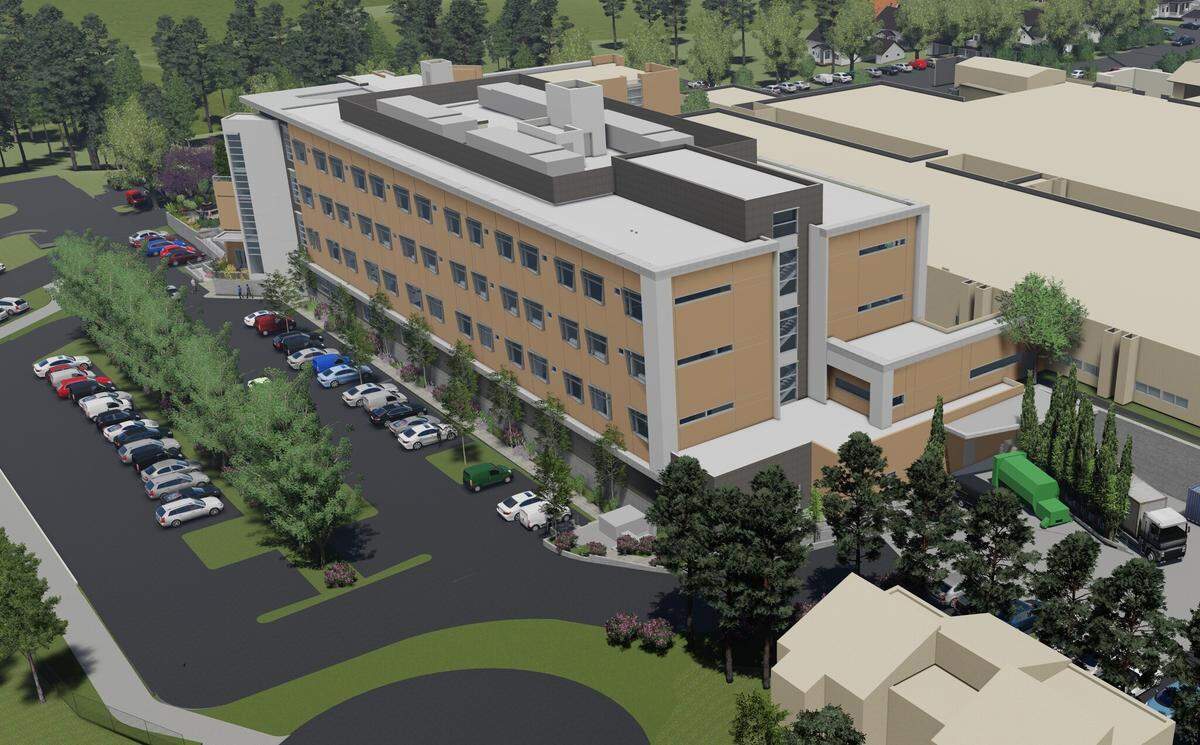
The new NICU is part of the French Hospital Beyond Health campaign, which aims to double the size of the SLO hospital. That’s estimated to cost a total of about $150 million.
Donors have contributed more than $5 million to help build the level 3 NICU wing at the hospital, which will have 16 private patient rooms, brand-new equipment and the latest advances in hospital technology, according to hospital officials.
Iftiniuk said the decision to build the NICU at French Hospital was the result of diligent research and direct engagement with community members and board members who felt the hospital needed a NICU to round out its maternal-infant health services.
“What we are endeavoring to do here is to take that level of care up for those most fragile patients to a whole new level that, frankly, isn’t available anywhere in any hospital on the Central Coast,” he said.
When The Tribune asked for more details from Dignity about how it measured need for an additional NICU in SLO County, the company declined to share that information.
The NICU at French Hospital will be a level 3 NICU, which is the same tier as the NICU at Sierra Vista Regional Medical Center, owned by Tenet Health Central Coast. So the new facility would presumably match the quality of care that already exists in San Luis Obispo.
Hospital officials said French Hospital has been delivering babies for more than 40 years.
In January 2018, the hospital opened a level 2 support care nursery, meaning it is equipped to care for babies born at or after 32 weeks who weigh more than three pounds at birth, said French Hospital neonatologist Erica Fernandes.
Infants admitted to a support care nursery often require equipment to help them breathe but are not deemed critically ill or in need of surgery, according to the March of Dimes, a maternal and child health research and advocacy organization.
“The reality is that there are always surprises at deliveries that the team needs to be prepared for,” Fernandes said.
Small, preterm or critically ill infants born at French Hospital need to be transferred to a level 3 NICU facility such as the one at Sierra Vista Regional Medical Center, or elsewhere for a higher level of care.
“You can imagine that putting a baby who is critically unstable (and) requiring life support in an ambulance to move them across town and then get restabilized in another bed ... is very hard,” Fernandes said, especially for breastfeeding mothers and other family members.
French Hospital officials say that transferring medically fragile infants via ambulance also poses a substantial safety risk for patients and is immensely stressful for families, even though the two hospitals in SLO are only two miles apart.
The new NICU at French Hospital aims to keep moms and babies together as much as possible for improved patient outcomes and maternal-infant bonding, French Hospital neonatologist Dr. Rocky Greer said.
In most NICUs, Greer noted, moms are discharged from the hospital soon after delivering fragile newborns that requires extra care.
At French Hospital, infants’ families are allowed to stay with them the entire length of their stay, he said, noting that the rooms will be large enough to fit several visitors at a time.
“I think where neonatology is going is keeping the families together, keeping the families involved,” Greer said in a video about the NICU produced by Dignity Health.
Private rooms with more square footage per baby are also beneficial for infection control, said neonatologist Dr. Bob Turbo, the patient safety manager at French Hospital.
The target completion date for the NICU at French Hospital, along with other construction associated with the Beyond Health campaign, is 2025, according to French Hospital officials.
How many babies end up in NICU in SLO County?
Birth trends in San Luis Obispo County have remained relatively consistent over the past 20 years, according to data provided by the California Department of Public Health.
County birth data show that about 2,300 to 2,900 infants were born in SLO County every year over the past two decades.
While assessing demand for a new NICU, Greer said French Hospital drew on numbers that showed substantial growth in the overall population of SLO County, which could mean a steady volume of new babies.
But the 2020 U.S. Census showed that SLO County’s population grew by only 4.7% in the past 10 years. That figure includes transplants as well as births.
National trends indicate that roughly 10% of all babies born will require some level of unplanned supportive care after birth, according to neonatologists at Sierra Vista Regional Medical Center and French Hospital Medical Center.
However, the vast majority of infants with unplanned complications only require level 2 care, such as a short-term need for oxygen, intravenous fluids or antibiotics, Sierra Vista neonatologist and NICU director Dr. Steve Van Scoy said.
Such care can be handled at a special care nursery, which French Hospital already has in place.
“That takes care of 80% of those babies who have surprise negative outcomes,” Van Scoy said.
Fragile infants born before 32 weeks, who weigh less than about three pounds at birth or are critically ill, are admitted to the level 3 NICU at Sierra Vista, which is owned by Tenet Health Central Coast.
“We’ve become a very capable staff at making sure that small problems in the delivery room and around birth don’t become big problems,” Van Scoy said, noting that the majority of his medical team has worked together at Sierra Vista for 25 years.
“When I first arrived at the NICU 25 years ago, we averaged 17 babies to care for per day and, in this busy environment, our babies did extremely well. Then, and now, our outcomes rival or exceed those of large academic centers, such as Stanford and UCLA,” Van Scoy said in a May speech to the San Luis Obispo Chamber of Commerce’s Good Morning SLO program.
Van Scoy said he has seen a significant change in maternal and infant outcomes in SLO County compared to the late 1990s.
“All the risks of having kids end up in the NICU were much higher back then,” Van Scoy said.
Census trends and improvements to maternal and infant health outcomes translate to fewer babies landing in the NICU at Sierra Vista, Van Scoy said.
The NICU at Sierra Vista, which has north and south wings, can hold up to 22 patients total, Van Scoy said.
The Sierra Vista NICU typically treats about 10 babies a day, Van Scoy said in the May speech. But recently, he said there have been only been one to two babies in the NICU at a time.
It’s not just patient volume that has declined, Van Scoy said. Patient acuity — meaning how sick the patients are — has decreased as well, he said.
“What has really struck me as I look back over the last 25 years, is that early on in the ‘90s and early 2000s, the county didn’t have a very well put together prenatal and perinatal care that is at the level that it is now,” Van Scoy said.
He said more babies were born premature 20 to 30 years ago, with complications stemming from maternal diabetes, infections and more.
History of SLO hospital landscape
According to Bravo, who has practiced pediatric medicine in San Luis Obispo County for more than 35 years, there’s been a rivalry between medical providers in San Luis Obispo for years.
About 20 years ago, there were three hospitals in the city within a couple miles of each other: Sierra Vista Regional Medical Center, which Tenet Health acquired in 1996; French Hospital Medical Center, which affiliated with Dignity Health in 2004; and General Hospital, which was run by the county and closed in 2003, according to a past Tribune report.
“The problem we ran into was that we almost had too much hospital for the population,” Bravo said, noting that General Hospital closed in part because it struggled to fill hospital beds.
Once General Hospital closed, there was a “gentleman’s agreement” between French and Sierra Vista that the hospitals would specialize in different service lines, Bravo said.
That agreement seemingly ended in 2013, when Sierra Vista Regional Medical Center announced plans to build a cardiac center that would compete with the heart program at French Hospital.
In 2013, physicians who volunteered on the French Hospital Community Board wrote a letter to the editor in The Tribune warning about the harm that could come from having two competing cardiac programs in SLO County.
“While we agree that competition is good in most cases, this type of duplicative competition in a county as small as ours will be detrimental to our patients and the community,” the authors wrote.
The argument against Sierra Vista’s planned cardiac center hinged mainly on the risk of adverse patient impacts due to the duplication of healthcare services and risk of physician skills getting rusty from less practice.
It was “an argument that (Sierra Vista) totally rejected,” Iftiniuk said, although that hospital ultimately never launched its proposed cardiac program.
.png "NICU_PatientRoom1 (2).png")
Candy Markwith was the CEO of Sierra Vista Regional Medical Center from 2005-2013 when the cardiac program was being considered.
In an email to the Tribune on Sunday, Markwith wrote plans for the cardiac program were withdrawn because “in a county of our size, it would do more harm than good to have duplicate specialty care services.”
“It is a community health issue,” Markwith wrote. “It would be ironic for one to flip to a position of advocating for duplicative specialty care services that disregards best practices and the lack of community need.”
Local clinicians are invoking similar concerns when discussing French Hospital’s plans to build a second NICU in SLO County.
“I think having a level 2 (at French Hospital) makes a lot of sense,” said Bravo, who is technically on staff at Sierra Vista, although he has not admitted patients there in years because he uses Sierra Vista’s pediatric hospitalist program. “I think that developing another level 3 is probably not going to help us and it may dilute out the expertise that we need in the community.”
Other practicing and retired physicians argue that opening a second NICU in San Luis Obispo County risks dilution of physician expertise over time.
“We generally think of competition as good in the United States ... and a lot of the time that is true, but medicine is a very different beast,” said Dr. Laura Hutchison, a pediatrician at Patterson and Tedford Pediatrics in Atascadero.
A 2019 nationwide study on newborn care found that more is not necessarily better when it comes to NICU beds.
The study shows the number of NICU beds in a region is not associated with fewer newborn deaths, except in places with an extremely low supply of beds, according to the Dartmouth Atlas of Neonatal Intensive Care.
When a second NICU is built in a community, the medical expertise and pool of available patients is divided between two different medical centers, said Hutchison, who saw a similar situation arise when she was practicing medicine in Dayton, Ohio.
“If there’s less babies at each center, you just simply end up with less experience, which kind of translates into a little bit less expertise over time,” Hutchison said.
At French Hospital, “We believe that just because there are competitors in the town doesn’t mean that our care is going to become any less sharp, or good,” Greer said.
Greer points out that French Hospital has a state-of-the-art simulation lab to help nurses and physicians keep their clinical skills sharp.
While simulation is good, Bravo said, nothing compares to practicing with real patients in real situations.
“That’s why we have residency programs,” Bravo said, add that level 3 NICUs tend to be in “big inner cities where there’s a lot of volume, because you do need patient volume to keep skills up.”
Dr. Dave Bernhardt, a retired internal medicine doctor and member of the San Luis Obispo Medical Education and Research Foundation, wrote a letter critiquing French Hospital’s decision to build a new NICU instead of increasing support for other essential medical services, such as mental health.
“We already have an excellent NICU at Sierra Vista Hospital in San Luis Obispo, and it rarely if ever is occupied to full capacity,” said Bernhardt, who also sits on the board of Transitions Mental Health Association. “Critics claim (and I agree) that dividing the patient load will create two underutilized units and add unneeded costs as well as compromise the quality of care.”
In its study, the Dartmouth Atlas of Neonatal Care found that the increase in neonatologists and NICU beds nationwide has outpaced the number of babies being born.
As a result, more low-risk infants are admitted to NICUs unnecessarily, the report said.
“At the very least, research shows too many empty NICU beds leads to unnecessary admissions, which means unnecessary costs to patient families,” said Michael Keleman, chief operating officer at Sierra Vista. “Another specialty unit means the cost of care will rise countywide because of the need to support more specialists. Each of these specialists will have to maintain a business and contract with hospitals. These are hard costs that increase the cost of care and each hospital will have to negotiate that with insurance companies.”
SLO County physicians concerned about increases to cost of patient care
Hutchison and Bravo also shared concerns about the increase in medical costs for fragile newborns across the county.
“With twice the number of neonatologists in our community and twice the number of respiratory therapists, it is going to increase the cost of the care countywide,” Hutchison said. “Would that be passed on to our patients?”
Iftiniuk said these concerns are “incorrect and unfounded.”
“The costs associated with French Hospital building a NICU would NOT be passed on to patients,” Iftiniuk wrote in an email. “This is a bogus assertion and not the way insurance works.”
“The costs that the patient is responsible for is based on the negotiated contract with the insurance companies; it’s not based on the cost of a new NICU,” he said, adding that French Hospital was the only hospital in San Luis Obispo County to be named a Top Maternity Hospital in 2022 by Newsweek.
However, concerns about increases to health care costs when health services are duplicated in a small community was a key argument against Sierra Vista hospital building a competing cardiac center, which was advanced by French Hospital Community Board members in a letter to the editor published in the Tribune.
“We risk increasing health care costs locally. Duplication of services means a duplication of costly, highly specialized equipment, resulting in increased health care costs for the patient,” according to French Hospital Community Board members.
In the end, French Hospital officials said, more options for patients will benefit growing local families.
If another hospital is building a “facility that is brand new, with newer, more state-of-the art ... care and you’re not able to match that, I guess you would be critical of that coming into the community,” Iftiniuk said.
But a patient who has “the choice of receiving that level of care versus what currently exists in the community” might take a different stance, he added. “I think the patients will ultimately make the choice that they think is best for them.”
This story was originally published June 22, 2022 at 5:00 AM.