Doctor who developed cure for childhood leukemia dies in San Luis Obispo at 95
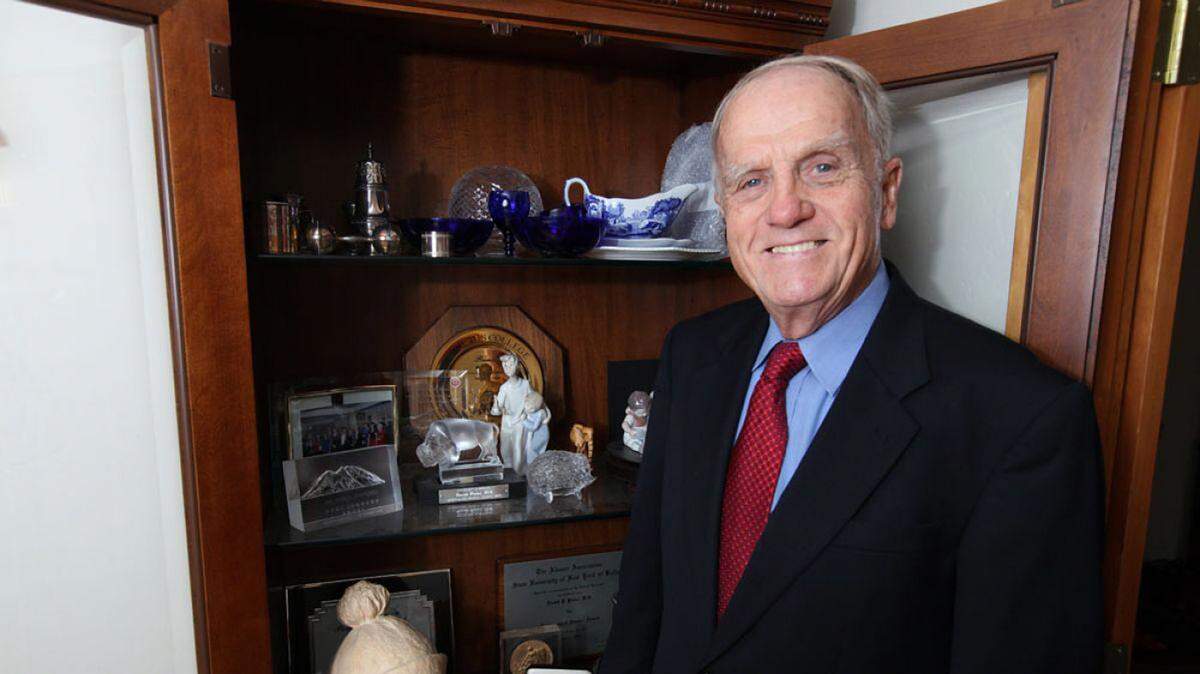
Dr. Donald Pinkel, the founding medical director of St. Jude Children’s Research Hospital who developed an effective cure for childhood leukemia, died at his home in San Luis Obispo on March 9. The pioneering doctor was 95 years old.
Pinkel started his medical career in the northeast, but his seminal work was accomplished at St. Jude Children’s Hospital in Memphis, Tennessee, which he ran from 1961 to 1973. While at St. Jude, he made it his mission to help children with acute lymphoblastic leukemia defy the odds.
Despite resistance from the medical establishment, which largely felt a cure for cancer was impossible, he developed an effective treatment for what was previously an incurable disease.
“The courage of the man was evident from the man from the very beginning,” Dr. Cathryn Howarth, who was married to Pinkel. “Speaking as a pediatric oncologist myself, I know how hard it was in the early days, how negative people were about treating leukemia.”
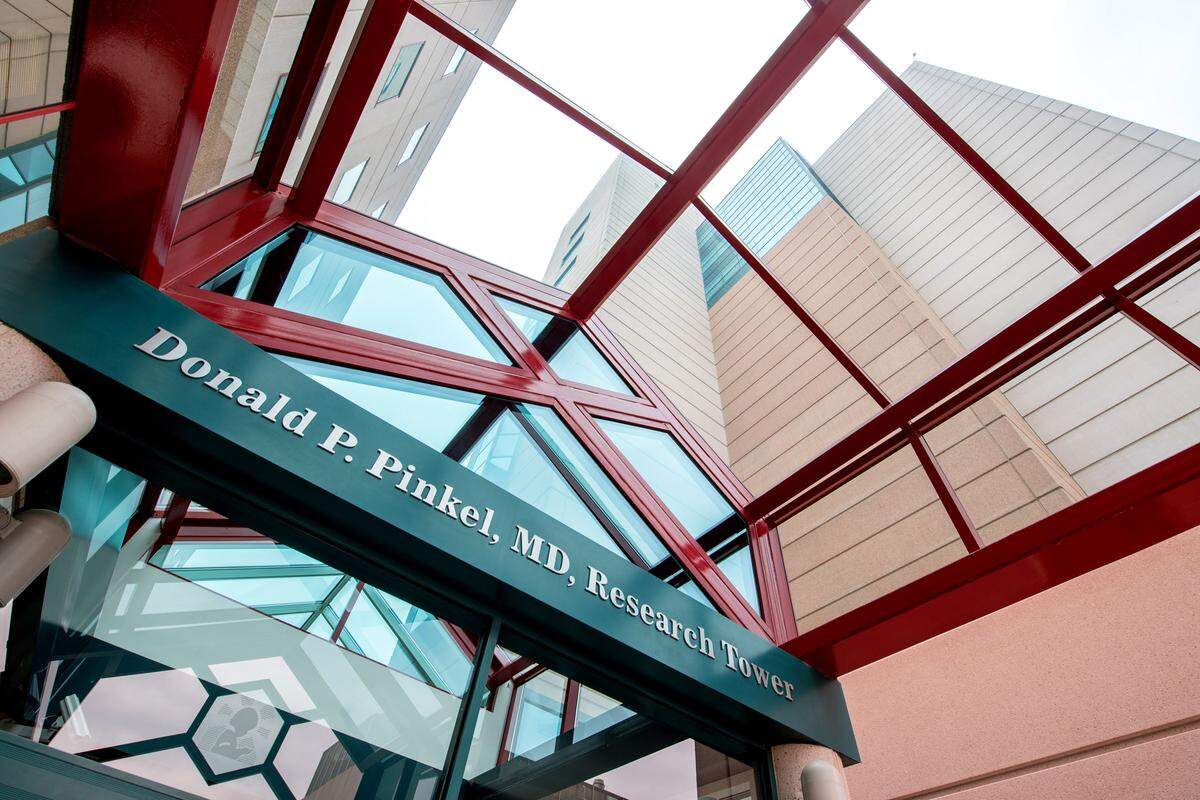
Despite the period of legalized segregation, St. Jude was the first integrated hospital in the South.
“What made me want to come to St. Jude was that we had the opportunity to take science and to meld it with great humanity,” Pinkel said in 2017 during a video interview for the dedication of the hospital’s Pinkel Tower.
After leaving his role at St. Jude, Pinkel worked in leadership roles at hospitals and medical schools throughout the United States.
He is described as a builder, not a stayer, in a profile about the doctor published in Smithsonian Magazine in July 2016.
In his later years, he worked as an adjunct instructor at Cal Poly and USC after moving to the Central Coast.
“Dr. Pinkel and my father had the same unyielding hope and were equally audacious in their determination that childhood leukemia could be vanquished,” the actress Marlo Thomas, whose father, the comedian and actor Danny Thomas, founded St. Jude Children’s Research Hospital, said in a statement.
Pinkel’s research cured the most common form of childhood cancer
Acute lymphoblastic leukemia was the most common form of childhood cancer in the mid-1900s and had a near universal fatality rate.
When Pinkel joined St. Jude Children’s Hospital in 1962, it was with the goal of developing a cure for this disease, according to a biography of the physician by St. Jude.
Pinkel and his team identified four key obstacles to curing childhood leukemia: drug resistance, drug toxicity, meningeal relapse and pessimism, the hospital said.
“The disease was neglected, and no one was doing much in the way of research or in actual care because they were so frustrated,” Pinkel told his daughter, Mary Pinkel, in an interview archived by the Cancer History Project. “(Children) were given a fatal diagnosis and sent home to die.”
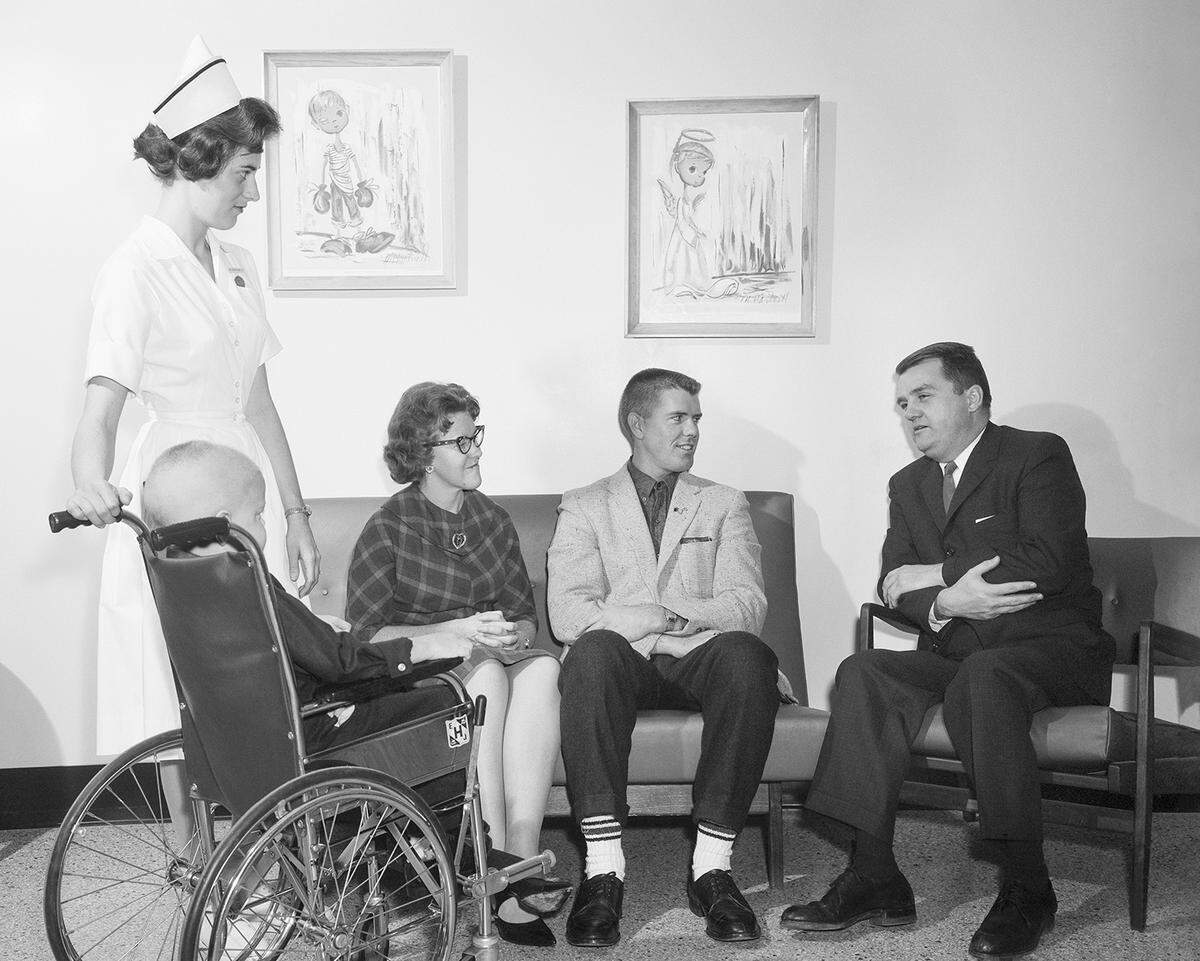
In an effort to cure acute lymphoblastic leukemia, Pinkel and his team developed a new treatment regimen at St. Jude called Total Therapy, which combined radiation therapy with cancer drugs injected directly into the patient’s spinal column.
The team researched Total Therapy through a series of studies beginning in 1962. The idea that cancer could be cured was met with intense skepticism by the medical establishment. Typically, children with leukemia were offered mostly palliative care.
“My hypothesis was that there were some leukemia cells that were sensitive to one drug and other cells that were sensitive to another. But if we used all these drugs at once and hit them along different pathways, we could permanently inhibit the development of resistant cells,” Pinkel said in an interview with Smithsonian Magazine.
In 1962, Pinkel introduced Total Therapy to a cooperative research group sponsored by the National Cancer Institute, which rejected his plan. St. Jude Children’s Hospital, under Pinkel’s leadership, then left the organization.
After a series of scientific iterations, the breakthrough moment came about in the Total Therapy Study V in 1967-68, which showed Total Therapy led to a 50% cure rate for childhood leukemia patients, according to St. Jude.
Total Therapy was also the first treatment method for any form of generalized cancer.
St. Jude Children’s Hospital still uses the Total Therapy approach that Pinkel developed back in the 1960s to treat childhood leukemia today. Since refining the treatment, the survival rate for children with acute lymphoblastic leukemia grew to 94%.
“(Dr. Pinkel’s) tenacity as a researcher, his compassion as a physician and his drive to solve some of medicine’s most difficult questions have made him an inspiration to thousands around the globe,” St. Jude President and CEO Dr. James R. Downing said. “At St. Jude, we continue to honor his life by carrying forward his work, chasing big dreams and seeking the day when no child dies in the dawn of life.”
Pinkel pioneered health equity in the segregated South
Beyond his achievements in clinical cancer research, Pinkel advanced healthcare access for all children and aimed to bridge disparities in health outcomes by focusing on essential resources, like nutrition and safe housing.
When St. Jude founder Danny Thomas first approached Pinkel about running the hospital in Memphis, the physician was initially hesitant, according to a Smithsonian Magazine article.
People thought he was throwing away his career by taking a chance on an unknown hospital run by a Hollywood actor based in the southern United States, according to the Cancer History Project.
Pinkel was also concerned about working in a community were racism and segregation were the norm.
“Memphis was such a sad place medically, highly segregated, not much going on there scientifically. It would be a real challenge,” Pinkel said in the Cancer History Project.
He met with the hospital board members, who agreed with Pinkel that the hospital treat all patients regardless of race, and that the hospital be fully integrated with doctors, nurses and staff of all races, according to the Smithsonian Magazine.
Pinkel worked with Paul Williams, a prominent Black architect from Los Angeles hired by Thomas, to build a star-shaped hospital with a lot of common spaces to foster interdisciplinary exchange.
Under Pinke’s leadership, St. Jude also devoted significant resources to treating sickle cell anemia, a hematological condition that heavily impacts Black Americans, according to the Smithsonian Magazine.
Pinkel also wanted St. Jude to treat all patients, regardless of their family’s ability to pay.
“The main motivation for me was the big vacuum, in terms of civil rights, science, and providing a service that was not being met in that part of the USA for both white and black children,” Pinkel said in the Cancer History Project.
Pinkel also developed supplemental nutrition programs to help children with cancer experiencing hunger. This program served as the foundation of the federal Special Supplemental Nutrition Program for Women, Infants and Children (WIC).
In a 1971 letter written to the Memphis newspaper The Commercial Appeal, Pinkel notes the ill effects of poor housing as well as nutrition on child health outcomes.
“To give medical care for illnesses without correcting their causes is like running on a treadmill,” Pinkel said in the letter. “To expand local child health care facilities without providing adequate food and shelter for all Memphis children is only to quicken our pace on the treadmill.”
In the Smithsonian Magazine article, Pinkel said he was called a communist for his commitment to treating all children regardless of their financial status.
Life after St. Jude Children’s Research Hospital
Pinkel spent about 12 years working at St. Jude Children’s Hospital before he decided it was time to move on in 1973.
That same year, he met a fellow pediatric hematologist-oncologist, Dr. Cathryn Howarth, at the Windermere Lecture in England. They were eventually married.
His next stop was Milwaukee, where he taught at the university medical college and practiced pediatric oncology at the local children’s hospital for about four years.
Then, he traveled to Duarte, California, where he spent four years at the City of Hope National Medical Center, before moving to Philadelphia to teach medicine at Temple University and practice at St. Christopher’s Hospital for Children.
He spent more time in Texas, traveling between universities and hospitals in Houston, Corpus Christi and College Station for about 16 years.
“He was never afraid to rock the boat,” Howarth said “The story of his career is one where he saw something that needed to be done or wasn’t correct, he didn’t hesitate to take it on.”
In 2001, Howarth and Pinkel moved to San Luis Obispo, and the esteemed doctor joined the biology department at Cal Poly, where he taught on an adjunct basis. He taught courses in medical virology, medical mycology and emerging infections at the university until he was 89 years old, Howarth said.
Everywhere he lived, he tried to find opportunities to sail, Howarth said.
He was also passionate about Russian literature and music. The duo traveled to Russia, Belarus and Ukraine and visited a children’s hospital in Kyiv, which has since been bombed in the recent conflict, Howarth said.
The family loved living in San Luis Obispo mostly because of the people in the community, she said.
Pinkel contracted polio as a young doctor before St. Jude
Pinkel was born in Buffalo, New York, on Sept. 7, 1926 in a family with a strong Catholic faith, Howarth said.
He was a bright child who taught himself how to read when he was just 5 years old, she said.
“I think he was a bit of a handful,” Howarth said.
The nuns at his Catholic school had him teaching some of his peers to keep him busy, she said.
He joined the Navy in 1944, and took coursework at Cornell University through the military’s education program. He went on to earn his medical degree in 1951 at what is now University of Buffalo, according to the New York Times.
Three years later, Pinkel contracted polio while working at the Army Medical Corps hospital in Massachusetts. He nearly died from the condition and was retired from military service due to his illness, according to a profile of the doctor published in Smithsonian Magazine.
He eventually recovered and was able to return to medicine. He worked at Boston Children’s Hospital under the mentorship of Dr. Sidney Farber, according to the Cancer History Project. He was still in a lot of pain as he recovered from polio and used braces and crutches while treating patients.
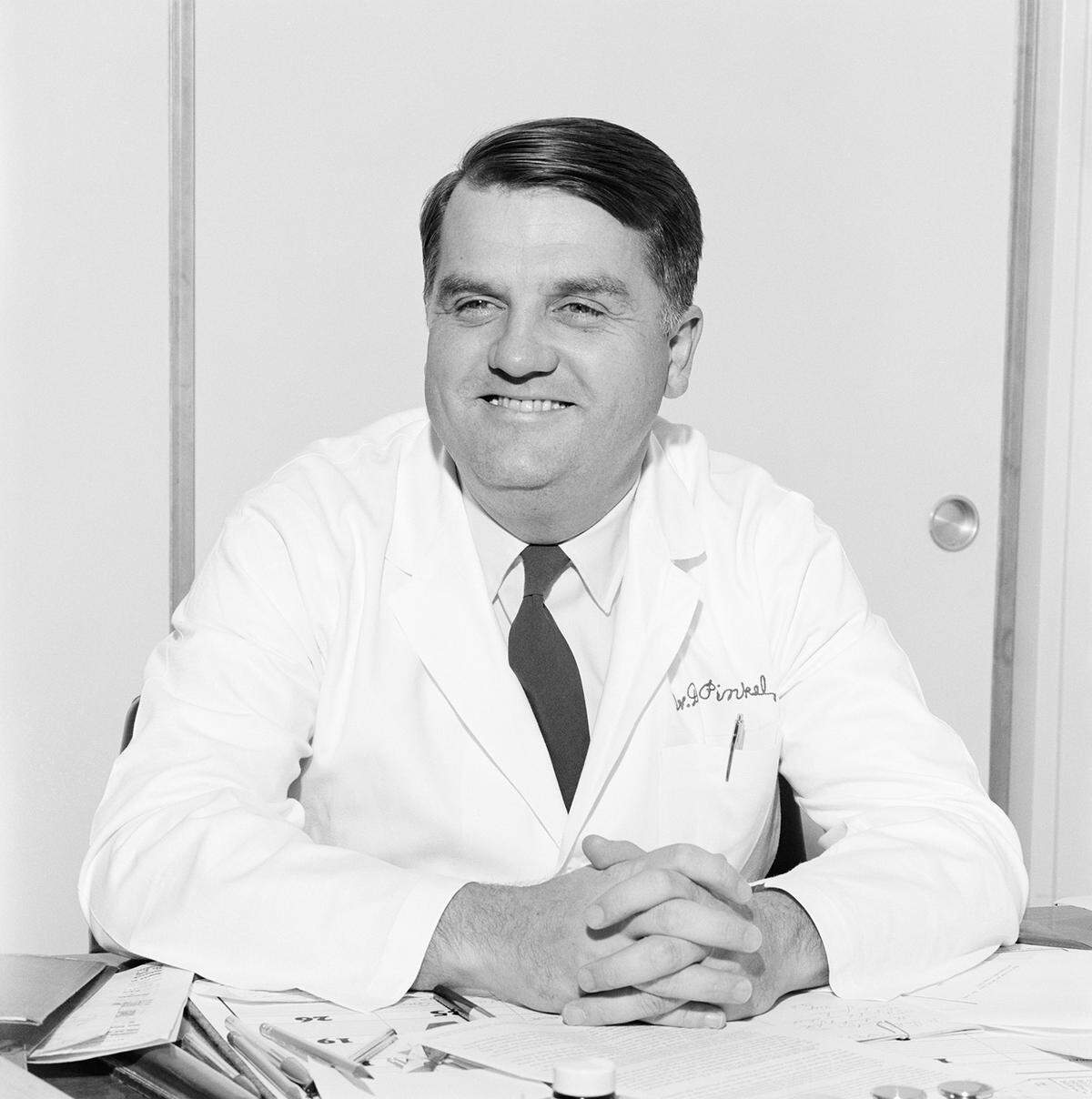
In 1956, Pinkel accepted a role as the first chief of pediatrics at Roswell Park Cancer Institute in Buffalo, according to the Cancer History Project.
His lungs were compromised by polio, and the cold winters in Buffalo made it so Pinkel was often sick with pneumonia, according to Smithsonian Magazine.
While searching for a hospital with a warmer climate in 1961, Pinkel was contacted by Thomas about coming to Memphis to run St. Jude Children’s Hospital, where he changed outcomes for all children with leukemia.
“Dr. Pinkel dared to dream big,” said Downing, the current president and CEO of St. Jude. “We owe a tremendous debt of gratitude to him. It’s because of what he accomplished, because of his leadership, because of the people he recruited to St. Jude, that we exist today. Dr. Pinkel’s legacy lives on through St. Jude and the countless lives saved through his work.”
Some of Pinkel’s early polio symptoms returned in his later years while living in San Luis Obispo, according to Smithsonian Magazine.
This didn’t stop him from enjoying swimming, reading medical journals and keeping up with his family.
Pinkel’s family included his wife, Dr. Cathryn Howarth, 10 children and 16 grandchildren.
How to support Pinkel’s mission
Pinkel supported UNICEF, Doctors without Borders (MSF) and St. Jude Children’s Research Hospital.
In lieu of flowers, donations can be made in Pinkel’s memory to any of these three organizations.
Funeral arrangements are being held at Reis Family Mortuary and Crematory in San Luis Obispo.
This story was originally published March 14, 2022 at 1:36 PM.