
A year ago, COVID hit SLO County. Here’s how we went from crisis to recovery
A year ago today, COVID-19 came to San Luis Obispo County.
It started with a single case, but it wasn’t a sneak attack.
It started slowly, but then grew into a full-on assault.
In late winter, as the new coronavirus spread across the country and other California counties began reporting their first cases, San Luis Obispo County had remained untouched, nestled equidistant between two major metropolitan areas hit earlier and harder by illness.
Then on a Saturday night, March 14, just after 7 p.m., a dreaded but not unexpected email arrived in the inboxes of local media.
“First Case of COVID-19 Reported in SLO County.”
Those eight words marked the beginning of a cataclysmic shift for San Luis Obispo County residents that would be swift, unrelenting and long-lasting.
Almost immediately, events were canceled. Schools sent kids home to learn by Zoom. All non-essential businesses in the county were ordered to close up shop.
Residents were ordered to stay in or near their houses and avoid seeing anyone they didn’t already live with.
“Wash your hands,” we were told. “Use hand sanitizer. Don’t touch your face.”
“Don’t panic.”
For a time, the world as we knew it came to a veritable standstill, as COVID-19 altered virtually every aspect of our lives.
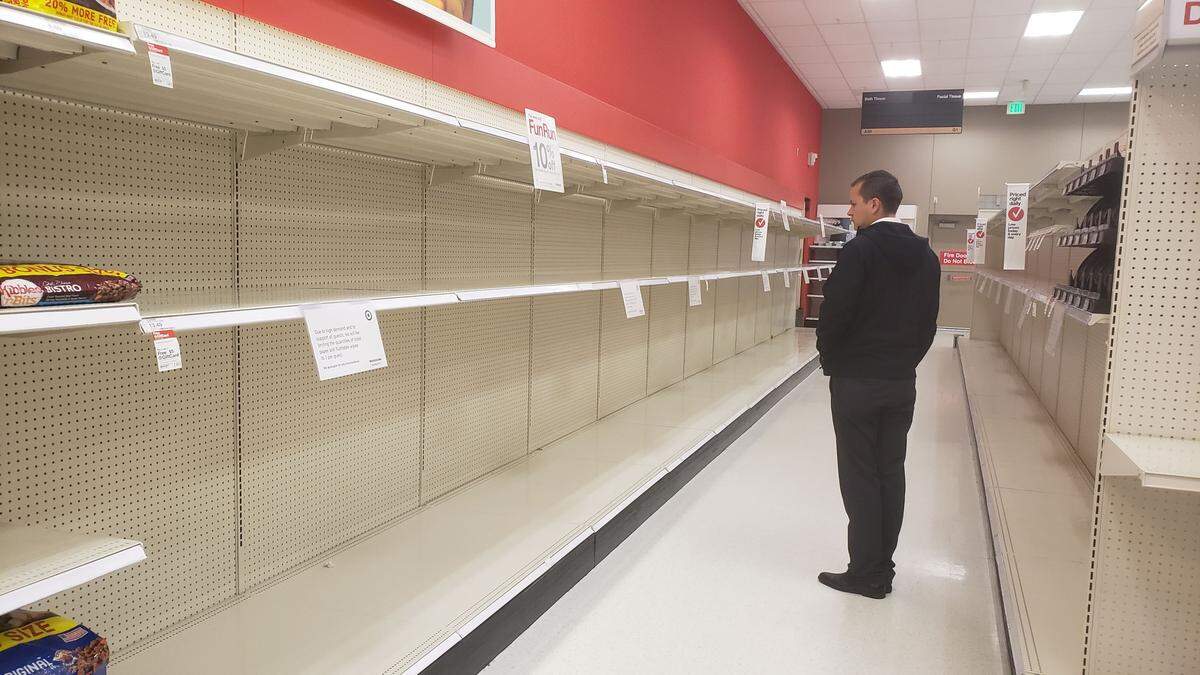
At the store, a rush on particular essentials created frustrating shortages. Suddenly, for several weeks, toilet paper was like gold. Clorox wipes were nowhere to be found.
At Cal Poly, experts and volunteers from a variety of disciplines turned the Rec Center into an Alternative Care Site in a matter of weeks.
At home, families buckled down, balancing remote work with remote school as the COVID case counts rose.
Eventually, the virus would sicken local people by the hundreds daily and claim many precious lives.
Today, 365 days since that first coronavirus case was confirmed, SLO County has recorded 20,040 more positive cases of COVID-19.
It has also recorded 251 deaths due to the virus.
Dozens of businesses have closed, unable to pay their rents or make ends meet in a time of social distancing and COVID restrictions.
In short, the virus’ impact on San Luis Obispo County over the past year has been dramatic and vivid — and it’s still ongoing.
Despite all the challenges, thanks to diligent safety measures, a trio of vaccines and loosening restrictions, we can see light at the end of the tunnel.
“There definitely is a feeling that we’re coming back,” CEO of the SLO Downtown association Bettina Swigger told The Tribune in a phone interview ahead of the anniversary of the county’s COVID shutdown.
“That feels really good.”
SLO downtown slowly returning to pre-pandemic life
Soon after SLO County issued a shelter-at-home order on March 18, cities across the area looked much like a scene from a post-apocalyptic movie — like all life had just suddenly disappeared, leaving behind only the buildings.
That week, on what would normally have been a Farmers Market night, downtown San Luis Obispo was a virtual ghost town with retail shops and restaurants closed, and no merry crowds of people loudly enjoying the Central Coast ritual.
This past Thursday night, however, presented a new scene: one of tentative rejuvenation.
Yes, Farmers Market is not back yet. But not even the rain — usually the great destroyer of plans in California — could keep COVID-weary people away from downtown now that businesses have been allowed to resume indoor operations.
People walked down the street, masked-up of course, carrying shopping bags.
Some lounged outside restaurants, checking out menus on their phones, while others sat around tables laughing and eating in a way that would have been unheard of six months ago.
At Woodstock’s Pizza on Higuera Street, the neon lights glowed on a group of four young men seated at a table inside the restaurant, enjoying a pitcher of beer and a slice of pizza.
It was a scene more reminiscent of the pre-pandemic era than 2020, if not for the parklet patio seating area now dominating several parking spaces out front.
After the dark days of the first shutdown, and then the subsequent one at the end of 2020, owners of the pizza joint are optimistic that there are happier days ahead.
“The saddest time honestly was walking into the restaurant, when we couldn’t be open at all and, you know, you just feel bad,” Woodstock’s owner Laura Ambrose told The Tribune on Friday. “So it’s nice to have it back for some use again, and of course we’re optimistic that we’ll quickly be able to get to more like 50%.”
The county re-entered the red tier of the state’s Blueprint for a Safer Economy earlier this month, which allowed local restaurants to resume indoor dining at 25% capacity.
Ambrose said this has helped to revitalize business, which dropped off significantly in the first months of the shutdown and then struggled somewhat throughout the roller coaster of state-regulated re-openings and re-closings — though she was quick to note that other businesses less well-equipped to do takeout only were definitely hit harder.
One thing that made all the difference throughout the craziness of the past year, though, was the support Ambrose’s business received from the city, she said.
“You know, of all the cities we’re in, San Luis Obispo is the most supportive and, you know, providing just exactly what we needed,” Ambrose said. “I mean, to the point that I’ve told several other cities that we’re in, ‘You should talk to our people in San Luis Obispo. Because they did it right. ‘”
New businesses are opening, vacant spaces filling up, SLO Downtown CEO says
Other hopeful signs of a return to normalcy line the downtown corridor as well.
Swigger said she was struck by a recent visit to Mission Plaza to check out the “SLO Lucky” light tunnel and the outdoor dining set up in the area.
“I was remarking to myself and to the people I was meeting that it’s the busiest that we’ve seen downtown in a while,” she said. “There’s just a lot of people. There’s pedestrians out, and they seem to be carrying shopping bags.”
Nestled among the signs of burgeoning re-activity, vacant storefronts still sit like retail skeletons, economic victims of the pandemic.
During the past year, downtown SLO and every other community in San Luis Obispo County have lost businesses, with owners citing coronavirus as a main reason they had to close down.
But Swigger said she’s been noticing on her recent walks through the area that there are numerous new businesses opening in those locations, and that “For Lease” signs appear to be being taken down in many of the open storefronts.
“Sometimes, these things sort of play out in ways that are unexpected,” she said. “Some businesses have done really well and some businesses are still struggling. There’s not a universal experience in this pandemic, other than maybe confusion.”
COVID vaccinations offer another ray of hope
Swigger noted that another huge, positive sign that the county is moving in the right direction is the recent announcement they will begin to vaccinate food workers, as well as other high-risk groups.
“The most gratifying thing for me though ... which has literally brought me tears of gratitude, is learning that restaurant workers are now eligible to get vaccinations,” she said. “Our restaurants have been open, many of them the whole time, and providing us takeout and a little bit of a splurge, and the workers have been just really hit by this. So to see that eligibility category open up just makes me feel a profound sense of hope for what things are gonna look like a couple months from now.”
As of Thursday night, 89,607 coronavirus vaccine doses have been administered in San Luis Obispo County, according to data from the California Department of Public Health.
“We are making great progress,” Public Health Officer Dr. Penny Borenstein said during a media briefing Wednesday. ”About three quarters of all of those doses are taking place through our public health mass vaccination sites ... but we are seeing more and more vaccination opportunities in the community, especially through pharmacies.”
Borenstein said several pharmacies are expected to start receiving vaccine shipments straight from the federal government, while the Public Health Department will continue to distribute some of its allotted doses to its partner pharmacies.
As of March 5, the Public Health Department has administered at least one dose of coronavirus vaccine to 36,264 SLO County residents. Of those, 20,212 have received their second dose and are fully immunized.
The numbers don’t include the Johnson & Johnson single-dose coronavirus vaccine yet, because the county only began administering them this week.
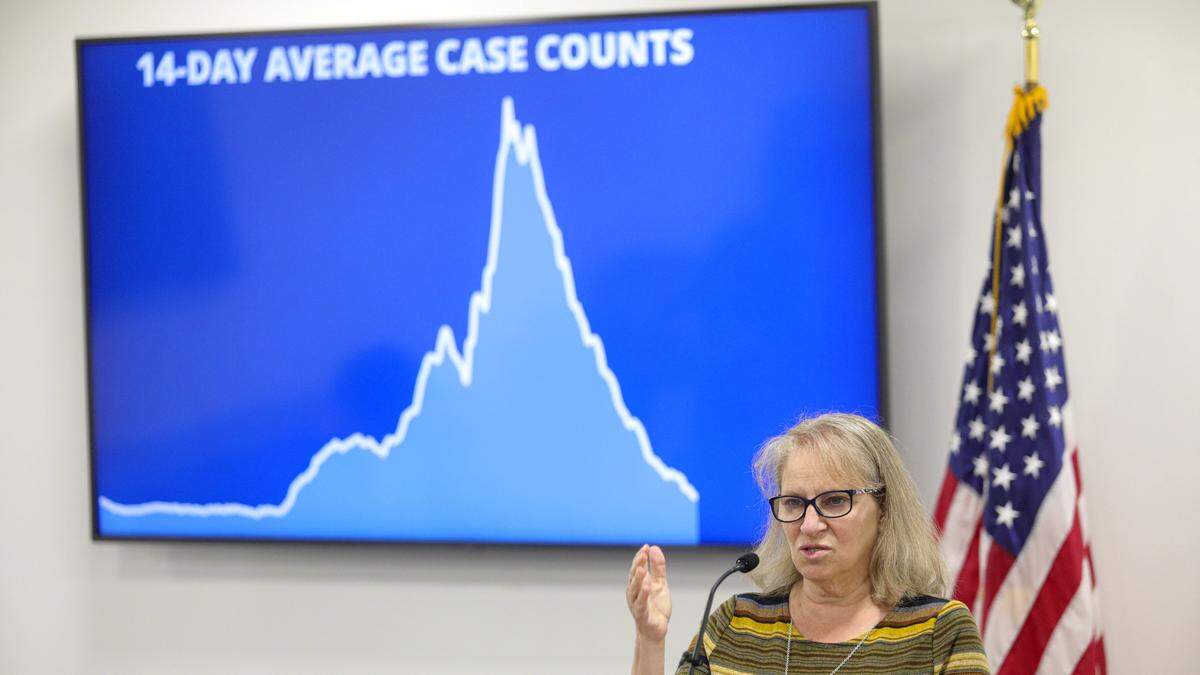
SLO County Public Health warns we’re ‘not out of woods’
With the return of indoor businesses and the rise in local vaccinations, it would be easy to assume everything is close to back to normal in SLO County already.
Borenstein warns though that we aren’t clear of the pandemic just yet.
“We are still seeing a high number of cases compared to when we had nothing in March, April, May,” she said. “We are not out of the woods.”
Borenstein urged people to not get complacent and to continue to use “all the protective measures that we continue to recommend, and we really will put this pandemic behind us in a relatively short period of time.”
As we look back on the past 12 months, and look forward to the future, one thing is clear: SLO County battled coronavirus. There have been victories. There have been losses.
But we might finally be winning the war.
“We will get there. We’re not that far off,” Borenstein said. “So please stay the course.“
This story was originally published March 14, 2021 at 5:00 AM.
%20Cropped.jpg)