
Is coronavirus a threat to California condors?
Are California condors potentially vulnerable victims when it comes to the fast-spreading COVID-19 virus that is killing thousands of humans? Will the 25 juvenile condors released during the past five years from the mountains above San Simeon be in harm’s way?
“The condor flock appears to be doing very well during this unprecedented time,” according to Joe Burnett, lead biologist for the Ventana Wildlife Society. The group is an integral component of the California Condor Recovery Program.
These giant birds “are fairly resilient to naturally occurring diseases. I’m hopeful that will make them more resistant to COVID-19,” Burnett said via email.
“Thus far there have been no documented COVID-19 cases in birds, but we are keeping a fairly close eye on the condor flock,” he wrote. “No doubt, you just never know.”
Due to the shelter in place and social-distancing protocols, VWS is counting heavily on “GPS transmitters and our live-streaming cams to monitor the flock,” Burnett explained.
All 25 juveniles released above San Simeon are fitted with GPS technology.
That’s “a saving grace,” he said, and a “really great example of technology further aiding conservation.”
But Burnett wrote that he’s “still as worried, if not more so, about the impact of lead-poisoning mortalities on the flock as I am of COVID-19.”
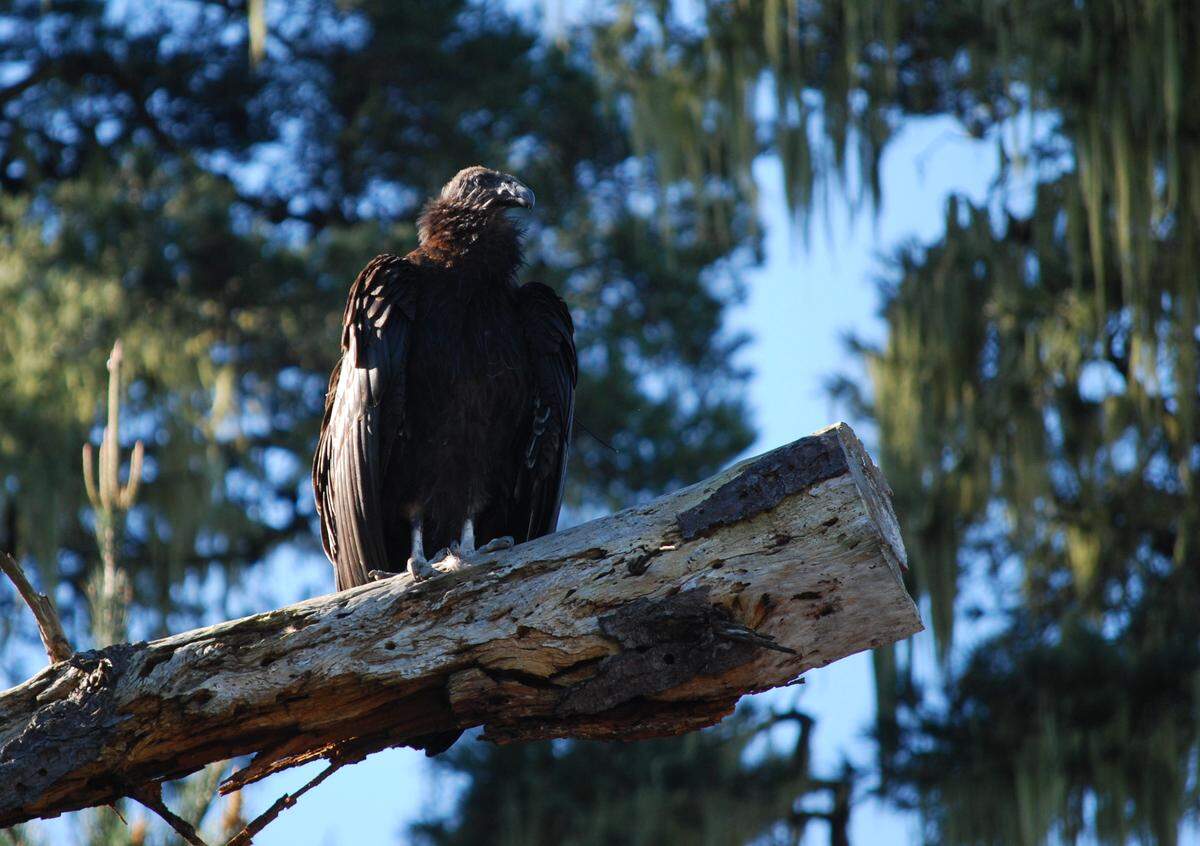
There are 101 condors flying free in central California, and 518 total condors in the West. The birds, which boast 9-1/2-foot wingspans, are still bouncing back from near extinction 35 years ago.
Lead poisoning threatens California condors
Even though the use of lead ammunition is illegal in California, the possibility of increased lead poisoning for condors is very real in this time of social distancing, VWS executive director Kelly Sorenson explained.
Condors become very sick – and many die – when they devour carrion killed with lead ammunition.
A recent study by the San Diego Zoo – with cooperation from the U.S. Fish and Wildlife Service, UC Santa Cruz, UC Davis and other conservation organizations – reveals that 67% of adult condor deaths are linked to lead poisoning.
But at this moment “it remains difficult for hunters and ranchers to find non-lead ammunition at stores,” Sorenson wrote in an email.
Moreover, VWS has been “forced to pause our free non-lead ammunition program” because California’s Safety for All Act prohibits the organization from sending “fully loaded cartridges by mail to those we wish to help,” Sorenson wrote.
Providing hunters and ranchers with free non-lead ammo must be done face-to-face, and social distancing makes that policy impossible, Sorenson continued.
However, notwithstanding the shelter-at-home protocol, Sorenson said VWS is “happy to assist hunters and ranchers in condor range who reload their own cartridges by sending qualified participants their (non-lead) bullets by mail.”
Big Sur nest cam
Thanks to the live-streaming condor cam in the Big Sur redwoods, viewers recently witnessed that a new egg waits to hatch in the nest seen on the so-called Big Sur Condor Nest Cam.
That egg first appeared in the nest on Leap Day, February 29, 2020, and Burnett expects it to hatch “in a few weeks.”
The female in the nest, named Redwood Queen, was originally hatched in captivity at the Los Angeles Zoo in 1998, and was released in January 1999. Years later, following her pairing with condor No. 167, she has produced two eggs.
The Big Sur Condor Nest Cam, which is live between 10 a.m. and 4 p.m. daily, can be viewed by visiting www.ventanaws.org.
Additional information on non-lead ammunition and the California Condor Recovery Program is available on that website.