
Millennials make up the largest share of homebuyers in California. How do they do it?
READ MORE
Millennial Real Estate Market
The millennial generation now makes up the biggest group of California homebuyers. How are they able to afford homes despite a statewide housing shortage and affordability crisis that make buying difficult?
Expand All
.JPG)
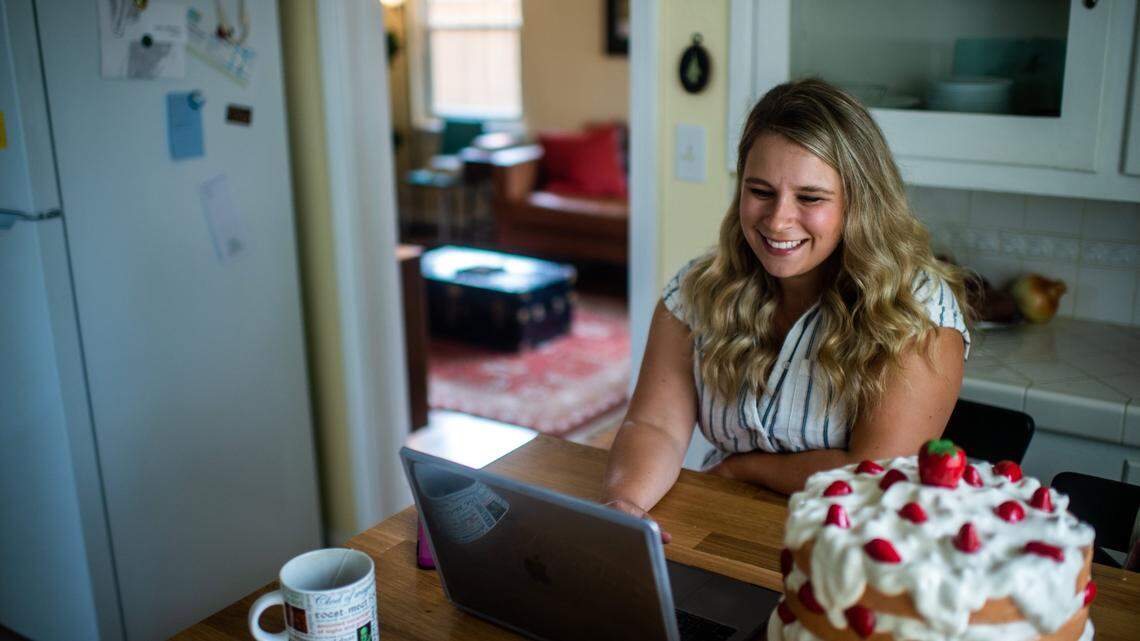
Chancellor and Hailey Veal were ready to give up house hunting after four months of bidding wars and rejection. Finally, in May 2020, they found their dream house in a South Natomas model home.
The white walls, wood floors, granite countertops and clean carpet of the newly built house epitomized fresh opportunity, and made the Veals feel as though their luck had finally changed.
“We walked in, and it was almost like the angels sang down from heaven,” said Chancellor Veal, 32.
Four months and $370,000 later, the couple moved in, joining the ranks of millennials who have said goodbye to landlords.
Their generation now makes up the biggest group of California homebuyers, accounting for 39.1% of sales, according to the California Association of Realtors.
Millennials, considered to be those born between 1981 and 1996, are investing in their own set of keys despite living through a national student debt crisis, two economic crashes and financial inequities their baby boomer parents never experienced.
In California, a statewide housing shortage and affordability crisis make buying a home even harder.
The median price tag for a Golden State house exceeded $800,000 in 2021, up 39% from last year. Meanwhile, the median household income was $75,235 in 2019, according to recent U.S. Census Bureau data. Thirty-four percent of Californians during the same year were living near or at poverty levels, a recent Public Policy Institute of California analysis concluded.
.JPG "SAC_DJI_0239 (2).JPG")
Millennials who successfully purchased a house often have at least one of several factors in common, including more cash on hand, wealthier parents, a partner to invest with or limited student debt.
Others are fighting for homeownership against the odds.
Chancellor Veal, an attorney for the state, and Hailey Veal, a 28-year-old social worker, have a collective $300,000 in student loan debt. They budgeted for a $375,000 house, which meant some of the homes in swankier Sacramento neighborhoods were out of reach.
They didn’t want to leave their native California and decided to stay in the capital area after renting a three-bedroom house in Arden-Arcade for a year and a half.
To lower costs, the couple took advantage of financial incentives the developer was offering to fill the homes. Hailey Veal’s mom also gifted the couple $10,000 to help with the down payment.
“If we didn’t get that gift, our budgeting and things of that nature would have been way more intense,” Chancellor Veal said in a phone interview with The Sacramento Bee. “That gift really propelled us into the position to see what we could qualify for.”
The 1,800 square-foot house leaves space for their 1-year-old son Grayson to have his own room, and for Chancellor Veal to sprawl out his collection of sports cards, jerseys and comic books in what he’s dubbed his “man cave” of a spare bedroom. If they choose to have another child, they won’t have to move.
The backyard is small, “but it’s enough,” Chancellor Veal said.
Others are still waiting for their California Dream.
Fighting to stay in the Golden State
Alonso Ramirez, 33, wanted his 4-year-old daughter to experience the same Southern California childhood he enjoyed after immigrating from Peru to Los Angeles County at 13.
Ramirez, an Ontario city employee, and his wife, Sheryl Wiltsey, 34, rent a two-bedroom townhouse in Montclair for $1,900 a month. They love how close the family lives to the coast, and how little time it takes to get to Mt. Baldy for a hike in the snow.
But with a second baby due in October, Ramirez said his family can’t afford the three-bedroom home the two have in mind for raising kids.
The couple has $120,000 in student loans to pay off, and they would struggle to save the “bare minimum” $20,000 an agent said they’d need for a small down payment and fees. And with a $375,000 budget, they’d have to “move out to the middle of nowhere,” Ramirez said he was told.
Instead, Ramirez and Wiltsey, who stays at home with their daughter due to child care costs, are considering a move to Idaho or Oregon. They are cheaper states, but still boast the kind of natural beauty the family loves about California.
Data underscore that desire to leave California in this age group.
Even though recent University of California research finds no evidence of a “California exodus” of wealthy residents, middle- and low-income residents experience life in the state as too difficult.
Between 2015 and 2019, hundreds of thousands of these Californians fled state lines, according to the Public Policy Institute of California.
The decision often comes down to housing.
In a March 2021 survey, the institute found that 90% of respondents worry about housing affordability, with 43% saying they would contemplate a move due to costs. Thirty-three percent said they’d relocate out of state.
The typical single-family home in Idaho cost $441,000, according to Zillow, and $490,000 in Oregon. The median sale price for a home in Texas, another popular destination for Californians, is $330,000, per the real estate brokerage RedFin.
Ramirez said he has compared what he can afford in other states to California prices, even with a likely lower salary, and concluded “it kind of makes sense to leave.”
But the thought still stings. Ramirez’s family found sanctuary in California 21 years ago after fleeing Peru amid government turmoil. It’s been home ever since.
“It really hurts, because in a way it feels like my family was kicked out of a country, one home already, and again, for reasons outside of my control, I feel like I’m being kicked out of California,” Ramirez said. ”I don’t want to leave for a second time in my life and start over again. I want to fight for this and make it work and live here and give my son and daughter the awesome childhood I had in California. But time and again, things are proving more difficult for me.”
Millennials face historic challenges
Millennials face higher costs of living than their parents.
The median sales price for a new, single-family home in the West was $69,600 in 1979, according to U.S. Census Bureau data. That’s $246,545 when adjusted for inflation using the U.S. Bureau of Labor Statistics calculator.
Buying a similar home in 2020 would cost $412,600.
In California, the median price tag for a single-family home hit a record $818,260 in May.
While housing costs doubled or tripled, wages didn’t. Compensation rose 17.2% since 1979, according to the Economic Policy Institute.
Older millennials additionally attended college or started their careers during the Great Recession. Tuition also was starting to rise faster than wages or inflation. By the time some of the youngest millennials graduated college in 2018, their loans averaged $29,200, per a 2019 report from the Institute for College Access & Success.
Then the economic turbulence of a pandemic hit, and housing prices again jumped sharply.
Millennials are more educated than their parents. Yet the conditions they face make it more difficult to move out of their family home, marry or have children, a 2019 Pew Research Center report said.
“Inequality has been steadily growing since the 1970s. If you’re a baby boomer, you were able to make some progress before that was too advanced,” said Chris Tilly, an economist and professor of urban planning at UCLA.
“Just think about essentially making the same wage that your grandparents may have made after controlling for inflation, and that lets you know what (millennials) are up against.”
Ashley Dixon, lead planner for the financial advisory group Gen Y planning, also said her clients face more debt and wage discrepancies than previous generations.
“Parents, grandparents, it was so much simpler ... no credit cards and student loans,” Dixon said. “The debts that are available for us to acquire now are tremendous. They had cash and maybe some individual stock, and that’s how they built their wealth. And they didn’t have the huge wage discrepancy for a long time.”
Some millennials still stand to gain from their parents’ deep pockets. Their generation can expect to inherit a portion of the trillions — some estimates predict $30 trillion, others up to $68 trillion — that will be passed down from older generations over the next few decades in what’s been dubbed the “Great Wealth Transfer.”
But not everyone will benefit.
Black and Hispanic families have “considerably less wealth” than their white counterparts, 2019 Survey of Consumer Finances data show.
In the Golden State, white and Asian families represent the majority of wealth and are more likely to own homes, a 2020 Public policy Institute of California report found.
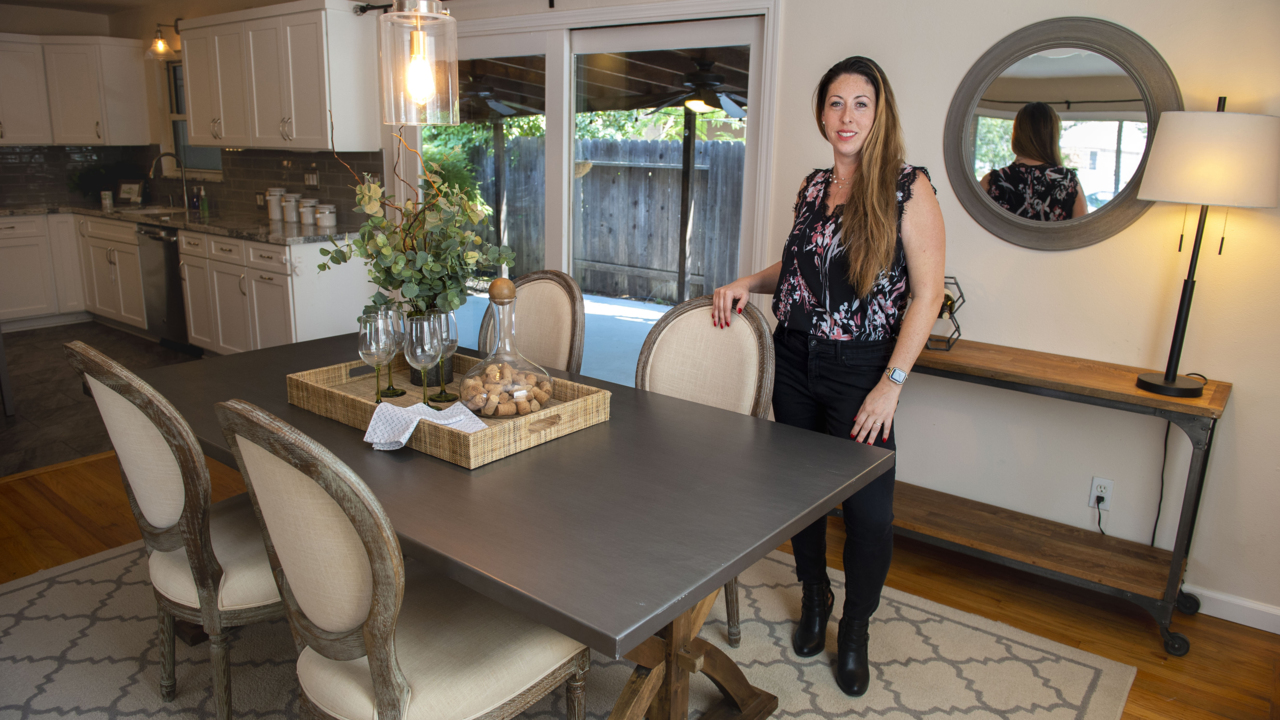
“I don’t want to be a Debbie Downer, but it’s the accessibility to generational wealth,” said Sacramento real estate agent Leanna Halldorf, who specializes in helping first-time buyers.
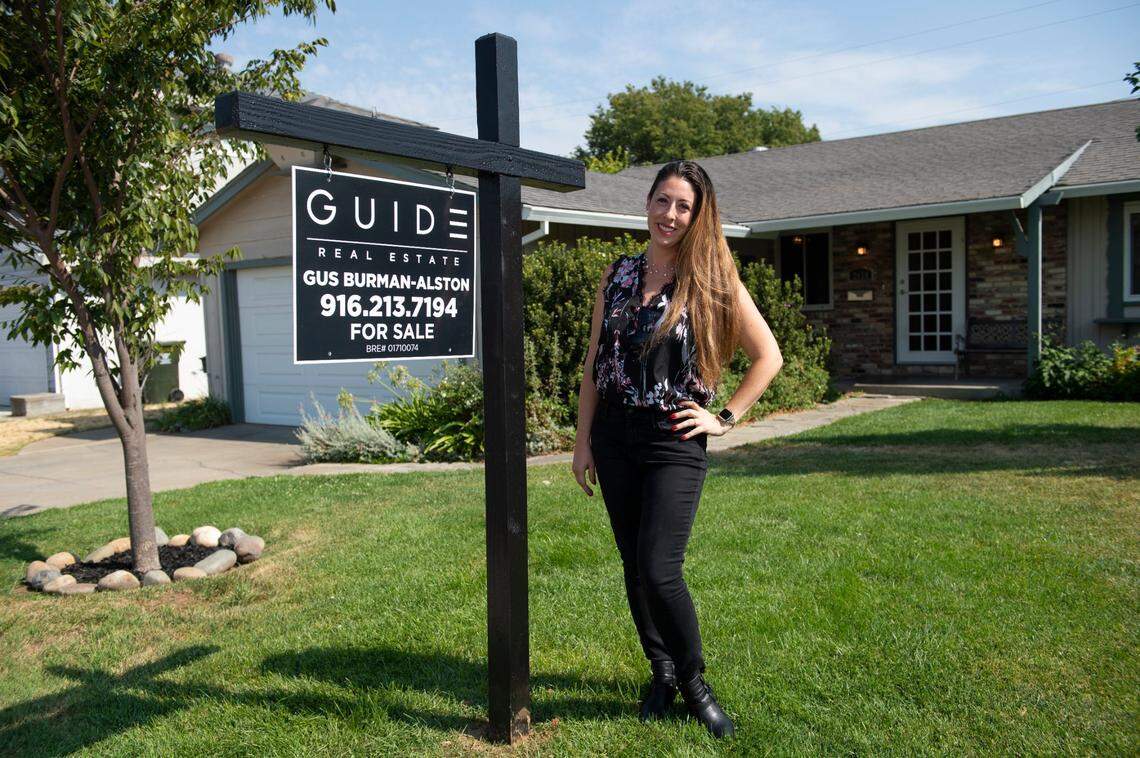
Halldorf, a 34-year-old millennial, said she’s noticed some in her generation are able to compete in the housing market because they frequently have family members helping with the down payment or closing costs.
That access to funds disadvantages hopeful owners “who don’t have that privilege,” Halldorf said.
Assemblyman Alex Lee, a 26-year-old San Jose Democrat, said obstacles to homeownership boil down to a dearth in supply combined with a generational and racial wealth gap.
Lee said the state must increase its housing supply to close an estimated 3.5 million-unit shortage and drive down prices. This year, the Legislature will consider a handful of bills that aim to increase the number of duplexes or small apartment buildings in transit- and jobs-rich areas and single-family neighborhoods.
But Lee said that should just be a starting point. He wants the Legislature to reexamine Proposition 13, the decades-old property tax law that he believes exacerbates financial inequities. He also wants to make California a friendlier place for low- and middle-class residents who have struggled to obtain upward mobility.
“Whether or not you make six figures working contract at Google or you’re a janitor working at Google,” Lee said, “it’s important that you have a place to live here.’’
Lee, the Legislature’s youngest member, still lives with his mom. He has no plans to move out.
Getting strategic to buy a home
Emilio Perez and Noel Pacheco married after eight years of dating in February 2020, and spent the first several months of their marriage searching for their perfect home.
They had a few things working for them, a few things against.
They weren’t overwhelmed with student debt. Pacheco, 30, had already paid off his $23,000 in loans, and Perez, 28, is on an income-based repayment plan for the $13,000 he still owes. They were prepared to drain their savings account for a down payment and moving costs.
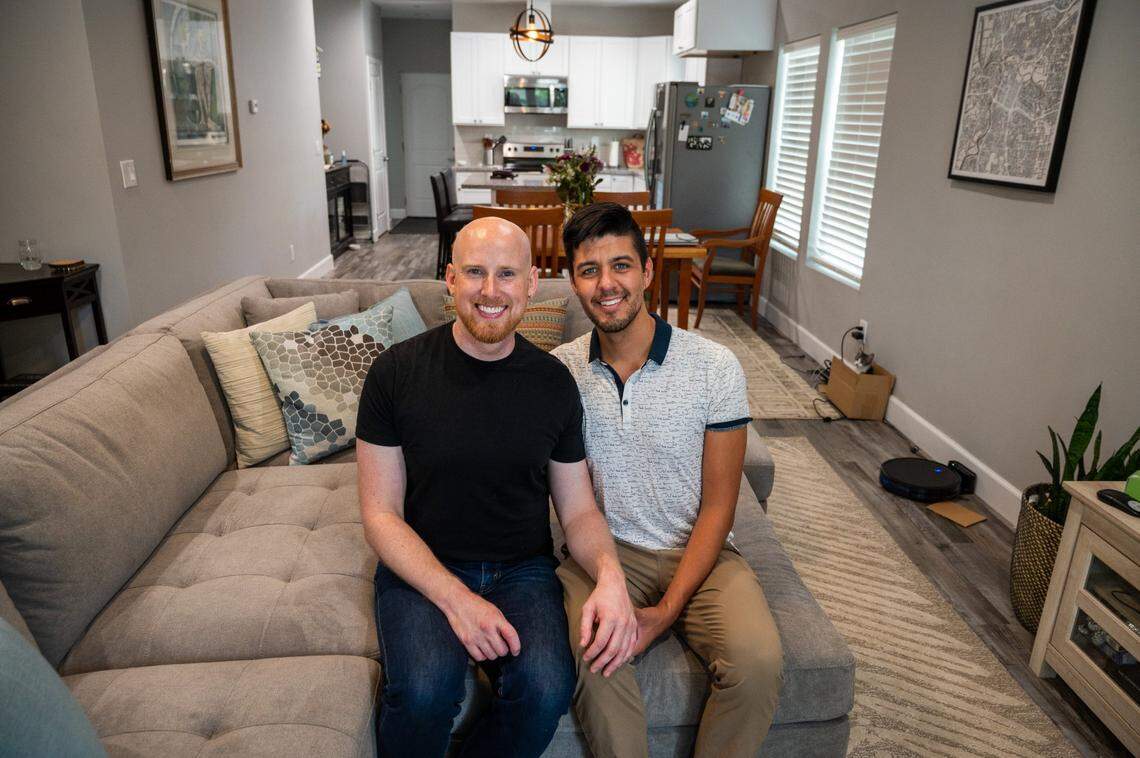
But they didn’t have the kind of cash on hand necessary in the pandemic-hot market. Pacheco said seven of their offers were rejected.
So they got creative.
Instead of narrowing their sights on a single-family home, they got pre-approved for loans that would also cover a multi-family unit. That way, they had a larger loan to work with in their hunt. They could afford the resulting bump in the down payment.
They ended up paying $730,000 for their 1,300 square-foot, three-bedroom, two-bathroom Oak Park house with an accessory dwelling unit on the property. The $2,325 they charge in rent for the 1,200 square-foot, three-bedroom, two-bathroom accessory dwelling unit on the property covers an estimated 55% to 60% of their mortgage.
Pacheco, a civil engineer, said he sees their success story as evidence that California needs to keep building different types of housing.
“Being able to buy a home in Sacramento, allowing ADUs to be built which hadn’t always been possible across the state, that’s how policies are really affecting how real people live their lives,” Perez, a legislative employee, added.
Halldorf, the real estate agent, said applying for a multi-unit property is a smart move for some of her clients, because they can qualify for a higher-priced home and then pay some of the mortgage with income from renters.
She also said the best path toward homeownership is flexibility, whether that means cutting an extra bathroom from your list of requirements or looking at different neighborhoods.
“Your first house doesn’t have to be your dream house,” Halldorf said.
Planting the seeds for a backyard
Laurel Harrison, 27, works with a public affairs firm and spent three years renting a 500-square-foot midtown apartment before she bought her home last October. She wanted a house in a neighborhood where she could settle in and get to know the neighbors. She hoped for a backyard where she could plant tomatoes, with space to stretch out during the long days of remote work.
But she knew with her $450,000 cap she couldn’t afford anything “super fancy, or super big.” She settled on a 1,200 square-foot, two-bedroom, one-bathroom East Sacramento cottage. Because it was over budget, she needed help from her parents.
Harrison has since repainted the entire exterior, and chose yellow for the interior walls. She loves cooking in the “old school kitchen” with a Wedgwood gas stove. A neighbor brings her coffee on weekend mornings.
She needed urgent electrical work done and a new fridge.

But she’s proud of her investment. The majority of her friends bought a house with their partners, though her boyfriend has since moved in.
“I do love that there’s this element of, if I wanted to paint my living room rainbow stripes, I could,” said Harrison. “Knowing it’s a place I can make into my own is nice, something I can enjoy.”
Harrison now has a yard full of roses, cherry tomatoes, wildflowers and herbs.
Next year, she wants to add basil, peppers, more tomatoes and squash.
This story was originally published August 11, 2021 at 5:00 AM with the headline "Millennials make up the largest share of homebuyers in California. How do they do it?."