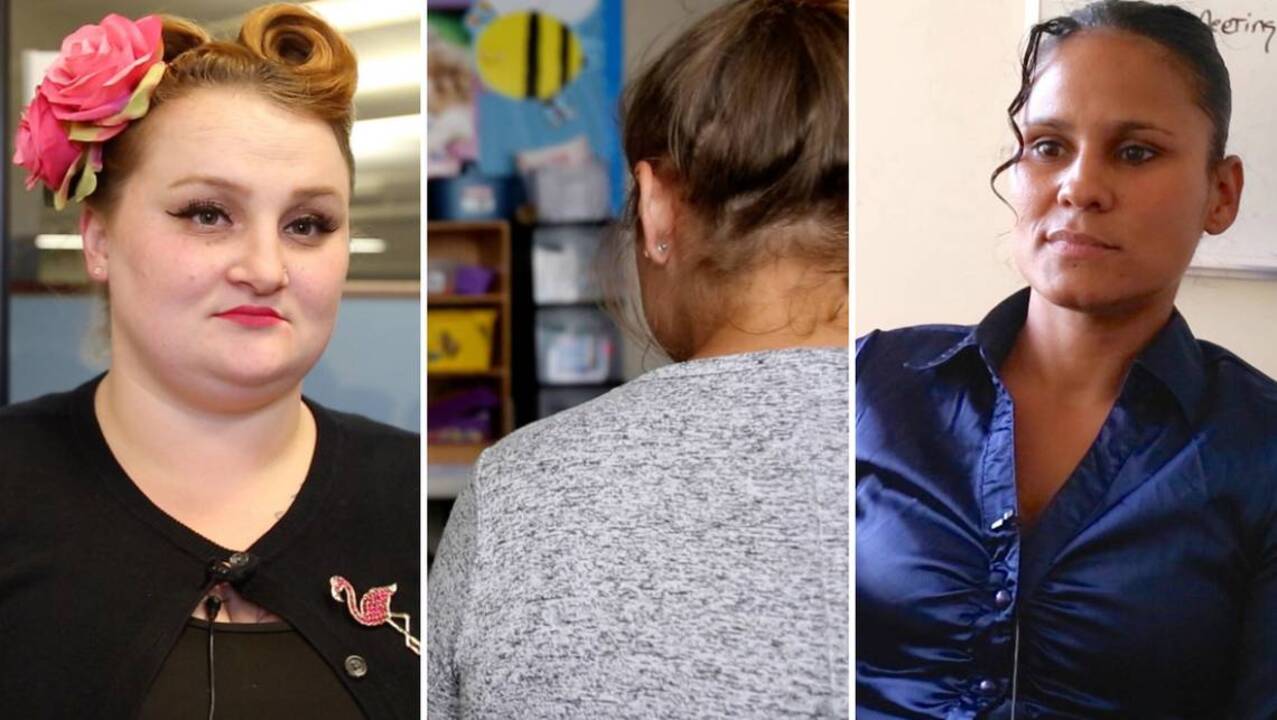
She was a hospital worker. He sold her for sex before, during and after her shifts
READ MORE
Slaves of the Sex Trade
Women and children are sold for sex every day online and in the streets of Fresno. Getting them out can be difficult, but some are trying.
Expand All
At her lowest point, the days seemed to stretch on forever. Eight hours a day as a hospital administrator, five hours – sometimes more – as a prostitute.
He would wake her up at 4 a.m. to walk the streets. She hated it – not that the house calls were much better. But when she begged to stop, he would convince her the fault was hers. Eventually, she would apologize and allow him to drop her off before the sun was up.
“He wanted at least $300 before I went to work at the hospital,” she said.
So she would work the streets for three hours before starting an eight-hour day scheduling appointments in the nephrology unit of a San Diego hospital – a job she had enjoyed before she met him. He eventually forced her to have sex with men during her lunch break, in addition to before and after work. On the weekends, he took her to neighboring cities – a common tactic to avoid law enforcement or reach a new clientele.
“If it were up to him, I would have never slept,” she said.
The mood-altering drug Xanax helped with the anxiety stemming from the intense guilt she felt. She was ashamed to talk to her friends and family – not that she could have if she wanted to. He had her phone now, and he made sure she never heard about her mother’s attempts to contact her.
This woman, now 34, is one of thousands who are sex-trafficked in California each year and one of hundreds of victims now living in the central San Joaquin Valley.
The Fresno Bee met with her and verified her identity, but it does not identify sexual assault victims.
In September, she sat on a metal folding chair in the office of Breaking the Chains, one of the Valley’s leading advocacy and recovery groups for survivors of human trafficking. The office’s location is a secret. Its magnetically locked doors and heavy curtains aim to give a measure of privacy and security to women desperately in need of both.
The office is one of the nonprofit’s several locations throughout Fresno. Breaking the Chains offers advocacy services and 24-hour residential services, as well as courses designed to help women cope with what has happened to them and keep from falling back into prostitution.
This woman has lived in the shelter for about four months – her second stint with Breaking the Chains. Like many others in her situation, it took a few tries to get help.
She could easily be mistaken for a woman in her mid-20s. She has a young face, with light eyes and brown hair with just a splash of blonde.
As she speaks, she fights back tears. This is difficult. She’s nervous. It’s her second time telling a stranger about what happened to her. The first was at Community Regional Medical Center, where she told a nurse practitioner who eventually referred her to Breaking the Chains.
“It’s just – I never thought this could happen to me,” she said.
Trafficked at 30
The first 30 years of her life went pretty much according to plan. She was raised in a two-parent home in Fresno County. She was never abused. She was a good student and a soccer player at her high school.
She eventually graduated from San Joaquin Valley College with a vocational degree in health-care administration. She found a job in San Diego. She began to lose the large amount of weight she had gained after her father died.
She still felt overweight and suffered from low self-esteem when she first met him – the man who would later traffick her – on an online dating app. She knew nothing about trafficking and had never been involved in any crimes.
“He was really charming and – I feel so embarrassed about it now,” she said with some light laughter. “Because I was in love with him. And he had different intentions, but he made me feel like he was in love with me, too.”
She was living with a friend and looking to move out. He told her he had a way for her to make some extra money. She turned him down at first, but her living situation became more contentious.
“He told me to just do it one time, and I said OK,” she said. “That was a lie. It wasn’t just one time.”
In fact, it was many, many times over the next year.
Within a week, she had enough money to put down a deposit on an apartment for herself and her trafficker. She was shocked by how much money she could make on the streets. He soon posted advertisements for her online. Some of the men she was forced to have sex with knew her trafficker. Some became regular customers. Some were total strangers.
He was never violent, she said, because she always caved into his demands. Knowing what she knows now, she thinks he probably would have hit her had she not acquiesced.
She was aware the man she thought was her boyfriend had served time in prison on prostitution and pandering charges. She believed he would never do that to her – even as he did. He eventually began taking her hospital paychecks as well as her prostitution money.
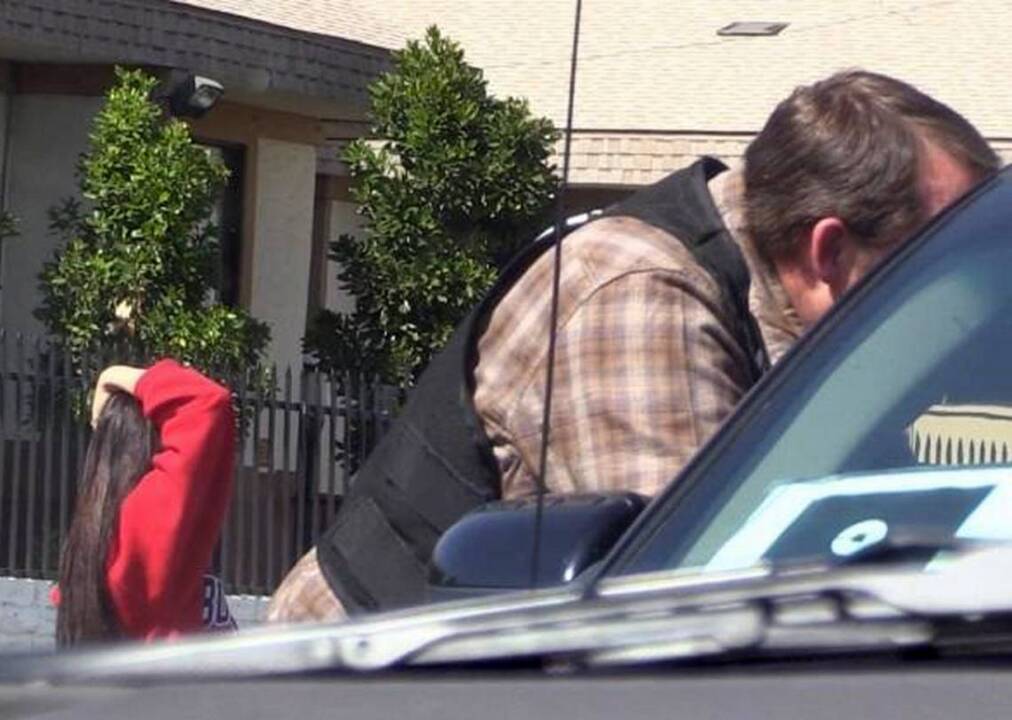
She did not know, however, that he was on parole. He was eventually arrested after police began to monitor his conversations with her. She remembers the confusion she felt when a police officer asked if she needed help.
“I didn’t feel victimized,” she said. “I thought it was for love. God, that sounds so dumb.”
She soon found out he had similar relationships with other women whom he had also found through a dating website. He trafficked them using separate phones, knowing she might leave if she found out there were others.
A failed escape
After he went to prison, she quit her job and came back to Easton.
However, her trafficker kept in contact and eventually convinced her to marry him in prison. She had been asked by law enforcement to testify against him. If they got married, she wouldn’t have to.
After they were married, he asked her to smuggle drugs into prison for him during their conjugal visits.
“I was in love with him,” she said. “I wanted to do anything I could for him, so I considered it.”
Although she had moved back to Easton, he tried to traffic her from prison. Men messaged and called her at all hours. She had to delete her social media accounts.
She eventually fell into a deep depression, which led to her hospitalization and referral to Breaking the Chains. She spent four months with the nonprofit before leaving.
“I had a hard time going to church,” she said. “I believed, but I had trust issues – even with God. I thought I could do it on my own.”
After leaving, she contacted her trafficker in prison. She started to use drugs again. Eventually, she knew she had to go back to the nonprofit. In addition to the residential services, she goes to counseling and takes courses designed to rebuild her self-esteem. The organization also helped her get her marriage annulled.
Her return to Breaking the Chains helped her share the full extent of what she had gone through with her mother and siblings. They were upset at first, she said, but now are supportive.
Talking to the other women at Breaking the Chains also has helped. They also thought they were in love. She learned that people like her trafficker sought her out because of her low self-esteem. The staff and her fellow survivors have drilled into her that he does not care about her. He never did. He only cared about money.
Her recovery is in its infancy. It will be another six months to two years before she finishes her counseling and educational program. She hopes to return to the medical field and volunteer with Breaking the Chains once she’s fully healed, but that won’t be soon.
For now, she’s working on regaining control of her life from her trafficker, who controlled everything – down to the color of her nail polish.
“I wasn’t allowed to say anything (to anyone),” she said. “I think that’s why to this day, I have a hard time talking. I used to work at a hospital. I used to talk all the time. And now I struggle. I wasn’t able to look anyone in the eye ...
“And so I’m trying to get my voice back.”
Rory Appleton: 559-441-6015, @RoryDoesPhonics
To get help or help others:
National Human Trafficking Hotline: 1-888-373-7888
This number can be used to report anyone in need of assistance and does not require the caller to contact law enforcement.
Fresno Police Department’s anonymous vice tip line: 559-621-5900
To fight trafficking:
Central Valley Against Human Trafficking: 559-263-1379
Breaking the Chains: 888-858-2021
This story was originally published November 2, 2017 at 7:30 AM with the headline "She was a hospital worker. He sold her for sex before, during and after her shifts."