
Doc Burnstein’s accused of ousting founder, scamming shareholders: ‘Their money is gone’
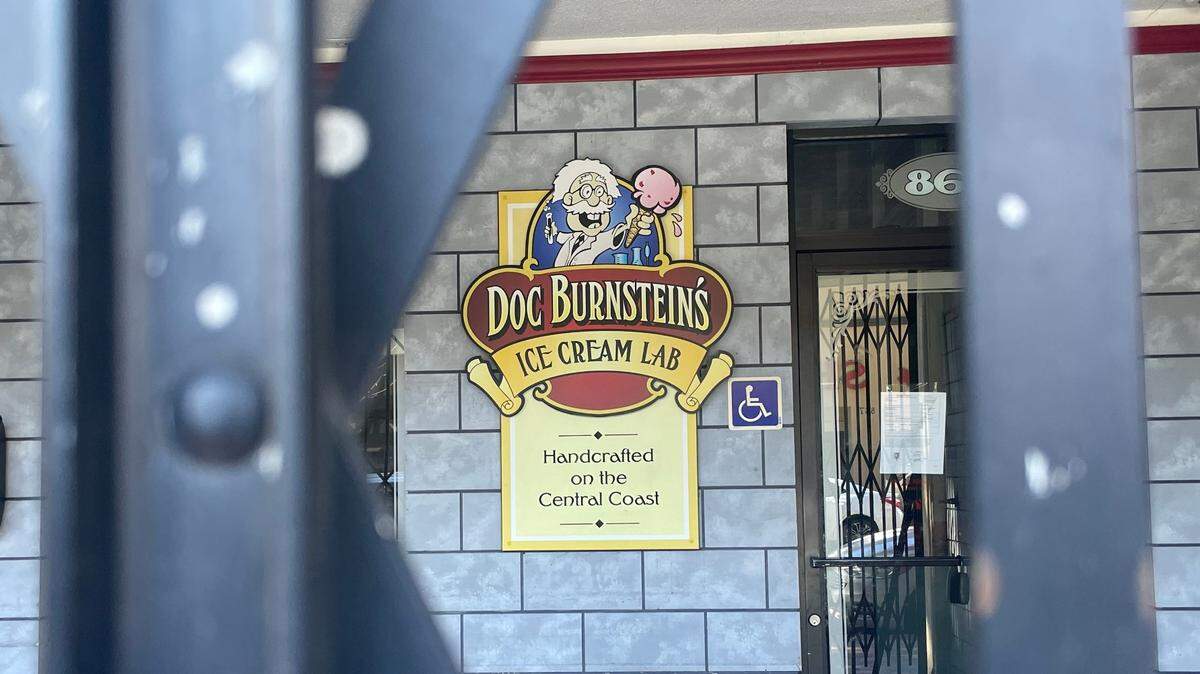
All is far from sweet for San Luis Obispo County’s homegrown ice cream chain, Doc Burnstein’s Ice Cream Lab, these days.
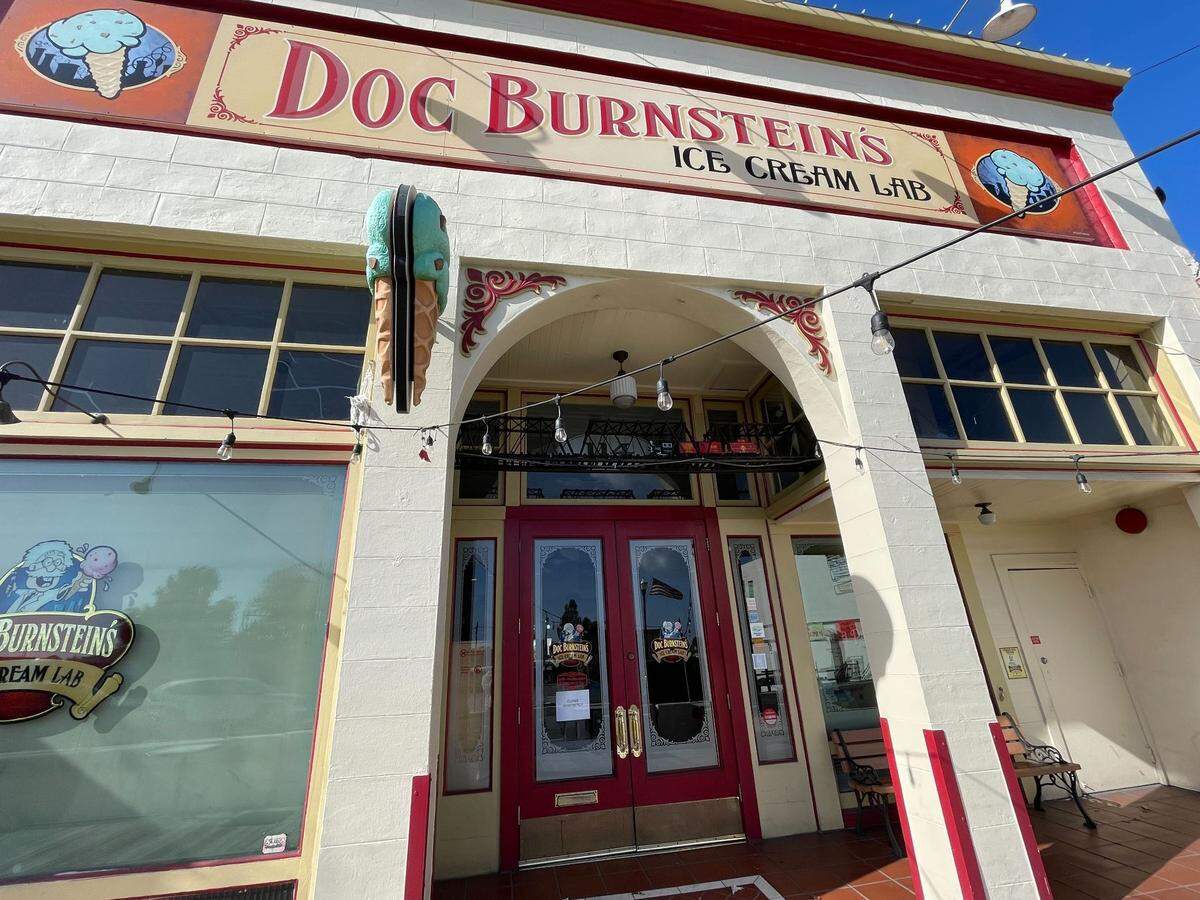
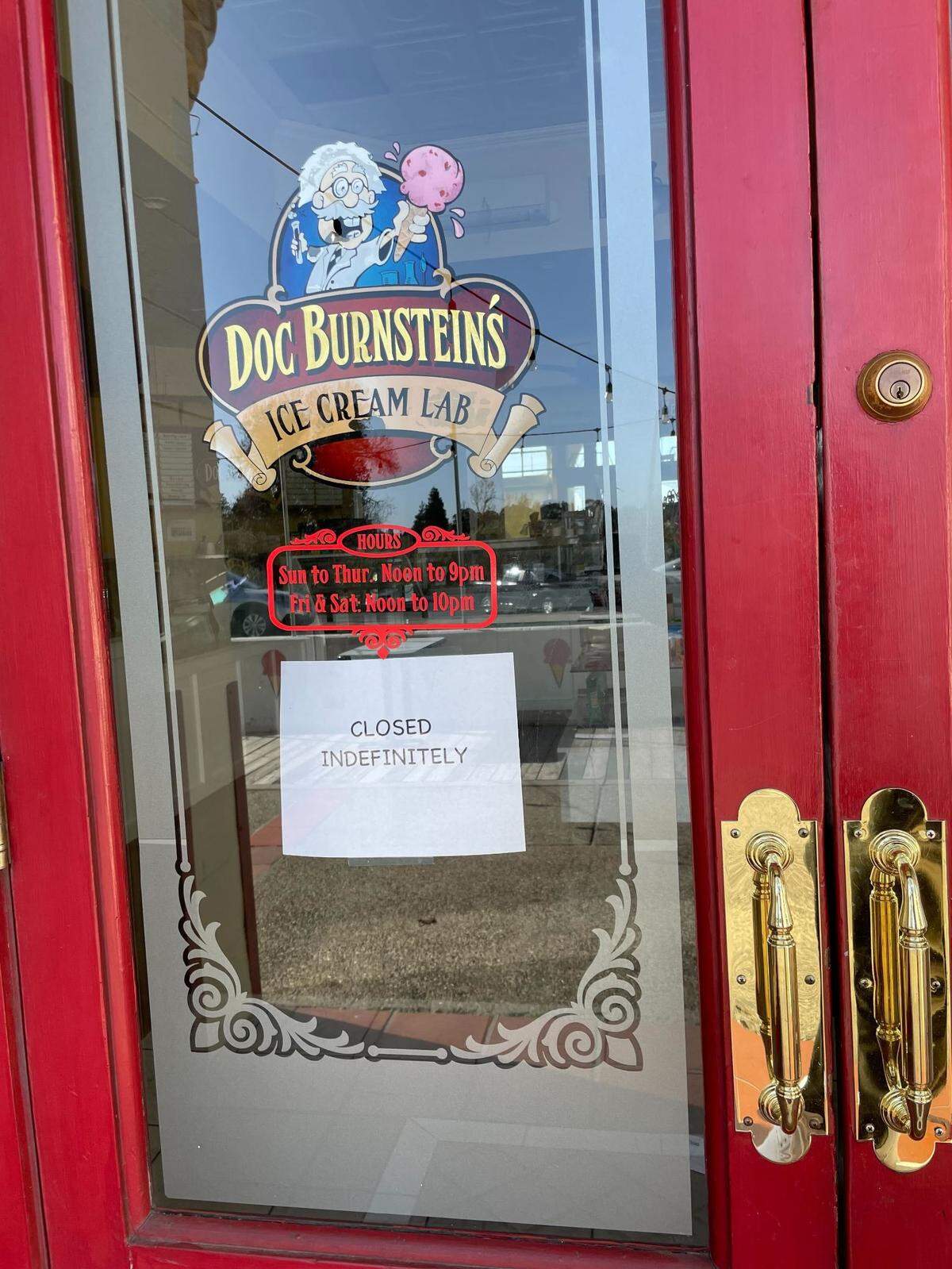
The company abruptly shut the doors of its Central Coast parlors this week. Signs posted at its Arroyo Grande and Santa Maria scoop shops said the parlors were closed indefinitely while its San Luis Obispo location sported an eviction notice.
But that’s just the tip of the rapidly melting ice cream cone for the beloved local chain.
Speaking with The Tribune in December, Doc Burnstein’s founder Greg Steinberger alleged that an investor’s share scheme, coupled with years of mismanagement and an internal coup that ousted him from the company he co-founded in 2003, pushed Doc Burnstein’s to the brink of collapse.
“I’ve got 550 (shareholders) who put their trust in me, and I’d like them to know the story — the real story,” Steinberger said.
Over the course of a month, Doc Burnstein’s representatives did not respond to repeated requests for comment from The Tribune to discuss Steinberger’s allegations or the closures of the company’s ice cream parlors.
When reached for comment, former CEO David Long declined to be interviewed, citing poor health.
Sacramento investor steps in to help grow ice cream chain
Only a few years ago, things seemed to be looking up for Doc Burnstein’s.
In 2014, with Steinberger still at the helm, the company opened its downtown San Luis Obispo parlor, followed in 2016 by a production facility in Grover Beach that would allow it to double the amount of ice cream it made.
Steinberger also signed franchise agreements to have other shops throughout California sell Doc Burnstein’s ice cream in their stores.
This was partly financed by the company’s first public share offering in 2013. Doc Burnstein’s sold 8,000 shares valued at $50 per share, meaning the company earned a total of $400,000.
In 2017, the company opened up a second public stock option to help finance its move into larger markets, saying it wanted to be the next Ben and Jerry’s.
“We want Doc Burnstein’s to be No. 1 in the hearts and minds of America,” Steinberger told The Tribune at the time. “When they think of ice cream, we want them to think Doc Burnstein’s.”
Behind the scenes, however, that dream was already starting to go sour.
Steinberger said Long, CEO of Sacramento-based Aulon Arch Inc., first approached him in 2013.
Steinberger said Long helped to purchase equipment for the Doc Burnstein’s production plant in Grover Beach and with some federal Small Business Administration loans.
Because the first stock offering was open only to people and not corporations, and because there were ownership limitations set up so no one person could get controlling interest, Long was limited in his involvement, Steinberger said.
Then in 2018, Long approached company management saying he wanted to fund the next five or six locations to “help launch this into becoming a nationwide brand,” Steinberger said.
To do that, Long would need to have more stock ownership, Steinberger said.
So the board changed its bylaws to allow corporations to hold shares and allow more than 5% ownership by a single individual.
According to an unofficial timeline provided to The Tribune by a Doc Burnstein’s shareholder, Aulon Arch invested $1.2 million in new shares at a value of $14 per share in October 2018, obtaining 60% of the company’s outstanding shares.
Steinberger said he was told at the time that having a controlling stake in the company allowed Aulon Arch to continue to be classified as a holding company, not an investment company, which avoids some U.S. Securities and Exchange Commission reporting.
He later found out it would also allow Aulon Arch to set its own stock prices.
“I had this dream of growing the business and spreading the community corporation and benefit corporation idea,” Steinberger said. “And it seemed like an avenue to do that.”
Within a few months of Long coming aboard as CFO, “There were conflicts happening within the key management,” Steinberger said. “I wasn’t happy with some of the things that were going on, especially in the accounting world.”
The Doc Burnstein’s board of directors also hired a new president.
An October 2018 news release said Michael Boyer was expected to be “responsible for strategic direction, growth and operations of the business,” as it attempted to grown into a national brand.
Five months later, Boyer was CEO — a position that had been held by Steinberger until then.
According to Steinberger, Long threatened to cut off funding to the company if Boyer was not made CEO.
After the switch-up, Steinberger retained his shares in the company and became chair of the Doc Burnstein’s board.
“They convinced me that the best option was to step aside and let them grow the business,” Steinberger said. “But it never really grew.”
Doc Burnstein’s offers new stock sale to finance growth
When he stepped down, Steinberger said, Doc Burnstein’s had about $1.3 million in liquid assets and cash reserves between its three Central Coast parlors, as well as a lease for a new Sacramento location.
According to the company’s annual report, at the end of 2018 — and following Aulon Arch’s $1.2 million purchase of new shares — the company’s assets totaled $2.86 million.
That included $1.1 million in marketable securities — assets that can be liquidated to cash quickly — and $119,008 in cash and cash equivalents.
The equity of the company’s shares almost tripled that year, jumping from $696,722 in 2017 to more than $2 million in 2018, according to the annual report.
The company was still operating at a loss, however.
In 2018, Doc Burnstein’s was in the red, with an operating loss of $350,735 at the end of the year.
Meanwhile, Long announced a new investment strategy to help grow the company: It would divide outstanding shares in a 7-for-1 stock split. That would create more available shares, although they’d each be worth only one-seventh of their previous value.
Normally a stock split is meant to help encourage investment when share prices are high. For example, 100 shares at $10 can be more appealing to an investor than one share at $1,000.
In a video of an April 2019 shareholder meeting Steinberger provided to The Tribune, Long said the move was meant to “slow down the dilution of original shareholders.”
“As you raise more capital, if you don’t continue to split the stock, before you know it, the founder doesn’t own anything and the original shareholders don’t own anything,” Long said. “So you have to keep splitting the stock.”
“In order to make it fair to the existing shareholders and fair to the new shareholders, that requires a profitable business, and a business that is growing,” Long said in the video.
Following the split, shares that been valued at $13.92 the year before were now worth $1.98 each.
However, Long told shareholders that their investment had actually increased in value, Steinberger said.
At the same time, Aulon Arch announced a new Doc Burnstein’s stock offering at $50 per share, and offered to buy back shares at that price from existing shareholders who wanted to sell, according to Steinberger.
“Within a month, the first investor who wanted to sell his shares was told, ‘No, I can’t do that,’ ” Steinberger said. “So (Long) misled investors of Doc Burnstein’s at that April shareholder meeting on what their stock was worth and what they could do with it. But that was basically to get people excited to buy more shares.”
Shareholder calls Aulon Arch a ‘wolf in sheep’s clothing’
Behind the scenes, Aulon Arch representatives were also encouraging Doc Burnstein’s investors to put money into the Sacramento-based holding company directly, several sources told The Tribune.
Ted Malley — who served on the Doc Burnstein’s board from 2013 to 2017 and was at one time one of the ice cream company’s largest shareholders — said he invested six figures into Aulon Arch. He declined to disclose the specific amount.
As of January, the value of Malley’s Aulon Arch shares had plummeted to less than $1,000 total, he said.
“My take is Aulon Arch came in as a wolf in sheep’s clothing,” Malley said.
Malley said he felt Long took advantage of Steinberger’s reputation to encourage investment in Aulon Arch.
BEHIND THE STORY
MOREInvestigating Doc Burnstein's Ice Cream Lab
It once had dreams to be the next Ben and Jerry’s — but by February 2023, all Doc Burnstein’s Ice Cream Lab parlors were shuttered and the company was allegedly facing bankruptcy. What happened to the beloved San Luis Obispo County ice cream institution?
How we reported this story
The Tribune first met with Doc Burnstein’s founder Greg Steinberger and shareholder Barry VanderKelen in December 2022 to discuss allegations of corporate malfeasance by the ice cream chain’s corporate parent.
During the interview, Steinberger alleged years of mismanagement from Aulon Arch and the Doc Burnstein’s executive team had led the company to the brink of bankruptcy — with few of the company’s community shareholders aware of how dire the situation had become.
Over the course of two months, The Tribune reached out to former board members, shareholders, employees and others associated with Doc Burnstein’s to substantiate the claims. We reviewed dozens of pages of annual reports, financial documents and shareholder notices, as well as previous Tribune reporting on the company, to track the slow downfall of a beloved San Luis Obispo County institution.
What happens next?
There is still more to be told. Even in the course of reporting this story, a number of other allegations have arisen regarding Aulon Arch and Doc Burnstein’s. The Tribune is actively investigating those claims.
The Tribune wants to hear from other community shareholders and employees, or those impacted by the recent parlor closures, to learn about their experiences.
If you are interested in speaking on the subject, please contact reporter Kaytlyn Leslie at kleslie@thetribunenews.com.
“I think (Long) traded on Greg’s trust that he had with older people in the community, and he eventually convinced them to invest in Aulon Arch, promising them double-digit returns,” Malley said. “And he, I think, was a charlatan.”
One shareholder, who spoke to The Tribune on the condition of anonymity, said he and his parents invested thousands of dollars into Aulon Arch after being told it would be more beneficial to invest in the holding company rather than just Doc Burnstein’s.
His parents, who originally bought about $45,000 of Doc Burnstein’s shares after meeting with Steinberger during one of the early stock offerings, invested roughly $550,000 into Aulon Arch in early 2019, while he invested between $38,000 and $40,000, the shareholder said.
That money is now all but gone, the shareholder said.
At the start of 2023, the shareholder was told his stock in Aulon was worth only $58, with shares that were once worth $50 each now down to 8 cents.
“Somebody needs to be held accountable,” the shareholder said. “They shouldn’t be allowed to run any type of business from here on out.”
SLO County company on brink of bankruptcy
In 2019, Steinberger said he began to feel like things at Doc Burnstein’s were truly unraveling.
That October, at a particularly contentious board meeting, Steinberger said questions were raised about the lack of financial documents being provided to the board.
Board members also voiced concerns about money running out in mere months and confusion about what was going on with the effort to raise capital, he said.
In November, management told the board that the business would have to close if directors did not approve an emergency loan, Steinberger said.
The management team also said that layoffs were imminent and lease payments on the parlors were three months overdue, he said.
“If we didn’t approve this loan, (they said) we may be completely closing the doors in two weeks because we’re completely out of money,” Steinberger said.
In the company’s 2019 interim annual financial report — from 2019 on, only unaudited financial reports were published on the Doc Burnstein’s website, rather than the full annual reports of years prior — revenue for the company was down slightly from the year before, with $2.4 million in sales.
The company’s expenses, however, far outpaced revenue. According to the report, the company spent $3.3 million on general and administrative expenses in 2019 — more than double what was spent the previous year.
By the end of the year, Doc Burnstein’s was operating at a net loss of $2.6 million, according to the report.
Much of the company’s funding between 2018 and 2019 seems to have gone to unsuccessful attempts to grow the brand.
In February 2019, Doc Burnstein’s signed a lease for a new parlor in Sacramento, but ended up operating out of a mobile food truck in the parking lot rather than renovate the space. The landlord sued the company in 2022 for allegedly not paying its rent for almost two years.
In September 2019, a new Doc Burnstein’s parlor opened in Chico. It shuttered a few months later.
The company also announced plans to open a chocolate factory in Nipomo ahead of the holiday season, but it never materialized, Steinberger said.
Shareholder Barry VanderKelen, who spoke to the Tribune in December, said this sudden growth was part of what led the company to the brink of bankruptcy so quickly.
“There’s this tremendous hiring of people in all these positions that hadn’t existed before, which accelerated the burning of the reserves — and then the futility of the fundraising,” VanderKelen said.
Doc Burnstein’s laid off a number of employees at the end of 2019, Steinberger said, but its finances were still in dire straits.
In early 2020, Steinberger said he began getting phone calls from credit card companies saying there were debts associated with the business in his name, and landlords were reaching out because rents were overdue and he was listed as the guarantor of the leases.
Facing personal bankruptcy, Steinberger said he made a deal with Aulon Arch to drop off the board of directors for both companies and sign over his voting rights.
That went into effect in April 2020, right as the coronavirus pandemic was shutting down businesses around San Luis Obispo County, the state and the country.
Founder: Investor reported false stock value to shareholders
Boyer left the company in March 2020, and Long officially took over as CEO.
Five out of the seven members of the Doc Burnstein’s board of directors left in quick succession, Steinberger said, and fewer notices were sent out to shareholders.
That was when Steinberger said he found Aulon Arch had allegedly been falsely reporting the book value of its
stock to shareholders.
He said the book value reported to shareholders in 2017 seemed to be going up each quarter, while the numbers being presented to the Aulon Arch board showed the value was actually going down.
So in early 2021, Steinberger, VanderKelen and several other Doc Burnstein’s shareholders alerted the California Department of Financial Protection and Innovation — formerly the Department of Business Oversight — of possible corporate malfeasance.
Steinberger said the department launched an investigation into Aulon Arch and Doc Burnstein’s 2019 stock sale activities, shareholder communication and “the lack of corporate governance.”
“Poor management is not criminal, but not abiding by the California Corporations Code is criminal,” VanderKelen said. “They were not abiding by the California Corporations Code.”
As of December 2022, Steinberger said he had not heard back from the department on the status of the investigation.
When reached for comment by The Tribune, DFPI media relations officer Mark Leyes said the department was unable to comment on investigations, even to confirm or deny their existence.
Financial adviser says employees are missing 401k contributions
Meanwhile, other issues within Doc Burnstein’s began popping up.
Financial adviser Melissa Gozukizil said she began getting phone calls from Doc Burnstein’s employees in 2021 saying their retirement contributions were being deducted from their paychecks but not put into their 401Ks with an equivalent match.
Gozukizil was brought on by Steinberger while he was still the company’s primary owner, she said.
When she started hearing from employees about the difficulties, Gozukizil said she reached out to Doc Burnstein’s management to try to get it sorted out.
She said she was told by current CFO Pauline Malysko that, because of the COVID-19 pandemic, the company was legally allowed to hold off on adding to employee retirement plans until a certain date, at which point they would have to make sure employees were made whole.
On Monday, Gozukizil said she has heard some employees had since gotten their contributions and matches, while others still had not.
She also has been working with former employees to help them roll their plans into independent IRAs, but said there’s been difficulty getting anyone with the Doc Burnstein’s management team to sign the paperwork.
Gozukizil said she is in contact with at least two employees who were trying to access their 401k funds but have been unable to because they can’t get signatures.
She has spoken to another employee whose retirement contributions and matches have not been added into his 401k for almost two years, she said. That employee also told her his past few paychecks had bounced, she said.
A different Doc Burnstein’s employee, who spoke to The Tribune on the condition of anonymity, said Wednesday that their most recent paycheck bounced and they were aware of other employees whose paychecks also bounced.
Gozukizil, who is no longer with Doc Burnstein’s, said she thought she was fired for “digging around” and reporting her concerns to the company’s third-party administrator.
She said that’s only fostered her resolve to help make sure Doc Burnstein’s employees get what they are owed.
“They don’t have much, but they each put away like a good $5,000, $6,000, $7,000 in their little 401k and they deserve it,” she said. “I really just want to do whatever I can to help them get it.”
Long resigns, Central Coast ice cream parlors close
In June 2022, Long resigned as CEO of Doc Burnstein’s.
In a letter to shareholders provided to The Tribune, the company said Long was retiring as interim CEO and that the board planned to eliminate the title of CEO going forward.
“This fulfills a long-held vision by Doc’s leadership of making the company more robust by distributing management into the hands of more people,” the notice read. “David is returning to his role as a board member and representative of Doc’s shareholders. For now, he will also continue to work as an adviser on special projects such as the introduction of new products.”
As of Tuesday, however, Long is still listed as the CEO on the Doc Burnstein’s website.
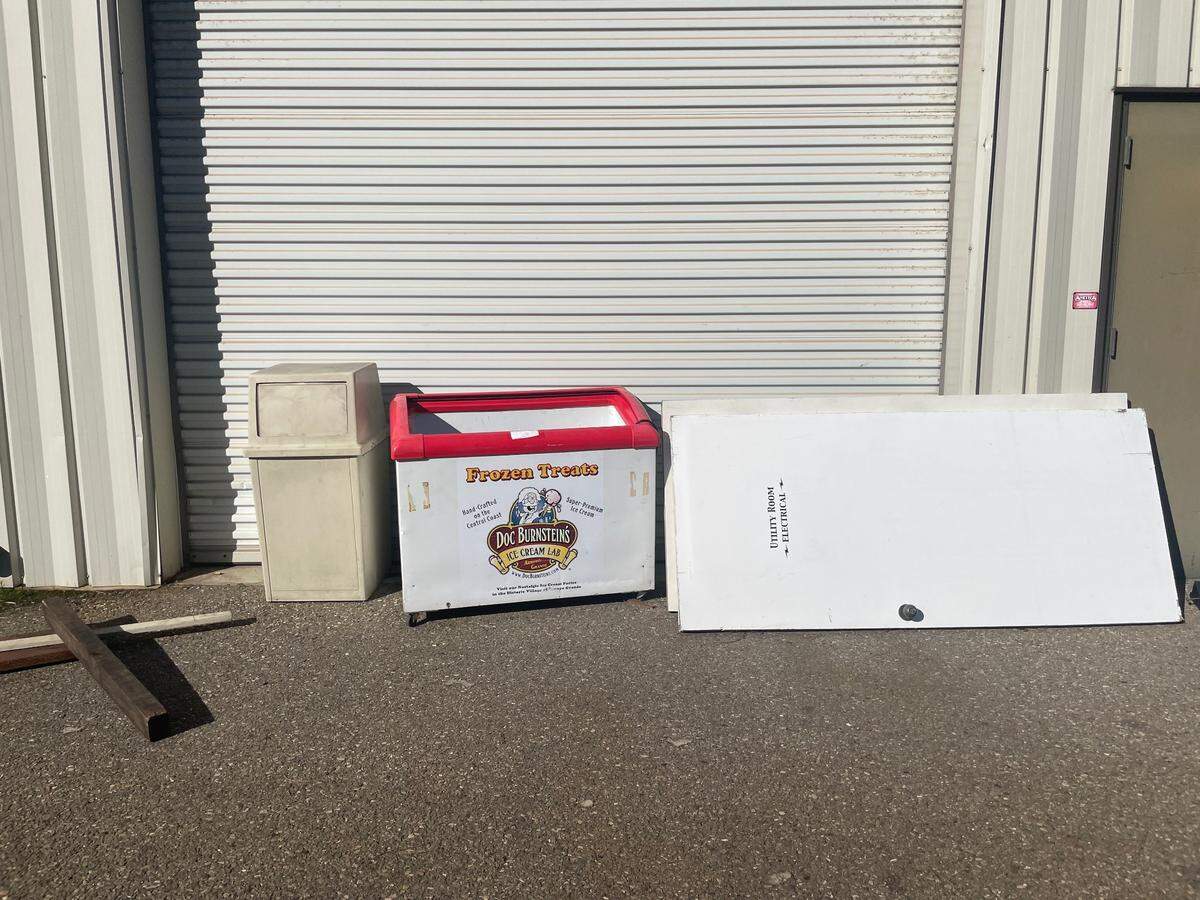
The company quietly closed its Grover Beach production facility in January 2022, saying it would instead transition back to making ice cream on site.
“We originally built the creamery in Grover Beach because we thought it would be more efficient, and we outgrew the capacity of the kitchen in Arroyo Grande,” Long wrote in a notice to shareholders at the time. “We also had a vision of expanding our wholesale business, which never materialized and currently is impractical. Starting fresh today and thinking about our primary mission of gathering customers to share authentic hand-made products, it seems clear that the way forward is making ice cream at the parlors.”
An eviction notice was posted at the San Luis Obispo parlor on Higuera Street in early January, and landlord Lana Johns at the time told The Tribune that the business was behind on its rent.
“So far the response from David Long has not been adequate or plausible,” she said.
Meanwhile, closure notices were posted on both the Arroyo Grande and Santa Maria shops as of Feb. 13.
Ahead of the closures, management told shareholders in a notice on Feb. 7 that the business might have to shutter its parlors due to a slate of “personal and family health challenges.” The letter also claimed the business was in a good position for future success after recent “cost-cutting decisions” and “profitable and unprofitable units have been partly separated.”
The letter concluded with a request for anyone interested in taking over the business to contact management at info@docburnsteins.com.
“Everyone who is invested in Doc’s cares deeply about our progress and survival, and it would be a shame if our beloved company were lost,” the letter read.
Soon after the notice was sent out, Steinberger sent one of his own to shareholders, informing them of his experiences with the company.
“Today we are losing more than our financial investments in this once iconic business,” Steinberger wrote in the email. “We also lose being part of a business that was a source of pride in our community.”
What’s next for Doc Burnstein’s Ice Cream Lab?
So what happens to the beleaguered ice cream company now?
In a text Monday, Long wrote that there was “more going on than meets the eye, and some of the people who have been speaking publicly are burnishing their reputations falsely.”
He also noted that “the business is very likely to reopen.”
On Tuesday, he declined to speak further on the record, citing his health.
Malley said he and a group of local shareholders attempted to submit a proposal to buy the Arroyo Grande parlor over the weekend, but that proposal was denied.
He and that group are currently looking into finding other members of the community interested in helping to buy the business.
At least three community shareholders who reached out to the Tribune following the announcement of the parlor closures said they have not been able to get in contact with anyone regarding their shares or investment in the company.
According to VanderKelen, silence has been the name of the game from Doc Burnstein’s management in the past year.
There has been no shareholder meeting nor board of directors election since 2019, VanderKelen said, and a number of shareholders have reported to him that phone and email inquiries to the company go unanswered.
“There’s a combination of bad management and illegal activity,” he said. “Bad management, we can’t do anything about that. It’s just bad management. But the illegal activity is hurting people.”
“There were over 550 people in the community who invested in this company, and they’re being harmed,” he added. “Their money is gone.”
It’s unclear what exactly the next steps are.
Numerous sources told the Tribune that they had filed or were planning to file complaints with a number of governmental agencies meant to regulate business and financial practices — but few had heard back on any concrete investigative action.
It was also unclear if some sort of legal action would result in shareholders and employees getting their money back if the company is near bankrupt.
For Steinberger, who had once hoped to be the leader behind the next ice cream sensation, the entire ordeal has become a bitter lesson.
“David Long said to me way back in, like 2015 or 2016 — he said, ‘When you have trust, you can move quickly in business,’ ” Steinberger said. “And the sad thing is I trusted. Yeah, that’s where I really got burned.”
The Tribune is investigating the allegations of mismanagement at Doc Burnstein’s Ice Cream. If you are a community shareholder, a current or former employee or someone impacted by Aulon Arch, please contact reporter Kaytlyn Leslie at kleslie@thetribunenews.com to share your experiences for future coverage of this ongoing story.
This story was originally published February 17, 2023 at 2:20 PM.
%20Cropped.jpg)