SLO County strawberry pickers strike for hourly wages. They ‘deserve pay that’s dignified’
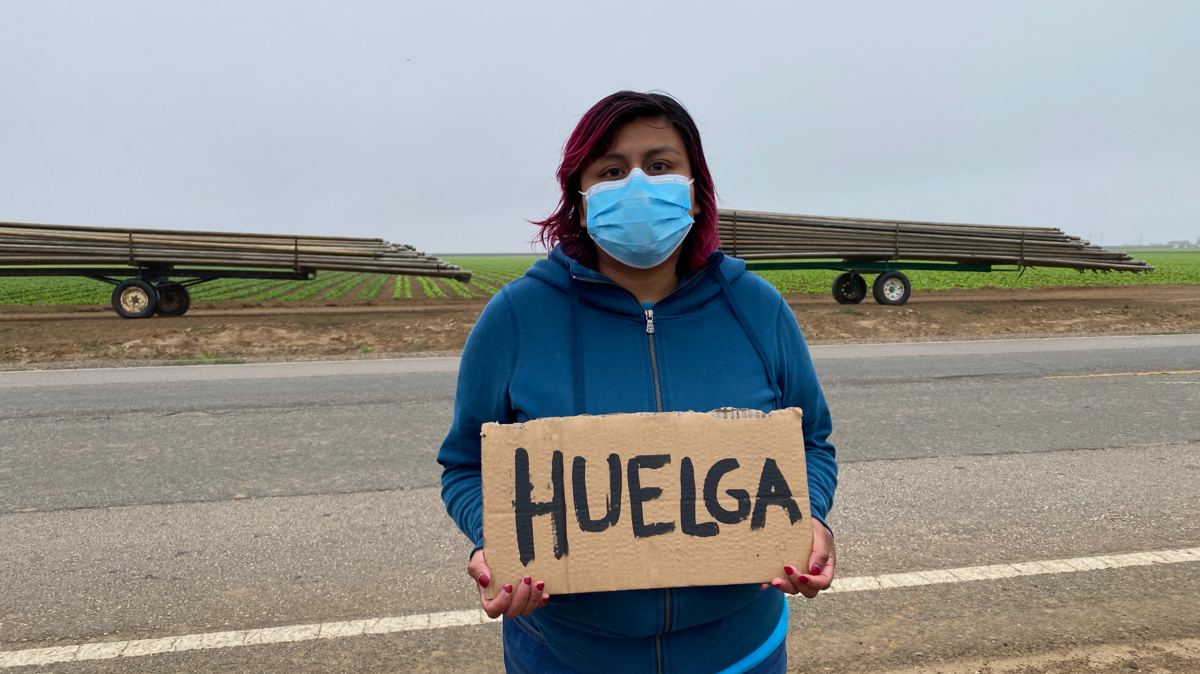
West Coast Berry Farms increased wages for farmworkers after about 50 workers went on strike Friday at a Nipomo strawberry field— seeking a switch to regular hourly pay.
Some workers at the site, located at the corner of Highway 1 and Oso Flaco Lake Road, argued that the wages the company offers don’t cover the increasing costs of rent, food, gas and childcare.
“We can’t offer the basic needs to our kids,” one worker, who preferred not to give his name for fear of retaliation, told The Tribune in Spanish, translated by community organizer Jeramias Salazar. “They should pay a fair amount.”
Zulema Aleman, a community organizer with Central Coast Alliance United for a Sustainable Economy (CAUSE), attended Friday’s strike to support the workers. The grassroots organization advocates for Central Coast immigrant communities, according to its website.
Aleman said field work is labor intensive, can cause stress injuries and supplies food to the nation, so workers should be paid fairly.
“They’re providing strawberries that are picked here and sold all over the U.S.,” Aleman said. “They’re just human beings that deserve pay that’s dignified and shows a respect for their work.”
Farmworkers seek higher pay for strawberry picking
Strawberries sold by West Coast Berry Farms have two destinations. The company sells ripe berries as produce at grocery stores, while overripe strawberries are turned into juice for use in granola bars, ice cream and more.
Before the strike, the Oxnard-based company paid workers $2 per strawberry tray.
Workers harvest about 10 to 18 trays of strawberries an hour during peak season, making $20 to $36 an hour before West Cost Berry Farms changed pay rates, company spokeswoman Cindy Jewell said.
But slower workers can pick less, according to community organizer Fernando Martinez, who represented the striking farmworkers through the Mixteco Indigena Community Organizing Project.
Workers who pick only six to eight trays an hour, for instance, would make $14 to $16 an hour.
When workers pick less than $14 of berries an hour, West Coast Berry Farms pays them extra to ensure they make minimum wage, Martinez said.
For example, if farmworkers pick six trays of strawberries, making $12 an hour, the company adds $2 to their hourly wage.
How workers are paid fluctuates throughout the year, Jewell said. During peak season when plants yield the largest number of berries, workers are paid per strawberry tray.
During off-season when berries are scarce and workers can’t pick enough to make minimum wage, the company pays hourly.
Workers receive breaks throughout the day as well as lunch, Jewell said.
They also “receive full benefits” such as paid sick time and medical, dental and vision insurance, she said.
“This is a good company that cares for all the employees,” Jewell wrote in an email to The Tribune.
Workers on strike demanded a $14 hourly wage, in addition to $1.25 per tray of regular strawberries and $2 per stray of juice berries.
Under those rates, workers who picked 10 trays of regular strawberries an hour would have made $26.50 per hour. If they picked 15 trays an hour, they would have made an hourly wage of $32.75.
According to Martinez, an hourly wage wouldn’t change much for young, fast workers, but he said being paid hourly is better for older workers, who can’t run from bush to bush and collect as many berries as younger pickers.
“Maybe they’re good with their hands, but they can’t run,” Martinez said. “The constant $14 an hour will help them in addition to the piece rate.”
Adding the $14 hourly wage to the piece rate would ensure farmworkers make more than minimum wage, which Martinez said they deserve.
On Friday, strikers showed up outside the Nipomo worksite at 5:30 a.m. wearing face masks and bandannas. They carried signs that read “huelga,” which means “strike” in Spanish, and “pago justo,” meaning “fair payment.”
Most drivers passing by the strikers honked their horns and cheered for the strikers, but one man driving a pickup truck yelled “Go back home!”
Throughout the morning, Martinez and other organizers made speeches in Spanish on a megaphone. Meanwhile, a community member brought coffee and pastries to the strikers.
At about 8 a.m., the workers marched onto the field, chanting “Si se puede” — “We can do it” — to encourage other workers to join them.
Most people at the strike were workers, but a handful of community members attended to show their support.
Community organizer Donna Olivera said her citizenship status made it safer for her to show up and support the strike.
“The fact that I am a US citizen allows me to be here without fear,” she said.
Lucia Mar Unified Teachers Association president Cody King showed up to support the strike with a cardboard sign that read “Fair Pay Now.”
Many of his students were children of farmworkers, he said, and missed school to work in the field.
“School was a second thought for many of them because they needed to put food on the table,” King said. “Economic conditions impact their education and opportunities.”
Company raises wages
West Coast Berry Farms raised wages from $2 to $2.40 per strawberry tray, and kept the per-tray rate for strawberries intended for juice at $2.
However, the company denied workers an hourly wage.
Jewell said $2.40 per tray is the highest the company can offer while remaining profitable.
“If we aren’t able to remain profitable and pay our bills, then they won’t have any work at all,” Jewell said. “The farmer isn’t guaranteed a price by Safeway, or Albertsons or Lucky, they pay the market price and they pay what they deem the fruit is worth. The farmer is the one at the end of the day, holding the bag trying to make ends meet.”
Though the company didn’t agree to the striking workers’ demands, Martinez said the adjusted per-tray pay is a step in the right direction.
The strike ended Friday afternoon, and workers accepted the new wage.
“It’s a small win,” Martinez said. “It was not what the workers expected, but it’s a step forward.”
This story was originally published July 7, 2021 at 12:31 PM.